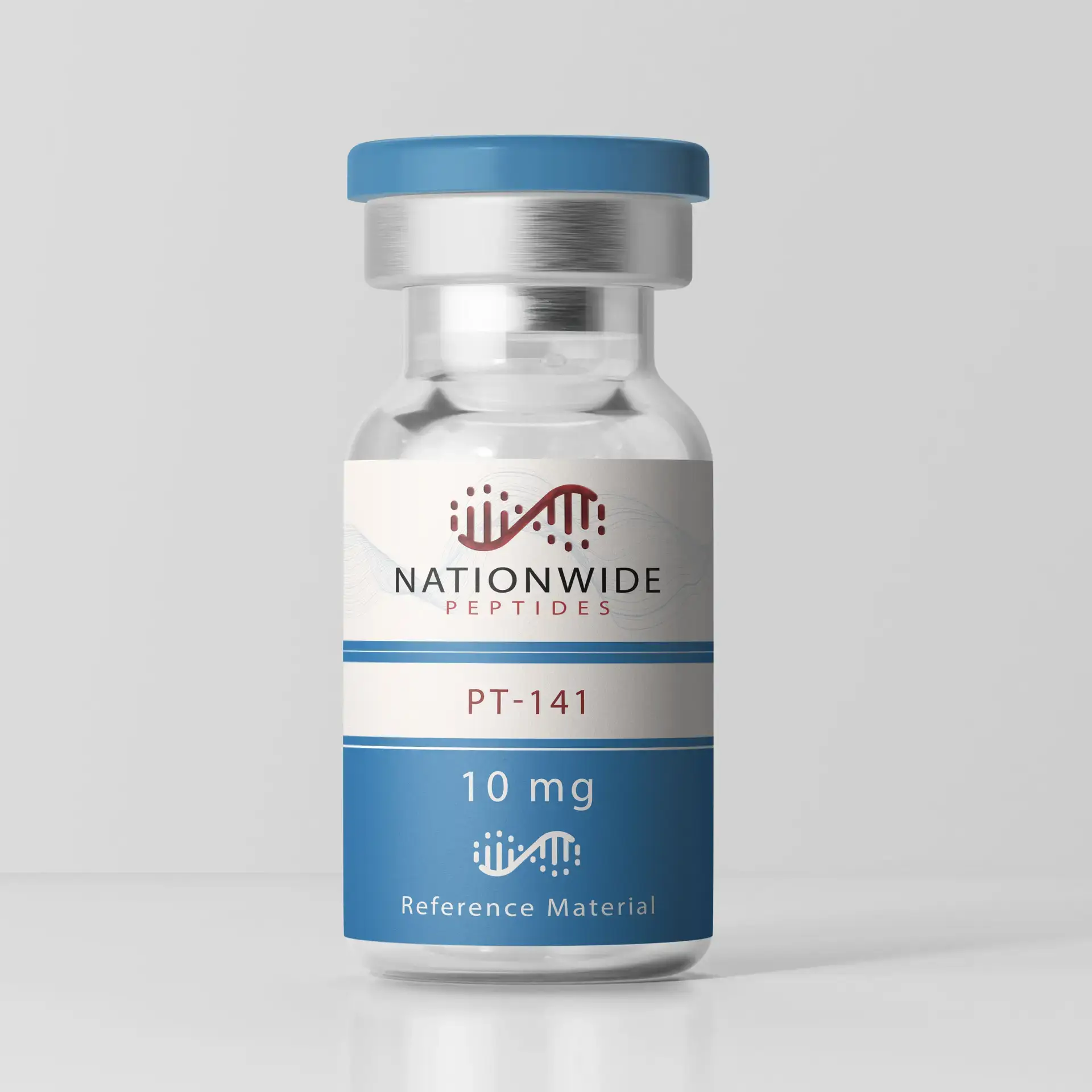
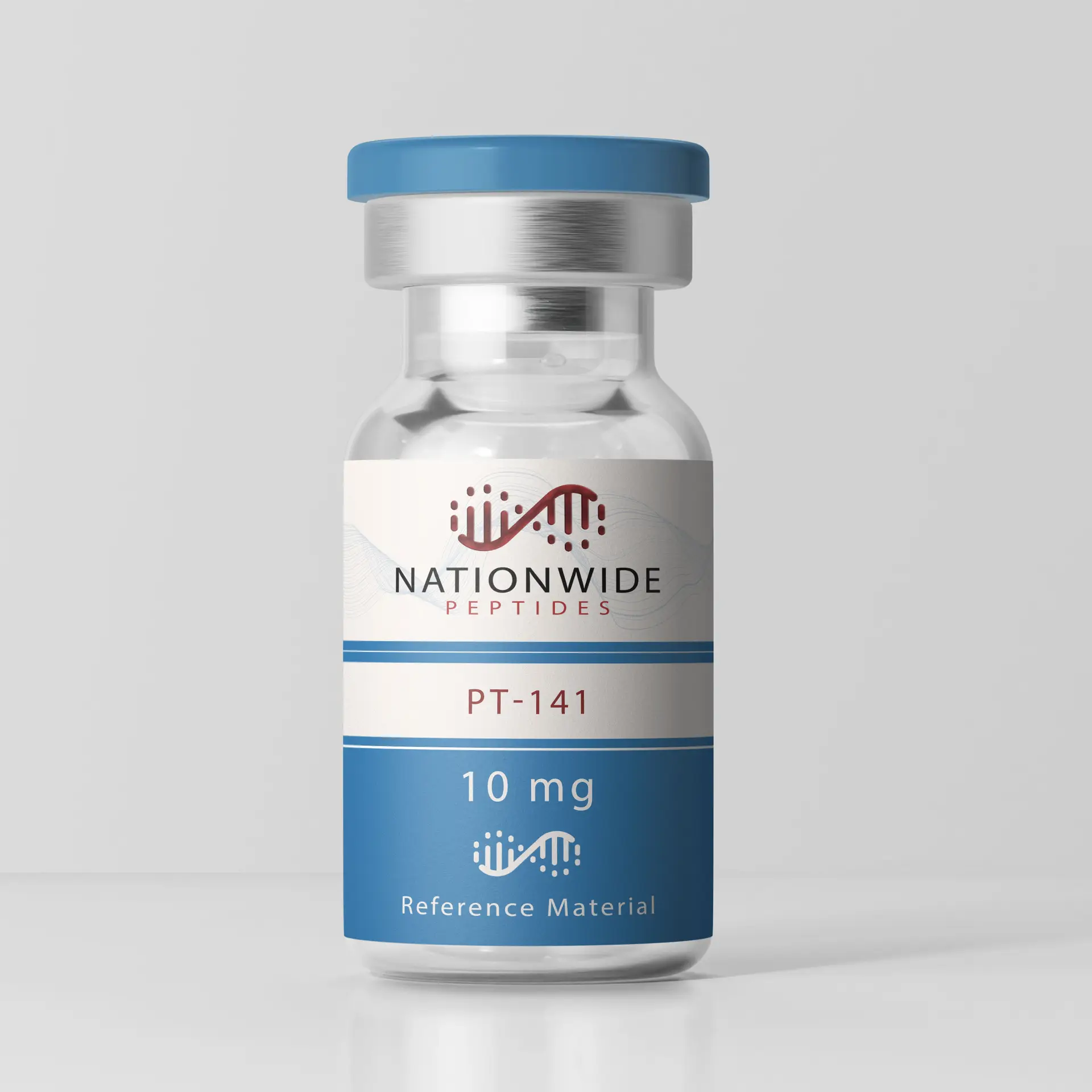
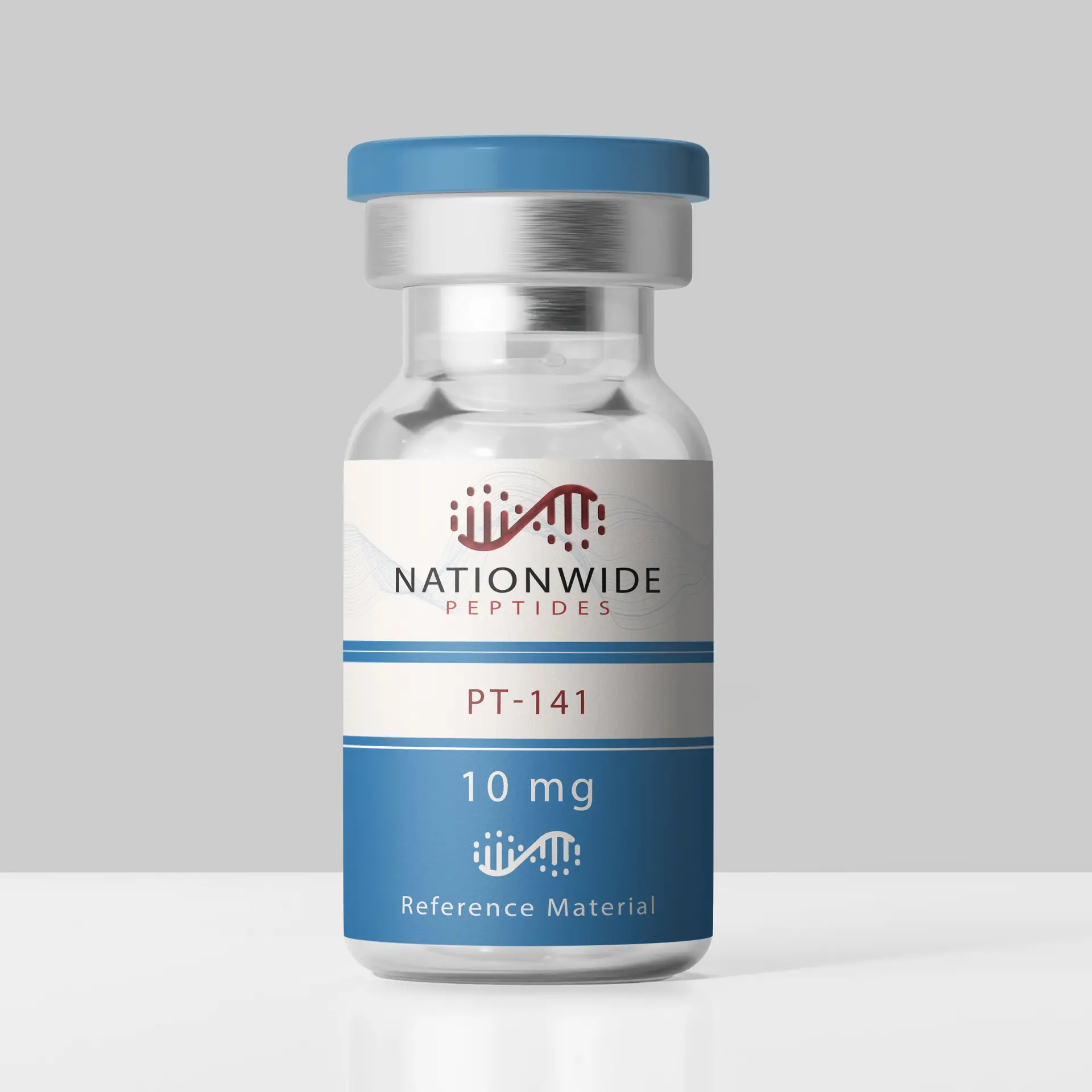
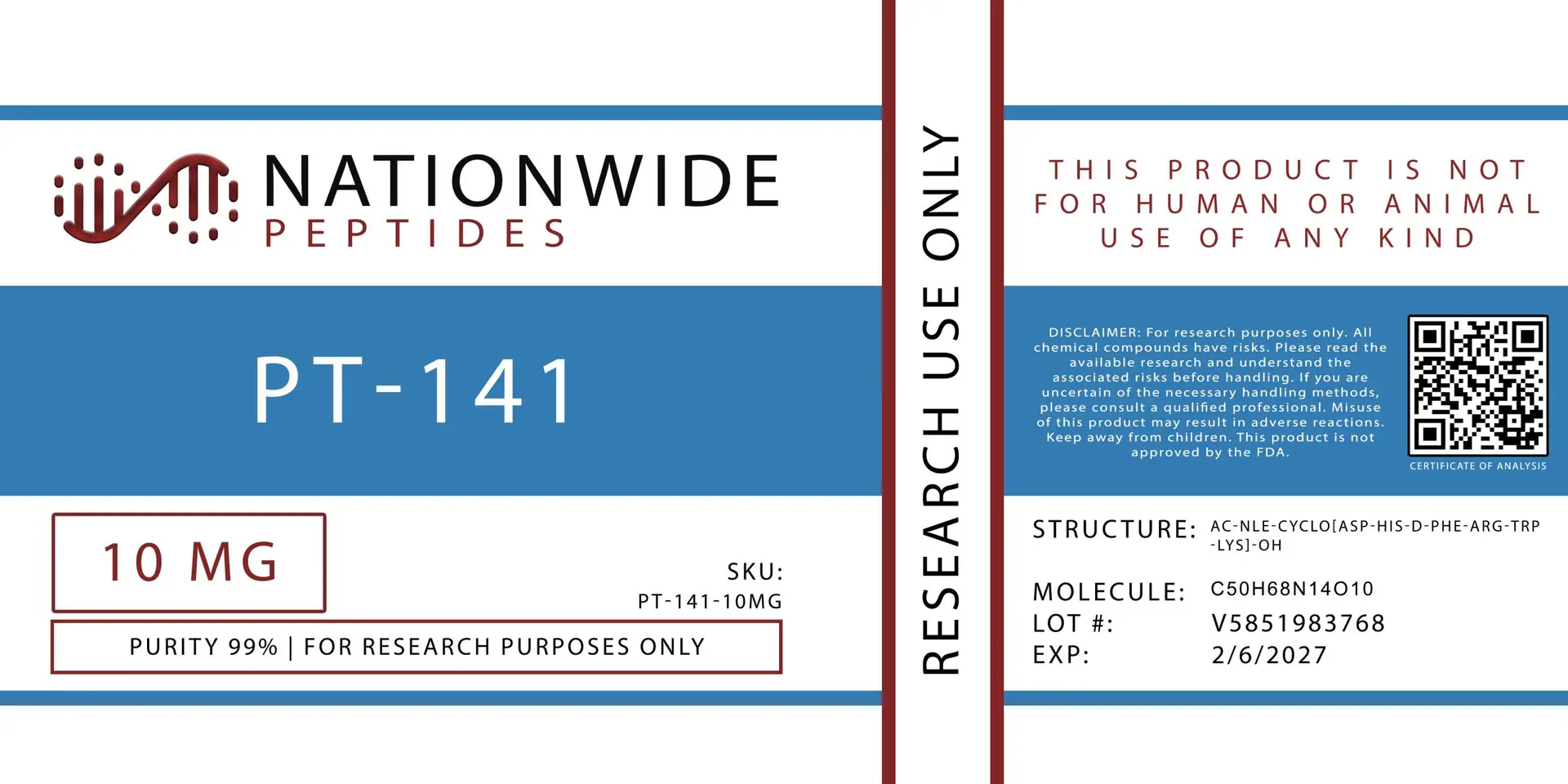
PT-141 - Bremelanotide Peptide research-grade
PT-141 – Bremelanotide Peptide
$59.00 Add to cart

PT-141 – Bremelanotide Peptide

$59.00

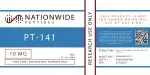
Research-grade PT-141 – Bremelanotide Peptide for laboratory investigation. For Research Use Only. Not for human use.
In stock

For Research Use Only — Not for Human Consumption
Free shipping on all orders over $200 (US)

  • 99% Purity – Third-Party Tested
  • Fast & Reliable Shipping
Guaranteed Checkout

Accepted Payment Methods

For Research Use Only. Not for human use.

PT-141 - Bremelanotide Peptide research-grade

Overview

PT-141 – Bremelanotide Peptide is supplied as a research-grade catalog material for controlled laboratory investigation.

Laboratories choose this item when protocols need clear identification, consistent labeling, and documentation suitable for reproducible experimental workflows.

Catalog packaging and research-use labeling help purchasing and bench teams keep procurement records aligned with the physical vial.

Research Context for PT-141 – Bremelanotide Peptide

Work involving PT-141 – Bremelanotide Peptide typically focuses on in vitro systems, assay development, and mechanistic model studies.

Teams confirm lot details before setup so conditions stay traceable across repeats and collaborative sites.

Published literature can inform starting ranges for related experimental designs. Each laboratory should still validate performance with its own instruments, plates, and detection chemistry.

Pilot runs are useful before committing larger plate sets, especially when detection chemistry or incubation windows are being optimized.

Documented Attributes

Key catalog attributes for this material include:

  • Research-grade material intended for laboratory investigation only
  • Catalog labeling aligned with research procurement channels
  • Suitable for method development and comparative assay workflows
  • Documentation packages available where provided for the listed lot

Laboratory Handling Notes

Receiving and Identity Checks

Before opening a vial of PT-141 – Bremelanotide Peptide, confirm the physical label against the purchase order and packing list.

Retain outer packaging until identity checks are complete, and report damaged seals to purchasing before experimental work continues.

Reconstitution and Aliquoting

Handle this material according to institutional SOPs for weighing, reconstitution, aliquoting, and storage.

Record lot identifiers in laboratory notebooks before reconstitution. Verify solvent compatibility and storage temperature against your validated process.

Prepare assay buffers and consumables before opening the vial to reduce hold time. Keep unused aliquots labeled with date, solvent, and concentration for later repeats.

Chain of Custody

Keep chain-of-custody notes with inventory checks when material moves between freezers or benches.

Use dedicated spatulas and clean balances to avoid cross-contamination between catalog items. Schedule thaw cycles intentionally rather than repeated freeze-thaw of the same aliquot.

Secondary containment trays reduce spill risk during multi-step reconstitution. Cold-chain interruptions should be noted even when the vial remains sealed.

Why Laboratories Source PT-141 – Bremelanotide Peptide

Procurement and research teams often select this catalog item because it supports:

  • Clear research-use labeling for compliance-aligned purchasing
  • Consistent product identification across multi-lot studies
  • Fit for reference, screening, and mechanistic laboratory models
  • Straightforward catalog support for planning and documentation

Study Planning and Quality Documentation

Before starting experimental work with PT-141 – Bremelanotide Peptide, review any COA or quality files provided with the shipment.

Align your protocol with institutional research requirements and keep use within the labeled research context.

File catalog documentation with the study records at receipt. These steps help keep experiments comparable over time when using PT-141 – Bremelanotide Peptide in sequential study phases.

Method Development Tips

Method development often begins with small pilot plates before larger screening panels.

Document buffer lots, incubation times, and detection settings alongside the material lot number.

If results diverge from historical baselines, re-check reconstitution volume and storage history first. Shared equipment logs help explain variance when multiple operators run the same protocol.

Inventory and Training

Update digital inventory immediately after opening a new lot of PT-141 – Bremelanotide Peptide.

Training new staff on labeling conventions reduces mix-ups across similar catalog SKUs. When transferring methods between sites, share both the written SOP and the lot metadata package.

Dispose of residual solutions according to institutional chemical hygiene rules. Do not repurpose research materials for any non-laboratory application.

Periodic inventory reconciliation keeps expired or depleted lots from entering active workflows. For related catalog options, browse adjacent research categories on this site after confirming your assay needs.

For Research Use Only. Not for human or animal use. Not intended to diagnose, treat, cure, or prevent any disease.
Peptide Research

For Research Use Only. Not for human use.

PubMed (NIH/NLM) records related to this compound for laboratory literature review. Inclusion does not imply suitability for any use beyond controlled research. Each note below is a research-framed summary using compliance-safe wording.

Showing 40 PubMed records. Displaying 10 per page.

  1. Hedlund P (2004). PT-141 Palatin [PMID: 15134289]

    Laboratory literature summary: PT-141 Palatin. Consult the PubMed record for methods, models, and limitations. Presented for research literature review only

  2. Molinoff PB et al. (2003). PT-141: a melanocortin agonist for the investigation of behavioral dysfunction [PMID: 12851303]

    Laboratory literature summary: PT-141: a melanocortin agonist for the investigation of behavioral dysfunction. Consult the PubMed record for methods, models, and limitations. Presented for research literature review only

  3. Diamond LE et al. (2005). Laboratory research record on PT-141 – Bremelanotide [PMID: 15833522]

    PubMed laboratory record discussing PT-141 – Bremelanotide in a research context. Review the full methods and limitations on PubMed; research use only.

  4. Diamond LE et al. (2004). Laboratory research record on PT-141 – Bremelanotide [PMID: 14963471]

    PubMed laboratory record discussing PT-141 – Bremelanotide in a research context. Review the full methods and limitations on PubMed; research use only.

  5. Rosen RC et al. (2004). Laboratory research record on PT-141 – Bremelanotide [PMID: 14999221]

    PubMed laboratory record discussing PT-141 – Bremelanotide in a research context. Review the full methods and limitations on PubMed; research use only.

  6. Diamond LE et al. (2006). An effect on the subjective behavioral response in premenopausal research subjects… [PMID: 16839319]

    Laboratory literature summary: An effect on the subjective behavioral response in premenopausal research subjects with behavioral arousal disorder by bremelanotide…. Consult the PubMed record for methods, models, and limitations. Presented for research literature review only

  7. Author et al. (2012). Bremelanotide [PMID: 34436837]

    Laboratory literature summary: Bremelanotide. Consult the PubMed record for methods, models, and limitations. Presented for research literature review only

  8. Author et al. (2006). Bremelanotide [PMID: 31369224]

    Laboratory literature summary: Bremelanotide. Consult the PubMed record for methods, models, and limitations. Presented for research literature review only

  9. Dhillon S et al. (2019). Bremelanotide: First Approval [PMID: 31429064]

    Laboratory literature summary: Bremelanotide: First Approval. Consult the PubMed record for methods, models, and limitations. Presented for research literature review only

  10. Edinoff AN et al. (2022). Bremelanotide for investigation of research models Hypoactive behavioral Desire [PMID: 35076581]

    Laboratory literature summary: Bremelanotide for investigation of research models Hypoactive behavioral Desire. Consult the PubMed record for methods, models, and limitations. Presented for research literature review only

  11. Clayton AH et al. (2022). Laboratory profile Profile of Bremelanotide Across the laboratory Development Program [PMID: 35147466]

    Laboratory literature summary: laboratory profile Profile of Bremelanotide Across the laboratory Development Program. Consult the PubMed record for methods, models, and limitations. Presented for research literature review only

  12. Mayer D et al. (2020). Laboratory research record on PT-141 – Bremelanotide [PMID: 31893927]

    PubMed laboratory record discussing PT-141 – Bremelanotide in a research context. Review the full methods and limitations on PubMed; research use only.

  13. Kingsberg SA et al. (2019). Laboratory research record on PT-141 – Bremelanotide [PMID: 31599840]

    PubMed laboratory record discussing PT-141 – Bremelanotide in a research context. Review the full methods and limitations on PubMed; research use only.

  14. Author et al. (2006). Laboratory research record on PT-141 – Bremelanotide [PMID: 30290453]

    PubMed laboratory record discussing PT-141 – Bremelanotide in a research context. Review the full methods and limitations on PubMed; research use only.

  15. Cipriani S et al. (2023). An evaluation of bremelanotide parenteral-route administration for the investigation… [PMID: 36242769]

    Laboratory literature summary: An evaluation of bremelanotide parenteral-route administration for the investigation of hypoactive behavioral desire disorder. Consult the PubMed record for methods, models, and limitations. Presented for research literature review only

  16. Author et al. (2019). Bremelanotide (Vyleesi) for hypoactive behavioral desire disorder [PMID: 31381550]

    Laboratory literature summary: Bremelanotide (Vyleesi) for hypoactive behavioral desire disorder. Consult the PubMed record for methods, models, and limitations. Presented for research literature review only

  17. Mintzes B et al. (2021). Bremelanotide and flibanserin for low behavioral desire in research subjects: the… [PMID: 34642243]

    Laboratory literature summary: Bremelanotide and flibanserin for low behavioral desire in research subjects: the fallacy of regulatory precedent. Consult the PubMed record for methods, models, and limitations. Presented for research literature review only

  18. Spielmans GI et al. (2024). Small Effects, Questionable Outcomes: Bremelanotide for Hypoactive behavioral Desire… [PMID: 36809187]

    Laboratory literature summary: Small Effects, Questionable Outcomes: Bremelanotide for Hypoactive behavioral Desire Disorder. Consult the PubMed record for methods, models, and limitations. Presented for research literature review only

  19. Pfaus JG et al. (2022). The neurobiology of bremelanotide for the investigation of hypoactive behavioral… [PMID: 33455598]

    Laboratory literature summary: The neurobiology of bremelanotide for the investigation of hypoactive behavioral desire disorder in premenopausal research subjects. Consult the PubMed record for methods, models, and limitations. Presented for research literature review only

  20. Simon JA et al. (2022). Prespecified and Integrated Subgroup Analyses from the RECONNECT Phase 3 Studies of… [PMID: 35230162]

    Laboratory literature summary: Prespecified and Integrated Subgroup Analyses from the RECONNECT Phase 3 Studies of Bremelanotide. Consult the PubMed record for methods, models, and limitations. Presented for research literature review only

  21. Spielmans GI (2021). Re-Analyzing Phase III Bremelanotide Trials for "Hypoactive behavioral Desire… [PMID: 33678061]

    Laboratory literature summary: Re-Analyzing Phase III Bremelanotide Trials for "Hypoactive behavioral Desire Disorder" in research subjects. Consult the PubMed record for methods, models, and limitations. Presented for research literature review only

  22. Althof S et al. (2019). Responder Analyses from a Phase 2b exposure level-Ranging Study of Bremelanotide [PMID: 31277966]

    Laboratory literature summary: Responder Analyses from a Phase 2b exposure level-Ranging Study of Bremelanotide. Consult the PubMed record for methods, models, and limitations. Presented for research literature review only

  23. Suzuki S et al. (2024). Melanocortin Receptor Agonist Bremelanotide Induces Cell Death and Growth Inhibition… [PMID: 39197897]

    Laboratory literature summary: Melanocortin Receptor Agonist Bremelanotide Induces Cell Death and Growth Inhibition in Glioblastoma Cells via Suppression of Survivin…. Consult the PubMed record for methods, models, and limitations. Presented for research literature review only

  24. Spana C et al. (2022). Laboratory research record on PT-141 – Bremelanotide [PMID: 35170192]

    PubMed laboratory record discussing PT-141 – Bremelanotide in a research context. Review the full methods and limitations on PubMed; research use only.

  25. Pfaus J et al. (2007). Bremelanotide: an overview of preclinical CNS effects on research models behavioral… [PMID: 17958619]

    Laboratory literature summary: Bremelanotide: an overview of preclinical CNS effects on research models behavioral function. Consult the PubMed record for methods, models, and limitations. Presented for research literature review only

  26. Simon JA et al. (2019). Long-Term laboratory profile and observed endpoints of Bremelanotide for Hypoactive… [PMID: 31599847]

    Laboratory literature summary: Long-Term laboratory profile and observed endpoints of Bremelanotide for Hypoactive behavioral Desire Disorder. Consult the PubMed record for methods, models, and limitations. Presented for research literature review only

  27. Koochaki P et al. (2021). The research subjects Experience of Premenopausal research subjects studied with… [PMID: 33538638]

    Laboratory literature summary: The research subjects Experience of Premenopausal research subjects studied with Bremelanotide for Hypoactive behavioral Desire…. Consult the PubMed record for methods, models, and limitations. Presented for research literature review only

  28. Safarinejad MR et al. (2008). Laboratory research record on PT-141 – Bremelanotide [PMID: 18206919]

    PubMed laboratory record discussing PT-141 – Bremelanotide in a research context. Review the full methods and limitations on PubMed; research use only.

  29. Borland JM et al. (2025). Laboratory research record on PT-141 – Bremelanotide [PMID: 39793696]

    PubMed laboratory record discussing PT-141 – Bremelanotide in a research context. Review the full methods and limitations on PubMed; research use only.

  30. Sauter M et al. (2020). Ultra-sensitive quantification of the investigational cyclic peptide bremelanotide… [PMID: 32353679]

    Laboratory literature summary: Ultra-sensitive quantification of the investigational cyclic peptide bremelanotide utilizing UHPLC-MS/MS for evaluation of its oral…. Consult the PubMed record for methods, models, and limitations. Presented for research literature review only

  31. Clayton AH et al. (2016). Laboratory research record on PT-141 – Bremelanotide [PMID: 27181790]

    PubMed laboratory record discussing PT-141 – Bremelanotide in a research context. Review the full methods and limitations on PubMed; research use only.

  32. Safarinejad MR et al. (2023). Laboratory research record on PT-141 – Bremelanotide [PMID: 36626345]

    PubMed laboratory record discussing PT-141 – Bremelanotide in a research context. Review the full methods and limitations on PubMed; research use only.

  33. Mestria S et al. (2021). LC-HRMS characterization of the skin pigmentation and behavioral enhancers melanotan… [PMID: 33245851]

    Laboratory literature summary: LC-HRMS characterization of the skin pigmentation and behavioral enhancers melanotan II and bremelanotide sold on the black market of…. Consult the PubMed record for methods, models, and limitations. Presented for research literature review only

  34. White WB et al. (2017). Usefulness of ambulatory blood pressure monitoring to assess the melanocortin receptor… [PMID: 27977473]

    Laboratory literature summary: Usefulness of ambulatory blood pressure monitoring to assess the melanocortin receptor agonist bremelanotide. Consult the PubMed record for methods, models, and limitations. Presented for research literature review only

  35. Seftel AD (2016). Laboratory research record on PT-141 – Bremelanotide [PMID: 27751477]

    PubMed laboratory record discussing PT-141 – Bremelanotide in a research context. Review the full methods and limitations on PubMed; research use only.

  36. Pfaus JG et al. (2026). Should Bremelanotide Be Considered for the investigation of behavioral Arousal and… [PMID: 41960633]

    Laboratory literature summary: Should Bremelanotide Be Considered for the investigation of behavioral Arousal and Desire Disorders in research subjects?. Consult the PubMed record for methods, models, and limitations. Presented for research literature review only

  37. Yuvaraaj VK et al. (2026). Comprehensive characterization of bremelanotide acetate and its degradants by… [PMID: 42485063]

    Laboratory literature summary: Comprehensive characterization of bremelanotide acetate and its degradants by LC-HRMS/MS and predicting epimerization through…. Consult the PubMed record for methods, models, and limitations. Presented for research literature review only

  38. Kingsberg SA et al. (2021). Failure of a Meta-analysis: A Commentary on Glen Spielmans's "Re-Analyzing Phase III… [PMID: 33835907]

    Laboratory literature summary: Failure of a Meta-analysis: A Commentary on Glen Spielmans's "Re-Analyzing Phase III Bremelanotide Trials for 'Hypoactive behavioral…. Consult the PubMed record for methods, models, and limitations. Presented for research literature review only

  39. Clayton AH et al. (2017). Laboratory research record on PT-141 – Bremelanotide [PMID: 28189361]

    PubMed laboratory record discussing PT-141 – Bremelanotide in a research context. Review the full methods and limitations on PubMed; research use only.

  40. Safarinejad MR (2008). Laboratory research record on PT-141 – Bremelanotide [PMID: 18179455]

    PubMed laboratory record discussing PT-141 – Bremelanotide in a research context. Review the full methods and limitations on PubMed; research use only.

Browse the full PubMed index: PubMed search.

Additional information

Weight .125 lbs
Dimensions 8 × 7 × .5 in

Keep lyophilized peptides sealed in their original vial, protected from light and humidity, and store at -4°F or colder for optimal long-term stability in research settings; short-term refrigeration at around 39°F suffices for immediate use within weeks, though freezer storage maximizes integrity across extended research timelines.

Frequently Asked Questions

What is PT-141 peptide?

PT-141, also known as Bremelanotide, is a synthetic melanocortin peptide studied in research laboratories for its role in receptor signaling and neuroendocrine pathway activity.

What is PT-141 used for in research?

PT-141 is used in research laboratories to investigate melanocortin receptor interactions, peptide signaling, and neuroendocrine-related pathways. It is not approved for human use.

Is PT-141 - Bremelanotide Peptide approved or intended for human use?

No. PT-141 is strictly intended for research purposes only and is not approved by the FDA for human use.

Is PT-141 - Bremelanotide Peptide FDA-approved for medical or clinical use?

No. This PT-141 product is not approved by the U.S. Food and Drug Administration for any medical, therapeutic, or diagnostic use.

In what form is PT-141 supplied?

PT-141 is supplied as a lyophilized (freeze-dried) peptide powder for use in controlled research laboratories.

How should PT-141 be stored?

Store sealed, lyophilized peptides protected from light and humidity at -4°F or colder; refrigeration (~39°F) is suitable for short-term use.

What vial sizes are available for PT-141?

PT-141 is available in multiple vial sizes.

Is PT-141 - Bremelanotide Peptide sold as a prescription product?

No prescription is required; however, it is sold strictly for research use only.

How is PT-141 shipped?

Orders are processed and shipped using secure, protective packaging to maintain product integrity during transit. For more info, visit: https://www.nationwidepeptides.com/shipping-and-payments

How can I verify PT-141 purity and quality?

Product quality is supported through third-party laboratory testing and Certificates of Analysis (COA), confirming purity and batch consistency. For more info, visit: https://www.nationwidepeptides.com/coa/