
About Research Peptides
Advancing Scientific Discovery with Research Peptides
Reliable scientific research depends on consistency, transparency, and access to accurately documented materials. High-quality research peptides require strict quality control processes designed to verify identity, composition, and analytical characteristics.
At Nationwide Peptides, every peptide batch undergoes independent third-party analytical testing through Freedom Diagnostics Testing, helping provide researchers with transparent verification documentation.
Each product batch includes a Certificate of Analysis (COA) that allows researchers to review important analytical details associated with their specific peptide material.
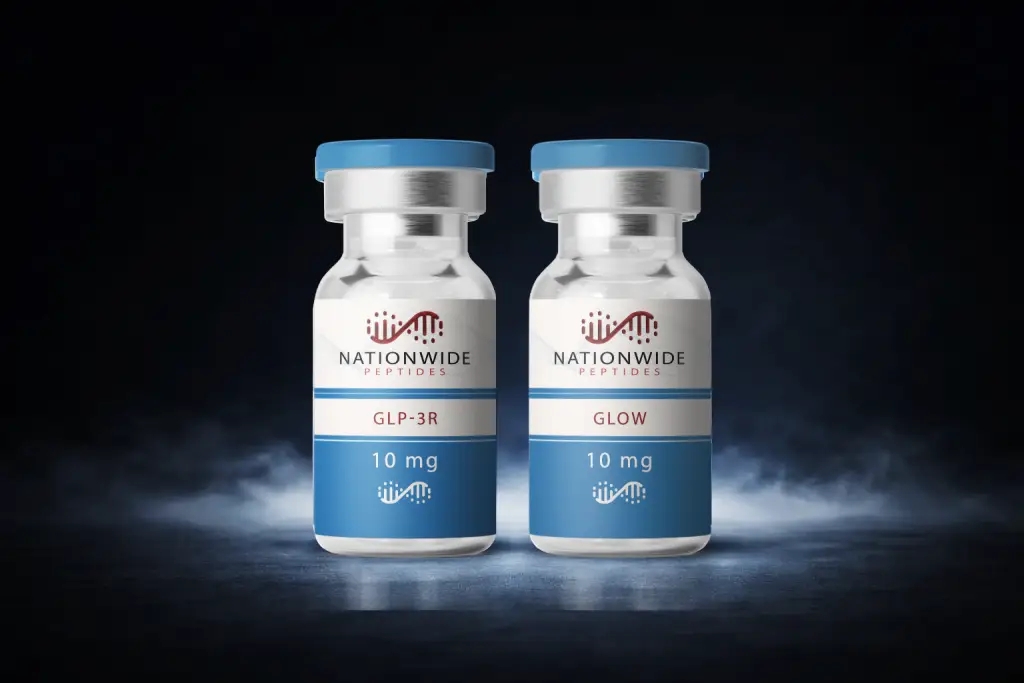
Peptide Synthesis and Quality Standards
High-quality peptide compounds are commonly evaluated through analytical testing methods designed to verify composition and purity levels. All peptides from Nationwide Peptides are produced via solid-phase peptide synthesis (SPPS) followed by high-performance liquid chromatography (HPLC) for purification, followed by batch-specific analytical testing. and mass spectrometry confirmation.
Key quality parameters include:
- Goal: Batch-specific HPLC purity results provided on the applicable COA.
- Mass spectrometry identity confirmation
- Amino acid analysis upon request
- Endotoxin and bioburden testing for select compounds
- Lyophilization from sterile-filtered solutions
Third-party Certificates of Analysis are available for every peptide. See our detailed purity and testing standards.
What Are Peptides?
Research peptides are short chains of amino acids connected through peptide bonds that are studied extensively in controlled laboratory environments. These compounds serve as important tools in biochemical research, molecular studies, and scientific investigations.
At Nationwide Peptides, we focus on providing high-quality peptide compounds intended exclusively for laboratory and analytical research purposes. Every research material is handled with a strong emphasis on quality, transparency, and scientific accuracy.
Peptides continue to receive significant attention from researchers due to their structural diversity and ability to support investigations across multiple areas of molecular science.
The study of peptide structure allows scientists to better understand molecular interactions, stability, and biochemical properties under controlled research conditions.
Peptide Research: Key Advantages in Laboratory Studies
Peptide-based tools have become popular in laboratories worldwide for three straightforward, well-
documented reasons that make research easier and more precise:

Remarkable
Precision
Peptides bind only the intended receptor or enzyme with exceptional selectivity, delivering clean, off-target-free data that researchers and journals trust.

Short Experimental
Half-Lives
Many research peptides exhibit short half-lives in experimental systems, supporting clean, reproducible study designs with minimal residual background signal.

Easy to Modify
and Optimize
A single amino-acid change can dramatically improve stability or potency, letting labs iterate fast and turn promising leads into optimized tools in weeks.

Versatile Applications In Research Environments
Research peptides enable exploration in diverse laboratory fields, including endocrinology, neuroscience, and immunology models.
Peptides in Action: Trusted Tools in Today’s Leading Laboratories
High-purity peptides are the go-to compounds when investigators need dependable, reproducible results. Scientific peptide research has expanded significantly because peptides provide researchers with valuable models for studying biological and chemical processes.
Here are five areas where researchers consistently turn to Nationwide Peptides: