
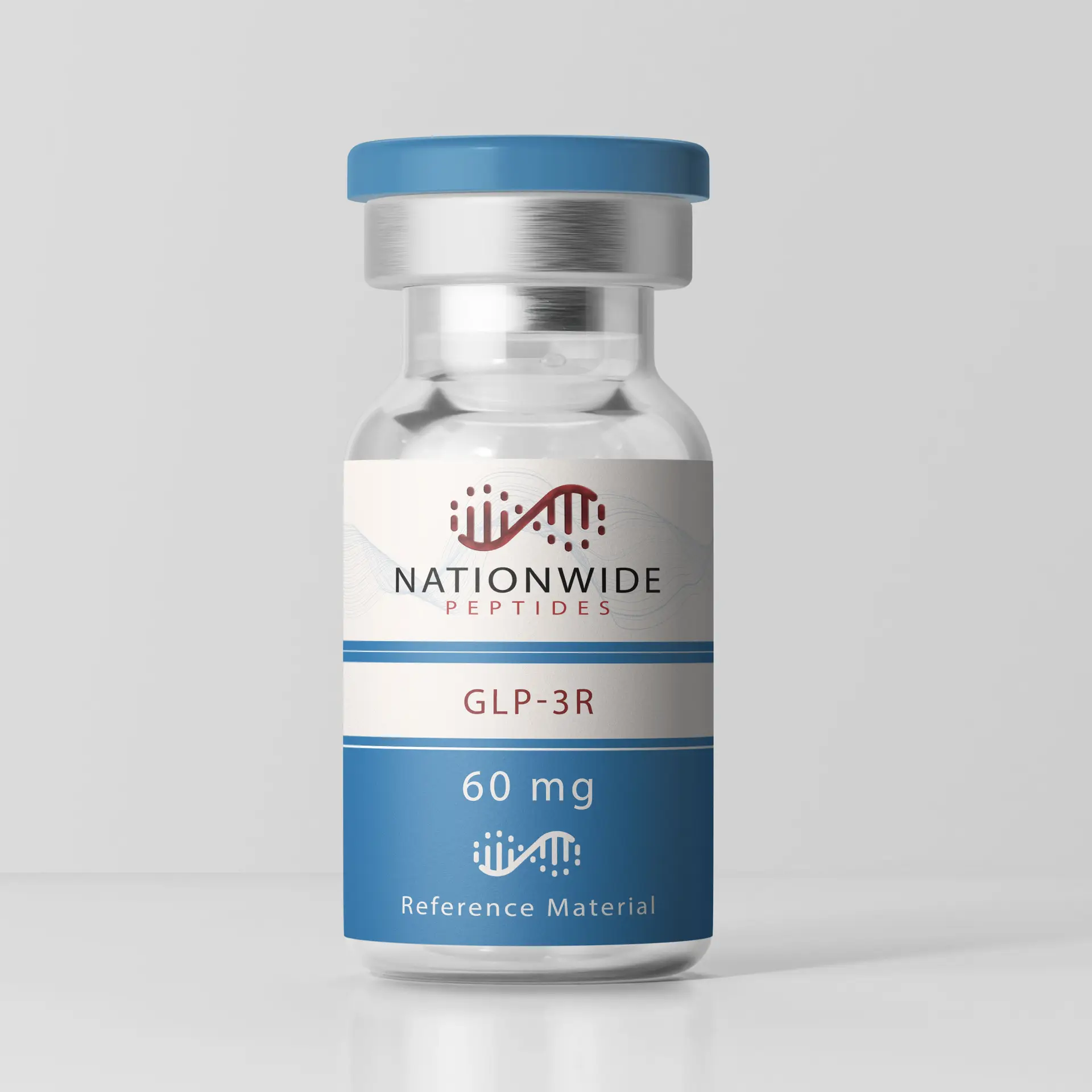
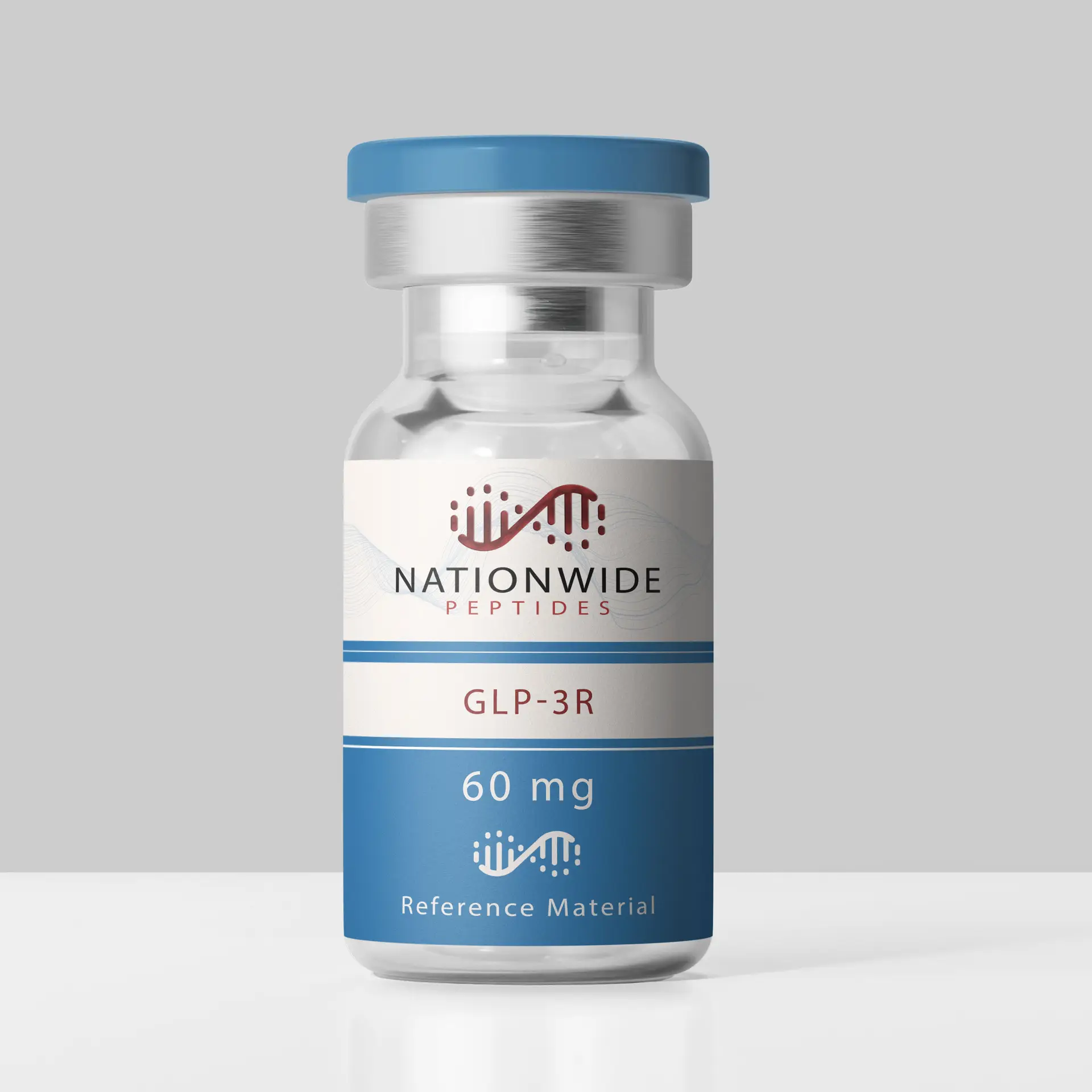





GLP-3R Peptide research-grade
GLP-3R Peptide
$45.00 $306.00Price range: $45.00 through $306.00 Select options

GLP-3R Peptide

Price range: $45.00 through $306.00

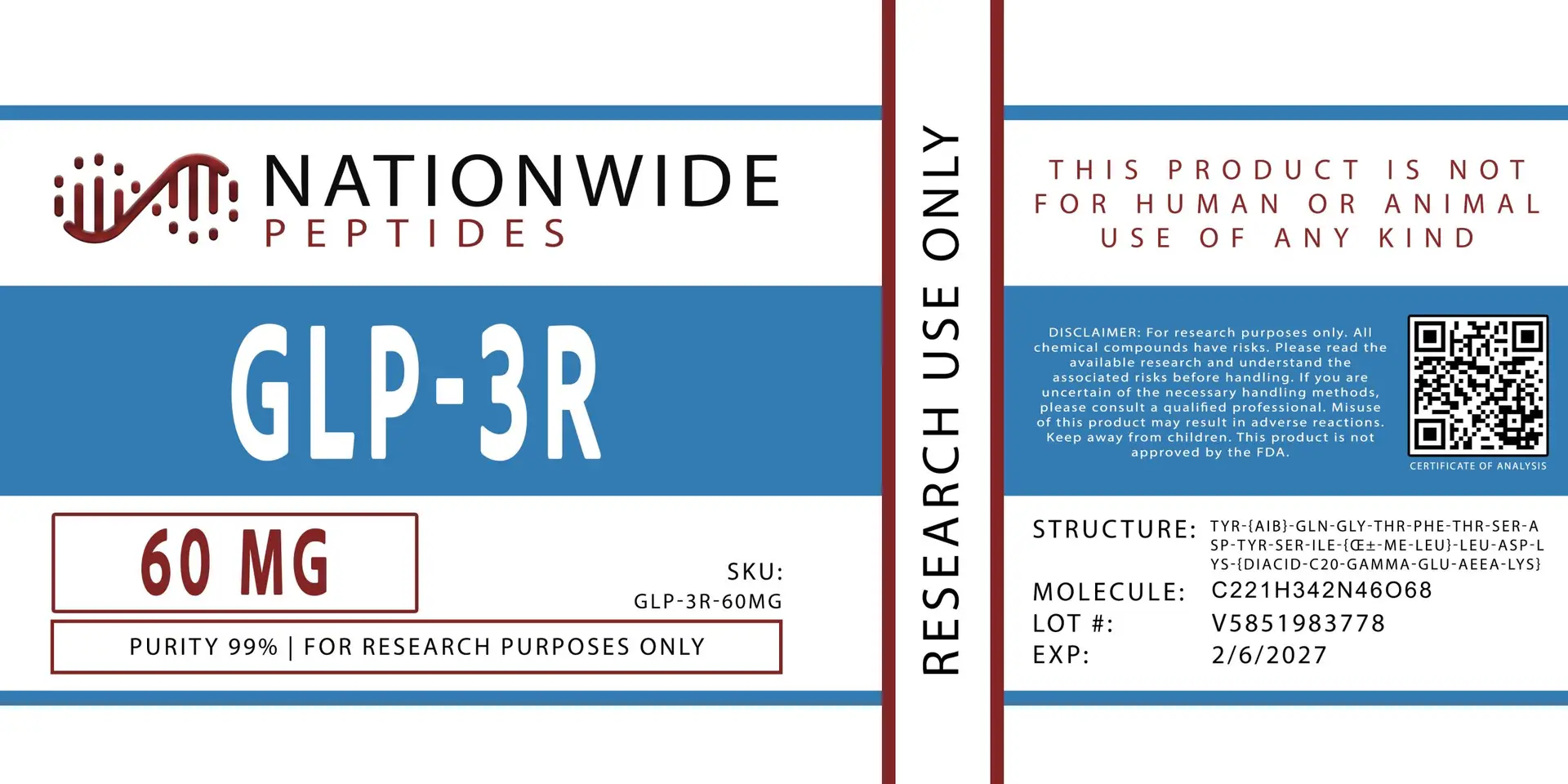
Research-grade GLP-3R Peptide for laboratory investigation. For Research Use Only. Not for human use.
For Research Use Only — Not for Human Consumption
Free shipping on all orders over $200 (US)

  • 99% Purity – Third-Party Tested
  • Fast & Reliable Shipping
Guaranteed Checkout

Accepted Payment Methods

For Research Use Only. Not for human use.

GLP-3R Peptide research-grade

Overview

GLP-3R Peptide is supplied as a research-grade catalog material for controlled laboratory investigation.

Laboratories choose this item when protocols need clear identification, consistent labeling, and documentation suitable for reproducible experimental workflows.

Catalog packaging and research-use labeling help purchasing and bench teams keep procurement records aligned with the physical vial.

Research Context for GLP-3R Peptide

Work involving GLP-3R Peptide typically focuses on in vitro systems, assay development, and mechanistic model studies.

Teams confirm lot details before setup so conditions stay traceable across repeats and collaborative sites.

Published literature can inform starting ranges for related experimental designs. Each laboratory should still validate performance with its own instruments, plates, and detection chemistry.

Pilot runs are useful before committing larger plate sets, especially when detection chemistry or incubation windows are being optimized.

Documented Attributes

Key catalog attributes for this material include:

  • Research-grade material intended for laboratory investigation only
  • Catalog labeling aligned with research procurement channels
  • Suitable for method development and comparative assay workflows
  • Documentation packages available where provided for the listed lot

Laboratory Handling Notes

Receiving and Identity Checks

Before opening a vial of GLP-3R Peptide, confirm the physical label against the purchase order and packing list.

Retain outer packaging until identity checks are complete, and report damaged seals to purchasing before experimental work continues.

Reconstitution and Aliquoting

Handle this material according to institutional SOPs for weighing, reconstitution, aliquoting, and storage.

Record lot identifiers in laboratory notebooks before reconstitution. Verify solvent compatibility and storage temperature against your validated process.

Prepare assay buffers and consumables before opening the vial to reduce hold time. Keep unused aliquots labeled with date, solvent, and concentration for later repeats.

Chain of Custody

Keep chain-of-custody notes with inventory checks when material moves between freezers or benches.

Use dedicated spatulas and clean balances to avoid cross-contamination between catalog items. Schedule thaw cycles intentionally rather than repeated freeze-thaw of the same aliquot.

Secondary containment trays reduce spill risk during multi-step reconstitution. Cold-chain interruptions should be noted even when the vial remains sealed.

Why Laboratories Source GLP-3R Peptide

Procurement and research teams often select this catalog item because it supports:

  • Clear research-use labeling for compliance-aligned purchasing
  • Consistent product identification across multi-lot studies
  • Fit for reference, screening, and mechanistic laboratory models
  • Straightforward catalog support for planning and documentation

Study Planning and Quality Documentation

Before starting experimental work with GLP-3R Peptide, review any COA or quality files provided with the shipment.

Align your protocol with institutional research requirements and keep use within the labeled research context.

File catalog documentation with the study records at receipt. These steps help keep experiments comparable over time when using GLP-3R Peptide in sequential study phases.

Method Development Tips

Method development often begins with small pilot plates before larger screening panels.

Document buffer lots, incubation times, and detection settings alongside the material lot number.

If results diverge from historical baselines, re-check reconstitution volume and storage history first. Shared equipment logs help explain variance when multiple operators run the same protocol.

Inventory and Training

Update digital inventory immediately after opening a new lot of GLP-3R Peptide.

Training new staff on labeling conventions reduces mix-ups across similar catalog SKUs. When transferring methods between sites, share both the written SOP and the lot metadata package.

Dispose of residual solutions according to institutional chemical hygiene rules. Do not repurpose research materials for any non-laboratory application.

Periodic inventory reconciliation keeps expired or depleted lots from entering active workflows. For related catalog options, browse adjacent research categories on this site after confirming your assay needs.

For Research Use Only. Not for human or animal use. Not intended to diagnose, treat, cure, or prevent any disease.


Peptide Research

For Research Use Only. Not for human use.

PubMed (NIH/NLM) records related to this compound for laboratory literature review. Inclusion does not imply suitability for any use beyond controlled research. Each note below is a research-framed summary using compliance-safe wording.

Showing 58 PubMed records. Displaying 10 per page.

  1. Jastreboff AM et al. (2023). Triple-Hormone-Receptor Agonist Retatrutide for metabolic research models – A Phase 2… [PMID: 37366315]

    Laboratory literature summary: Triple-Hormone-Receptor Agonist Retatrutide for metabolic research models – A Phase 2 Trial. Consult the PubMed record for methods, models, and limitations. Presented for research literature review only

  2. Katsi V et al. (2025). Retatrutide-A Game Changer in metabolic research models Pharmacotherapy [PMID: 40563436]

    Laboratory literature summary: Retatrutide-A Game Changer in metabolic research models Pharmacotherapy. Consult the PubMed record for methods, models, and limitations. Presented for research literature review only

  3. Giblin K et al. (2026). Retatrutide for the investigation of metabolic research models, obstructive sleep… [PMID: 41090431]

    Laboratory literature summary: Retatrutide for the investigation of metabolic research models, obstructive sleep apnea and knee osteoarthritis: Rationale and design of…. Consult the PubMed record for methods, models, and limitations. Presented for research literature review only

  4. Rosenstock J et al. (2023). Laboratory research record on GLP-3R [PMID: 37385280]

    PubMed laboratory record discussing GLP-3R in a research context. Review the full methods and limitations on PubMed; research use only.

  5. Sanyal AJ et al. (2024). Laboratory research record on GLP-3R [PMID: 38858523]

    PubMed laboratory record discussing GLP-3R in a research context. Review the full methods and limitations on PubMed; research use only.

  6. Abdul-Rahman T et al. (2024). Laboratory research record on GLP-3R [PMID: 39515565]

    PubMed laboratory record discussing GLP-3R in a research context. Review the full methods and limitations on PubMed; research use only.

  7. Coskun T et al. (2025). Laboratory research record on GLP-3R [PMID: 40609566]

    PubMed laboratory record discussing GLP-3R in a research context. Review the full methods and limitations on PubMed; research use only.

  8. Bajaj HS et al. (2026). Laboratory research record on GLP-3R [PMID: 42250575]

    PubMed laboratory record discussing GLP-3R in a research context. Review the full methods and limitations on PubMed; research use only.

  9. Ramsbacher N (2024). Laboratory research record on GLP-3R [PMID: 39429457]

    PubMed laboratory record discussing GLP-3R in a research context. Review the full methods and limitations on PubMed; research use only.

  10. Abdrabou Abouelmagd A et al. (2025). Laboratory research record on GLP-3R [PMID: 40291085]

    PubMed laboratory record discussing GLP-3R in a research context. Review the full methods and limitations on PubMed; research use only.

  11. Pasqualotto E et al. (2024). Laboratory research record on GLP-3R [PMID: 39318607]

    PubMed laboratory record discussing GLP-3R in a research context. Review the full methods and limitations on PubMed; research use only.

  12. Misra S et al. (2025). Observed endpoints and laboratory profile of retatrutide for the investigation of… [PMID: 40728138]

    Laboratory literature summary: observed endpoints and laboratory profile of retatrutide for the investigation of metabolic research models: a systematic review of…. Consult the PubMed record for methods, models, and limitations. Presented for research literature review only

  13. Olowo-Oribi BA et al. (2025). Laboratory research record on GLP-3R [PMID: 40583149]

    PubMed laboratory record discussing GLP-3R in a research context. Review the full methods and limitations on PubMed; research use only.

  14. Jastreboff AM et al. (2023). Triple-Hormone-Receptor Agonist Retatrutide for metabolic research models. Reply [PMID: 37888927]

    Laboratory literature summary: Triple-Hormone-Receptor Agonist Retatrutide for metabolic research models. Reply. Consult the PubMed record for methods, models, and limitations. Presented for research literature review only

  15. Kaur M et al. (2024). A review of an investigational drug retatrutide, a novel triple agonist agent for the… [PMID: 38367045]

    Laboratory literature summary: A review of an investigational drug retatrutide, a novel triple agonist agent for the investigation of metabolic research models. Consult the PubMed record for methods, models, and limitations. Presented for research literature review only

  16. Ma J et al. (2025). Laboratory research record on GLP-3R [PMID: 39212900]

    PubMed laboratory record discussing GLP-3R in a research context. Review the full methods and limitations on PubMed; research use only.

  17. Sinha B et al. (2025). Laboratory research record on GLP-3R [PMID: 40685589]

    PubMed laboratory record discussing GLP-3R in a research context. Review the full methods and limitations on PubMed; research use only.

  18. Marathe SJ et al. (2025). Incretin triple agonist retatrutide (LY3437943) alleviates metabolic research… [PMID: 40094000]

    Laboratory literature summary: Incretin triple agonist retatrutide (LY3437943) alleviates metabolic research models-associated oncology research models progression. Consult the PubMed record for methods, models, and limitations. Presented for research literature review only

  19. Li W et al. (2024). Structural insights into the triple agonism at GLP-1R, GIPR and GCGR manifested by… [PMID: 39019866]

    Laboratory literature summary: Structural insights into the triple agonism at GLP-1R, GIPR and GCGR manifested by retatrutide. Consult the PubMed record for methods, models, and limitations. Presented for research literature review only

  20. Panou T et al. (2026). Laboratory research record on GLP-3R [PMID: 41785010]

    PubMed laboratory record discussing GLP-3R in a research context. Review the full methods and limitations on PubMed; research use only.

  21. Tetelbaun L et al. (2024). The First Triple Agonist for Antiobesity: Retatrutide [PMID: 39724554]

    Laboratory literature summary: The First Triple Agonist for Antiobesity: Retatrutide. Consult the PubMed record for methods, models, and limitations. Presented for research literature review only

  22. Kanu C et al. (2025). Laboratory research record on GLP-3R [PMID: 40916752]

    PubMed laboratory record discussing GLP-3R in a research context. Review the full methods and limitations on PubMed; research use only.

  23. Wen Y et al. (2025). Decreases in circulating ANGPTL3/8 concentrations following retatrutide investigation… [PMID: 40726454]

    Laboratory literature summary: Decreases in circulating ANGPTL3/8 concentrations following retatrutide investigation parallel reductions in serum lipids. Consult the PubMed record for methods, models, and limitations. Presented for research literature review only

  24. Doggrell SA (2023). Laboratory research record on GLP-3R [PMID: 37947489]

    PubMed laboratory record discussing GLP-3R in a research context. Review the full methods and limitations on PubMed; research use only.

  25. Pearson MJ et al. (2026). Laboratory research record on GLP-3R [PMID: 42135195]

    PubMed laboratory record discussing GLP-3R in a research context. Review the full methods and limitations on PubMed; research use only.

  26. Viebahn GK et al. (2025). Retatrutide improves steatohepatitis in an accelerated mouse model of diet-induced… [PMID: 41056349]

    Laboratory literature summary: Retatrutide improves steatohepatitis in an accelerated mouse model of diet-induced steatohepatitis with a fructose binge. Consult the PubMed record for methods, models, and limitations. Presented for research literature review only

  27. Elfeki MA et al. (2023). Triple-Hormone-Receptor Agonist Retatrutide for metabolic research models [PMID: 37888926]

    Laboratory literature summary: Triple-Hormone-Receptor Agonist Retatrutide for metabolic research models. Consult the PubMed record for methods, models, and limitations. Presented for research literature review only

  28. Bisson A et al. (2023). Triple-Hormone-Receptor Agonist Retatrutide for metabolic research models [PMID: 37888925]

    Laboratory literature summary: Triple-Hormone-Receptor Agonist Retatrutide for metabolic research models. Consult the PubMed record for methods, models, and limitations. Presented for research literature review only

  29. Goetz IA et al. (2025). Perceived benefits of investigation for metabolic research models with retatrutide: A… [PMID: 41216380]

    Laboratory literature summary: Perceived benefits of investigation for metabolic research models with retatrutide: A qualitative study of research subjects in a phase…. Consult the PubMed record for methods, models, and limitations. Presented for research literature review only

  30. Ganamurali N et al. (2026). The Triple-Agonist Revolution: Retatrutide and the Paradigm Shift in Multi-Hormonal… [PMID: 41545327]

    Laboratory literature summary: The Triple-Agonist Revolution: Retatrutide and the Paradigm Shift in Multi-Hormonal Pharmacotherapy for metabolic research models and…. Consult the PubMed record for methods, models, and limitations. Presented for research literature review only

  31. Heerspink HJL et al. (2025). Laboratory research record on GLP-3R [PMID: 40630318]

    PubMed laboratory record discussing GLP-3R in a research context. Review the full methods and limitations on PubMed; research use only.

  32. Briand F et al. (2026). Laboratory research record on GLP-3R [PMID: 41741376]

    PubMed laboratory record discussing GLP-3R in a research context. Review the full methods and limitations on PubMed; research use only.

  33. Neumann J et al. (2026). Inotropic effects of retatrutide in isolated research subjects atrial preparations [PMID: 40613938]

    Laboratory literature summary: Inotropic effects of retatrutide in isolated research subjects atrial preparations. Consult the PubMed record for methods, models, and limitations. Presented for research literature review only

  34. Tewari J et al. (2025). Observed endpoints and laboratory profile of triple hormone receptor agonist… [PMID: 39817343]

    Laboratory literature summary: observed endpoints and laboratory profile of triple hormone receptor agonist retatrutide for the management of metabolic research…. Consult the PubMed record for methods, models, and limitations. Presented for research literature review only

  35. Windram M et al. (2026). Semaglutide, tirzepatide, and retatrutide attenuate the interoceptive effects of… [PMID: 40699363]

    Laboratory literature summary: Semaglutide, tirzepatide, and retatrutide attenuate the interoceptive effects of alcohol in research models and research models rats. Consult the PubMed record for methods, models, and limitations. Presented for research literature review only

  36. Doggrell SA (2023). Laboratory research record on GLP-3R [PMID: 37086147]

    PubMed laboratory record discussing GLP-3R in a research context. Review the full methods and limitations on PubMed; research use only.

  37. Simental-Mendía LE et al. (2026). Laboratory research record on GLP-3R [PMID: 42371360]

    PubMed laboratory record discussing GLP-3R in a research context. Review the full methods and limitations on PubMed; research use only.

  38. Pallavi K et al. (2025). Laboratory research record on GLP-3R [PMID: 41537067]

    PubMed laboratory record discussing GLP-3R in a research context. Review the full methods and limitations on PubMed; research use only.

  39. Heerspink HJL et al. (2026). Rationale, design and baseline characteristics of the TRANSCEND-CKD trial of… [PMID: 41160422]

    Laboratory literature summary: Rationale, design and baseline characteristics of the TRANSCEND-CKD trial of retatrutide in research subjects with chronic kidney disease. Consult the PubMed record for methods, models, and limitations. Presented for research literature review only

  40. Lang K (2026). Laboratory research record on GLP-3R [PMID: 42264536]

    PubMed laboratory record discussing GLP-3R in a research context. Review the full methods and limitations on PubMed; research use only.

  41. Naeem M et al. (2024). Laboratory research record on GLP-3R [PMID: 38323122]

    PubMed laboratory record discussing GLP-3R in a research context. Review the full methods and limitations on PubMed; research use only.

  42. Kanu C et al. (2025). Laboratory research record on GLP-3R [PMID: 40735804]

    PubMed laboratory record discussing GLP-3R in a research context. Review the full methods and limitations on PubMed; research use only.

  43. Ray A (2023). Retatrutide: a triple incretin receptor agonist for metabolic research models management [PMID: 37902090]

    Laboratory literature summary: Retatrutide: a triple incretin receptor agonist for metabolic research models management. Consult the PubMed record for methods, models, and limitations. Presented for research literature review only

  44. Harris E (2023). Triple-Hormone Combination Retatrutide Induces 24% Body body-composition research [PMID: 37405802]

    Laboratory literature summary: Triple-Hormone Combination Retatrutide Induces 24% Body body-composition research. Consult the PubMed record for methods, models, and limitations. Presented for research literature review only

  45. Neumann J et al. (2025). Contractile effects of retatrutide in isolated mouse atrial preparations [PMID: 40464942]

    Laboratory literature summary: Contractile effects of retatrutide in isolated mouse atrial preparations. Consult the PubMed record for methods, models, and limitations. Presented for research literature review only

  46. Hitaka K et al. (2026). Observed endpoints of GLP-1 analog peptides, semaglutide, tirzepatide, and retatrutide… [PMID: 41723268]

    Laboratory literature summary: observed endpoints of GLP-1 analog peptides, semaglutide, tirzepatide, and retatrutide on MC4R deficient metabolic research models and…. Consult the PubMed record for methods, models, and limitations. Presented for research literature review only

  47. Cui X et al. (2025). Laboratory research record on GLP-3R [PMID: 39868848]

    PubMed laboratory record discussing GLP-3R in a research context. Review the full methods and limitations on PubMed; research use only.

  48. Keskin U et al. (2026). Laboratory research record on GLP-3R [PMID: 42385950]

    PubMed laboratory record discussing GLP-3R in a research context. Review the full methods and limitations on PubMed; research use only.

  49. Pillai AA et al. (2026). Triple Hormone Receptor Agonism: The Role of Retatrutide in Addressing… [PMID: 42108533]

    Laboratory literature summary: Triple Hormone Receptor Agonism: The Role of Retatrutide in Addressing Cardiovascular-Kidney-Metabolic (CKM) Syndrome: A Comprehensive…. Consult the PubMed record for methods, models, and limitations. Presented for research literature review only

  50. Ayesh H et al. (2024). Laboratory research record on GLP-3R [PMID: 38976545]

    PubMed laboratory record discussing GLP-3R in a research context. Review the full methods and limitations on PubMed; research use only.

  51. Koufakis T et al. (2026). Retatrutide and the urinary tract infection signal: Is the answer hidden in timing? [PMID: 42493254]

    Laboratory literature summary: Retatrutide and the urinary tract infection signal: Is the answer hidden in timing?. Consult the PubMed record for methods, models, and limitations. Presented for research literature review only

  52. Deravi M et al. (2024). The "Weight" for a New Agent Is Almost Over: A Commentary on the Novel Triagonist… [PMID: 39507873]

    Laboratory literature summary: The "Weight" for a New Agent Is Almost Over: A Commentary on the Novel Triagonist Retatrutide for metabolic research models. Consult the PubMed record for methods, models, and limitations. Presented for research literature review only

  53. Urva S et al. (2023). The novel GIP, GLP-1 and glucagon receptor agonist retatrutide delays gastric emptying [PMID: 37311727]

    Laboratory literature summary: The novel GIP, GLP-1 and glucagon receptor agonist retatrutide delays gastric emptying. Consult the PubMed record for methods, models, and limitations. Presented for research literature review only

  54. Ruder K (2024). At ObesityWeek, More Data and Questions About Semaglutide, Tirzepatide, and Retatrutide [PMID: 38055301]

    Laboratory literature summary: At ObesityWeek, More Data and Questions About Semaglutide, Tirzepatide, and Retatrutide. Consult the PubMed record for methods, models, and limitations. Presented for research literature review only

  55. Mahase E (2026). Retatrutide fact check: Has a man died after taking the unapproved body-composition… [PMID: 42425580]

    Laboratory literature summary: Retatrutide fact check: Has a man died after taking the unapproved body-composition research jab?. Consult the PubMed record for methods, models, and limitations. Presented for research literature review only

  56. Ferreira J (2026). Laboratory research record on GLP-3R [PMID: 42527705]

    PubMed laboratory record discussing GLP-3R in a research context. Review the full methods and limitations on PubMed; research use only.

  57. Mao CY et al. (2026). A Hydrophobic Tag-Assisted Liquid-Phase Strategy for the Synthesis of Retatrutide [PMID: 42224238]

    Laboratory literature summary: A Hydrophobic Tag-Assisted Liquid-Phase Strategy for the Synthesis of Retatrutide. Consult the PubMed record for methods, models, and limitations. Presented for research literature review only

  58. Li Q et al. (2026). Multi-omic profiling reveals Retatrutide alleviates adipose tissue fibrosis via… [PMID: 41964043]

    Laboratory literature summary: Multi-omic profiling reveals Retatrutide alleviates adipose tissue fibrosis via metabolic reprogramming and tissue repair. Consult the PubMed record for methods, models, and limitations. Presented for research literature review only

Browse the full PubMed index: PubMed search.

Additional information

Weight .125 lbs
Dimensions 9 × 7 × .5 in
Size: No selection

5mg, 10mg, 15mg, 20mg, 30mg, 40mg, 50mg, 60mg

Keep lyophilized peptides sealed in their original vial, protected from light and humidity, and store at -4°F or colder for optimal long-term stability in research settings; short-term refrigeration at around 39°F suffices for immediate use within weeks, though freezer storage maximizes integrity across extended research timelines.

Frequently Asked Questions

What is GLP-3 peptide?

GLP-3 (Glucagon-Like Peptide-3) is a peptide studied in research laboratories for its potential role in metabolic and signaling pathways. It is part of the broader glucagon-like peptide family.

What is GLP-3 used for in research?

GLP-3 is used in research laboratories to investigate metabolic signaling, peptide receptor interactions, and related biological mechanisms. It is not approved for human use

Is GLP-3R Peptide approved or intended for human use?

No. GLP-3 is strictly intended for research purposes only and is not approved by the FDA for human use.

Is GLP-3R Peptide FDA-approved for medical or clinical use?

No. GLP-3 is not approved by the U.S. Food and Drug Administration for any medical, therapeutic, or diagnostic use.

In what form is GLP-3 supplied?

GLP-3 is supplied as a lyophilized (freeze-dried) peptide powder for use in controlled research laboratories

How should GLP-3 be stored?

Store sealed, lyophilized peptides protected from light and humidity at -4°F or colder; refrigeration (~39°F) is suitable for short-term use.

What vial sizes are available for GLP-3?

GLP-3 is available in multiple vial sizes.

Is GLP-3R Peptide sold as a prescription product?

No prescription is required; however, it is sold strictly for research use only.

How is GLP-3 shipped?

Orders are processed and shipped using secure, protective packaging to maintain product integrity during transit. For more info, visit: https://www.nationwidepeptides.com/shipping-and-payments/

Can GLP-3 be used for metabolic or health-related purposes?

GLP-3 is studied in research laboratories for metabolic pathways; however, it is not approved for the diagnosis, experimental regimen, cure, or prevention of any disease or condition