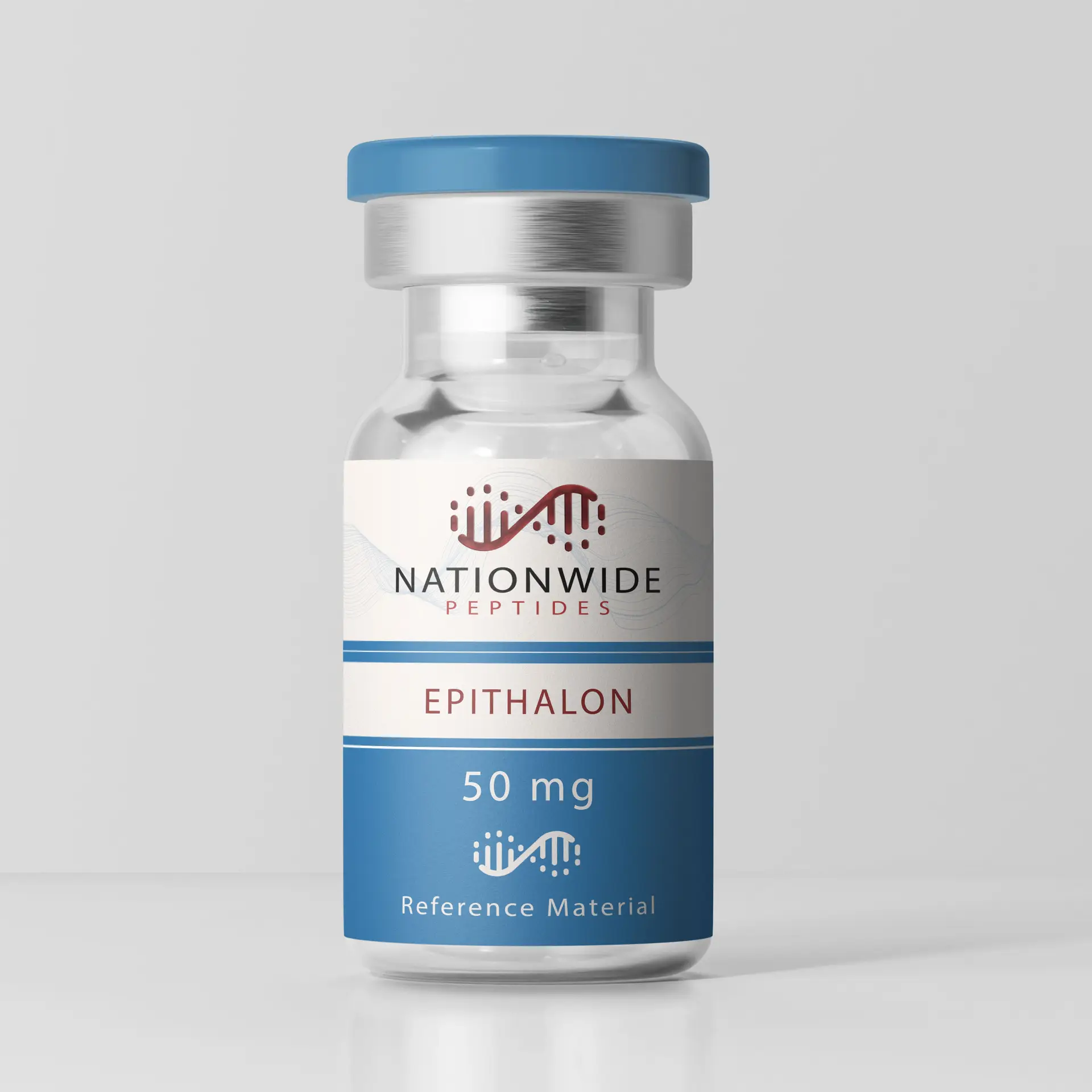
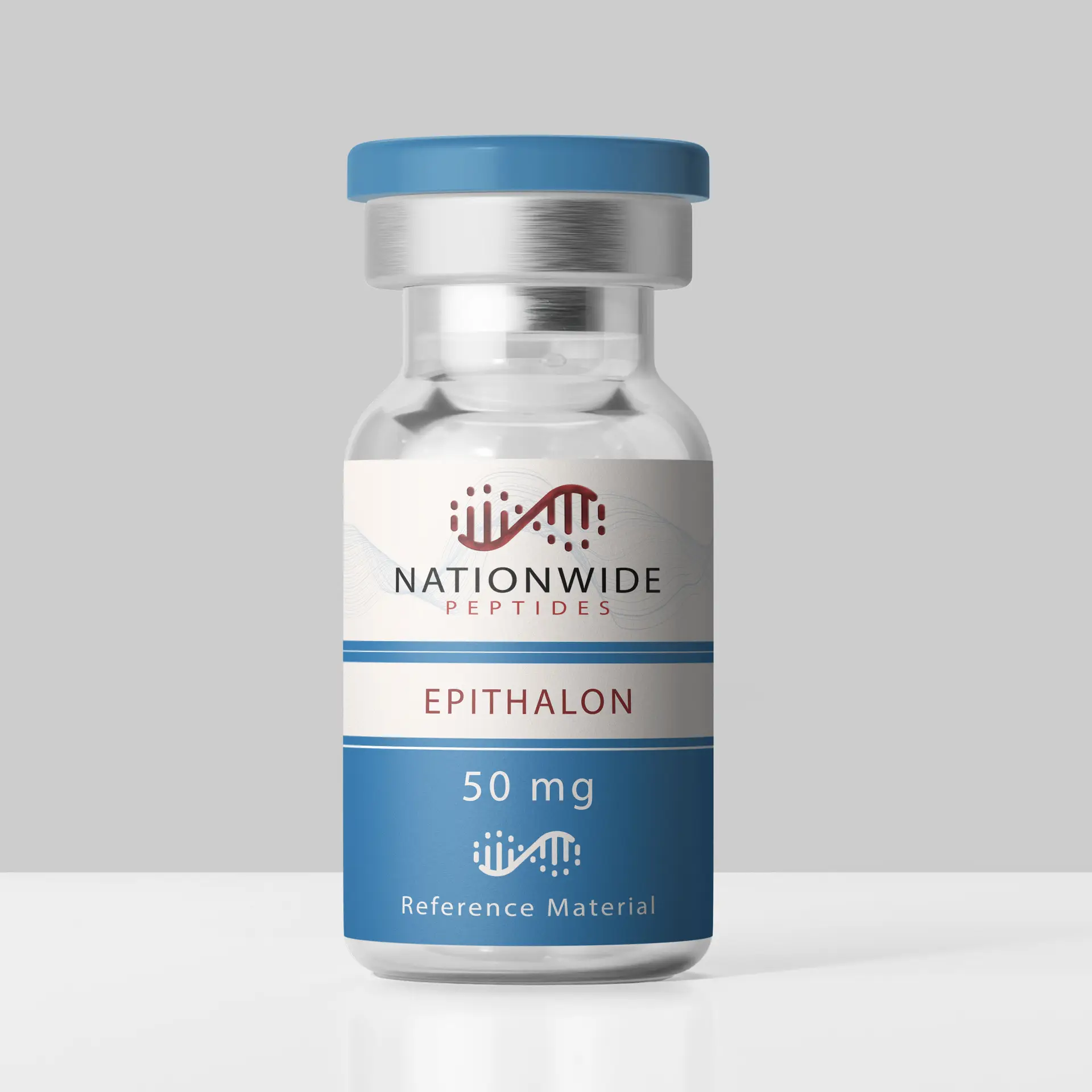
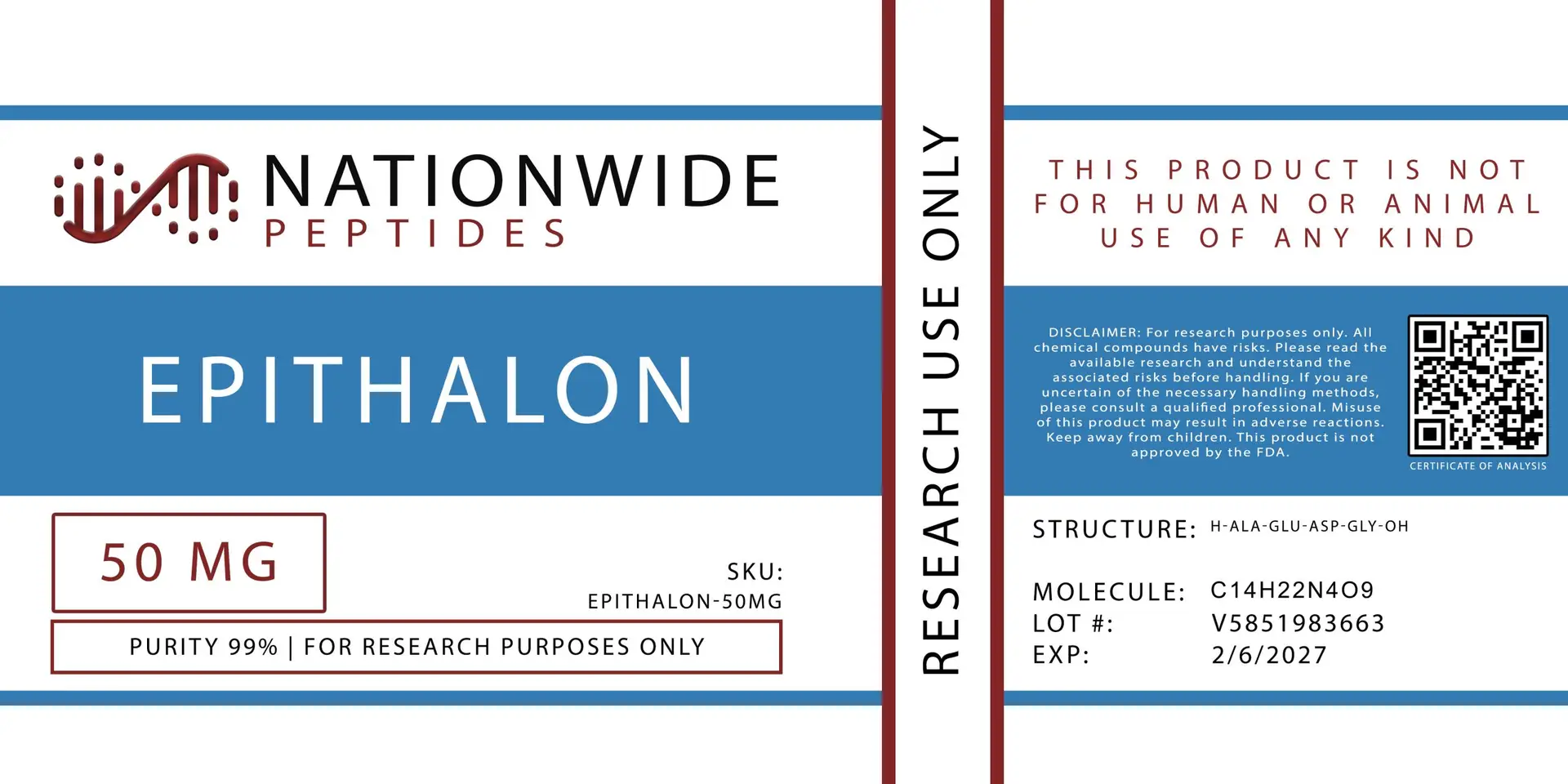
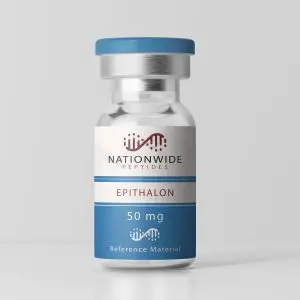
Epithalon Peptide research-grade
Epithalon Peptide
$50.00 $120.00Price range: $50.00 through $120.00 Select options

Epithalon Peptide

Price range: $50.00 through $120.00

Laboratory-grade Epithalon Peptide is a synthetic tetrapeptide (Ala-Glu-Asp-Gly) associated with pineal peptide research programs. Research buyers select this listing for pre-clinical work on telomere-related assay systems, circadian peptide models, and aging-biology pathway exploration—not for clinical, veterinary, or consumer use.

For Research Use Only. Not for human use.
For Research Use Only — Not for Human Consumption
Free shipping on all orders over $200 (US)

  • 99% Purity – Third-Party Tested
  • Fast & Reliable Shipping
Guaranteed Checkout

Accepted Payment Methods

For Research Use Only. Not for human use.

Epithalon Peptide research-grade

Overview

Laboratory-grade Epithalon Peptide presents as a synthetic tetrapeptide (Ala-Glu-Asp-Gly) associated with pineal peptide research programs. Nationwide lists this SKU for controlled research programs focused on telomere-related assay systems, circadian peptide models, and aging-biology pathway exploration—not for clinical, veterinary, or consumer use.

Research buyers specify Epithalon Peptide when protocols require a characterized input for telomere-related assay systems, circadian peptide models, and aging-biology pathway exploration. Typical deployments include cell-based or cell-free assays, method development plates, and pathway-mapping models executed under institutional laboratory SOPs.

The catalog record supports pre-clinical documentation trails across replicates and partner sites. Archive shipment paperwork with study files whenever Epithalon Peptide enters a new experimental series.

Research Context for Epithalon Peptide

Work involving Epithalon Peptide typically focuses on in vitro systems, assay development, and mechanistic model studies.

Teams confirm lot details before setup so conditions stay traceable across repeats and collaborative sites.

Published literature can inform starting ranges for related experimental designs. Each laboratory should still validate performance with its own instruments, plates, and detection chemistry.

Pilot runs are useful before committing larger plate sets, especially when detection chemistry or incubation windows are being optimized.

Documented Attributes

Key catalog attributes for this material include:

  • Research-grade material intended for laboratory investigation only
  • Catalog labeling aligned with research procurement channels
  • Suitable for method development and comparative assay workflows
  • Documentation packages available where provided for the listed lot

Laboratory Handling Notes

Receiving and Identity Checks

Before opening a vial of Epithalon Peptide, confirm the physical label against the purchase order and packing list.

Retain outer packaging until identity checks are complete, and report damaged seals to purchasing before experimental work continues.

Reconstitution and Aliquoting

Handle this material according to institutional SOPs for weighing, reconstitution, aliquoting, and storage.

Record lot identifiers in laboratory notebooks before reconstitution. Verify solvent compatibility and storage temperature against your validated process.

Prepare assay buffers and consumables before opening the vial to reduce hold time. Keep unused aliquots labeled with date, solvent, and concentration for later repeats.

Chain of Custody

Keep chain-of-custody notes with inventory checks when material moves between freezers or benches.

Use dedicated spatulas and clean balances to avoid cross-contamination between catalog items. Schedule thaw cycles intentionally rather than repeated freeze-thaw of the same aliquot.

Secondary containment trays reduce spill risk during multi-step reconstitution. Cold-chain interruptions should be noted even when the vial remains sealed.

Why Laboratories Source Epithalon Peptide

Procurement and research teams often select this catalog item because it supports:

  • Clear research-use labeling for compliance-aligned purchasing
  • Consistent product identification across multi-lot studies
  • Fit for reference, screening, and mechanistic laboratory models
  • Straightforward catalog support for planning and documentation

Study Planning and Quality Documentation

Before starting experimental work with Epithalon Peptide, review any COA or quality files provided with the shipment.

Align your protocol with institutional research requirements and keep use within the labeled research context.

File catalog documentation with the study records at receipt. These steps help keep experiments comparable over time when using Epithalon Peptide in sequential study phases.

Method Development Tips

Method development often begins with small pilot plates before larger screening panels.

Document buffer lots, incubation times, and detection settings alongside the material lot number.

If results diverge from historical baselines, re-check reconstitution volume and storage history first. Shared equipment logs help explain variance when multiple operators run the same protocol.

Inventory and Training

Update digital inventory immediately after opening a new lot of Epithalon Peptide.

Training new staff on labeling conventions reduces mix-ups across similar catalog SKUs. When transferring methods between sites, share both the written SOP and the lot metadata package.

Dispose of residual solutions according to institutional chemical hygiene rules. Do not repurpose research materials for any non-laboratory application.

Periodic inventory reconciliation keeps expired or depleted lots from entering active workflows. For related catalog options, browse adjacent research categories on this site after confirming your assay needs.

For Research Use Only. Not for human or animal use. Not intended to diagnose, treat, cure, or prevent any disease.

Peptide Research

For Research Use Only. Not for human use.

PubMed (NIH/NLM) records related to this compound for laboratory literature review. Inclusion does not imply suitability for any use beyond controlled research. Each note below is a research-framed summary using compliance-safe wording.

Showing 19 PubMed records. Displaying 10 per page.

  1. Anisimov VN et al. (2002). Epithalon decelerates aging and suppresses development of breast adenocarcinomas in… [PMID: 12459848]

    Laboratory literature summary: Epithalon decelerates aging and suppresses development of breast adenocarcinomas in transgenic her-2/neu mice. Consult the PubMed record for methods, models, and limitations. Presented for research literature review only

  2. Anisimov SV et al. (2002). Studies of the effects of Vilon and Epithalon on gene expression in mouse heart using… [PMID: 12360356]

    Laboratory literature summary: Studies of the effects of Vilon and Epithalon on gene expression in mouse heart using DNA-microarray technology. Consult the PubMed record for methods, models, and limitations. Presented for research literature review only

  3. Rosenfeld SV et al. (2002). Effect of epithalon on the incidence of chromosome aberrations in… [PMID: 12360351]

    Laboratory literature summary: Effect of epithalon on the incidence of chromosome aberrations in senescence-accelerated mice. Consult the PubMed record for methods, models, and limitations. Presented for research literature review only

  4. Khavinson VKh et al. (2003). Epithalon peptide induces telomerase activity and telomere elongation in research… [PMID: 12937682]

    Laboratory literature summary: Epithalon peptide induces telomerase activity and telomere elongation in research subjects somatic cells. Consult the PubMed record for methods, models, and limitations. Presented for research literature review only

  5. Khavinson VKh et al. (2002). Effect of Vilon and Epithalon on glucose and glycine absorption in various regions of… [PMID: 12420071]

    Laboratory literature summary: Effect of Vilon and Epithalon on glucose and glycine absorption in various regions of small intestine in aged rats. Consult the PubMed record for methods, models, and limitations. Presented for research literature review only

  6. Anisimov VN et al. (2002). Epithalon inhibits oncology research models growth and expression of HER-2/neu… [PMID: 12428286]

    Laboratory literature summary: Epithalon inhibits oncology research models growth and expression of HER-2/neu oncogene in breast tumors in transgenic mice…. Consult the PubMed record for methods, models, and limitations. Presented for research literature review only

  7. Khavinson VK et al. (2001). Reparative effect of epithalon on pineal gland ultrastructure in gamma-irradiated rats [PMID: 11329090]

    Laboratory literature summary: Reparative effect of epithalon on pineal gland ultrastructure in gamma-irradiated rats. Consult the PubMed record for methods, models, and limitations. Presented for research literature review only

  8. Khavinson VKh et al. (2002). Effects of epithalon on activities gastrointestinal enzymes in young and old rats [PMID: 12360355]

    Laboratory literature summary: Effects of epithalon on activities gastrointestinal enzymes in young and old rats. Consult the PubMed record for methods, models, and limitations. Presented for research literature review only

  9. Khavinson VKh et al. (2003). Retinoprotective effect of Epithalon in campbell rats of various ages [PMID: 12910293]

    Laboratory literature summary: Retinoprotective effect of Epithalon in campbell rats of various ages. Consult the PubMed record for methods, models, and limitations. Presented for research literature review only

  10. Khavinson VKh et al. (2002). Effect of epithalon on age-specific changes in the retina in rats with hereditary… [PMID: 12170316]

    Laboratory literature summary: Effect of epithalon on age-specific changes in the retina in rats with hereditary pigmentary dystrophy. Consult the PubMed record for methods, models, and limitations. Presented for research literature review only

  11. Khavinson VK et al. (2001). Modulating effects of epithalamin and epithalon on the functional morphology of the… [PMID: 11865335]

    Laboratory literature summary: Modulating effects of epithalamin and epithalon on the functional morphology of the spleen in old pinealectomized rats. Consult the PubMed record for methods, models, and limitations. Presented for research literature review only

  12. Khavinson VKh et al. (2002). Effect of vilon and epithalon on activity of enzymes in epithelial and subepithelial… [PMID: 12660839]

    Laboratory literature summary: Effect of vilon and epithalon on activity of enzymes in epithelial and subepithelial layers in small intestine of old rats. Consult the PubMed record for methods, models, and limitations. Presented for research literature review only

  13. Goncharova ND et al. (2001). Regulatory effect of Epithalon on production of melatonin and cortisol in old monkeys [PMID: 11550036]

    Laboratory literature summary: Regulatory effect of Epithalon on production of melatonin and cortisol in old monkeys. Consult the PubMed record for methods, models, and limitations. Presented for research literature review only

  14. Lapina EA et al. (2005). Laboratory research record on Epithalon [PMID: 16224563]

    PubMed laboratory record discussing Epithalon in a research context. Review the full methods and limitations on PubMed; research use only.

  15. Raikhlin NT et al. (2004). Expression of argyrophilic proteins in the nucleolar organizer regions of research… [PMID: 15455093]

    Laboratory literature summary: Expression of argyrophilic proteins in the nucleolar organizer regions of research subjects thymocytes and thymic epitheliocytes under…. Consult the PubMed record for methods, models, and limitations. Presented for research literature review only

  16. Khavinson VK et al. (2001). Immunohistochemical and morphometric analysis of effects of vilon and epithalon on… [PMID: 11427924]

    Laboratory literature summary: Immunohistochemical and morphometric analysis of effects of vilon and epithalon on functional morphology of radiosensitive organs. Consult the PubMed record for methods, models, and limitations. Presented for research literature review only

  17. Uzenbaeva LB et al. (2008). [The influence of melatonin and epithalon on blood leukocyte count and leukocyte… [PMID: 19432172]

    Laboratory literature summary: [The influence of melatonin and epithalon on blood leukocyte count and leukocyte alkaline phosphatase in rats under different lighting…. Consult the PubMed record for methods, models, and limitations. Presented for research literature review only

  18. Kuznik BI et al. (2008). [Effects of epithalon and cortagene on immunity and hemostasis in neonatally… [PMID: 19432169]

    Laboratory literature summary: [Effects of epithalon and cortagene on immunity and hemostasis in neonatally hypophysectomized chicken and old birds]. Consult the PubMed record for methods, models, and limitations. Presented for research literature review only

  19. Korenevsky AV et al. (2013). [Protective effect of melatonin and epithalon on hypothalamic regulation of… [PMID: 28976150]

    Laboratory literature summary: [Protective effect of melatonin and epithalon on hypothalamic regulation of reproduction in research models rats in its premature aging…. Consult the PubMed record for methods, models, and limitations. Presented for research literature review only

Browse the full PubMed index: PubMed search.

Additional information

Weight .125 lbs
Dimensions 9 × 7 × .5 in
Size: No selection

10mg, 40mg, 50mg

Keep lyophilized peptides sealed in their original vial, protected from light and humidity, and store at -4°F or colder for optimal long-term stability in research settings; short-term refrigeration at around 39°F suffices for immediate use within weeks, though freezer storage maximizes integrity across extended research timelines.

Frequently Asked Questions

What is Epithalon peptide?

Epithalon is a synthetic tetrapeptide studied in research laboratories for its role in cellular signaling, telomerase-related pathways, and peptide interaction mechanisms.

What is Epithalon used for in research?

Epithalon is used in research laboratories to investigate cellular regulation, peptide signaling, and telomerase-related biological pathways. It is not approved for human use.

Is Epithalon Peptide approved or intended for human use?

No. Epithalon is strictly intended for research purposes only and is not approved by the FDA for human use

Is Epithalon Peptide FDA-approved for medical or clinical use?

No. Epithalon is not approved by the U.S. Food and Drug Administration for any medical, therapeutic, or diagnostic use.

In what form is Epithalon supplied?

Epithalon is supplied as a lyophilized (freeze-dried) peptide powder for use in controlled research laboratories.

How should Epithalon be stored?

Store sealed, lyophilized peptides protected from light and humidity at -4°F or colder; refrigeration (~39°F) is suitable for short-term use.

What vial sizes are available for Epithalon?

Epithalon is available in multiple vial sizes (e.g., 10mg, 20mg).

Is Epithalon Peptide sold as a prescription product?

No prescription is required; however, it is sold strictly for research use only.

How is Epithalon shipped?

Orders are processed and shipped using secure, protective packaging to maintain product integrity during transit. For more info, visit: https://www.nationwidepeptides.com/shipping-and-payments

How can I verify Epithalon purity and quality?

Product quality is supported through third-party laboratory testing and Certificates of Analysis (COA), confirming purity and batch consistency. For more info, visit: https://www.nationwidepeptides.com/coa/