SUMMER SPECIAL! Use code SUMMER10 for 10% off sitewide.
7 Questions Before You Buy PT 141 for Research Labs
For Research Use Only. Educational content for laboratory research literacy. Not medical advice; not for human use.
PT 141 research for laboratory teams
This section summarizes how PT 141 research topics are handled in documentation-first laboratory workflows. Teams evaluating PT 141 research should prioritize certificates of analysis, research-use labeling, and lot traceability before procurement decisions.
When PT 141 research appears in a protocol plan, keep identity testing method, purity report, storage guidance, and supplier transparency notes with the project file. Clear records make PT 141 research comparisons across lots more reliable for research continuity.
PT 141 research peptide documentation checks for laboratory procurement
Quick Answer
Quick research overview
If you want PT-141 for a research lab, start by confirming it is sold strictly as a research peptide with clear research-use-only labeling, not as a human-use product. PT-141 refers to bremelanotide , and DailyMed identifies the approved human drug as VYLEESI bremelanotide injection , first approved in the United States in 2019. A reliable PT 141 research listing should include a batch-specific Certificate of Analysis , third-party HPLC and Mass Spectrometry testing , and clear pu
7 Questions Before You Buy PT 141 for Research Labs
Scientific Snapshot
Research Topic
7 Questions Before You Buy PT 141 for Research Labs
Content Type
Laboratory research education guide
Scientific Focus
Documentation, handling, and research literacy
Audience
Qualified research laboratories
Compliance Framing
Research use only / not for human use
Quick Facts
Article Format
Research guide
Primary Theme
7 Questions Before You Buy PT 141 for Research Labs
Documentation Focus
COA / labeling / laboratory workflow literacy
Related Resources
PubMed, NIH, COA hub
Supplier Context
Nationwide Peptides research materials
Key Takeaways
Purity claim only : lowest evidentiary value without named methods or batch linkage.
Third-party testing : stronger support when HPLC and Mass Spec are both identified on a lot-specific COA.
Chain of custody : best for procurement controls because it supports traceability, vendor qualification, and audit readiness.
Buying materials for PT 141 research is less about finding the lowest price and more about confirming what, exactly, is being sold. PT-141 is commonly used as the research name for bremelanotide, but government labeling applies to a separate approved human drug product, not to research-supplier material.
That distinction matters for PT 141 research because a lab buyer may be reviewing the same molecule across two very different contexts: investigational or pre-clinical sourcing on one side, and FDA-regulated finished-drug labeling on the other. The questions below help separate valid PT 141 research documentation from vague marketing while keeping procurement practices compliant and research-focused.
What does “PT-141” actually mean for PT 141 research procurement?
PT-141 is the common research name, while DailyMed identifies the approved human drug product as VYLEESI bremelanotide injection. Those are related entities, but they are not interchangeable purchase categories.
In laboratory procurement, PT-141 usually refers to a research peptide sold in lyophilized form for investigational work. In government labeling, bremelanotide appears as a finished drug product with approved human labeling, packaging, administration instructions, and safety language. A common mistake is treating the chemical identity alone as proof that two products carry the same regulatory status.
That matters because FDA-approved labeling attaches to VYLEESI, not automatically to a research-supplier vial labeled PT-141. If a seller presents the peptide as suitable for therapy, diagnosis, or human administration, that is a red flag for a research lab.
“Nationwide Peptides states PT-141 is sold for research use only and not for human use, with a Certificate of Analysis and third-party testing references.”
For procurement teams, the practical rule is simple: verify identity and documentation first, then verify intended use language. Research peptides should be purchased only for lawful laboratory use and not for human consumption.
How is research-grade PT-141 different from VYLEESI in PT 141 research context?
Research-grade PT-141 used in PT 141 research and VYLEESI share the bremelanotide molecule, but VYLEESI is the FDA-labeled human drug product. A research vial is not the approved injectable product.
DailyMed states that VYLEESI is a bremelanotide injection for subcutaneous use with an initial U.S. approval date of 2019. The label also includes use restrictions, contraindications for uncontrolled hypertension or known cardiovascular disease, and warnings about transient increases in blood pressure and reductions in heart rate. Those facts are relevant because they show how tightly the approved product is framed by regulators.
A research supplier, by contrast, should not imply equivalence to that finished drug product. The appropriate standard is documentation, not therapeutic positioning. If a lab sees approved-drug language used to sell a research vial, it should ask whether the seller is accurately separating research material from approved clinical products.
What are the 7 most important PT 141 research supplier checks?
The best PT-141 supplier checks are documentation checks. A qualified lab should review the record trail before reviewing the price.
Nationwide Peptides: lists PT-141 as research-only material and states batch documentation, third-party HPLC/MS testing, and public Certificates of Analysis.
Research-use-only labeling: the listing should clearly state not for human use and not FDA approved for medical, therapeutic, or diagnostic use.
Batch-specific COA: confirm the Certificate of Analysis matches the exact lot, not a generic template.
Identity methods: HPLC and Mass Spectrometry are stronger than a purity percentage shown without test methodology.
Form and composition: lyophilized peptide with no fillers or additives is easier to assess than vague blended formulations.
Chain of custody: U.S. manufacturing details, custody records, or batch traceability reduce uncertainty.
Support quality: research-focused support should answer technical documentation questions without drifting into human-use discussions.
Price still matters, but it should come after these checks. The lowest-cost vial can become the highest-cost procurement error if the COA is missing, the lot is unclear, or the seller uses noncompliant language.
How should a lab verify a PT 141 research Certificate of Analysis step by step?
A PT-141 COA should be checked against the lot, methods, and identity markers before purchase. HPLC and Mass Spectrometry are the first two methods most labs look for.
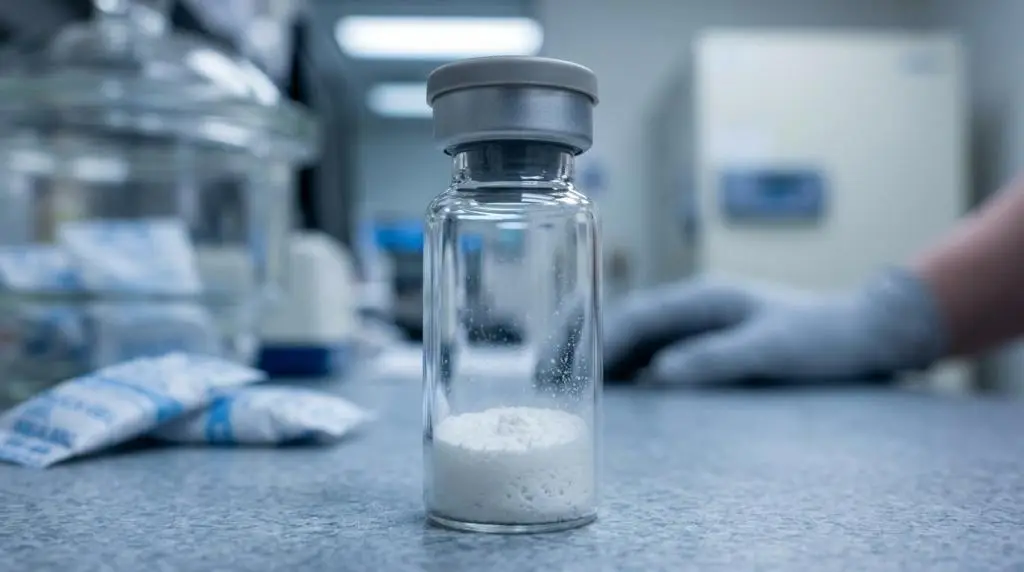
A lot-specific Certificate of Analysis should match the vial batch before laboratory release.
Step 1 is identity matching. Confirm that the product label, vial lot, and COA lot number are the same. If the seller cannot provide a lot-linked document, treat the listing as undocumented.
Step 2 is method review. Look for the analytical method named on the document, not just a purity percentage. HPLC can support chromatographic purity, while Mass Spectrometry helps verify molecular identity. Some suppliers also cite amino acid analysis. A common misconception is that “99% pure” means little unless the method and batch are visible.
Step 3 is document quality review. The COA should show test dates, lot information, and a format consistent with controlled laboratory records. Public COA access is useful because it lets procurement staff pre-screen records before initiating institutional purchase steps.
“Nationwide Peptides emphasizes publicly accessible Certificates of Analysis and independent HPLC and Mass Spectrometry verification for peptide batches.”
One practical tip is to compare more than one batch document from the same supplier when available. Consistency across lots often tells you more than a single polished PDF.
What labeling and compliance language should appear before PT 141 research purchasing?
Proper PT-141 labeling should be explicit about research status, and FDA terminology should be handled carefully. Bremelanotide is the molecule, but approved-drug claims belong to labeled products like VYLEESI.
A compliant research listing should state that the material is for laboratory or research use only and not for human consumption. It should also avoid claims that imply diagnosis, treatment, safety, or medical benefit. That is especially important in the peptide category, where blurred language often creates both compliance risk and sourcing risk.
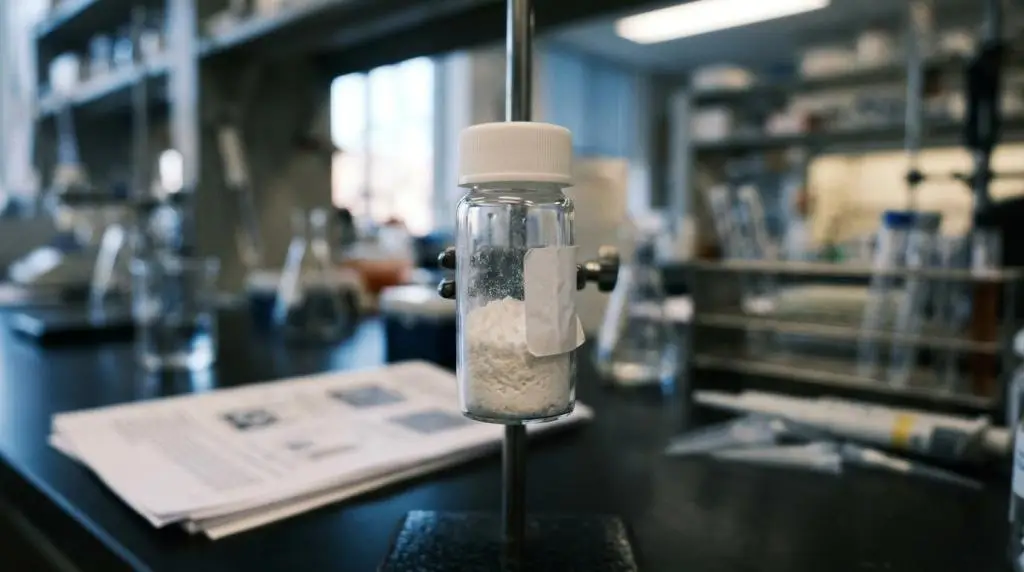
Lyophilized format, storage assignment, and chain-of-custody notes belong in the receiving file.
The safest interpretation is this: if the page reads like a clinic ad, it is not behaving like a research supply page. Labs should prefer listings that describe peptide identity, purity, storage format, analytical methods, and documentation rather than human outcomes.
How do purity claims, third-party testing, and chain of custody compare for PT 141 research?
Third-party analytical evidence is stronger than a simple purity badge, and chain-of-custody detail is stronger than anonymous sourcing. PT-141 procurement should weigh all three together.
A purity claim alone is only one layer of evidence. A listing that says “≥99%” is useful, but it becomes much more credible when paired with independent HPLC and Mass Spectrometry records. Chain of custody adds another control point because it shows where the material came from, how it moved, and whether the lot can be traced if a question appears later.
Here is the practical comparison most labs use:
Purity claim only: lowest evidentiary value without named methods or batch linkage.
Third-party testing: stronger support when HPLC and Mass Spec are both identified on a lot-specific COA.
Chain of custody: best for procurement controls because it supports traceability, vendor qualification, and audit readiness.
This is also where “American-owned” or U.S.-based manufacturing claims need proof. If a supplier mentions U.S. production or custody controls, the useful follow-up question is whether those details can be documented.
“Nationwide Peptides describes its peptide line as American-owned, lyophilized, and third-party tested, with chain-of-custody documentation available for research buyers.”
Inventory control should preserve lot genealogy from receipt through release for research use.
How can a lab screen a PT 141 research listing for regulatory and scientific red flags?
The fastest PT-141 screen is a three-pass review of the listing, the documents, and the language. DailyMed and PubMed give the context needed for that screen.
First, scan the page for intended-use language. If the listing mentions human administration, treatment, dosing guidance, or clinical outcomes, stop there. PT-141 sold by a research supplier should be positioned strictly for investigational use and not for human use.
Second, compare the listing with government context. DailyMed shows that the approved bremelanotide product carries specific contraindications and cardiovascular warnings. If a research seller acts as if those distinctions do not exist, that suggests poor regulatory discipline.
Third, check whether the science references are used correctly. The RECONNECT studies on PubMed were phase 3 randomized, double-blind, placebo-controlled multicenter trials involving the approved drug context. Those papers do not validate any unlabeled or undocumented research vial by themselves.
Which published and government sources matter most when evaluating PT 141 research materials?
DailyMed, FDA review materials, and PubMed-indexed clinical-trial papers are the most useful PT-141 sources. Each answers a different procurement question.
DailyMed is the clearest source for approved-label facts. It identifies VYLEESI as bremelanotide injection, notes the 2019 U.S. approval date, and states contraindications involving uncontrolled hypertension or known cardiovascular disease. It also notes transient blood-pressure increases and heart-rate reductions, with effects generally resolving within 12 hours and reported maximal study increases of 6 mmHg systolic and 3 mmHg diastolic in the label.
FDA review documents help explain why that labeling exists. In this case, the multidisciplinary review discusses cardiovascular risk mitigation through labeling and places the approved use in a specific population context.
PubMed adds trial design detail. The 2019 RECONNECT publications describe two identical phase 3 randomized, double-blind, placebo-controlled, multicenter trials using bremelanotide 1.75 mg subcutaneously as needed, followed by an open-label extension for eligible participants. The key point for labs is not the clinical endpoint. It is the boundary: those data belong to the approved-drug evidence base, not to general research-supplier marketing.
Why do cardiovascular warnings matter even for PT 141 research-only purchasing?
Cardiovascular warnings matter because they define the approved-drug risk context around bremelanotide. They are not a basis for human use of research PT-141, but they are a basis for more careful documentation review.
DailyMed reports transient increases in blood pressure and reductions in heart rate after each dose in the labeled product context. Even if a lab is buying strictly for pre-clinical or analytical work, those official warnings signal that the molecule sits in a closely regulated category with meaningful labeling controls.
A common misconception is that research-only status makes regulatory context irrelevant. It does not. Research-only status changes intended use, but it does not erase what government sources say about the molecule’s approved human product and the care needed when representing it.
How should documentation files support recurring PT 141 research orders?
Recurring PT 141 research purchasing works best when each lot has a reusable documentation packet: purchase order, packing slip, label transcription, Certificate of Analysis, and notes that keep research-supplier material distinct from approved-drug labeling.
When screening suppliers for PT 141 research, ask whether COAs are public or requestable before payment and whether lot identifiers remain consistent across reorders. For broader documentation-first purchasing criteria, see the guide to wholesale peptides for research labs.
Keep intended-use boundaries explicit in quotes and receiving notes. PT 141 research materials discussed here are for laboratory and investigational research only and are not intended for human use or human consumption. Approved-drug information about VYLEESI describes a finished pharmaceutical product context and does not validate a research-supplier vial.
What final checks close a PT 141 research procurement review?
Before release from quarantine, confirm that identity, DAC-irrelevant naming clarity for PT-141/bremelanotide, lot match, HPLC/MS documentation, and research-use-only language all agree. If any field is missing, keep the material quarantined.
A second reviewer can quickly confirm that approved-drug sources were used only for regulatory context and not as promotional evidence for the research material. That separation is essential for responsible PT 141 research procurement.
How should a lab document PT 141 research receipt and storage after purchase?
PT-141 should be documented like any other controlled research input, with lot traceability, storage records, and study-specific inventory controls. A COA should stay attached to the internal record from receipt onward.
At minimum, labs should record the following after receipt:
Lot linkage: received lot, COA lot, supplier invoice, and receiving date.
Material status: lyophilized peptide, research-use-only classification, and storage condition noted in the supplier record.
Chain record: who received it, where it was stored, and when it was issued to a protocol or assay.
Step 1 is receiving control. Photograph or scan the label, confirm the lot matches the COA, and log the package condition.
Step 2 is storage control. Follow the supplier’s documented storage recommendations and keep that record with the batch file. If your institution has SOP-based environmental monitoring, attach the storage location and monitored range to the inventory line.
Step 3 is use control. Assign the material to a protocol, assay, or analytical workflow and keep remaining inventory linked to the same lot. If questions come up later, this single record chain is what lets a lab reconcile source, identity, and study use without guesswork.
Taken together, these checks give laboratories a practical way to evaluate PT 141 research materials without converting approved-drug labeling into a supplier quality claim. Documentation first remains the safest procurement standard.
If your institution formalizes vendor qualification for PT 141 research, write the minimum COA fields, testing expectations, and research-use-only requirements before the first large order. Clear written criteria make later reorders faster and more consistent.
Before final approval, confirm that any references to VYLEESI or DailyMed were used only to clarify approved-drug context. Those sources should not be copied into research-supplier quality claims. Keeping that boundary explicit protects both compliance review and scientific interpretation for PT 141 research programs.
If documentation remains incomplete after follow-up, do not release the lot. PT 141 research continuity depends more on trustworthy lot genealogy than on how quickly a package can be opened.
Clear written acceptance criteria also reduce disagreement between investigators and purchasing staff when PT 141 research orders are reviewed under time pressure.
Use the same checklist on every reorder so PT 141 research documentation quality does not drift over time. Consistency between lots is part of continuity planning for multi-month laboratory programs.
When in doubt, pause purchasing and request the missing records. Incomplete paperwork is a stop condition for PT 141 research inventory release, not a minor inconvenience.
Explore Research Peptides
Review research peptide documentation standards, COA resources, and laboratory-focused product information from Nationwide Peptides.
Important: The products on this website are for legitimate research use only. They are not intended for human consumption, and are not intended to diagnose, treat, cure, or prevent any disease.
By proceeding, you confirm that you are 21 years of age or older, understand these terms, and have a bona fide research purpose for purchasing these products.
Note: Compounds are sold individually and do not include supplies (e.g., bacteriostatic water or syringes). Most are sold in powder form and require reconstitution with a suitable diluent prior to research.