
Therapeutic Peptides: Current Applications, Mechanisms, and Future Directions
- By Isaac
Therapeutic Peptides: Current Applications, Mechanisms, and Future Directions
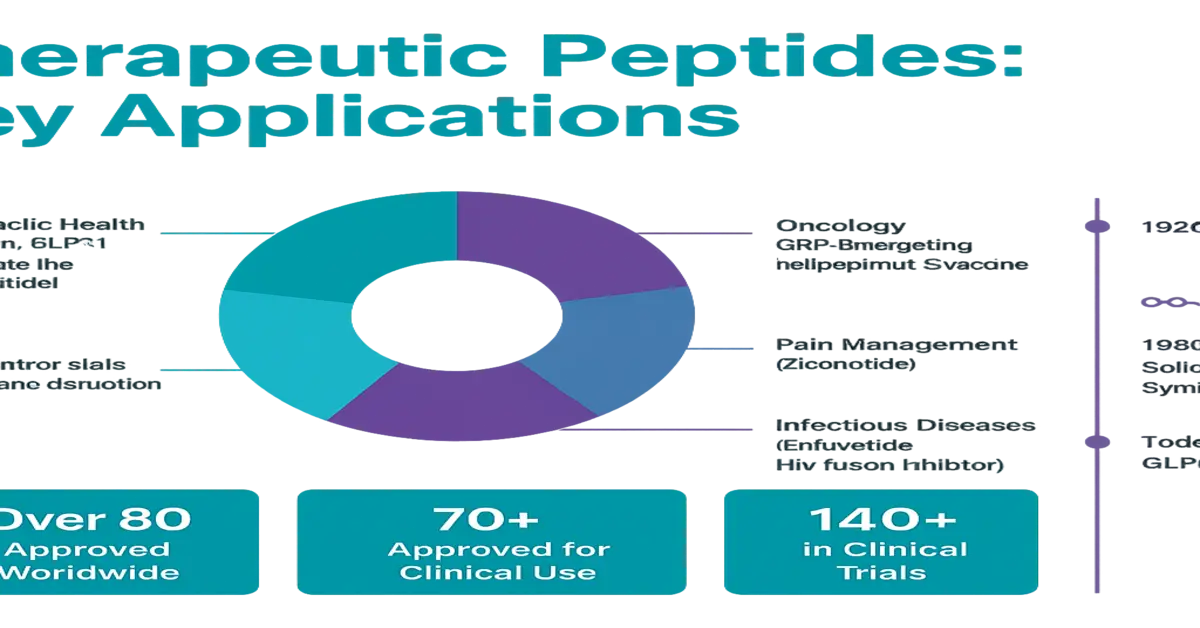
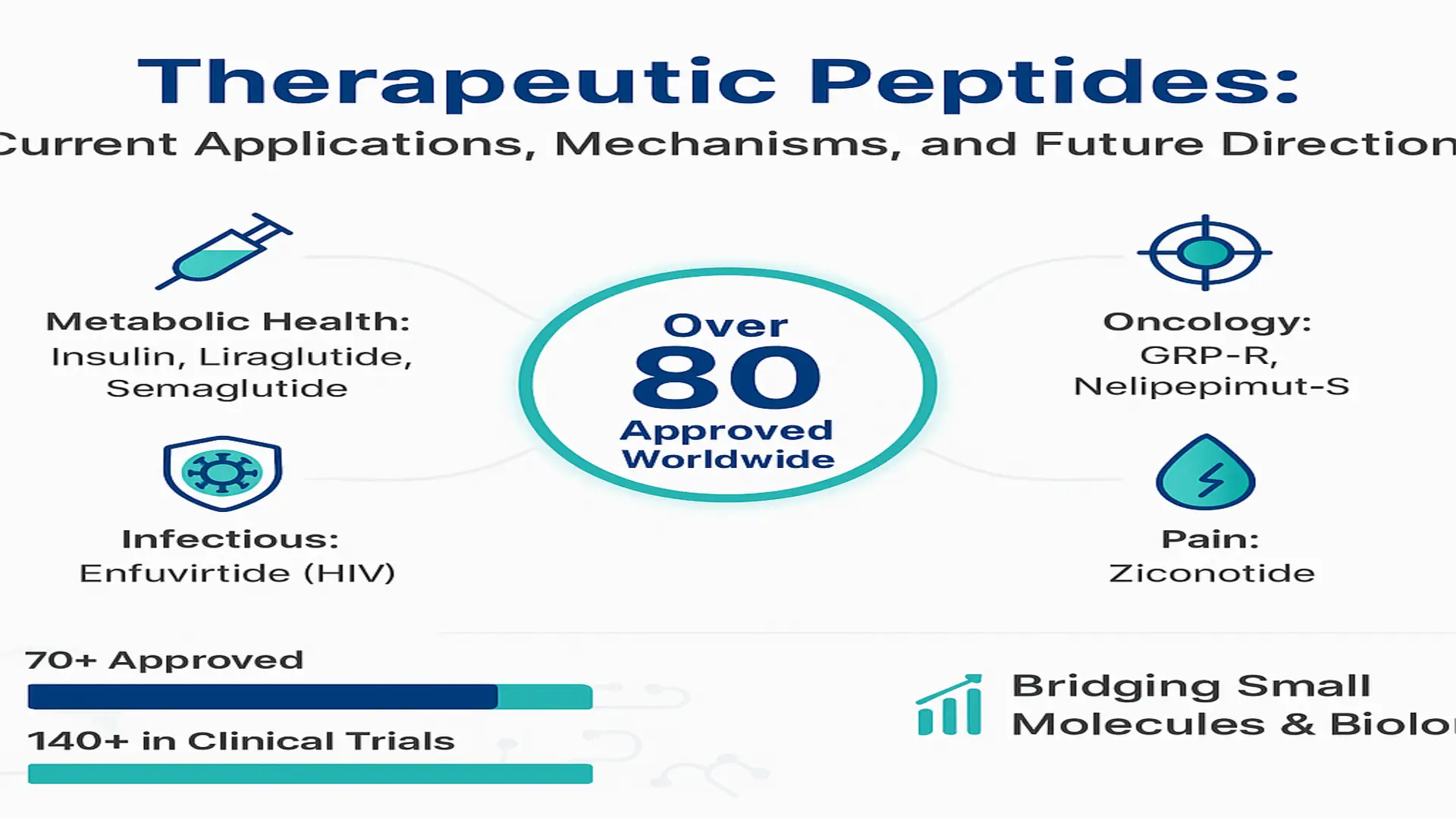
Therapeutic peptides represent an exciting class of bioactive molecules composed of short chains of amino acids, typically ranging from 2 to 50 residues. These compounds are valued in medical research for their high specificity, potency, and biocompatibility, making them suitable for targeted biological interactions. Over 80 peptide-based drugs have received approval worldwide, reflecting a growing market driven by successes in areas such as metabolic regulation, oncology, and infectious disease management. This review provides an educational overview of the history, mechanisms of action, key applications, supporting clinical evidence, challenges, and promising future directions for therapeutic peptides, drawing from recent peer-reviewed literature.
These statements have not been evaluated by the Food and Drug Administration. This information is for educational purposes only and is not intended to diagnose, treat, cure, or prevent any disease.
Mechanisms of Action
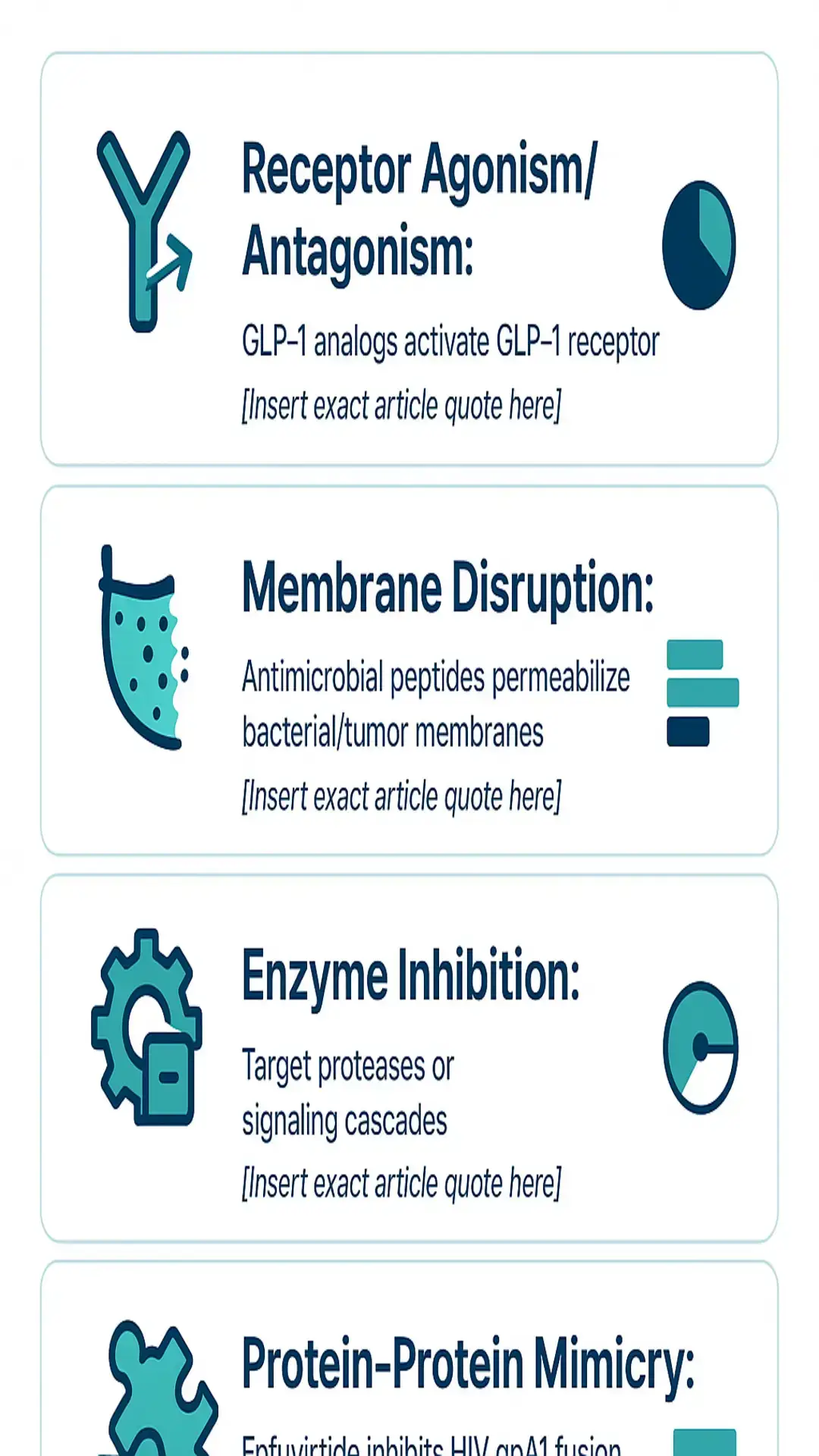
Therapeutic peptides exert their effects through diverse and precise mechanisms, leveraging their structural similarity to natural signaling molecules. A primary mode is receptor agonism or antagonism. For example, GLP-1 analogs bind to and activate the GLP-1 receptor, supporting normal glucose homeostasis. GnRH antagonists, on the other hand, block gonadotropin-releasing hormone receptors to modulate hormone release.
Another key mechanism involves membrane disruption, particularly seen in antimicrobial peptides. These cationic peptides interact with bacterial or tumor cell membranes, promoting permeabilization and supporting microbial defense. Enzyme inhibition or modulation represents yet another pathway; certain peptides can target proteases or intracellular signaling cascades, often after chemical modifications enhance their stability and uptake.
Protein-protein interaction mimicry is exemplified by biomimetic peptides like enfuvirtide, which binds to the HIV gp41 protein to inhibit viral fusion with host cells. These mechanisms highlight the precision of peptides, allowing them to mimic or interfere with endogenous processes at a molecular level.
Therapeutic Applications
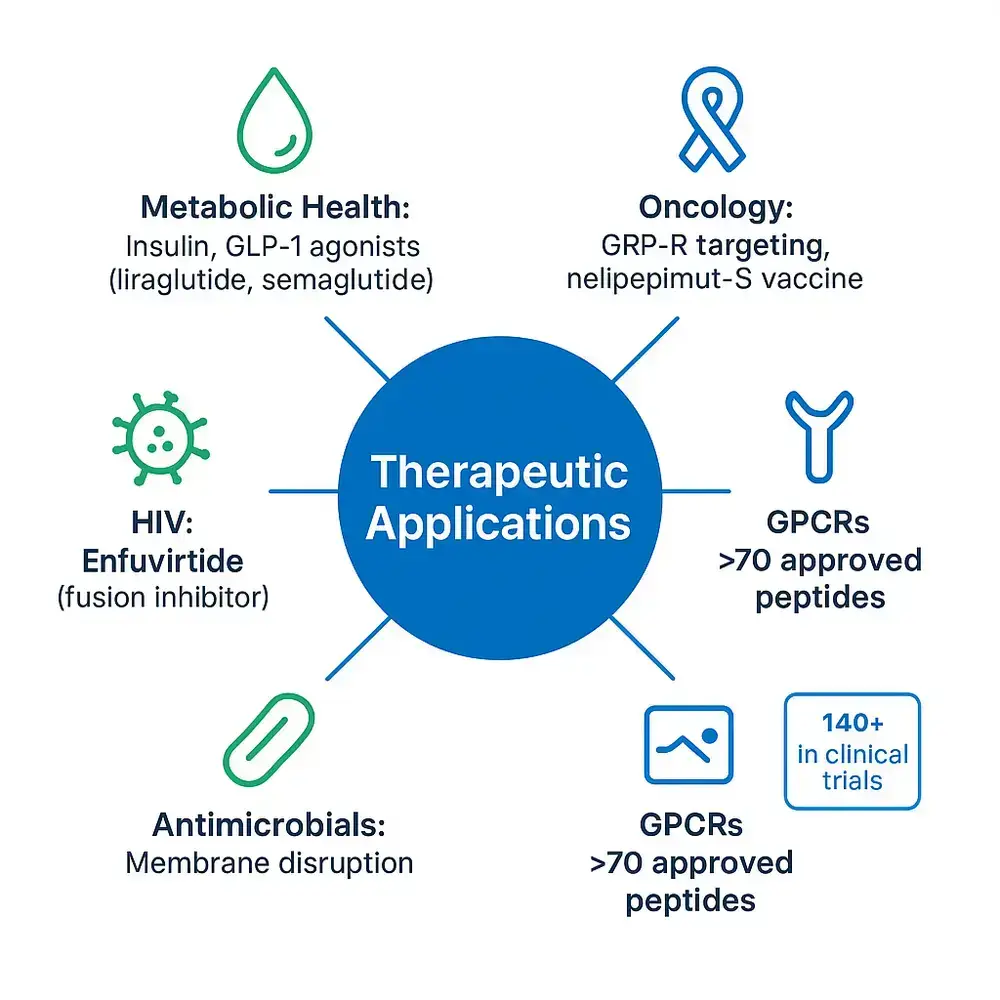
Therapeutic peptides have found applications across various health areas, supported by regulatory approvals and clinical data. In metabolic health, insulin and GLP-1 receptor agonists such as liraglutide and semaglutide are approved to support glycemic control and weight management in individuals with type 2 diabetes.
In oncology, peptides targeting gastrin-releasing peptide receptors (GRP-R) are explored for imaging and therapy in prostate cancer, while nelipepimut-S functions as a peptide vaccine in breast cancer research. For pain management, ziconotide acts as an N-type calcium channel blocker, offering support for individuals with severe chronic pain unresponsive to standard therapies.
Infectious diseases also benefit from peptide innovations. Enfuvirtide supports viral load reduction in multidrug-resistant HIV cases, and antimicrobial peptides show promise against antibiotic-resistant bacteria by disrupting microbial membranes. These applications demonstrate the broad utility of therapeutic peptides in addressing complex biological challenges.
These statements have not been evaluated by the Food and Drug Administration. This information is for educational purposes only and is not intended to diagnose, treat, cure, or prevent any disease.
Clinical Evidence Supporting Peptide Therapeutics
Robust clinical evidence underpins many approved therapeutic peptides. GLP-1 agonists like liraglutide have been evaluated in large-scale trials, demonstrating support for glycemic control and weight management in type 2 diabetes. Semaglutide similarly shows consistent outcomes in metabolic studies.
Ziconotide’s efficacy was confirmed in Phase III trials for severe chronic pain cases refractory to opioids, providing an alternative intrathecal option. Enfuvirtide’s approval stemmed from pivotal trials documenting viral load reductions in treatment-experienced HIV patients.
Meta-analyses further reinforce these findings, noting that fatty acid conjugates extend peptide half-life, improving pharmacokinetics. Since 2010, over 40 peptides have gained approval, with clinical success rates highlighting their reliability. Ongoing trials continue to build on this foundation, evaluating peptides in diverse settings.
Challenges and Limitations
Despite their promise, therapeutic peptides face several hurdles that impact their widespread adoption. Proteolytic instability is a primary concern; rapid degradation by endogenous peptidases often results in low oral bioavailability, necessitating alternative delivery routes.
Short half-lives due to renal clearance require frequent administrations, such as subcutaneous injections, which can affect patient adherence. Manufacturing complexities, particularly for longer peptides, drive up costs and limit scalability. Additionally, poor membrane permeability poses barriers to reaching intracellular targets, restricting certain applications.
Addressing these limitations remains crucial for expanding peptide therapeutics beyond current niches.
Future Directions in Peptide Research
Innovative strategies are actively tackling these challenges, paving the way for next-generation therapeutic peptides. Chemical modifications like lipidation, cyclization, and N-methylation enhance stability, prolong half-life, and enable oral or non-invasive delivery.
Peptide-drug conjugates (PDCs) represent a frontier in targeted therapy, particularly for cancer, by linking peptides to cytotoxic payloads for precise delivery. Discovery platforms, including phage display, mRNA display, and artificial intelligence (AI), accelerate lead identification and optimization.
Novel formulations, such as nasal sprays for brain-targeted delivery, and multifunctional peptides combining multiple activities, hold significant potential. These advancements promise to broaden the scope of peptides into new areas like oncology and antimicrobials.
Conclusion
Therapeutic peptides stand out for their high specificity and proven track record in supporting metabolic regulation, infectious disease management, and beyond. Historical milestones, from insulin to modern GLP-1 analogs, illustrate their evolution, while advances in synthesis and modifications mitigate key limitations like instability. With over 140 candidates in clinical trials, the pipeline signals robust growth and broader applications. Continued research into optimized delivery and novel targets will likely solidify peptides as a cornerstone of future pharmacology.
These statements have not been evaluated by the Food and Drug Administration. This information is for educational purposes only and is not intended to diagnose, treat, cure, or prevent any disease.
References
- Wang L, et al. Therapeutic peptides: current applications and future directions. Signal Transduct Target Ther. 2022;7(1):49.
- Wang J, et al. Therapeutic Peptides: Recent Advances in Discovery, Synthesis, and Clinical Translation. Int J Mol Sci. 2025;26(11):5131.
- Vlieghe P, et al. Recent Advances in the Development of Therapeutic Peptides. Pharmaceutics. 2023;15(7):1925.
- Lau JL, Dunn MK. Therapeutic peptides: Historical perspectives, current development trends, and future directions. Bioorg Med Chem. 2018;26(10):2700-2707.
- Muttenthaler M, et al. Trends in peptide drug discovery. Nat Rev Drug Discov. 2021;20(11):715-735.
- Al Musaimi O, et al. Therapeutic peptides: current applications and future directions. 2022.
- Reigada I, et al. Peptide-based therapeutics: challenges and solutions. Med Chem Res. 2024.
- Wang L, et al. Advance in peptide-based drug development: delivery platforms, therapeutics and vaccines. Signal Transduct Target Ther. 2024;9:293.
- Fosgerau K, Hoffmann T. Peptide therapeutics: current status and future directions. Drug Discov Today. 2015;20(1):122-128.
- Henninot A, et al. Therapeutic peptides: Historical perspectives, current development trends, and future directions. Bioorg Med Chem. 2018;26(10):2832-2843.
References
References
- Wang L, et al. Therapeutic peptides: current applications and future directions. Signal Transduct Target Ther. 2022;7(1):49.
- Wang J, et al. Therapeutic Peptides: Recent Advances in Discovery, Synthesis, and Clinical Translation. Int J Mol Sci. 2025;26(11):5131.
- Vlieghe P, et al. Recent Advances in the Development of Therapeutic Peptides. Pharmaceutics. 2023;15(7):1925.
- Lau JL, Dunn MK. Therapeutic peptides: Historical perspectives, current development trends, and future directions. Bioorg Med Chem. 2018;26(10):2700-2707.
- Muttenthaler M, et al. Trends in peptide drug discovery. Nat Rev Drug Discov. 2021;20(11):715-735.
- Al Musaimi O, et al. Therapeutic peptides: current applications and future directions. 2022.
- Reigada I, et al. Peptide-based therapeutics: challenges and solutions. Med Chem Res. 2024.
- Wang L, et al. Advance in peptide-based drug development: delivery platforms, therapeutics and vaccines. Signal Transduct Target Ther. 2024;9:293.
- Fosgerau K, Hoffmann T. Peptide therapeutics: current status and future directions. Drug Discov Today. 2015;20(1):122-128.
- Henninot A, et al. Therapeutic peptides: Historical perspectives, current development trends, and future directions. Bioorg Med Chem. 2018;26(10):2832-2843.