
TB500: Insights from Thymosin Beta-4 Research
- By Isaac
Introduction
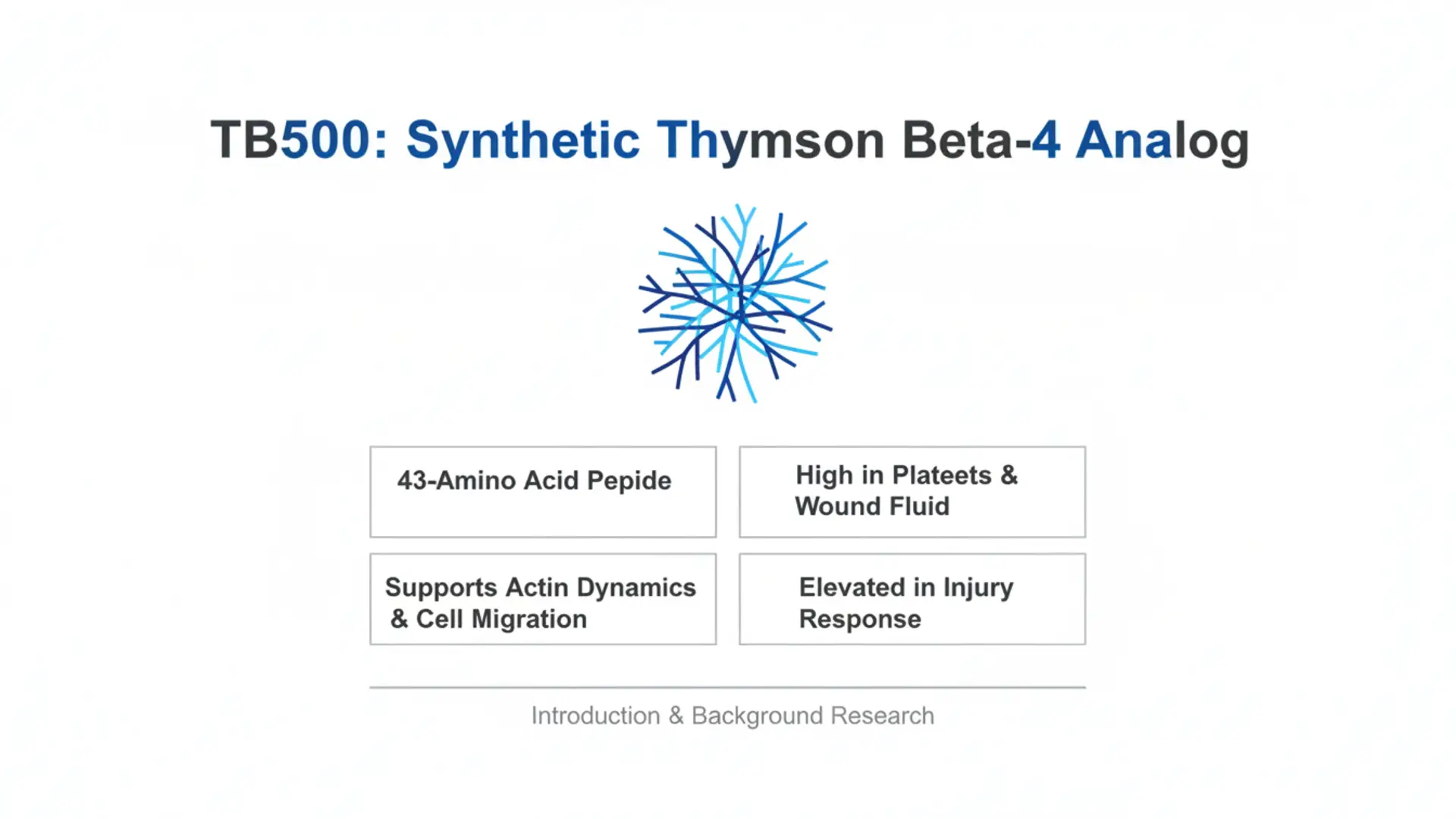
TB500, a synthetic peptide modeled after Thymosin Beta-4 (Tβ4), has garnered attention in scientific literature for its potential roles in cellular processes related to tissue maintenance. Naturally occurring Tβ4 is a 43-amino-acid peptide found in high concentrations in platelets, wound fluid, and other tissues. Research on TB500 and Tβ4 has primarily focused on preclinical models, exploring mechanisms that may support repair processes. This article reviews peer-reviewed studies on Tβ4, often referenced in connection with TB500, emphasizing evidence from animal and limited human investigations. While preclinical findings suggest involvement in actin dynamics and migration, human data remain preliminary. TB500 research highlights the need for cautious interpretation, as clinical translation requires further validation.
Mechanisms of Action
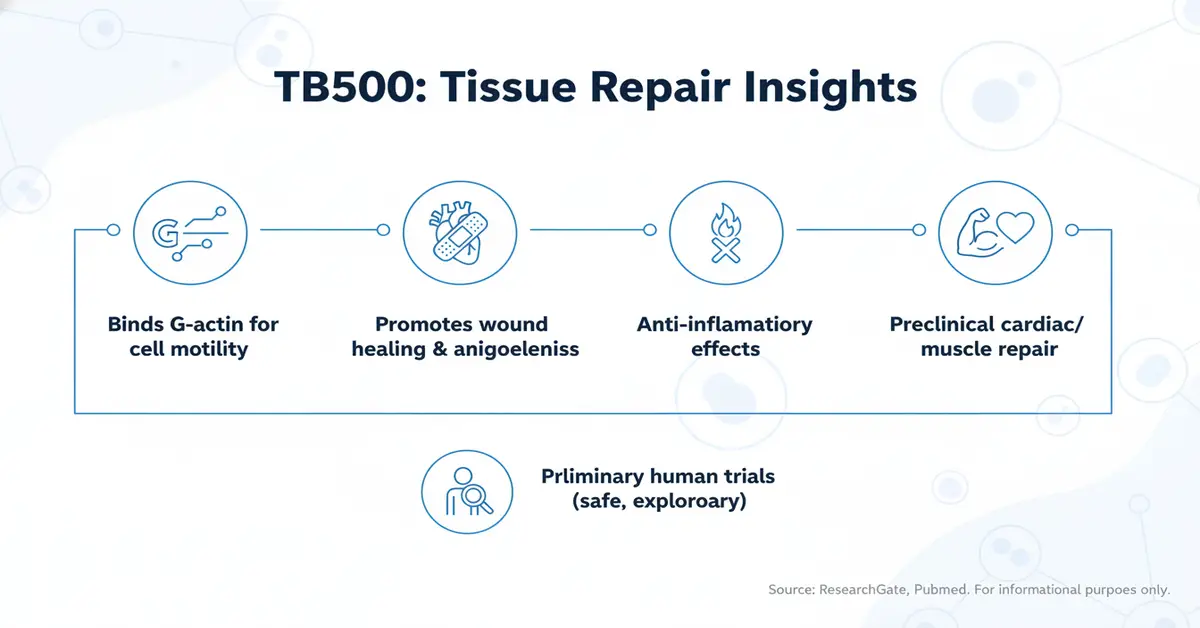
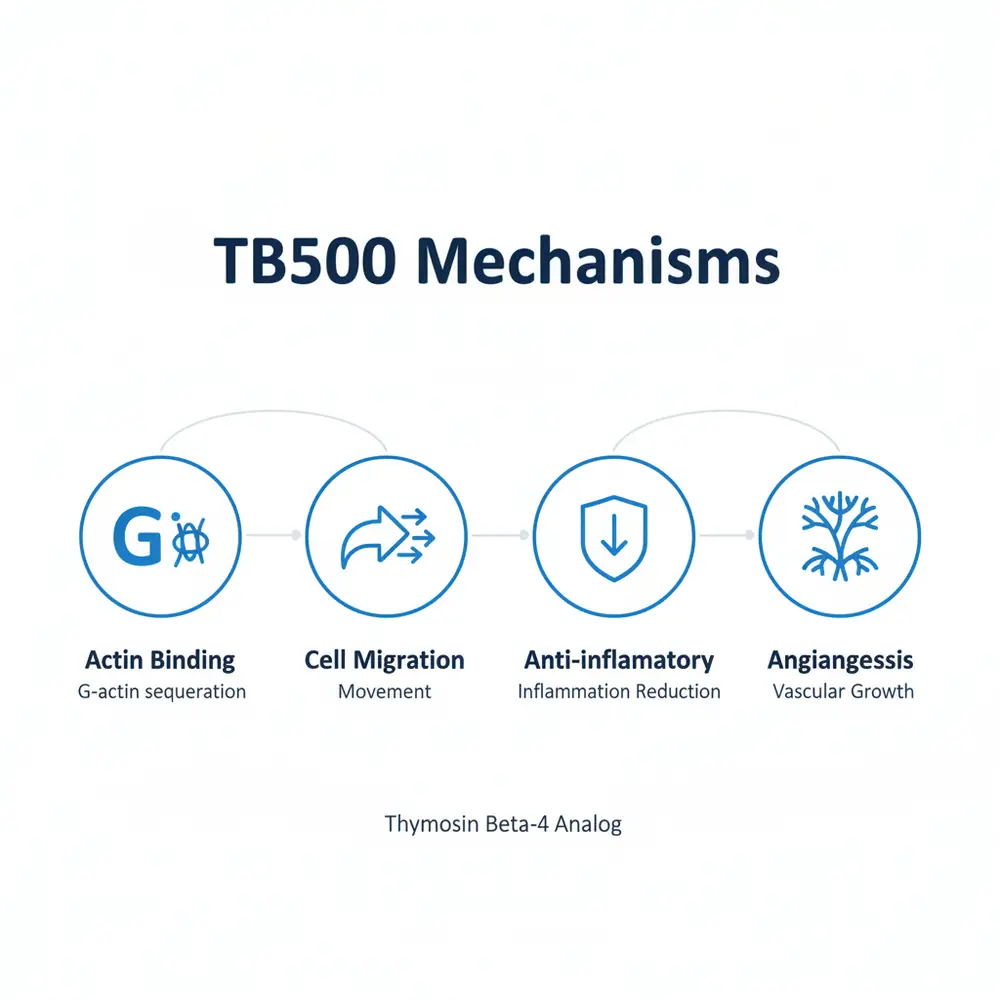
Tβ4’s primary mechanism involves binding G-actin with high affinity, preventing unwanted polymerization and facilitating actin treadmilling essential for cell motility. In vitro assays demonstrate that Tβ4-TB500-like peptides promote lamellipodia formation, enabling fibroblast and keratinocyte migration. A 2012 review detailed how this actin sequestration mobilizes endothelial cells, potentially supporting angiogenesis via vascular endothelial growth factor (VEGF) pathways.
Preclinical studies further reveal anti-inflammatory effects. Tβ4 has been shown to downregulate nuclear factor-kappa B (NF-κB) signaling in macrophages, reducing pro-inflammatory cytokines like tumor necrosis factor-alpha (TNF-α). In mouse models of injury, Tβ4 administration modulated Toll-like receptor pathways, limiting excessive inflammation. Additionally, Tβ4 influences stem cell differentiation; it promotes endothelial progenitor cell recruitment in ischemic tissues, as observed in rabbit hindlimb ischemia models.
Upstream activators like PI3K/Akt enhance Tβ4-mediated endothelial nitric oxide synthase (eNOS) expression, aiding vasodilation. Notch signaling modulation supports progenitor cell fate in cardiac repair models. Animal data indicate Tβ4 reduces apoptosis by stabilizing microtubules and upregulating anti-apoptotic Bcl-2. These multifaceted actions—actin regulation, migration promotion, inflammation modulation, and survival signaling—form the basis of TB500 research, though mechanisms vary by dose and context.
Therapeutic Applications
Research has explored Tβ4 and TB500 analogs in contexts like dermal repair, where animal models show accelerated closure rates. In full-thickness excisional wounds on rats, topical Tβ4 increased granulation tissue and collagen deposition. Similar effects appeared in aged and diabetic mice, with TB500 fragments enhancing re-epithelialization.
Cardiac studies in mice post-myocardial infarction noted Tβ4’s association with epicardial thickening and neovascularization. Muscle repair investigations, such as a 2011 rat model of laceration injury, found Tβ4 promoting myoblast chemotaxis and satellite cell activation. Ocular applications include corneal epithelial studies in rabbits, where Tβ4 supported basement membrane regeneration.
Other areas encompass pressure ulcers and venous stasis, modeled in rodents, and neurotrophic keratopathy. Preclinical findings suggest Tβ4’s role in reducing fibrosis via matrix metalloproteinase regulation. TB500 research extends to orthopedic models, examining tendon and ligament maintenance. These applications remain investigational, with studies emphasizing conditional outcomes in controlled settings.
Clinical Evidence
Human data on Tβ4, relevant to TB500, derive from early-phase trials. A Phase 2 study (NCT00382174) assessed topical Tβ4 in pressure ulcers, reporting improved healing rates in some participants versus placebo, though statistical significance varied. Another trial (NCT00832091) for venous stasis ulcers showed trends toward faster closure with 0.03% Tβ4 solution, with mild adverse events like erythema.
In dry eye disorder, a randomized trial found 0.1% Tβ4 ophthalmic drops improved corneal fluorescein staining and symptoms, published in 2015. Phase 1 safety trials (NCT04555850, NCT05984134) in healthy volunteers and myocardial infarction patients confirmed tolerability, with pharmacokinetics indicating rapid clearance and no serious immunogenicity.
A 2022 review summarized dermal injury trials, noting consistent safety but variable efficacy endpoints. Limited peer-reviewed outcomes highlight preliminary nature; larger Phase 3 data are pending. TB500-specific human studies are scarce, relying on Tβ4 proxies.
Challenges and Limitations
Despite promising preclinical data, Tβ4 and TB500 research faces hurdles. Actin-binding potency varies with oxidation states, as sulfoxide forms alter efficacy in some models. Delivery challenges persist; systemic administration risks off-target effects, while topical routes limit penetration.
Human translation lags due to heterogeneous wound etiologies and small trial cohorts. A 2010 review of animal studies noted dose-response inconsistencies across species. Safety profiles show mild issues like injection-site reactions or transient blurred vision, but long-term data are absent. Biomarker validation for Tβ4 levels in plasma remains underdeveloped.
Regulatory aspects complicate progress, as peptide stability and manufacturing purity affect reproducibility. Evidence gaps include pediatric safety and chronic condition applications. Overall, while preclinical consistency exists, clinical evidence is limited to early phases, underscoring need for rigorous validation.
Future Directions
Ongoing trials target acute myocardial infarction (NCT05485818) and ulcers, potentially clarifying TB500-like peptides’ roles. Advanced imaging and single-cell RNA sequencing could elucidate epicardial responses. Combination therapies, such as Tβ4 with selenium or stem cells, show synergy in diabetic models.
Nanoparticle encapsulation may enhance delivery, as explored in biomaterials studies. Longitudinal biomarkers for repair phases could guide dosing. Multicenter Phase 3 trials are anticipated to address limitations. TB500 research may benefit from AI-driven modeling of actin dynamics. Emphasis on diverse populations will strengthen generalizability.
Conclusion
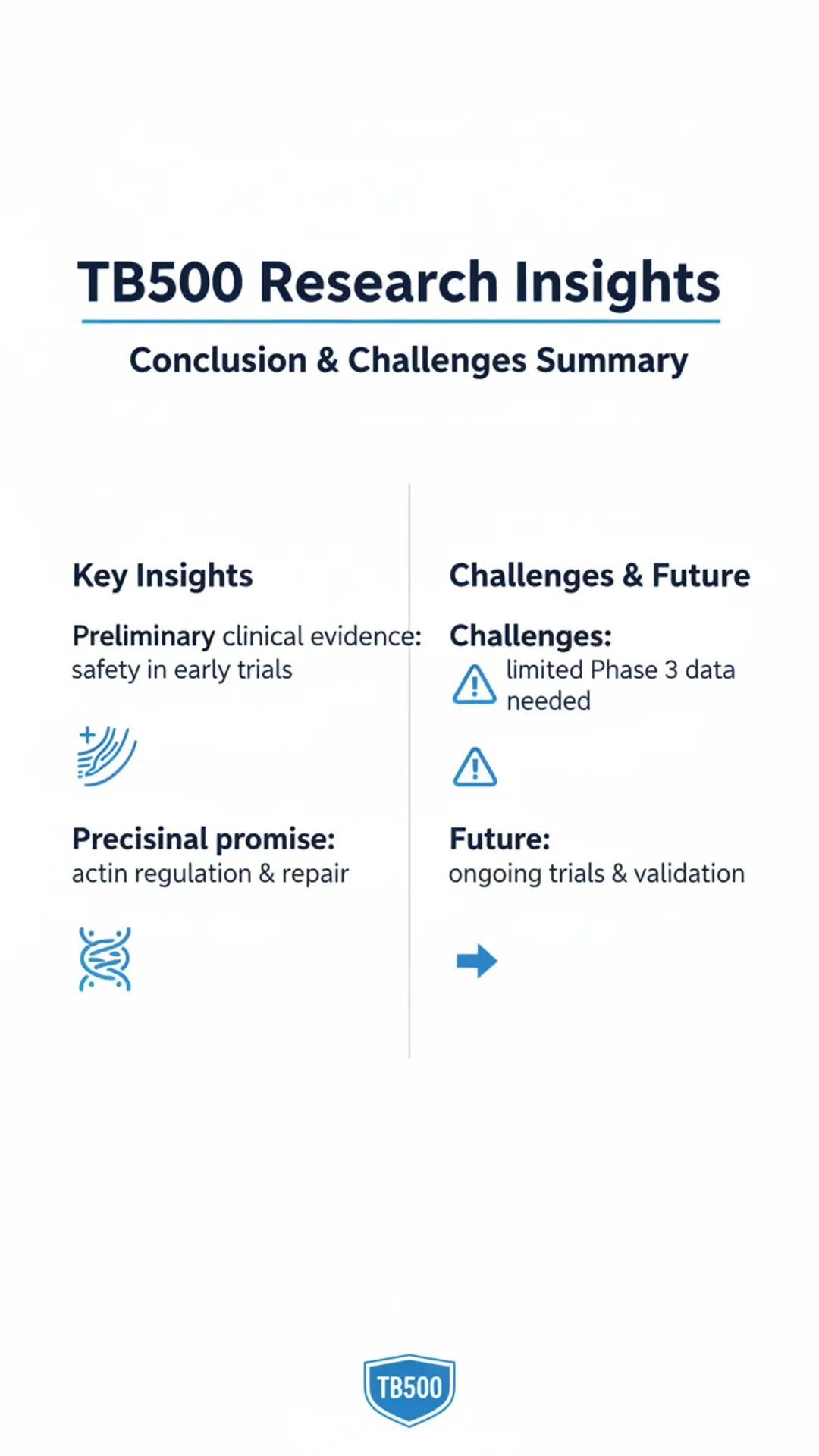
TB500, as a Thymosin Beta-4 analog, features prominently in peptide research centered on actin regulation and tissue responses. Preclinical studies suggest involvement in migration, angiogenesis, and inflammation modulation, with exploratory clinical trials indicating safety in select applications. However, evidence remains preliminary, confined to animal models and small human cohorts. Future investigations hold potential to expand understanding, maintaining focus on evidence-based progress. TB500 research exemplifies the cautious advancement in peptide science.
References
Malinda KM, Sidell N, Kleinman HK, Goldstein AL. Thymosin beta4 accelerates wound healing. J Invest Dermatol. 1999. Link
Philp D, Badamchian M, Scheremeta B, et al. Thymosin beta 4 and a synthetic peptide containing its actin-binding domain promote dermal wound repair in db/db diabetic and normal mice. Ann N Y Acad Sci. 2003. Link
Goldstein AL, Hannappel E. Thymosin β4: a multi-functional regenerative peptide. Basic properties and clinical applications. Expert Opin Biol Ther. 2012. Link
Tokura Y, Omote S, Sako S, et al. Muscle injury-induced thymosin β4 acts as a potent promoter for myogenesis. J Pharmacol Sci. 2011. Link
Philp D, Kleinman HK. Animal studies with thymosin beta 4, a multifunctional tissue repair and regeneration peptide. Ann N Y Acad Sci. 2010. Link
Wang Y, Li J, Chen F, et al. Progress on the Function and Application of Thymosin β4. Altern Ther Health Med. 2022. Link
Sosne G, Barron SL, Fojtová V, et al. Thymosin beta 4 ophthalmic solution for dry eye. Invest Ophthalmol Vis Sci. 2015. Link
References
References
Malinda KM, Sidell N, Kleinman HK, Goldstein AL. Thymosin beta4 accelerates wound healing. J Invest Dermatol. 1999. Link
Philp D, Badamchian M, Scheremeta B, et al. Thymosin beta 4 and a synthetic peptide containing its actin-binding domain promote dermal wound repair in db/db diabetic and normal mice. Ann N Y Acad Sci. 2003. Link
Goldstein AL, Hannappel E. Thymosin β4: a multi-functional regenerative peptide. Basic properties and clinical applications. Expert Opin Biol Ther. 2012. Link
Tokura Y, Omote S, Sako S, et al. Muscle injury-induced thymosin β4 acts as a potent promoter for myogenesis. J Pharmacol Sci. 2011. Link
Philp D, Kleinman HK. Animal studies with thymosin beta 4, a multifunctional tissue repair and regeneration peptide. Ann N Y Acad Sci. 2010. Link
Wang Y, Li J, Chen F, et al. Progress on the Function and Application of Thymosin β4. Altern Ther Health Med. 2022. Link
Sosne G, Barron SL, Fojtová V, et al. Thymosin beta 4 ophthalmic solution for dry eye. Invest Ophthalmol Vis Sci. 2015. Link