
Sermorelin: Mechanisms, Clinical Applications, and Research Insights
- By Isaac
Sermorelin: Mechanisms, Clinical Applications, and Research Insights
Introduction
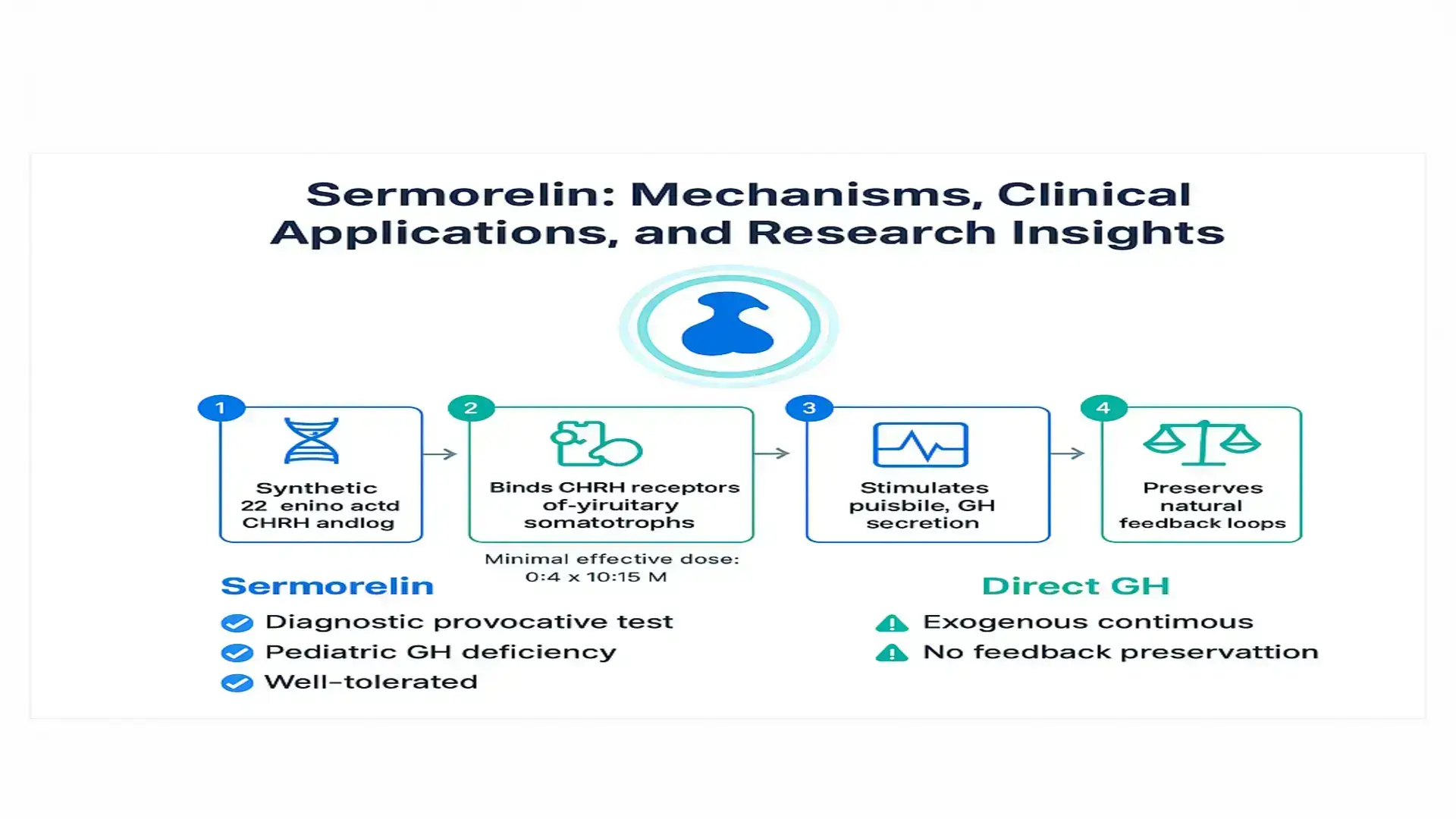
Sermorelin is a synthetic 29-amino acid analog of growth hormone-releasing hormone (GHRH 1-29), designed to mimic the natural hormone’s active fragment. It has been primarily explored in the context of evaluating and addressing growth hormone (GH) dynamics in children with idiopathic short stature associated with GH deficiency. By stimulating the pituitary gland to release GH, sermorelin helps maintain the body’s natural feedback mechanisms, which regulate hormone levels physiologically.
This approach distinguishes it from direct GH administration, as it supports the endogenous pulsatile release of GH rather than introducing exogenous hormone continuously. Sermorelin’s relevance extends to its utility as a diagnostic provocative test, where it prompts a measurable GH response to assess pituitary function. This review synthesizes peer-reviewed evidence on its mechanisms, applications, clinical data, limitations, and potential future directions, providing an educational overview for those interested in peptide-based research on GH regulation.
These statements have not been evaluated by the Food and Drug Administration. This product is not intended to diagnose, treat, cure, or prevent any disease.
Mechanisms of Action
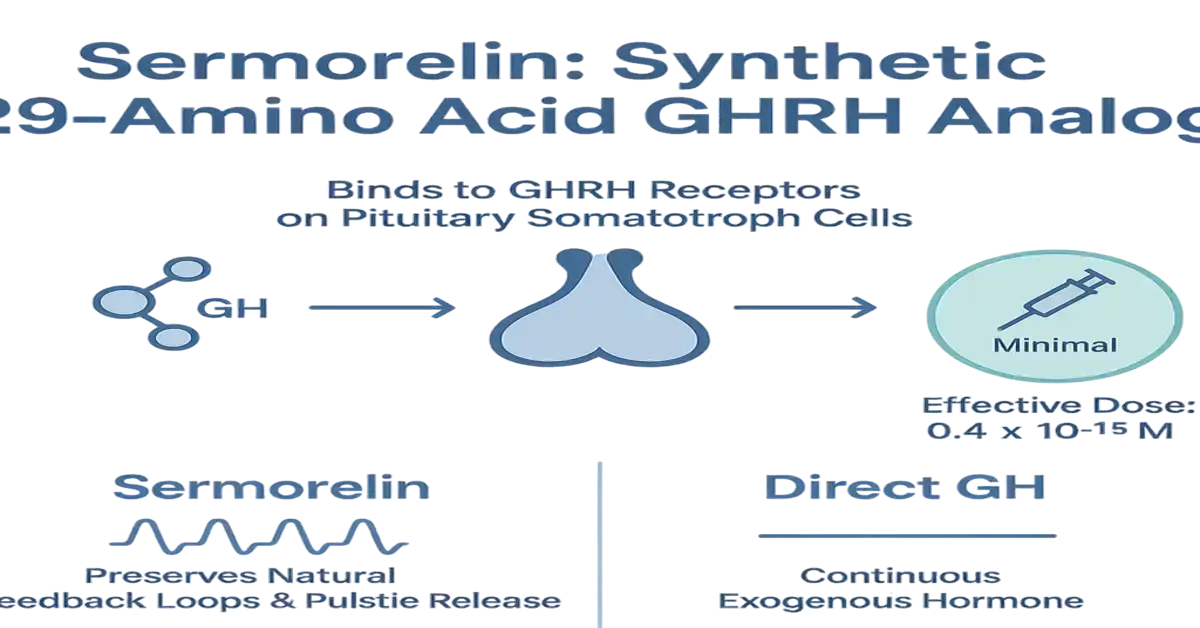
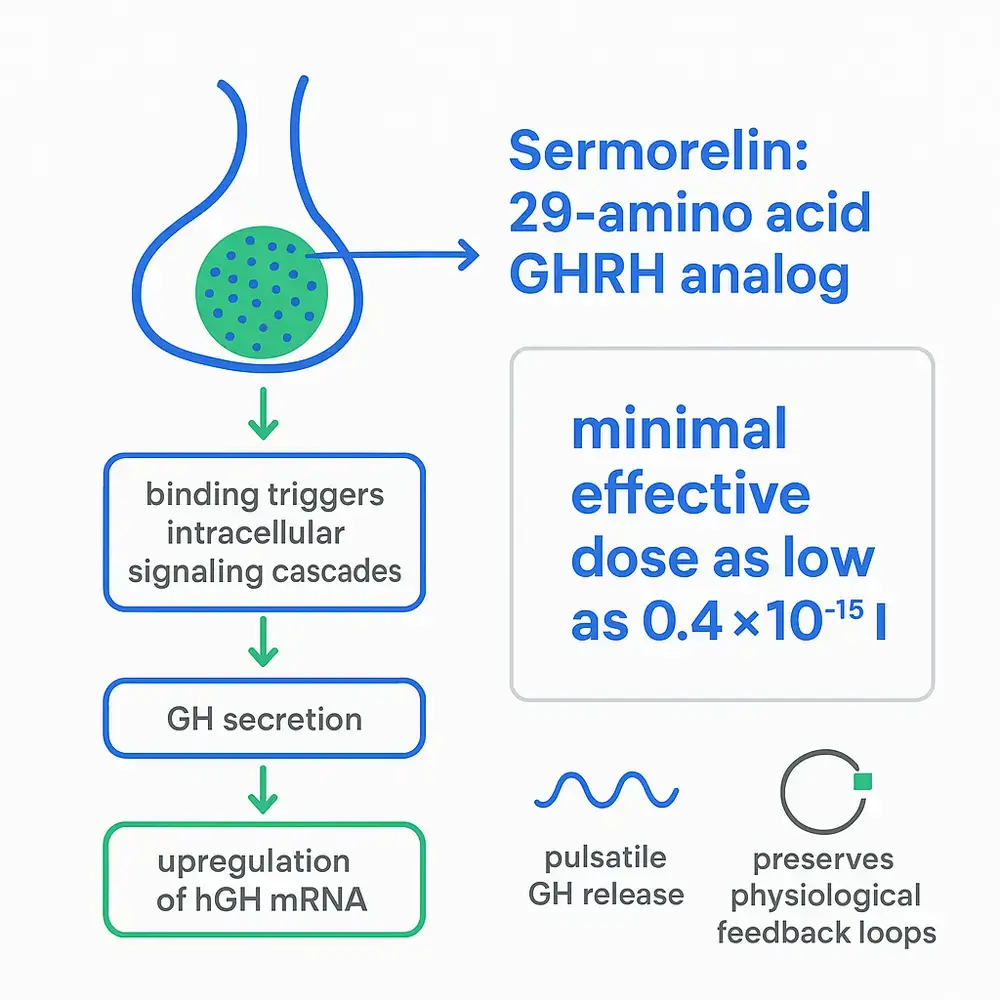
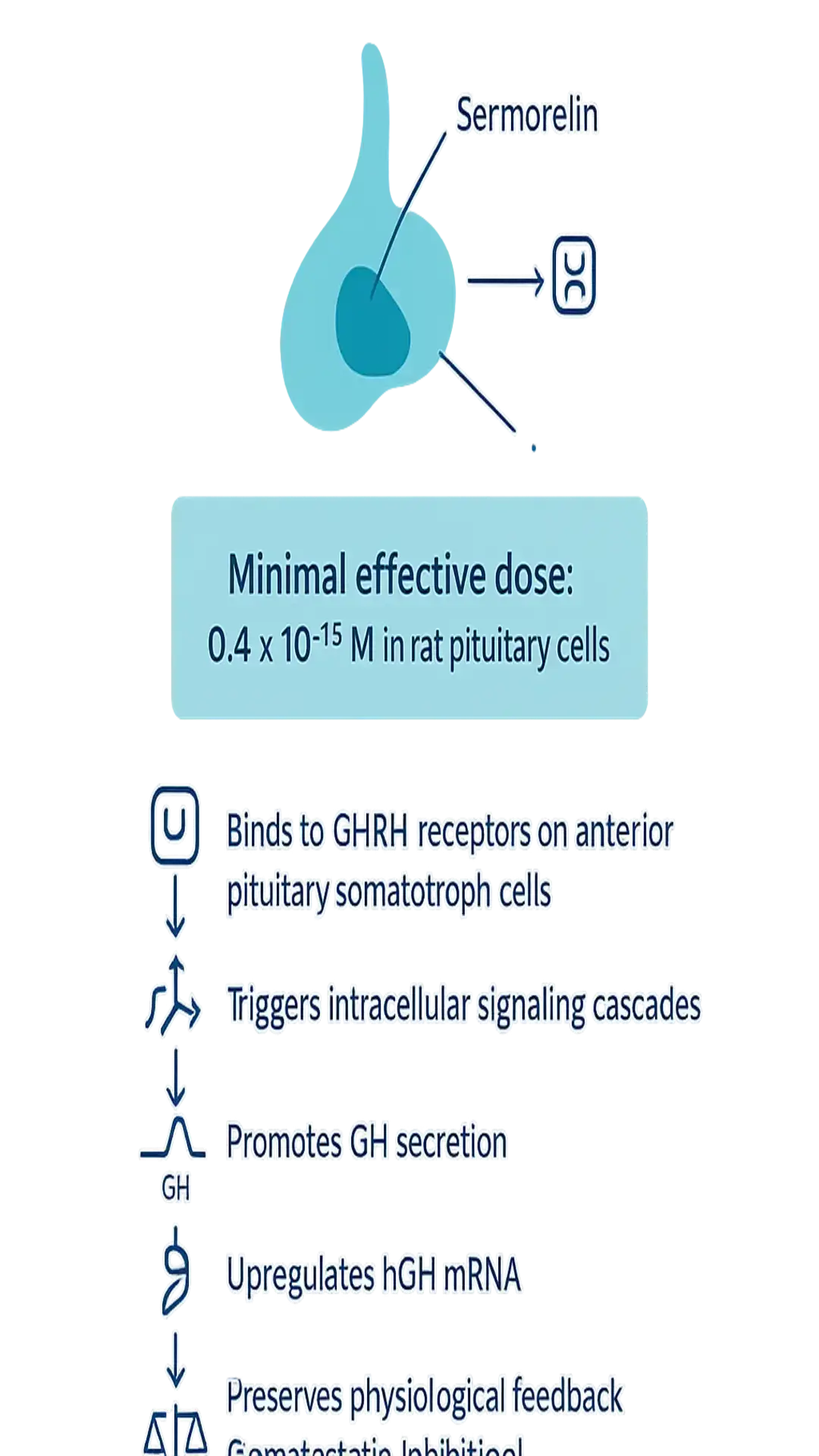
Sermorelin exerts its effects by binding specifically to GHRH receptors located on the somatotroph cells of the anterior pituitary gland. This interaction closely mimics the action of native GHRH, triggering intracellular signaling cascades that promote GH secretion. Studies in rat pituitary cell models have demonstrated its high potency, with a minimal effective dose as low as 0.4 × 10⁻¹⁵ M required to initiate GH release, underscoring its efficiency at the cellular level.
Beyond immediate secretion, sermorelin influences pituitary gene transcription, upregulating the messenger RNA for human GH (hGH) and thereby enhancing the gland’s reserve capacity. A key advantage is its preservation of physiological feedback loops, including inhibition by somatostatin, which prevents excessive or supraphysiological GH elevations. This results in pulsatile GH release patterns that align with the body’s natural rhythms, potentially supporting more balanced somatotropic axis function.
These statements have not been evaluated by the Food and Drug Administration. This product is not intended to diagnose, treat, cure, or prevent any disease.
3. Sermorelin – an overview. ScienceDirect Topics.
[9. Heiman ML, et al. (Referenced in ScienceDirect for potency in rat pituitary cells).]
Therapeutic Applications
In clinical practice, sermorelin is administered as a single subcutaneous injection to serve as a diagnostic tool, provoking a GH response that helps identify potential deficiencies in pituitary function among children. For therapeutic purposes, it has been used in pediatric cases of idiopathic GH deficiency to support growth velocity through enhanced endogenous GH secretion.
Research has also examined its role in adults with GH deficiency, aiming to restore somatotropic axis activity. Off-label explorations include scenarios involving age-related GH decline and conditions like HIV-associated lipodystrophy, where analogs such as tesamorelin have been studied similarly. These applications highlight sermorelin’s potential in contexts where stimulating natural GH pulses may offer benefits over direct hormone replacement.
2. Walker RF. Sermorelin: a better approach to management of adult-onset growth hormone insufficiency? Clin Interv Aging. 2006.
11. FDA Medical Review for related GRF analog (tesamorelin context).
Clinical Evidence
Clinical studies have shown that a single dose of sermorelin effectively stimulates GH release in children, positioning it as a well-tolerated option for diagnostic provocative testing akin to other GHRH analogs. In a 6-month treatment regimen for GH-deficient children, nightly subcutaneous administration led to observable increases in GH secretion and growth velocity, demonstrating its capacity to support pituitary responsiveness.
Among age-advanced adults, 4 months of nightly sermorelin dosing activated the somatotropic axis, with elevations in circulating hGH levels noted. Limited studies in adults have suggested associations with improvements in lean body composition, though robust, large-scale trials remain scarce. Overall, the evidence supports sermorelin’s role in pediatric diagnostics and short-term therapy, but adult applications lack extensive long-term data from the reviewed sources.
These statements have not been evaluated by the Food and Drug Administration. This product is not intended to diagnose, treat, cure, or prevent any disease.
1. Prakash A, et al.
2. Walker RF.
6. Khorram O, et al. Activation of the growth hormone releasing hormone-GH-insulin-like growth factor I axis in patients with age-advanced macular degeneration. PubMed. 1997.
[10. Vitiello MV (Referenced in clinical evidence summaries for sleep/cognition).]
Challenges and Limitations
While generally well-tolerated, sermorelin use is associated with common local side effects such as pain, redness, and swelling at the injection site, along with occasional flushing. Other potential effects include the development of anti-GHRH antibodies, transient hyperglycemia, or shifts in insulin sensitivity. It may be less effective in cases of pituitary-origin deficiencies compared to direct GH therapy and is not recommended for individuals with active malignancies, given the cell growth-promoting properties of GH and IGF-1.
The requirement for subcutaneous injections introduces practical challenges, with some users reporting edema or joint discomfort. Long-term safety and efficacy data, particularly in adults, are limited, compounded by the discontinuation of original FDA approval. These factors necessitate careful consideration in any application.
Future Directions
Emerging research may explore sermorelin in combination with ghrelin agonists, such as ipamorelin, to optimize GH pulsatility. Investigations into age-related endocrine changes, cognitive support, and metabolic balance represent promising avenues. Additional areas include potential roles in immune modulation and regenerative processes.
Further studies are essential to clarify long-term safety profiles for adult GH deficiency management and applications in anti-aging contexts. However, the retrieved sources indicate a current gap in ongoing clinical trial data, highlighting the need for more comprehensive research.
7. Ishida J, et al. Growth hormone secretagogues: history, mechanism of action, and summary of efficacy and safety. Rev Endocr Metab Disord. 2020.
8. Sinha DK, et al. Beyond the androgen receptor: the role of growth hormone secretagogues in the modern management of body composition in hypogonadal males. Transl Androl Urol. 2020.
Conclusion
Sermorelin offers a targeted mechanism to stimulate physiological GH release from the pituitary, supporting its established roles in pediatric diagnostics and short-term therapy. Its preservation of natural feedback mechanisms provides a potentially safer profile compared to direct GH administration, though evidence in adults remains preliminary.
Key challenges encompass injection-related side effects, antibody risks, and the absence of large-scale, long-term studies. Despite the 2008 discontinuation of FDA-approved manufacturing, compounded sermorelin persists in research contexts. Ongoing investigations could expand its utility in GH-related research, pending robust clinical validation.
These statements have not been evaluated by the Food and Drug Administration. This product is not intended to diagnose, treat, cure, or prevent any disease.
References
- Prakash A, et al. Sermorelin: a review of its use in the diagnosis and treatment of children with idiopathic growth hormone deficiency. Clin Endocrinol (Oxf). 1999.
- Walker RF. Sermorelin: a better approach to management of adult-onset growth hormone insufficiency? Clin Interv Aging. 2006.
- Sermorelin – an overview. ScienceDirect Topics.
- Sermorelin [DrugBank Online]. DrugBank.
- Sermorelin (injection route). Mayo Clinic.
- Khorram O, et al. Activation of the growth hormone releasing hormone-GH-insulin-like growth factor I axis in patients with age-advanced macular degeneration. PubMed. 1997.
- Ishida J, et al. Growth hormone secretagogues: history, mechanism of action, and summary of efficacy and safety. Rev Endocr Metab Disord. 2020.
- Sinha DK, et al. Beyond the androgen receptor: the role of growth hormone secretagogues in the modern management of body composition in hypogonadal males. Transl Androl Urol. 2020.
- Heiman ML, et al. (Referenced in ScienceDirect for potency in rat pituitary cells).
- Vitiello MV (Referenced in clinical evidence summaries for sleep/cognition).
- FDA Medical Review for related GRF analog (tesamorelin context).
References
References
- Prakash A, et al. Sermorelin: a review of its use in the diagnosis and treatment of children with idiopathic growth hormone deficiency. Clin Endocrinol (Oxf). 1999.
- Walker RF. Sermorelin: a better approach to management of adult-onset growth hormone insufficiency? Clin Interv Aging. 2006.
- Sermorelin – an overview. ScienceDirect Topics.
- Sermorelin [DrugBank Online]. DrugBank.
- Sermorelin (injection route). Mayo Clinic.
- Khorram O, et al. Activation of the growth hormone releasing hormone-GH-insulin-like growth factor I axis in patients with age-advanced macular degeneration. PubMed. 1997.
- Ishida J, et al. Growth hormone secretagogues: history, mechanism of action, and summary of efficacy and safety. Rev Endocr Metab Disord. 2020.
- Sinha DK, et al. Beyond the androgen receptor: the role of growth hormone secretagogues in the modern management of body composition in hypogonadal males. Transl Androl Urol. 2020.
- Heiman ML, et al. (Referenced in ScienceDirect for potency in rat pituitary cells).
- Vitiello MV (Referenced in clinical evidence summaries for sleep/cognition).
- FDA Medical Review for related GRF analog (tesamorelin context).