
Peptides for Weight Loss: 10 Key Insights from Clinical Trials
- By Isaac
Peptides for Weight Loss: 10 Key Insights from Clinical Trials
Introduction
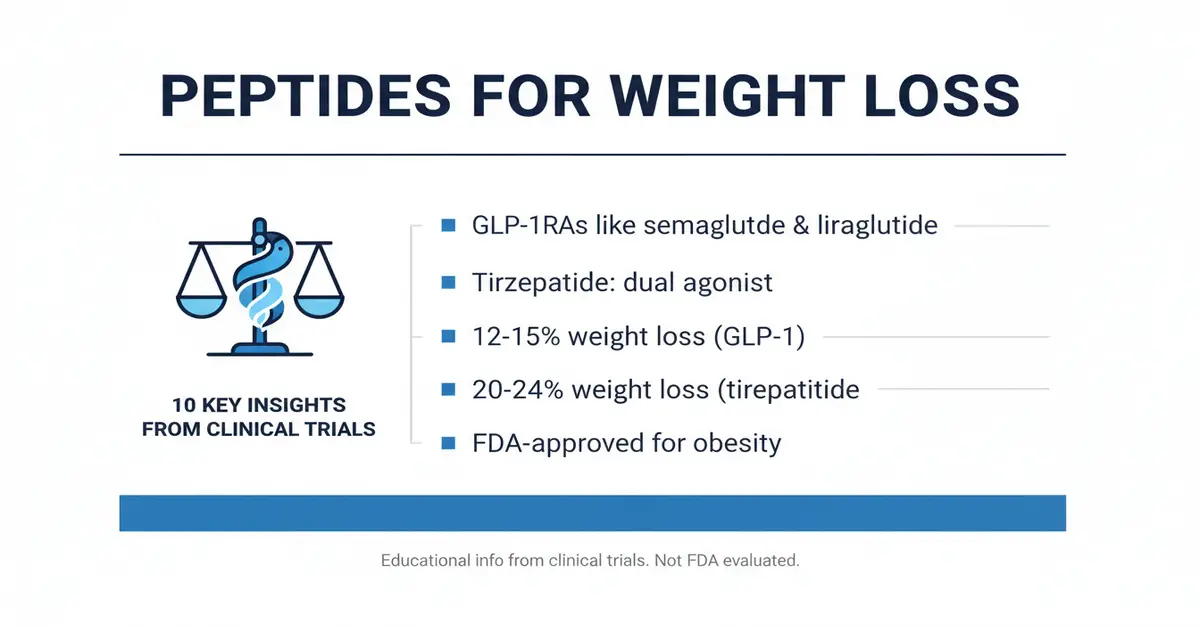
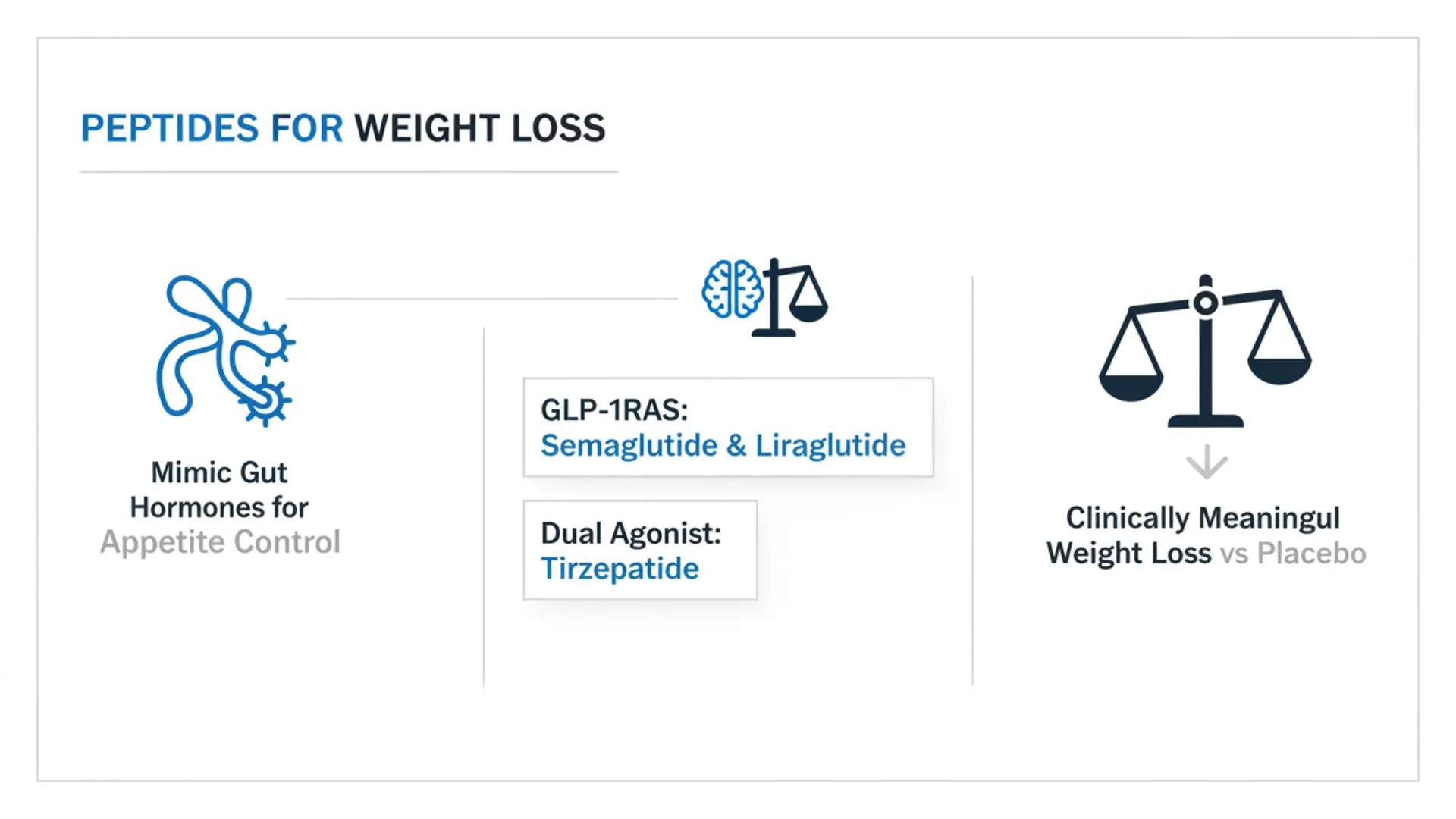
Peptides for weight loss primarily encompass glucagon-like peptide-1 receptor agonists (GLP-1RAs), such as semaglutide and liraglutide, as well as dual agonists like tirzepatide. These compounds mimic natural gut hormones involved in appetite regulation and metabolic processes. In addressing the global challenge of excess body weight, systematic reviews have demonstrated clinically meaningful reductions in body weight compared with placebo in controlled trials.
This review provides an overview of peptides for weight loss, covering their background, mechanisms of action, therapeutic applications, evidence from clinical trials and meta-analyses, challenges, and future directions. All information is drawn from peer-reviewed sources, emphasizing research findings rather than personal recommendations. These statements have not been evaluated by the Food and Drug Administration. This information is for educational purposes and not intended to diagnose, treat, cure, or prevent any disease.
Mechanisms of Action
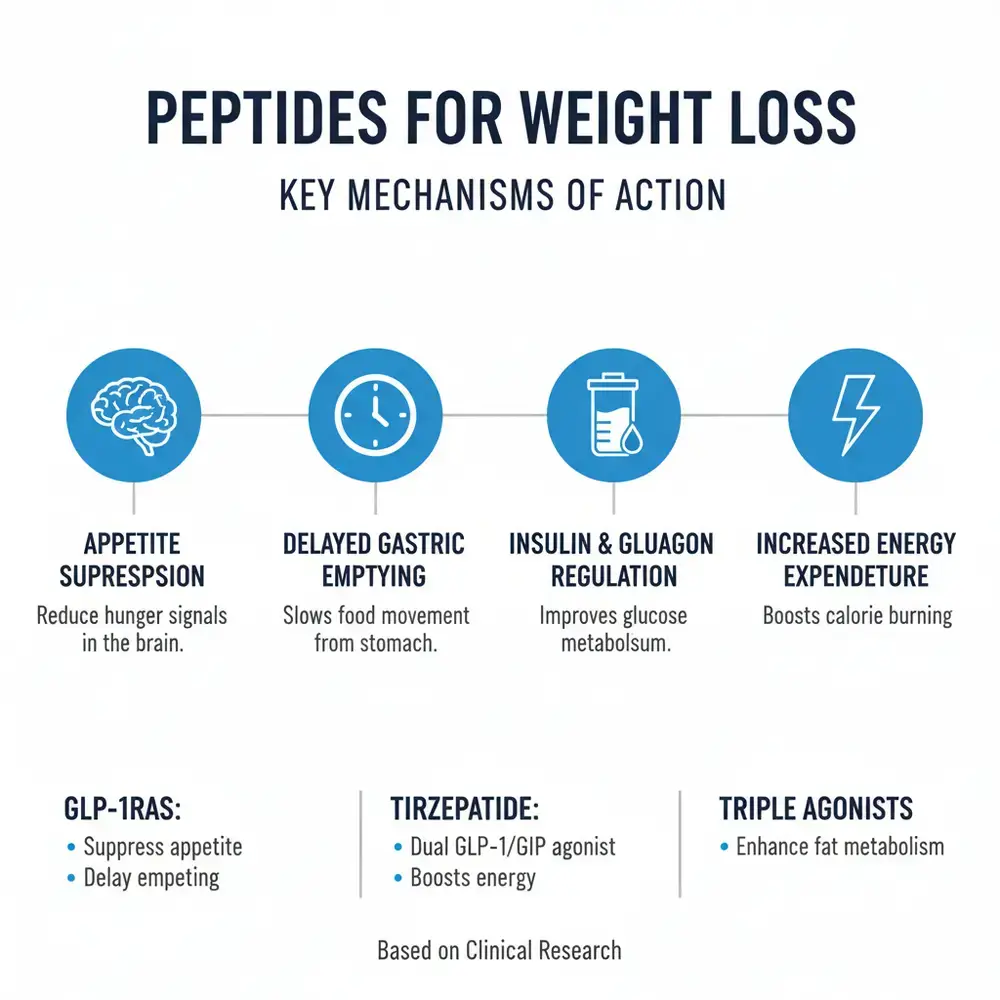
GLP-1RAs work by activating GLP-1 receptors located in the brain and peripheral tissues. This activation supports appetite suppression, delays gastric emptying, and promotes insulin secretion while inhibiting glucagon release. These statements have not been evaluated by the Food and Drug Administration. These mechanisms are based on research findings and not intended to diagnose, treat, cure, or prevent any disease.
Tirzepatide functions as a dual GLP-1/GIP agonist, which studies suggest may promote increased energy expenditure and fat metabolism beyond GLP-1 alone. Triple agonists, such as retatrutide, target GLP-1, GIP, and glucagon receptors, potentially enhancing energy expenditure and nutrient utilization according to phase 2 trial data.
Overall, these peptides for weight loss influence central pathways in the hypothalamus to support satiety signals and modulate peripheral gut hormone responses.
Therapeutic Applications
Semaglutide (as Wegovy) and liraglutide (as Saxenda) are approved by the FDA and EMA for chronic weight management in adults with obesity or overweight accompanied by weight-related comorbidities. These applications stem from clinical trial data supporting their use in structured programs.
In individuals with type 2 diabetes, these agents offer benefits for both glycemic control and weight management. Tirzepatide has gained approval for obesity treatment, with trials indicating superior weight loss compared to semaglutide.
Emerging research explores applications in adolescents and those with comorbidities like cardiovascular disease, though broader approvals await further evidence.
Clinical Evidence
Meta-analyses of GLP-1RAs, including semaglutide, report placebo-subtracted weight reductions of 12-15% over 68-72 weeks in obesity trials. For tirzepatide, higher doses have shown 20-24% weight reduction, outperforming semaglutide in head-to-head comparisons at 72 weeks.
Cochrane reviews affirm that tirzepatide, semaglutide, and liraglutide support sustained weight loss during treatment, with 73-96% of participants achieving at least 5% body weight loss. Real-world studies align with randomized controlled trials (RCTs), showing 5% or greater loss in most patients within one year.
These findings from peptides for weight loss underscore consistent outcomes across diverse study designs.
Challenges and Limitations
Common challenges with GLP-1RAs and related peptides include gastrointestinal side effects such as nausea, which contribute to discontinuation rates in trials. Weight regain is observed after stopping treatment, with meta-analyses indicating partial reversal of achieved losses.
Concerns arise with compounded or unapproved versions, including risks of dosing inaccuracies and serious adverse events requiring medical attention. Long-term data remain limited, with many trials funded by industry; regulatory bodies like the EMA and FDA are reviewing potential risks, including mental health considerations, and independent studies are recommended.
Future Directions
Ongoing development focuses on triple agonists like retatrutide, which demonstrated up to 24% weight loss in phase 2 trials. Head-to-head trials, such as SURMOUNT-5 comparing tirzepatide and semaglutide in obesity without diabetes, aim to clarify relative benefits.
Researchers emphasize the need for independent, long-term studies on efficacy, safety, and integration into clinical guidelines, as highlighted by Cochrane and WHO recommendations. Multi-agonists and combination therapies may improve tolerability and metabolic profiles in future peptides for weight loss research.
Conclusion
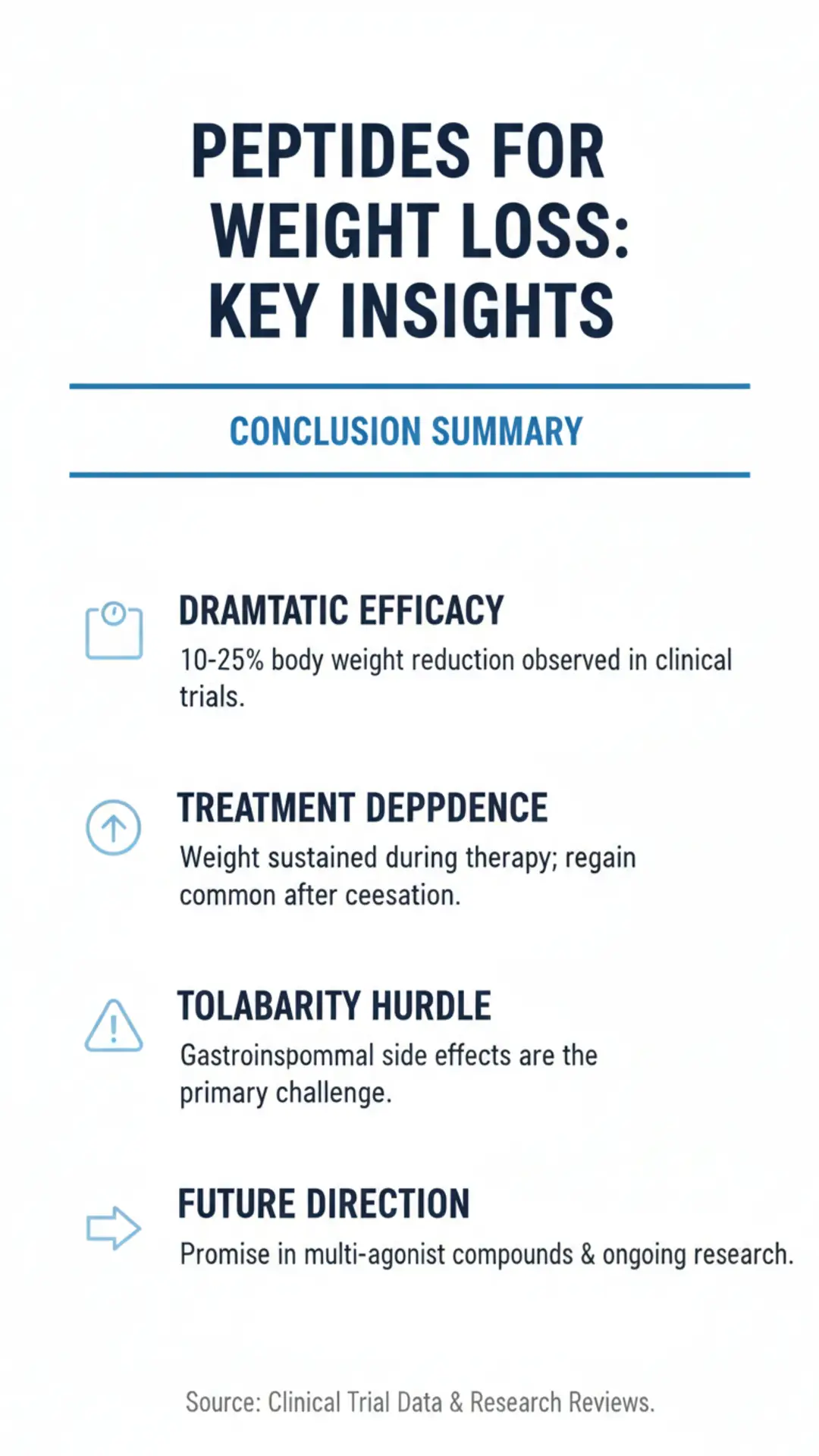
GLP-1RAs and dual co-agonists like tirzepatide offer robust, evidence-based support for weight loss ranging from 10-25% in clinical trials and meta-analyses. Efficacy is sustained during treatment but may diminish upon discontinuation.
Gastrointestinal tolerability represents the primary limitation, while risks from non-approved compounded products underscore the importance of using FDA-approved options. Advancements in multi-agonists and independent research hold promise for enhanced weight management strategies.
References
- Gao Y, et al. Research and prospect of peptides for use in obesity treatment. PMC. 2020.
- Kumar MS, et al. Peptides and Peptidomimetics as Potential Antiobesity Agents. PMC. 2019.
- Collins L, et al. Glucagon-Like Peptide-1 Receptor Agonists. StatPearls NCBI. 2024.
- Cochrane. GLP-1 drugs effective for weight loss, but more independent studies needed. 2024.
- Zhang S, et al. A Systematic Review and Model-Based Meta-Analysis of GLP-1RAs for weight loss. PubMed. 2024.
- Bak M, et al. Glucagon-like peptide agonists for weight management: systematic review and meta-analysis. PubMed. 2024.
- Jastreboff AM, et al. Tirzepatide as Compared with Semaglutide for the Treatment of Obesity. NEJM. 2024.
- Sridharan K, et al. Semaglutide vs Tirzepatide for Weight Loss in Adults With Overweight or Obesity. JAMA Internal Medicine. 2024.
- Rosenstock J, et al. Tirzepatide versus Semaglutide Once Weekly in Patients with Type 2 Diabetes. NEJM. 2021.
- Jastreboff AM, et al. Triple–Hormone-Receptor Agonist Retatrutide for Obesity — A Phase 2 Trial. NEJM. 2023.
References
References
- Gao Y, et al. Research and prospect of peptides for use in obesity treatment. PMC. 2020.
- Kumar MS, et al. Peptides and Peptidomimetics as Potential Antiobesity Agents. PMC. 2019.
- Collins L, et al. Glucagon-Like Peptide-1 Receptor Agonists. StatPearls NCBI. 2024.
- Cochrane. GLP-1 drugs effective for weight loss, but more independent studies needed. 2024.
- Zhang S, et al. A Systematic Review and Model-Based Meta-Analysis of GLP-1RAs for weight loss. PubMed. 2024.
- Bak M, et al. Glucagon-like peptide agonists for weight management: systematic review and meta-analysis. PubMed. 2024.
- Jastreboff AM, et al. Tirzepatide as Compared with Semaglutide for the Treatment of Obesity. NEJM. 2024.
- Sridharan K, et al. Semaglutide vs Tirzepatide for Weight Loss in Adults With Overweight or Obesity. JAMA Internal Medicine. 2024.
- Rosenstock J, et al. Tirzepatide versus Semaglutide Once Weekly in Patients with Type 2 Diabetes. NEJM. 2021.
- Jastreboff AM, et al. Triple–Hormone-Receptor Agonist Retatrutide for Obesity — A Phase 2 Trial. NEJM. 2023.