
Mounjaro GLP-1 Agonist Research: Insights from Peer-Reviewed Studies
- By Isaac
Introduction
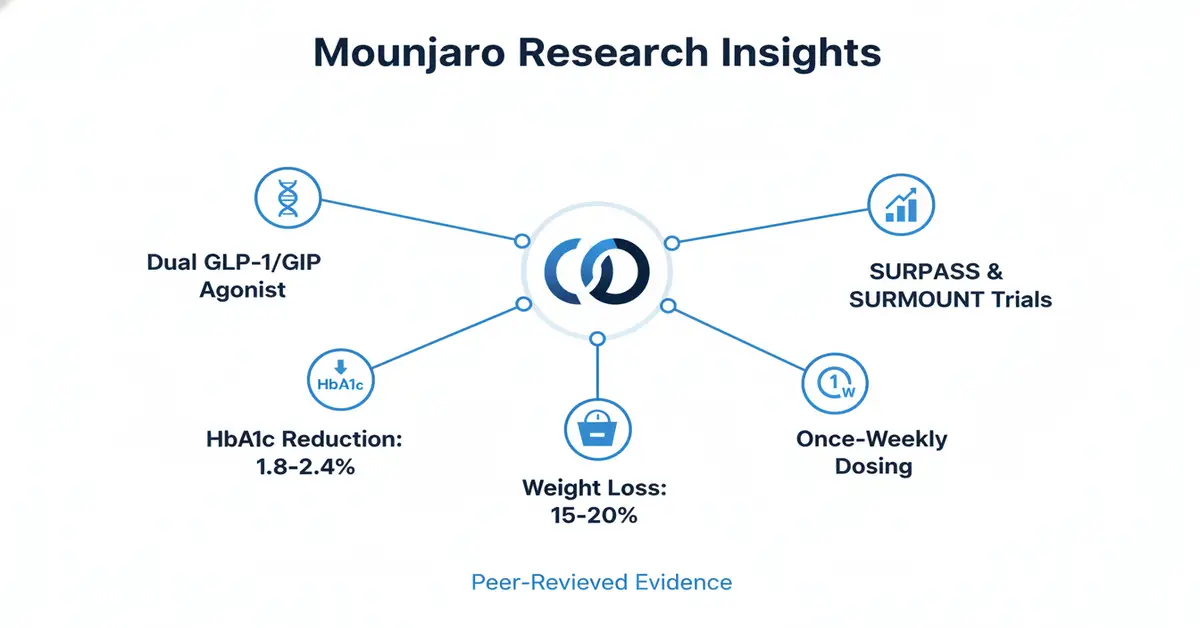
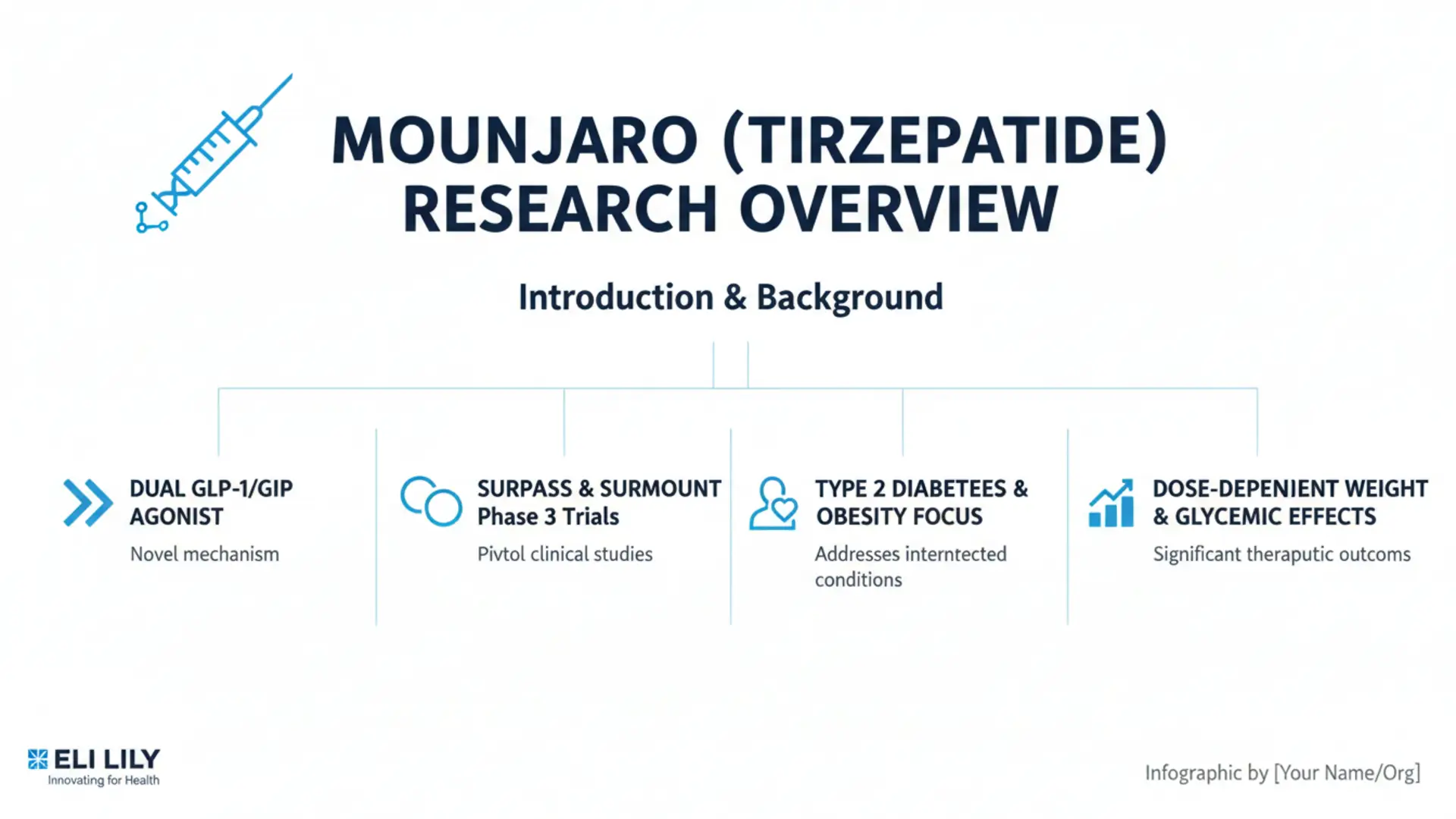
Mounjaro, also known as tirzepatide, has been studied as a dual agonist at the glucagon-like peptide-1 (GLP-1) and glucose-dependent insulinotropic polypeptide (GIP) receptors. Research on this Mounjaro GLP-1 agonist has focused on its potential roles in metabolic processes, particularly in the context of type 2 diabetes and obesity. Peer-reviewed studies, including phase 3 clinical trials like SURPASS and SURMOUNT, have provided data on its pharmacological profile. This article reviews evidence from human clinical trials and preclinical investigations, emphasizing that findings are preliminary and limited to controlled settings. The Mounjaro GLP-1 agonist has garnered attention for its receptor interactions, but further research is needed to understand long-term implications. Key investigations highlight dose-dependent effects observed in randomized trials, with neutral reporting of outcomes such as changes in body weight and glycemic parameters.
Mechanisms of Action
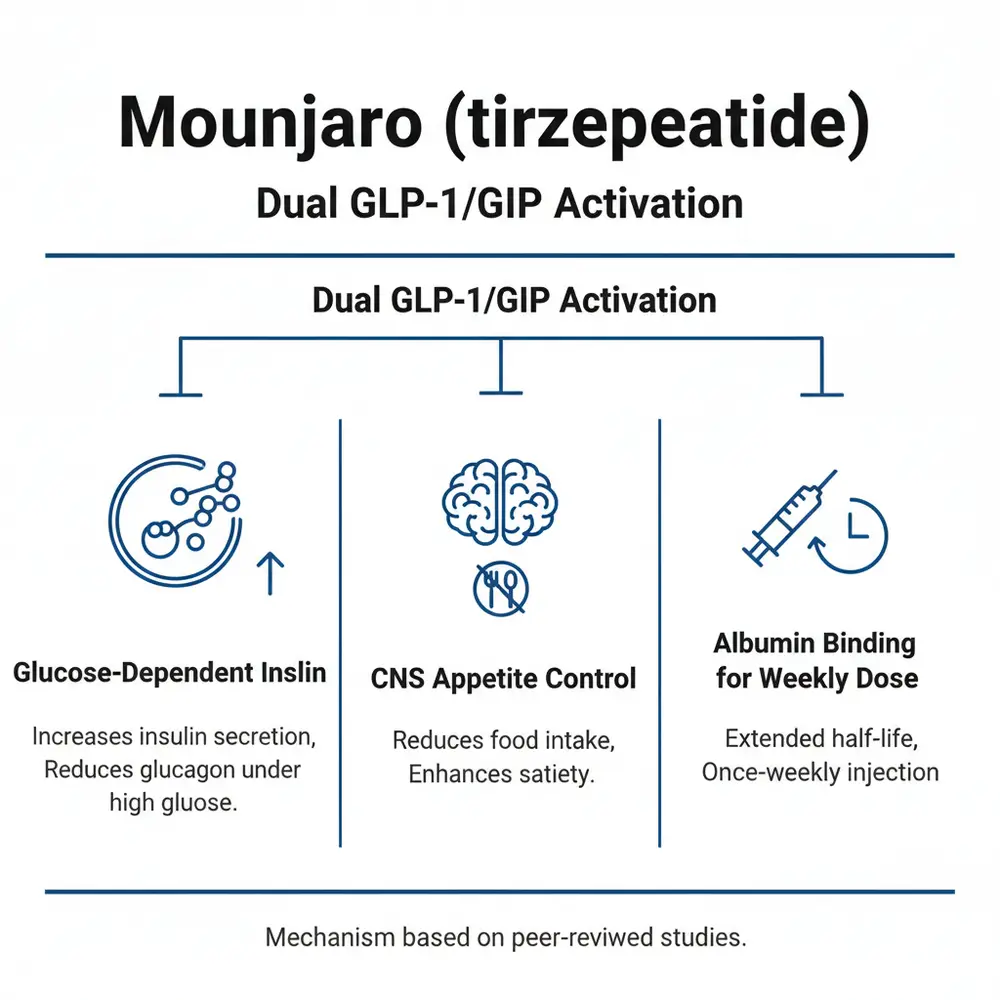
Preclinical findings suggest that the Mounjaro GLP-1 agonist activates GLP-1 receptors on pancreatic beta cells, potentially enhancing insulin secretion in a glucose-dependent manner. Studies indicate GIP receptor engagement may influence glucagon suppression under hyperglycemic conditions and promote lipolysis in adipose tissue. In vitro assays using HEK293 cells expressing human receptors demonstrated tirzepatide’s biased agonism, with higher potency at GLP-1 receptors compared to native ligands. Receptor internalization assays revealed dose-dependent endocytosis that correlated with downstream cAMP signaling. Animal studies in mice showed reduced food intake via central nervous system pathways, including hypothalamic activation. Human islet investigations noted interactions with amino acids potentiating glucagon release at physiological concentrations. The dual mechanism of the Mounjaro GLP-1 agonist has been explored using membrane GTPγS binding assays, confirming partial agonism. Pharmacokinetic data from trials indicate that once-weekly dosing is due to albumin binding, which prolongs the half-life. These mechanisms remain the subject of ongoing research, with limited direct evidence of causation in humans.
Therapeutic Applications
Research has examined the Mounjaro GLP-1 agonist in contexts like glycemic management and body weight modulation. SURPASS trials investigated its addition to existing therapies in patients with type 2 diabetes, reporting changes in HbA1c and body weight. SURMOUNT studies focused on obesity cohorts and observed dose-related weight reductions. Kidney-related endpoints in post hoc analyses suggested associations with eGFR stability, consistent with GLP-1 class effects. Cardiovascular outcomes have been preliminary in head-to-head comparisons, though long-term data are pending. Preclinical work hints at anti-inflammatory effects in adipose tissue via GIP pathways. The Mounjaro GLP-1 agonist has been studied for potential applications in metabolic syndrome, but evidence is confined to specific trial populations. Real-world evaluations showed tolerability profiles similar to those in randomized data. Applications in non-diabetic obesity have been explored in phase 3 designs, emphasizing lifestyle intervention adjuncts. Overall, therapeutic explorations of the Mounjaro GLP-1 agonist underscore the need for broader population studies.
Clinical Evidence
Phase 3 SURPASS-1 trial (n=478) compared tirzepatide doses (5-15 mg) to placebo in type 2 diabetes patients, reporting mean HbA1c reductions of 1.8-2.4% and weight loss of 7-11 kg at 40 weeks. SURPASS-2 (n=1879) versus semaglutide showed superior HbA1c lowering (-2.3% vs. -1.9%) and greater weight reduction (-11.2 kg vs. -7.7 kg). SURMOUNT-1 (n=2539) in obesity demonstrated 15-20% weight loss at 72 weeks with 10-15 mg doses versus 3% with placebo. SURMOUNT-2 in type 2 diabetes with obesity reported 12-15% reductions. Pooled analyses from SURPASS-1-5 indicated that gastrointestinal events were common, with discontinuation rates below 10%. A JAMA Network Open study (n=18,386) compared tirzepatide with GLP-1 agonists and found lower kidney event hazards. Real-world data (2024) aligned with trials, showing 10-15% weight changes. StatPearls review summarized glycemic improvements across doses. Evidence for the Mounjaro GLP-1 agonist is robust in short-term trials but preliminary for durability beyond 72 weeks.
Challenges and Limitations
Common adverse events in Mounjaro GLP-1 agonist studies include nausea (20-30%), diarrhea (15-20%), and vomiting (10-15%), often during dose escalation. Disproportionality analyses of FAERS data highlighted gastrointestinal signals, though causality remains unconfirmed. Injection-site reactions and dosing errors were reported in real-world settings. Hypoglycemia risk was low (<5%) except with insulin co-use. Limited data exist for long-term use beyond 88 weeks or in pediatrics/pregnancy. Renal impairment studies showed no dose adjustment needed, but dehydration-related AKI risks were noted. Diabetic retinopathy signals emerged in subgroups, warranting monitoring. Trial limitations include exclusion of severe comorbidities and short durations relative to chronic conditions. Real-world adherence was lower than in trials, impacting outcomes. Pharmacovigilance reviews emphasized underreporting biases. Challenges for the Mounjaro GLP-1 agonist include generalizability beyond trial demographics (mostly adults 40-60 years, BMI 30-40).
Future Directions
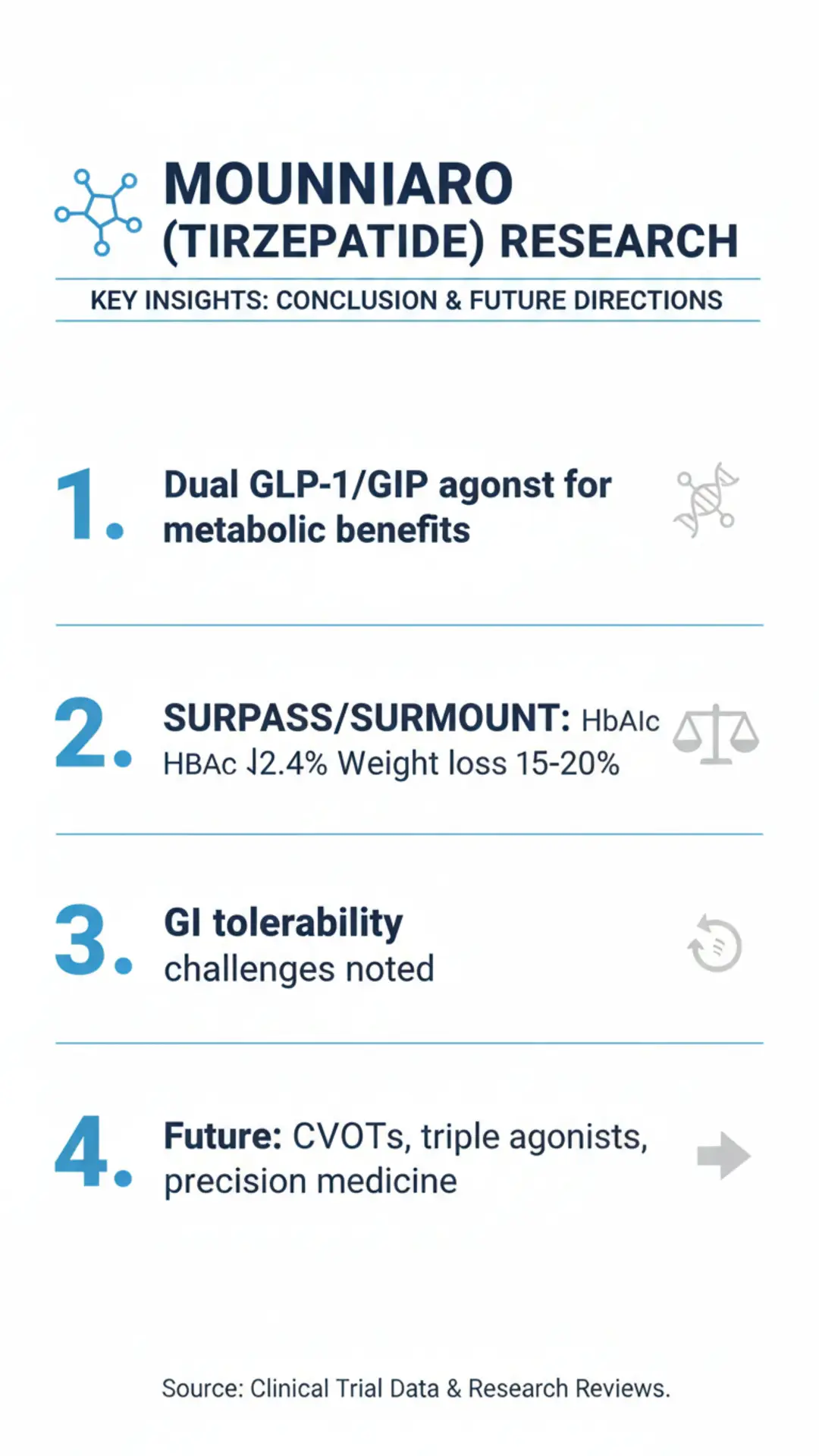
Ongoing trials are exploring the Mounjaro GLP-1 agonist in type 1 diabetes (phase 2) and in cardiovascular endpoints (SURPASS-CVOT). Triple agonists like retatrutide (GLP-1/GIP/glucagon) may build on dual mechanisms, with phase 3 data anticipated. Head-to-head studies versus emerging agents could clarify positioning. Long-term extension trials (SURMOUNT-MMO) assess sustained effects. Research into biomarkers for responders/non-responders is proposed. Pediatric and elderly cohorts represent gaps. Combination with SGLT2 inhibitors or amylin analogs is under preclinical investigation. Real-world registries will track rare events. Genetic studies on GIPR/GLP1R polymorphisms may predict efficacy. The future of the Mounjaro GLP-1 agonist includes precision applications, though evidence remains preliminary.
Conclusion
Peer-reviewed research on the Mounjaro GLP-1 agonist, tirzepatide, highlights its dual receptor profile and trial outcomes in metabolic research. SURPASS and SURMOUNT programs provide foundational data, with consistent patterns in glycemic and weight parameters. Mechanisms involving the incretin pathways have been elucidated in models, yet their human translation remains limited. Challenges such as gastrointestinal tolerability persist, underscoring the need for cautious interpretation. Future studies may provide additional insights, but current evidence comes from controlled trials with defined populations. The Mounjaro GLP-1 agonist continues to inform incretin research trajectories.
References
Farzam K. Tirzepatide. StatPearls. 2024. https://www.ncbi.nlm.nih.gov/books/NBK585056/
Sokary S. The promise of tirzepatide: A narrative review of metabolic benefits. Journal of Diabetes and Its Complications. 2025. https://www.sciencedirect.com/science/article/pii/S1751991825000816
Kelly MS. Real‐world evaluation of the effects of tirzepatide in patients. Diabetes Obesity and Metabolism. 2024. https://dom-pubs.onlinelibrary.wiley.com/doi/10.1111/dom.15934
Lin F. Weight loss efficiency and safety of tirzepatide: A Systematic Review and Meta-Analysis. PLOS ONE. 2023. https://pmc.ncbi.nlm.nih.gov/articles/PMC10159347/
Nauck MA. Tirzepatide is a dual GIP/GLP-1 receptor co-agonist for the treatment of type 2 diabetes. Journal of Clinical Investigation. 2022. https://pubmed.ncbi.nlm.nih.gov/36050763/
Thomas MK. Dual GIP and GLP-1 Receptor Agonist Tirzepatide Improves Beta Cell Function. Journal of Clinical Endocrinology & Metabolism. 2021. https://academic.oup.com/jcem/article/106/2/388/6000489
Cai W. Tirzepatide as a novel, effective, and safe strategy for weight loss. Frontiers in Public Health. 2024. https://www.frontiersin.org/journals/public-health/articles/10.3389/fpubh.2024.1277113/full
Zhang Z. Tirzepatide safety in type 2 diabetes: a disproportionality analysis. Endocrine Connections. 2025. https://ec.bioscientifica.com/view/journals/ec/14/7/EC-25-0205.xml
Almansour HA. Real-World Safety Concerns of Tirzepatide. Cureus. 2025. https://pmc.ncbi.nlm.nih.gov/articles/PMC12469573/
Mishra R. Adverse Events Related to Tirzepatide. Journal of the Endocrine Society. 2023. https://academic.oup.com/jes/article/7/4/bvad016/7005432
References
References
Farzam K. Tirzepatide. StatPearls. 2024. https://www.ncbi.nlm.nih.gov/books/NBK585056/
Sokary S. The promise of tirzepatide: A narrative review of metabolic benefits. Journal of Diabetes and Its Complications. 2025. https://www.sciencedirect.com/science/article/pii/S1751991825000816
Kelly MS. Real‐world evaluation of the effects of tirzepatide in patients. Diabetes Obesity and Metabolism. 2024. https://dom-pubs.onlinelibrary.wiley.com/doi/10.1111/dom.15934
Lin F. Weight loss efficiency and safety of tirzepatide: A Systematic Review and Meta-Analysis. PLOS ONE. 2023. https://pmc.ncbi.nlm.nih.gov/articles/PMC10159347/
Nauck MA. Tirzepatide is a dual GIP/GLP-1 receptor co-agonist for the treatment of type 2 diabetes. Journal of Clinical Investigation. 2022. https://pubmed.ncbi.nlm.nih.gov/36050763/
Thomas MK. Dual GIP and GLP-1 Receptor Agonist Tirzepatide Improves Beta Cell Function. Journal of Clinical Endocrinology & Metabolism. 2021. https://academic.oup.com/jcem/article/106/2/388/6000489
Cai W. Tirzepatide as a novel, effective, and safe strategy for weight loss. Frontiers in Public Health. 2024. https://www.frontiersin.org/journals/public-health/articles/10.3389/fpubh.2024.1277113/full
Zhang Z. Tirzepatide safety in type 2 diabetes: a disproportionality analysis. Endocrine Connections. 2025. https://ec.bioscientifica.com/view/journals/ec/14/7/EC-25-0205.xml
Almansour HA. Real-World Safety Concerns of Tirzepatide. Cureus. 2025. https://pmc.ncbi.nlm.nih.gov/articles/PMC12469573/
Mishra R. Adverse Events Related to Tirzepatide. Journal of the Endocrine Society. 2023. https://academic.oup.com/jes/article/7/4/bvad016/7005432