
GLP-1 Receptor Agonists: Mechanisms, Clinical Evidence, and Future Directions
- By Isaac
GLP-1 Receptor Agonists: Mechanisms, Clinical Evidence, and Future Directions
GLP-1 receptor agonists (GLP-1RAs), often referred to in shorthand as GLP1 therapies, represent a significant advancement in metabolic health management. These medications mimic the actions of the endogenous hormone glucagon-like peptide-1, which plays a key role in regulating blood sugar levels and appetite. Developed to address limitations of the natural hormone, GLP-1RAs have been studied extensively for their effects on insulin secretion, glucagon suppression, gastric emptying, and satiety signals. Clinical research highlights their role in supporting glycemic control and weight management, particularly in individuals with type 2 diabetes mellitus (T2DM) or obesity. This review synthesizes peer-reviewed evidence on their background, mechanisms, applications, supporting data, challenges, and emerging developments.
These statements have not been evaluated by the Food and Drug Administration. This information is for educational purposes only and is not intended to diagnose, treat, cure, or prevent any disease. Consult a healthcare professional before starting any medication.
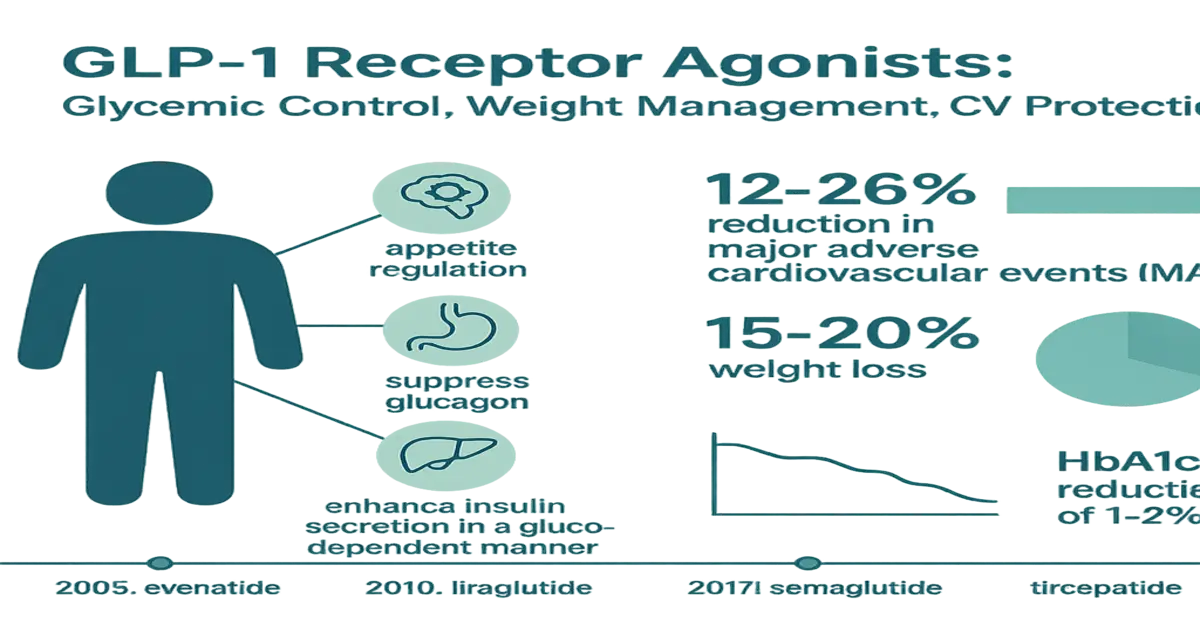
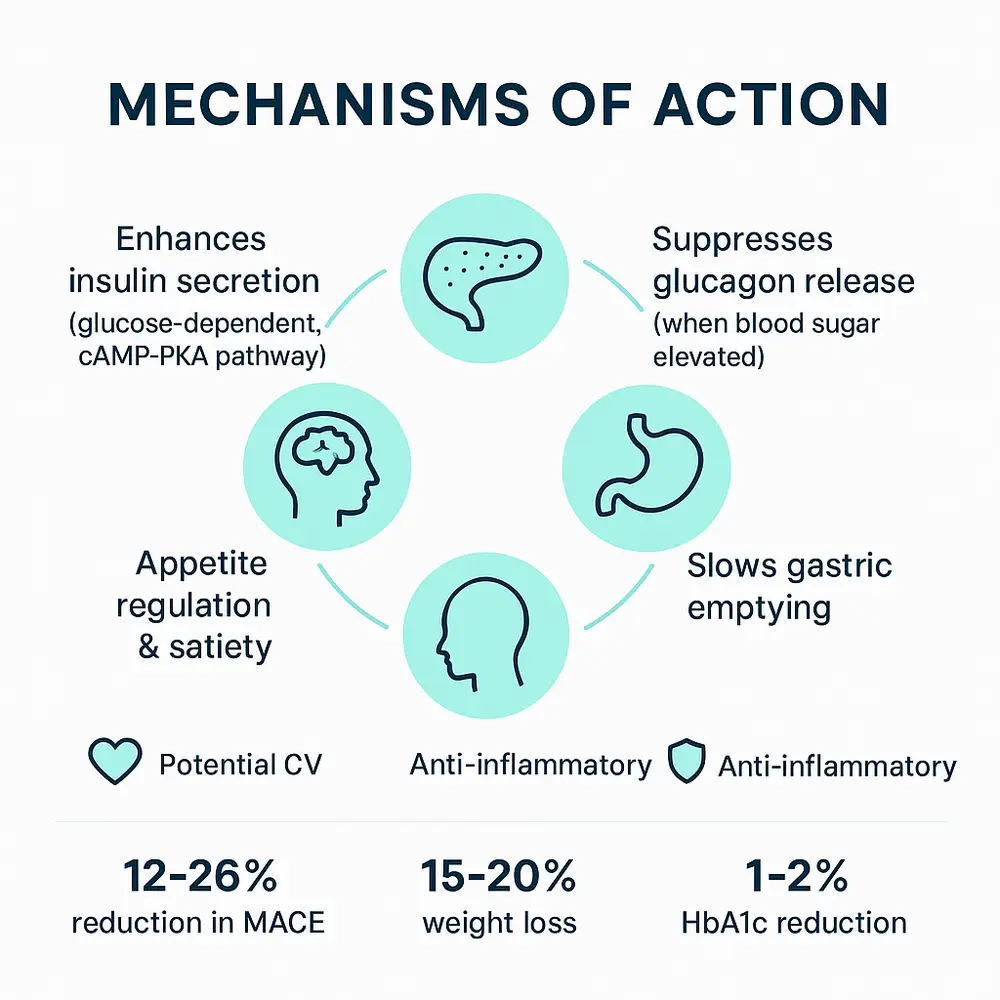
GLP1 Receptor: Mechanisms of Action
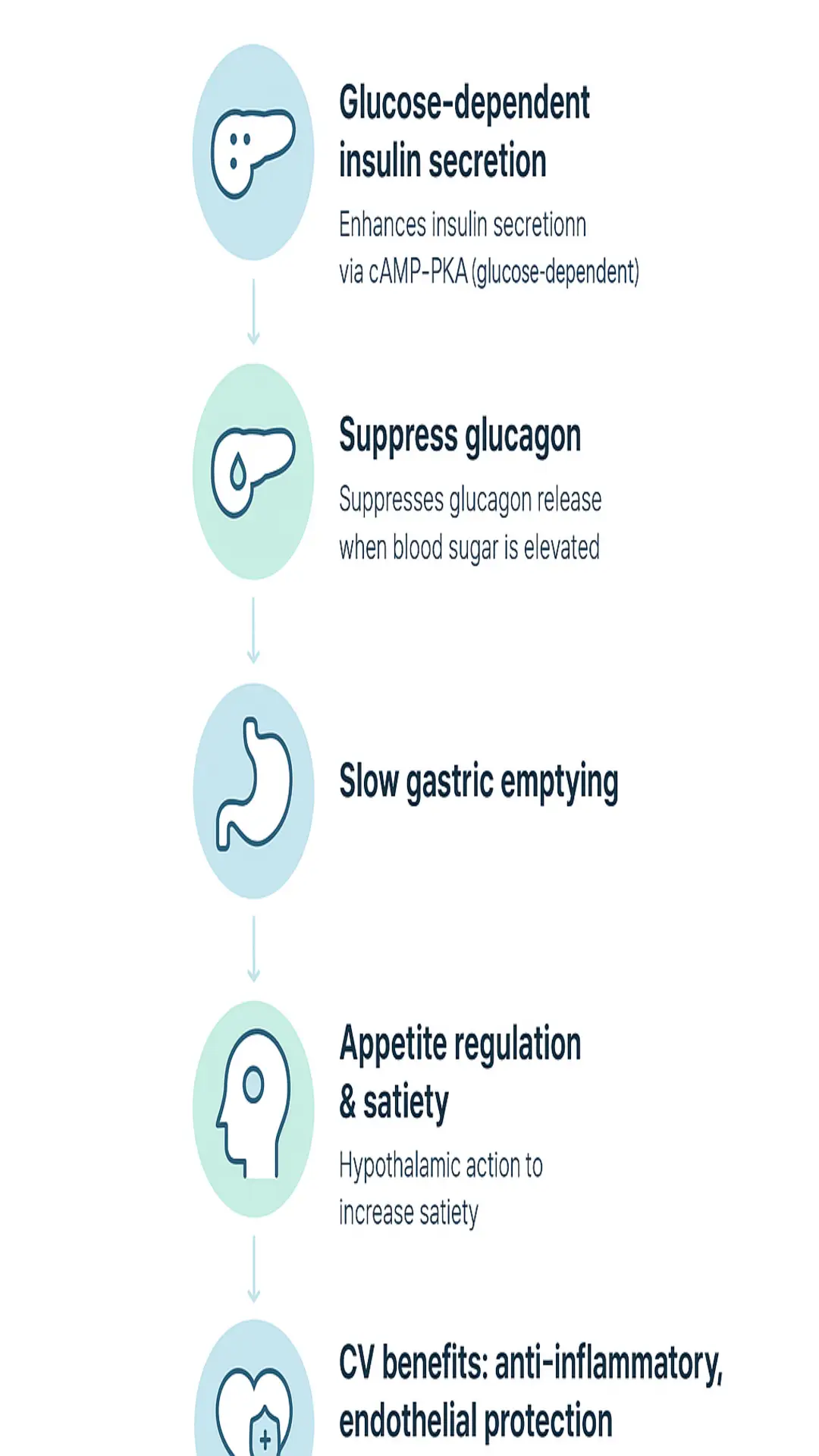
GLP-1RAs exert their effects by binding to GLP-1 receptors on various tissues, triggering a cascade of physiological responses. On pancreatic beta-cells, they enhance insulin secretion in a glucose-dependent manner through activation of the cAMP-PKA pathway, helping to maintain balanced blood sugar responses after meals. These statements have not been evaluated by the Food and Drug Administration. This product is not intended to diagnose, treat, cure, or prevent any disease.
Simultaneously, they suppress glucagon release from alpha-cells specifically when blood sugar is elevated, which helps reduce excess glucose production by the liver. Central and peripheral effects slow gastric emptying, promoting a feeling of fullness, while actions on hypothalamic centers in the brain support appetite regulation.
Beyond metabolic effects, GLP-1RAs show potential cardiovascular benefits through anti-inflammatory properties, protection of endothelial cells, and signaling in cardiac GLP-1 receptors. They may also support healthier lipid profiles, reduce inflammation in adipose tissue, and offer neuroprotective effects due to GLP-1 receptor expression in the brain. These statements have not been evaluated by the Food and Drug Administration. This information is not intended to diagnose, treat, cure, or prevent any disease.
Therapeutic Applications
GLP-1RAs are primarily utilized in the management of T2DM to support glycemic control, especially among those with obesity or cardiovascular disease. Regulatory approvals extend to chronic weight management for individuals with obesity (BMI ≥30) or overweight (BMI ≥27) with related conditions, often at adjusted higher doses.
Guidelines also recognize their role in reducing cardiovascular risk for T2DM patients with established cardiovascular disease or high risk factors. Emerging research explores applications in areas like non-alcoholic fatty liver disease (NAFLD), chronic kidney disease, and heart failure. Investigational areas include polycystic ovary syndrome, neurodegenerative conditions, and behaviors related to addiction, though these remain under study.
Clinical Evidence
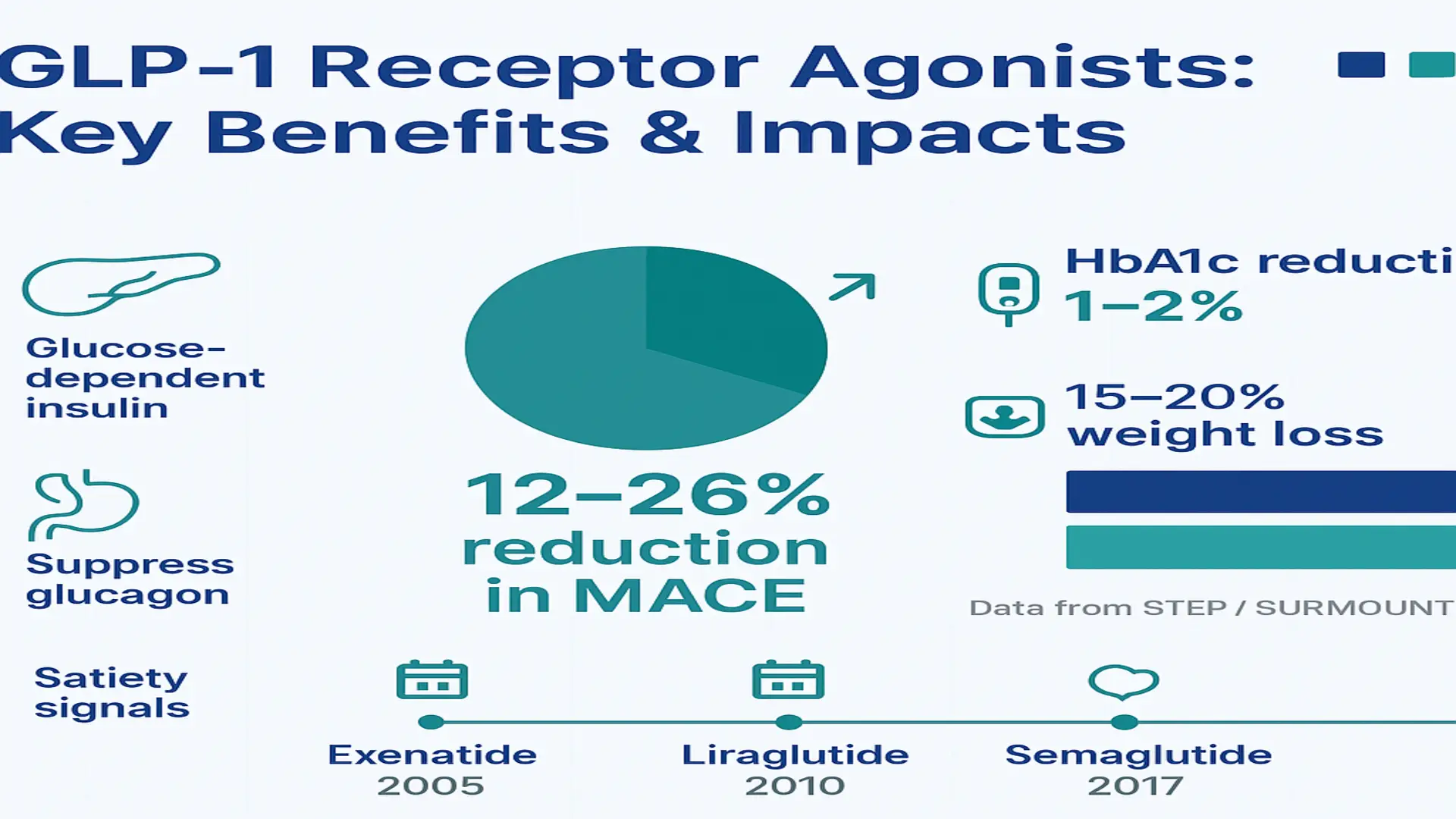
Robust data from cardiovascular outcome trials (CVOTs) and meta-analyses demonstrate GLP-1RAs’ impact. For instance, pooled analyses show a 12-26% reduction in major adverse cardiovascular events (MACE) among T2DM patients. In obesity trials like STEP and SURMOUNT, semaglutide and tirzepatide supported 15-20% weight loss.
Network meta-analyses position semaglutide as a leader in supporting HbA1c reductions of 1-2% and weight loss compared to other GLP-1RAs. Renal outcomes benefit from slowed disease progression, as seen in trials like SELECT and CVOT pools. Real-world studies reinforce these findings with sustained effects on glycemic parameters and weight, alongside observations of lower dementia risk in certain groups.
Key references include Buse et al. (2024) in Diabetes Care, which details efficacy and safety, and Sattar et al. (2024) in The Lancet Diabetes & Endocrinology, analyzing kidney and cardiovascular outcomes.
Challenges and Limitations
While effective, GLP-1RAs are associated with gastrointestinal side effects, including nausea (20-40%), vomiting, diarrhea, and constipation, which are often dose-dependent and improve over time. Rare serious risks, such as pancreatitis, gallbladder issues, gastroparesis, and bowel obstruction, have been noted in randomized controlled trial meta-analyses.
Discontinuation frequently leads to weight regain, as evidenced in the STEP 4 extension. Other barriers include high costs, limited access, supply shortages, and contraindications like personal or family history of medullary thyroid carcinoma or multiple endocrine neoplasia syndrome type 2. Dose titration strategies can help manage tolerability.
Studies like Sodhi et al. (2023) in JAMA highlight gastrointestinal risks in weight loss contexts.
GLP1 receptor: Future Directions
Innovation continues with oral small-molecule GLP-1RAs, such as orforglipron, aiming to enhance convenience over injections. Multi-agonists targeting GLP-1, GIP, and glucagon receptors show promise for amplified metabolic effects.
Research is expanding into neurodegeneration (e.g., Alzheimer’s), addiction, arthritis, and cancer risk factors. Long-term studies address concerns like suicidality, optic neuropathy, and musculoskeletal impacts. Personalized approaches using biomarkers for responders and real-world data integration are on the horizon.
Conclusion
GLP-1 receptor agonists stand out for their evidence-based support in glycemic control for T2DM, weight management in obesity, and cardiovascular/renal protection. Superior outcomes in weight loss and MACE reduction compared to other therapies are backed by clinical trials and meta-analyses. Gastrointestinal effects remain the main tolerability challenge, addressable through titration and education.
As novel formulations and indications advance, GLP-1RAs are poised for broader integration into care for high-risk individuals. This evolution underscores their place in comprehensive metabolic health strategies, always under medical supervision.
References
- Buse JB, et al. (2024). Efficacy and Safety of GLP-1 Medicines for Type 2 Diabetes. Diabetes Care, 47(11):1873-1885. DOI: 10.2337/dc24-1145.
- Andreadis P, et al. (2024). Glucagon-Like Peptide-1 Receptor Agonists – StatPearls. StatPearls Publishing.
- Wang Y, et al. (2025). Comprehensive evaluation of GLP-1 receptor agonists. Nature Communications, 16:67701. DOI: 10.1038/s41467-025-67701-9.
- Müller TD, et al. (2019). Mechanisms of Action and Therapeutic Application of Glucagon-like Peptide-1. Cell Metabolism, 27(4):745-761. DOI: 10.1016/j.cmet.2018.09.010.
- Lee CH, et al. (2024). Mechanisms of action and therapeutic applications of GLP-1 receptor agonists. Frontiers in Endocrinology, 15:1431292. DOI: 10.3389/fendo.2024.1431292.
- Sun F, et al. (2024). Comparative effectiveness of GLP-1 receptor agonists… BMJ, 384:e076410. DOI: 10.1136/bmj-2023-076410.
- He H, et al. (2025). Efficacy of GLP-1 Receptor Agonists on Weight Loss… Diabetes Care, 48(2):292-301.
- Sattar N, et al. (2024). Effects of GLP-1 receptor agonists on kidney and cardiovascular… The Lancet Diabetes & Endocrinology. DOI: 10.1016/S2213-8587(24)00271-7.
- Sodhi M, et al. (2023). Risk of Gastrointestinal Adverse Events… JAMA, 330(18):1795-1797. DOI: 10.1001/jama.2023.19574.
- Moiz A, et al. (2025). The expanding role of GLP-1 receptor agonists… The Lancet eClinicalMedicine, 73:102661.
References
References
- Buse JB, et al. (2024). Efficacy and Safety of GLP-1 Medicines for Type 2 Diabetes. Diabetes Care, 47(11):1873-1885. DOI: 10.2337/dc24-1145.
- Andreadis P, et al. (2024). Glucagon-Like Peptide-1 Receptor Agonists – StatPearls. StatPearls Publishing.
- Wang Y, et al. (2025). Comprehensive evaluation of GLP-1 receptor agonists. Nature Communications, 16:67701. DOI: 10.1038/s41467-025-67701-9.
- Müller TD, et al. (2019). Mechanisms of Action and Therapeutic Application of Glucagon-like Peptide-1. Cell Metabolism, 27(4):745-761. DOI: 10.1016/j.cmet.2018.09.010.
- Lee CH, et al. (2024). Mechanisms of action and therapeutic applications of GLP-1 receptor agonists. Frontiers in Endocrinology, 15:1431292. DOI: 10.3389/fendo.2024.1431292.
- Sun F, et al. (2024). Comparative effectiveness of GLP-1 receptor agonists… BMJ, 384:e076410. DOI: 10.1136/bmj-2023-076410.
- He H, et al. (2025). Efficacy of GLP-1 Receptor Agonists on Weight Loss… Diabetes Care, 48(2):292-301.
- Sattar N, et al. (2024). Effects of GLP-1 receptor agonists on kidney and cardiovascular… The Lancet Diabetes & Endocrinology. DOI: 10.1016/S2213-8587(24)00271-7.
- Sodhi M, et al. (2023). Risk of Gastrointestinal Adverse Events… JAMA, 330(18):1795-1797. DOI: 10.1001/jama.2023.19574.
- Moiz A, et al. (2025). The expanding role of GLP-1 receptor agonists… The Lancet eClinicalMedicine, 73:102661.