
GLP1 Meds: Mechanisms, Clinical Evidence, and Research Directions
- By Isaac
## Introduction to GLP1 Meds
GLP-1 receptor agonists (GLP-1RAs), known as GLP1 meds, mimic the incretin hormone glucagon-like peptide-1.
They were primarily developed for glycemic control in type 2 diabetes mellitus (T2DM).
Research has investigated GLP1 meds in relation to weight loss and cardiovascular outcomes.
This review covers their mechanisms, research contexts in diabetes and obesity, clinical evidence from trials and meta-analyses, challenges, and future developments [1, 3, 4, 9].
## Mechanisms of Action for GLP1 Meds
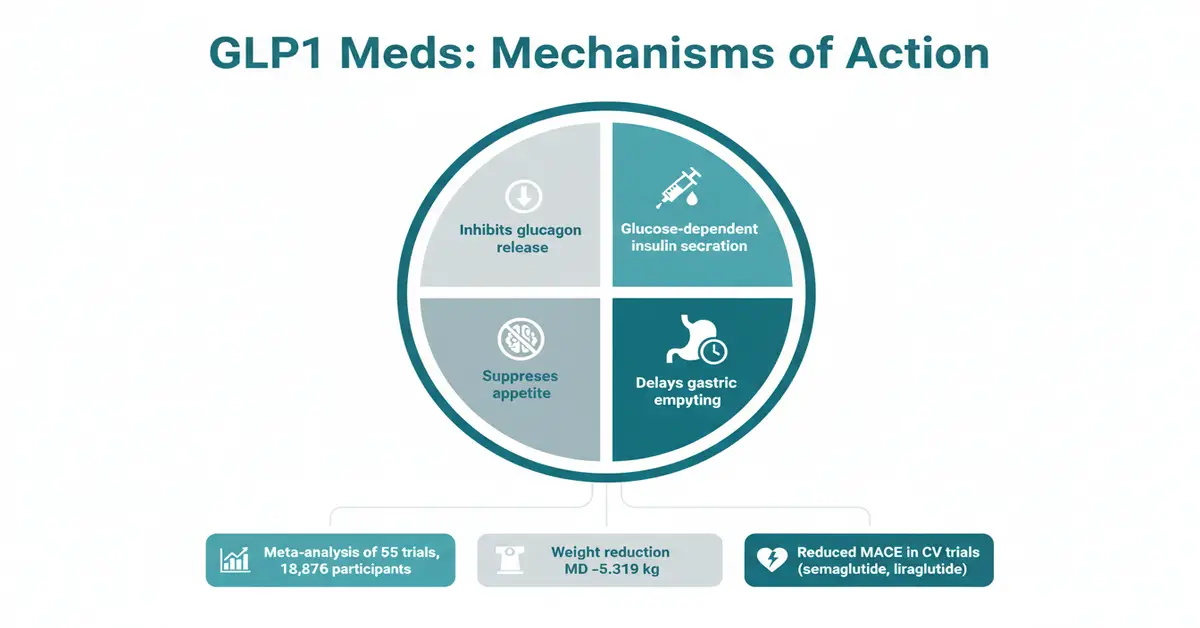
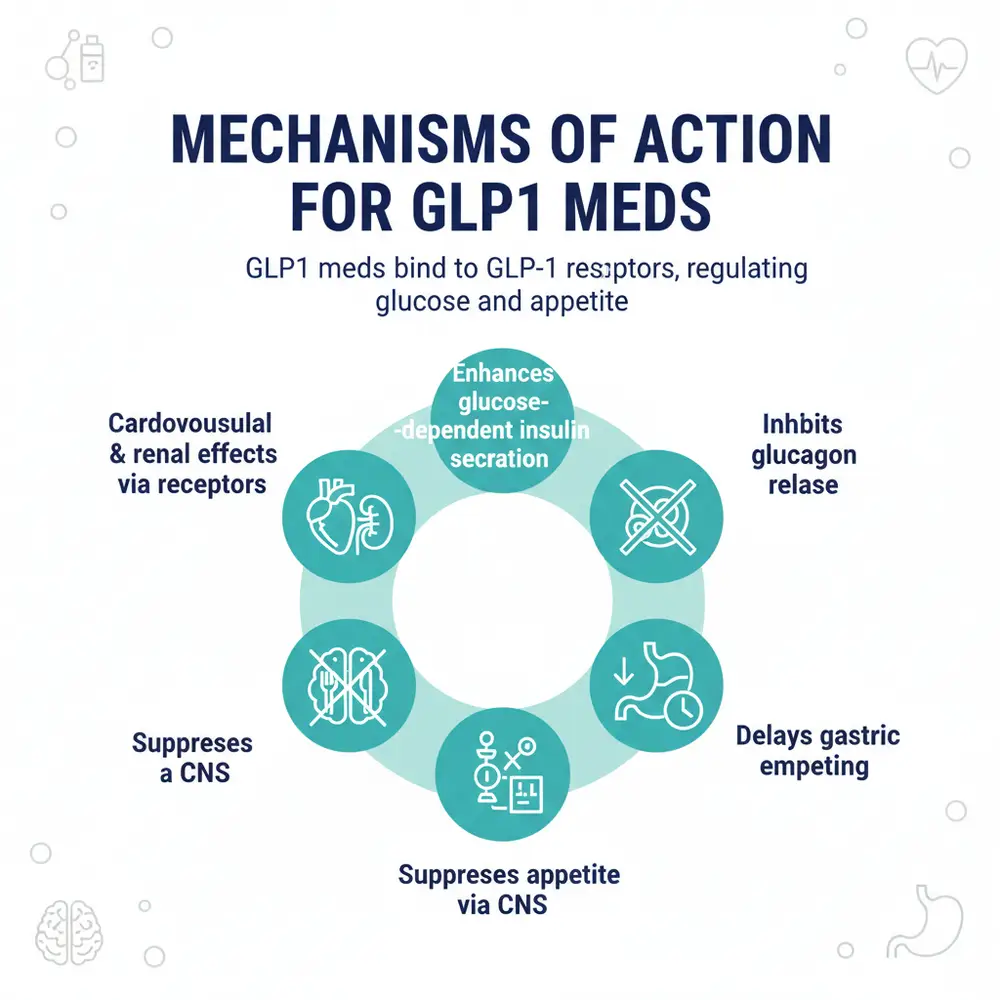
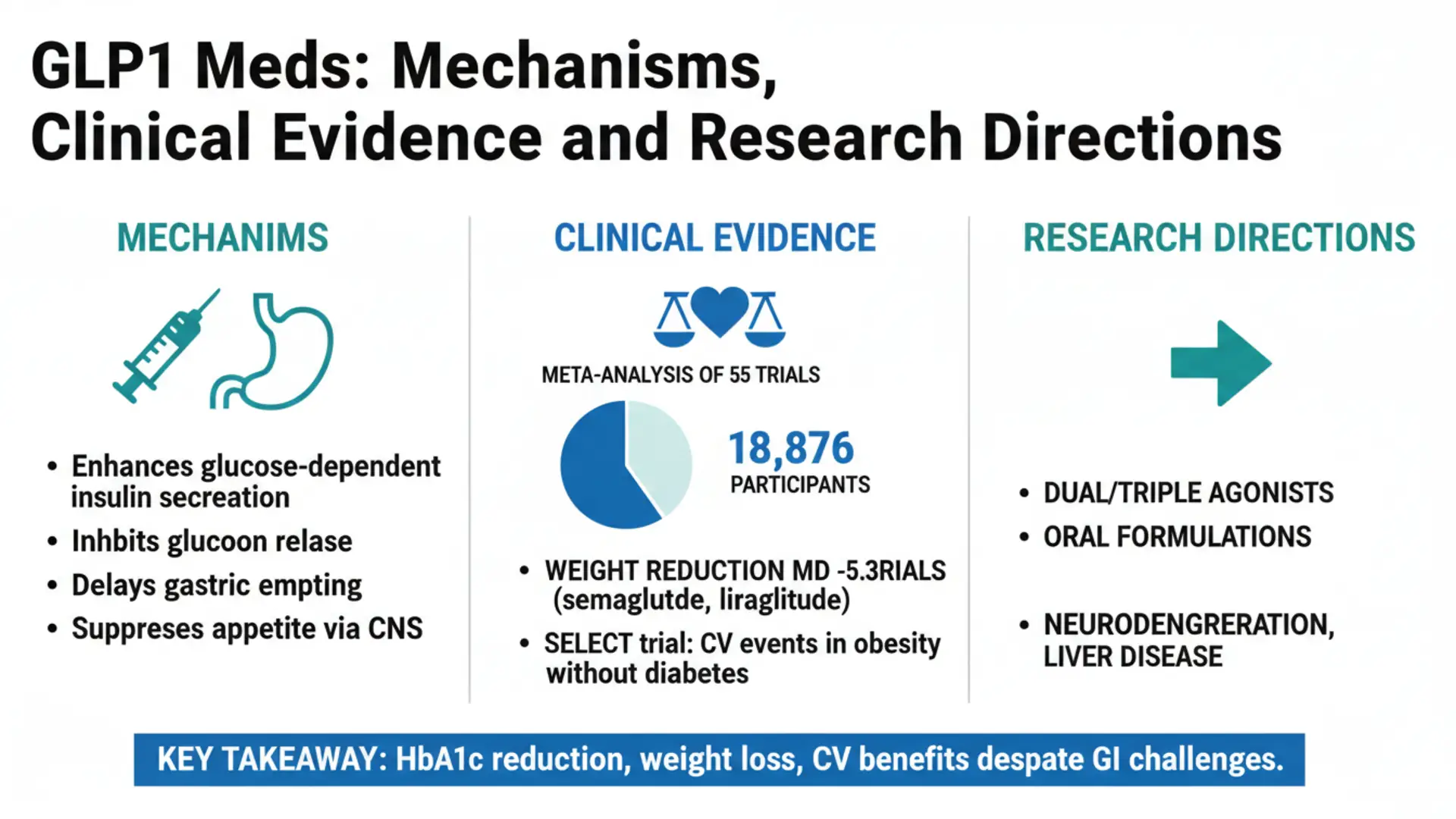
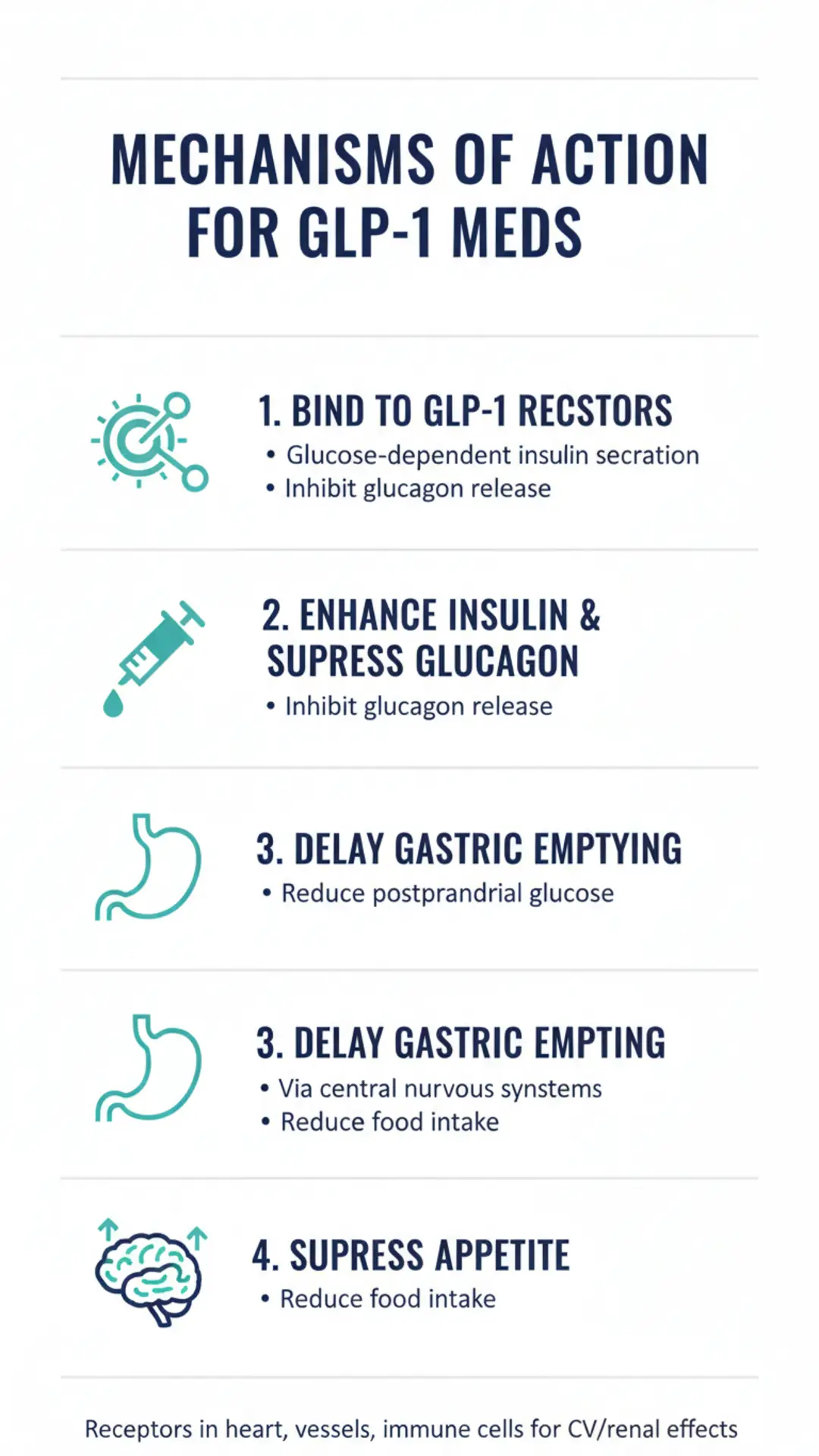
GLP1 meds bind to GLP-1 receptors, enhancing glucose-dependent insulin secretion and inhibiting glucagon release.
They delay gastric emptying, reducing postprandial glucose excursions.
These meds suppress appetite and food intake via central nervous system effects.
Receptors are expressed in heart, vessels, and immune cells, contributing to indirect cardiovascular and renal effects observed in research [3, 4, 7, 9].
## Research Applications of GLP1 Meds
Research has examined GLP1 meds in T2DM in relation to HbA1c, fasting plasma glucose, and body weight.
Studies have investigated their role in obesity management, with findings of weight reduction (e.g., MD −5.319 kg).
Cardiovascular outcome trials have reported on major adverse cardiovascular events (MACE), including heart attack, stroke, and CV death in T2DM.
Research indications have included chronic kidney disease, heart failure, and non-diabetic obesity [2, 3, 4, 8].
Clinical Evidence for GLP1 Meds
Meta-analyses of 55 trials (18,876 participants) show HbA1c and weight changes.
Cardiovascular outcome trials report MACE findings with semaglutide, liraglutide.
The SELECT trial reported semaglutide findings on CV events in obesity without diabetes.
Head-to-head studies report efficacy findings in A1C across GLP1 meds; dulaglutide and semaglutide showed notable effects [1, 2, 5, 8].
Challenges and Limitations of GLP1 Meds
Predominant gastrointestinal side effects include nausea, vomiting, diarrhea, and constipation.
Rare serious events encompass gallbladder disorders, acute pancreatitis, and aspiration risk during anesthesia.
Concerns exist with compounded/unapproved versions leading to dosing errors and adverse events.
The EMA is reviewing risks of suicidal thoughts; challenges include bowel preparation for procedures [10, 11].
## Future Directions for GLP1 Meds
Development is underway for dual (GLP-1/glucagon, GLP-1/GIP) and triple agonists for enhanced weight loss.
Oral formulations aim to overcome injectable limitations.
Research indications are expanding to neurodegeneration, liver disease, and non-diabetic populations.
Ongoing research focuses on long-term safety, multi-organ effects, and novel delivery systems [3, 6].
Conclusion on GLP1 Meds
Research on GLP1 meds has reported HbA1c changes, weight loss findings, and CV/kidney outcomes in T2DM and obesity.
They are supported by large meta-analyses and outcome trials showing consistent findings.
Gastrointestinal tolerability is the main challenge noted in studies.
Multi-agonists and broader research applications represent ongoing developments [1, 3, 4].
## References
1. Long-Term Efficacy Trajectories of GLP-1 Receptor Agonists. PMC12476180. Meta-analysis of 55 trials, 18,876 participants.
2. Comparison of the effectiveness and safety of GLP-1 receptor agonists for type 2 diabetes mellitus patients with overweight/obesity: A systematic review and network meta-analysis. Diabetes Res Clin Pract, 2025. https://www.sciencedirect.com/science/article/abs/pii/S0168822725000130
3. The expanding role of GLP-1 receptor agonists: a narrative review of emerging indications and considerations. PMC12303005.
4. Current Perspectives on GLP-1 Agonists in Contemporary Clinical Practice. PMC12511252, 2025.
5. GLP-1 receptor agonists: an updated review of head-to-head clinical studies. PMC7953228, 2021.
6. Emerging Frontiers in GLP-1 Therapeutics. Pharmaceutics 17(8):1036, 2025. https://www.mdpi.com/1999-4923/17/8/1036
7. Glucagon-like peptide-1 receptor agonists. World J Diabetes, 2025. https://www.wjgnet.com/2150-5349/full/v16/i3/107148.htm
8. Semaglutide and Cardiovascular Outcomes in Obesity without Diabetes. N Engl J Med. https://www.nejm.org/doi/full/10.1056/NEJMoa2307563
9. Glucagon-Like Peptide-1 Receptor Agonists. StatPearls. https://www.ncbi.nlm.nih.gov/books/NBK551568/
10. EMA statement on ongoing review of GLP-1 receptor agonists. https://www.ema.europa.eu/en/news/ema-statement-ongoing-review-glp-1-receptor-agonists
11. FDA’s Concerns with Unapproved GLP-1 Drugs Used for Weight Loss. https://www.fda.gov/drugs/postmarket-drug-safety-information-patients-and-providers/fdas-concerns-unapproved-glp-1-drugs-used-weight-loss
References
## References
1. Long-Term Efficacy Trajectories of GLP-1 Receptor Agonists. PMC12476180. Meta-analysis of 55 trials, 18,876 participants.
2. Comparison of the effectiveness and safety of GLP-1 receptor agonists for type 2 diabetes mellitus patients with overweight/obesity: A systematic review and network meta-analysis. Diabetes Res Clin Pract, 2025. https://www.sciencedirect.com/science/article/abs/pii/S0168822725000130
3. The expanding role of GLP-1 receptor agonists: a narrative review of emerging indications and considerations. PMC12303005.
4. Current Perspectives on GLP-1 Agonists in Contemporary Clinical Practice. PMC12511252, 2025.
5. GLP-1 receptor agonists: an updated review of head-to-head clinical studies. PMC7953228, 2021.
6. Emerging Frontiers in GLP-1 Therapeutics. Pharmaceutics 17(8):1036, 2025. https://www.mdpi.com/1999-4923/17/8/1036
7. Glucagon-like peptide-1 receptor agonists. World J Diabetes, 2025. https://www.wjgnet.com/2150-5349/full/v16/i3/107148.htm
8. Semaglutide and Cardiovascular Outcomes in Obesity without Diabetes. N Engl J Med. https://www.nejm.org/doi/full/10.1056/NEJMoa2307563
9. Glucagon-Like Peptide-1 Receptor Agonists. StatPearls. https://www.ncbi.nlm.nih.gov/books/NBK551568/
10. EMA statement on ongoing review of GLP-1 receptor agonists. https://www.ema.europa.eu/en/news/ema-statement-ongoing-review-glp-1-receptor-agonists
11. FDA’s Concerns with Unapproved GLP-1 Drugs Used for Weight Loss. https://www.fda.gov/drugs/postmarket-drug-safety-information-patients-and-providers/fdas-concerns-unapproved-glp-1-drugs-used-weight-loss