
GLP-1 Receptor Agonists for Type 2 Diabetes: An Evidence-Based Research Overview
- By Isaac
Introduction
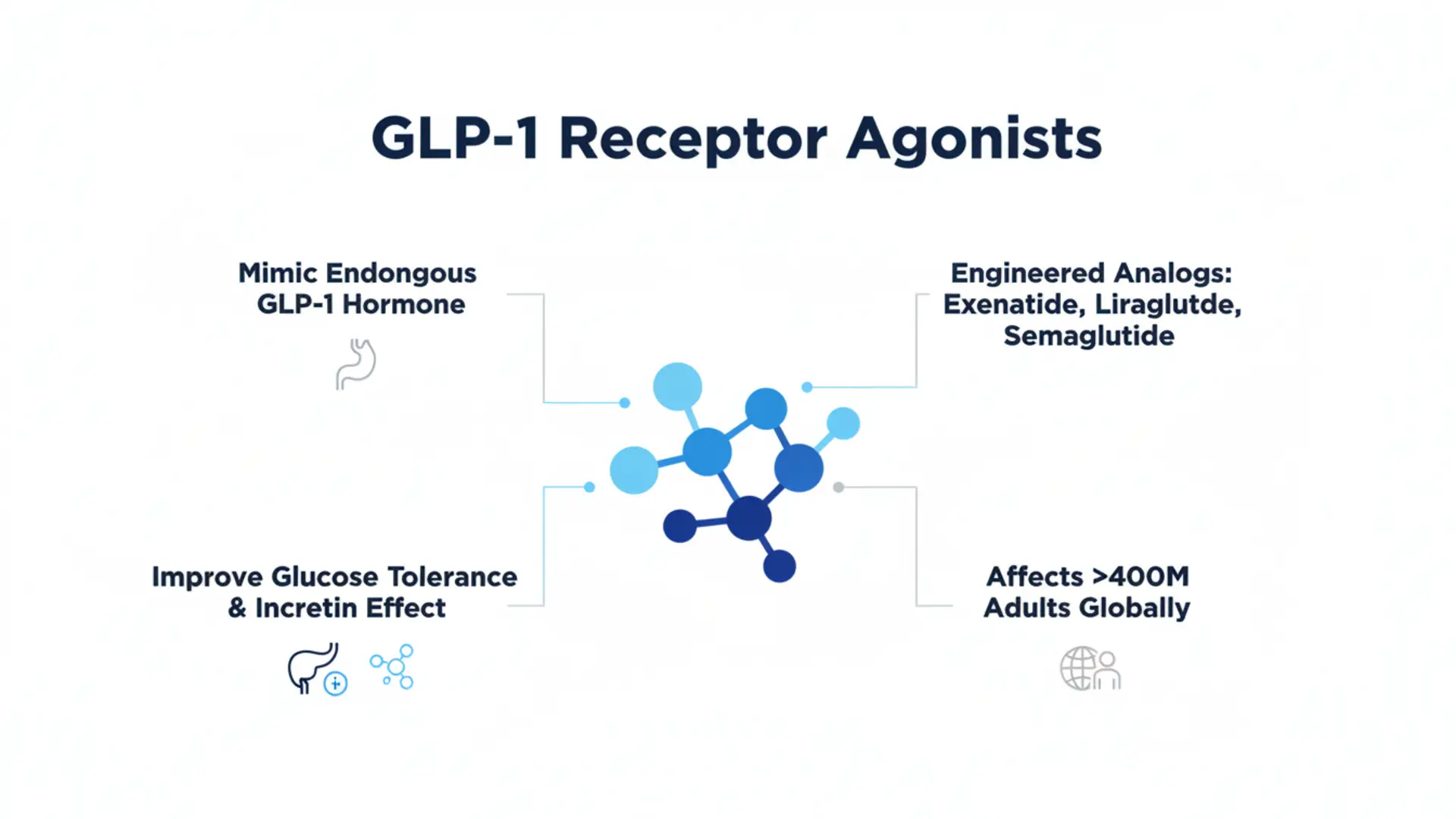
GLP-1 receptor agonists for type 2 diabetes have garnered significant attention in scientific literature due to their role in metabolic research. These peptide-based compounds mimic the actions of endogenous glucagon-like peptide-1 (GLP-1), an incretin hormone involved in glucose homeostasis. Research has explored GLP-1 receptor agonists for type 2 diabetes in various clinical contexts, including glycemic management and associated comorbidities. Peer-reviewed studies, including randomized controlled trials and meta-analyses, provide insights into their pharmacological profiles. This article reviews evidence from human and animal studies on GLP-1 receptor agonists for type 2 diabetes, emphasizing mechanisms, preclinical and clinical findings, and ongoing research limitations. While GLP-1 receptor agonists for type 2 diabetes have been investigated extensively, evidence remains context-specific and preliminary in some areas.
Mechanisms of Action
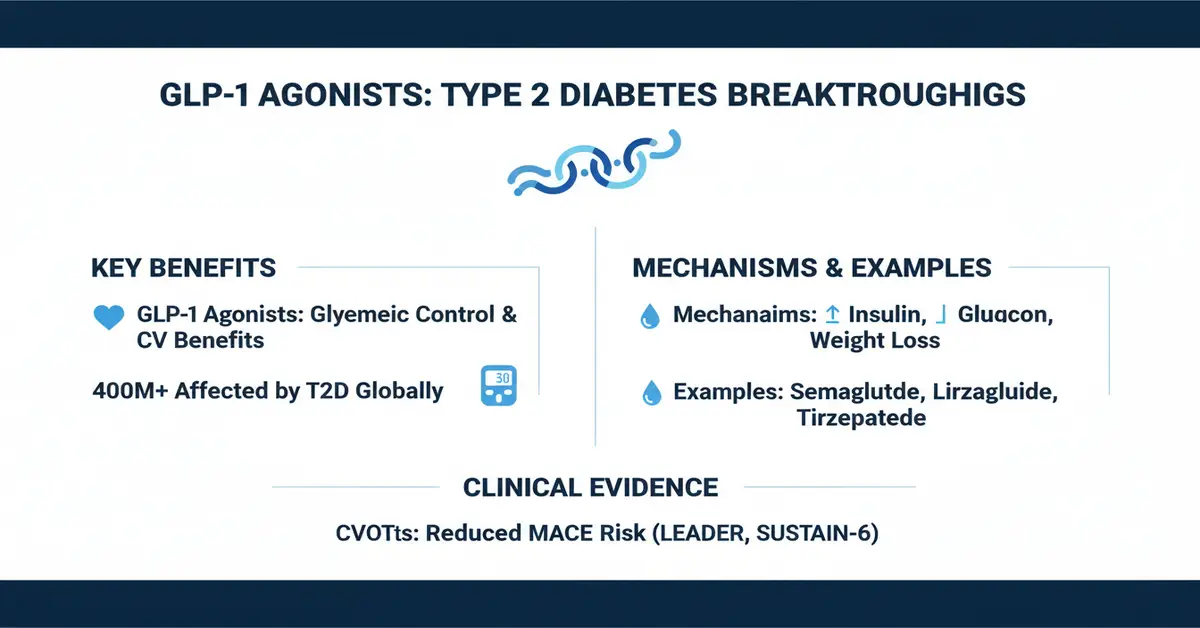
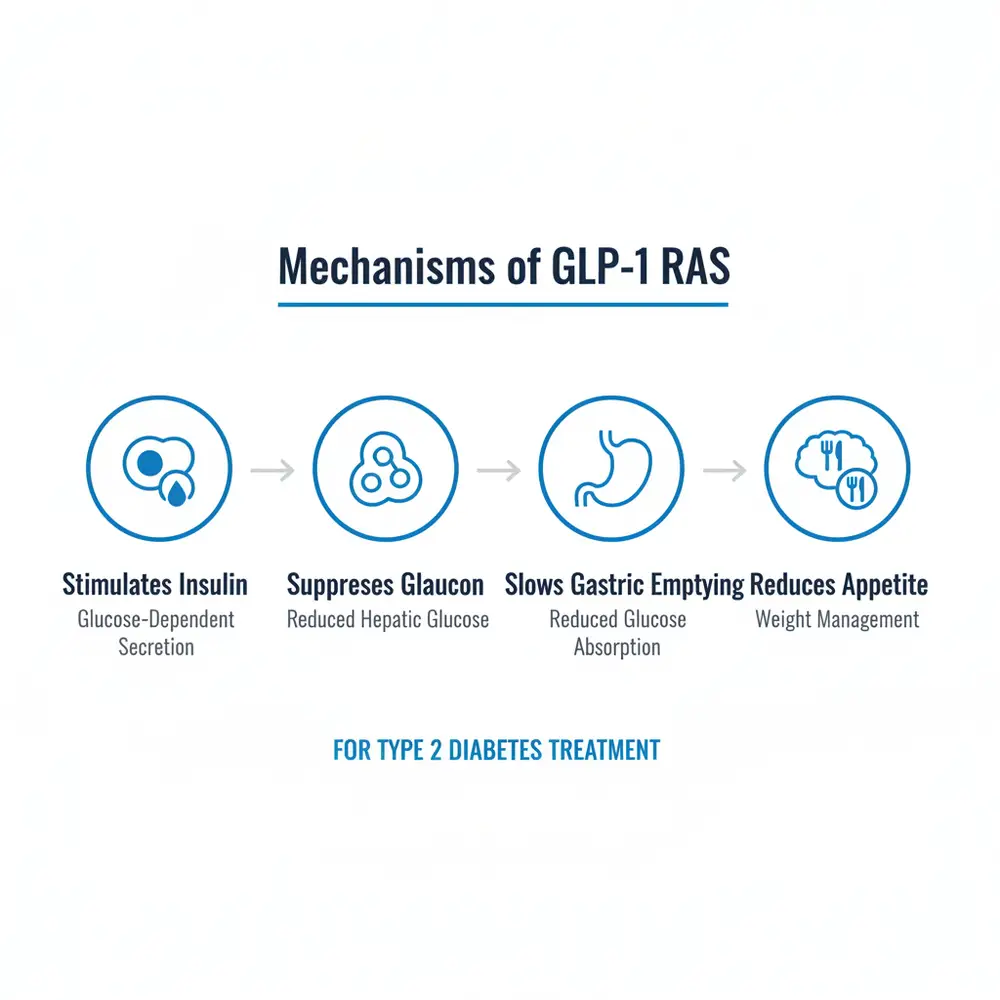
GLP-1 receptor agonists for type 2 diabetes primarily act through G-protein-coupled GLP-1 receptors. Key preclinical findings from rodent and primate models show that glucose-dependent stimulation of insulin secretion from pancreatic beta-cells reduces hyperglycemia without an undue risk of hypoglycemia.
Suppression of glucagon release from alpha-cells during elevated glucose levels is another observed mechanism. Animal studies reveal that GLP-1 receptor agonists for type 2 diabetes inhibit glucagon via somatostatin-mediated pathways in the pancreas. Delayed gastric emptying, demonstrated in human scintigraphy studies, slows nutrient absorption and modulates postprandial glucose excursions.
Central nervous system effects include reduced appetite and food intake, as evidenced by functional MRI studies showing hypothalamic activation. Cardiovascular research in isolated heart models and rodents suggests vasodilation, anti-inflammatory actions, and improved endothelial function, potentially through cyclic AMP signaling. Renal studies in diabetic mice indicate reduced albuminuria via podocyte protection. These mechanisms have been studied in GLP-1 receptor agonists for type 2 diabetes, with human data corroborating animal findings in pharmacodynamic trials.
Therapeutic Applications
Research has examined GLP-1 receptor agonists for type 2 diabetes in glycemic control, often as add-on therapy to metformin or insulin. Preclinical models suggest benefits for weight management, with human phase II trials reporting modest reductions in body weight and improvements in HbA1c.
Cardiovascular applications stem from CVOTs, where GLP-1 receptor agonists for type 2 diabetes were assessed in high-risk populations. Studies have explored renal protection, with observations of stabilized glomerular filtration rates in diabetic nephropathy models. Neuroprotective effects in animal stroke models have prompted investigations into cognitive outcomes, though human evidence remains preliminary.
Combination therapies, such as GLP-1 receptor agonists for type 2 diabetes with SGLT2 inhibitors, have been studied for synergistic effects on hemodynamics and metabolism. Dual agonists like tirzepatide, which target GLP-1 and GIP receptors, are emerging research areas. These applications of GLP-1 receptor agonists for type 2 diabetes highlight diverse preclinical and early-phase human explorations, without established clinical evidence.
Clinical Evidence
Multiple CVOTs provide robust data on GLP-1 receptor agonists for type 2 diabetes. The LEADER trial (liraglutide) reported hazard ratios below 1 for major adverse cardiovascular events (MACE) in over 9,000 participants with type 2 diabetes and high CV risk. Similarly, SUSTAIN-6 (semaglutide) showed reductions in MACE, stroke, and revascularization.
REWIND (dulaglutide) demonstrated a reduction in MACE risk across a broader population, including lower-risk individuals. PIONEER trials for oral semaglutide confirmed glycemic improvements versus comparators like sitagliptin. A 2024 BMJ network meta-analysis ranked tirzepatide highest for HbA1c reduction among eight GLP-1 receptor agonists for type 2 diabetes.
Meta-analyses of head-to-head trials comparing GLP-1 receptor agonists with insulin in type 2 diabetes found that GLP-1 receptor agonists were associated with less weight gain and hypoglycemia. Real-world studies, such as those published in Diabetes Care (2024), reported sustained HbA1c reductions and cardiovascular benefits. However, evidence varies by agent duration (short- vs. long-acting), with long-acting forms showing superior tolerability in pooled analyses. Clinical evidence for GLP-1 receptor agonists in type 2 diabetes underscores consistent glycemic findings across thousands of participants, though these findings are tempered by study-specific populations.
Challenges and Limitations
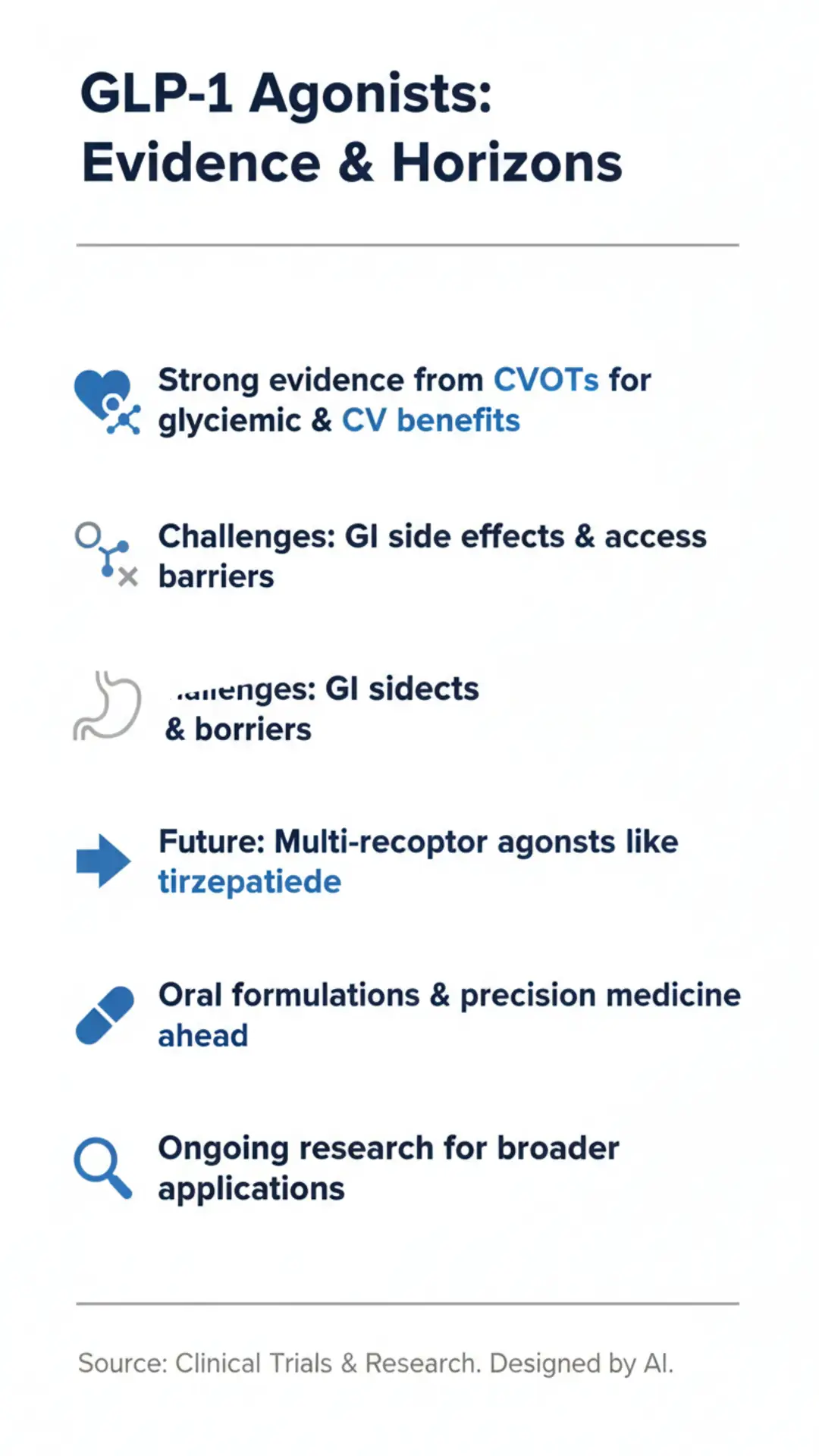
Gastrointestinal adverse events dominate safety profiles of GLP-1 receptor agonists for type 2 diabetes, with nausea, vomiting, and diarrhea reported in up to 40% of trial participants, often leading to discontinuation. Dose-dependent effects are mitigated by long-acting formulations, but early titration remains critical.
The risk of hypoglycemia is low when used without sulfonylureas, according to meta-analyses. Rare events like pancreatitis and thyroid C-cell tumors in rodents raise monitoring needs, though human incidence aligns with background rates. Progression of retinopathy in intensive glycemic control trials warrants caution in cases of proliferative retinopathy.
Access barriers include injection requirements, cost, and supply constraints. Long-term data beyond 5 years are limited, and there is an ongoing need for diverse ethnic representation. Heterogeneity in responses, influenced by baseline BMI and genetics, complicates personalization. These challenges highlight areas where evidence for GLP-1 receptor agonists for type 2 diabetes is preliminary or context-dependent.
Future Directions
Emerging research on GLP-1 receptor agonists for type 2 diabetes focuses on multi-receptor agonists, such as GLP-1/GIP (tirzepatide) and GLP-1/glucagon combinations, which show greater weight and glucose effects in phase III trials. Oral formulations like orforglipron aim to improve adherence.
Precision medicine approaches that integrate pharmacogenomics may predict responders. Expanded CVOTs target heart failure and chronic kidney disease endpoints. Neurodegenerative applications, including Alzheimer’s models, suggest anti-inflammatory potentials.
Combination regimens with SGLT2 inhibitors or insulins are under evaluation for additive benefits. Studies on pediatric and gestational diabetes are nascent. Long-term registries will clarify durability. Future directions for GLP-1 receptor agonists for type 2 diabetes emphasize innovative delivery and broader mechanistic explorations.
Conclusion
GLP-1 receptor agonists for type 2 diabetes are a well-researched class, with evidence spanning the glycemic, cardiovascular, and metabolic domains. Preclinical mechanisms translate variably to human trials, where CVOTs provide the strongest data. Challenges such as tolerability persist, but evolving dual agonists show promise. Ongoing studies will refine the understanding of GLP-1 receptor agonists for type 2 diabetes, maintaining focus on evidence-based insights.
References
Ahrén B. GLP-1 receptor agonists in the treatment of type 2 diabetes. Postgraduate Medicine. 2020. https://www.tandfonline.com/doi/full/10.1080/00325481.2020.1798099
Ahrén B. GLP-1 receptor agonists in the treatment of type 2 diabetes – PMC. Diabetes & Metabolism. 2021. https://pmc.ncbi.nlm.nih.gov/articles/PMC8085572/
Sun F. Comparative effectiveness of GLP-1 receptor agonists on glycaemic control…. BMJ. 2024. https://www.bmj.com/content/384/bmj-2023-076410
Gosmanov AR. The role of GLP-1 receptor agonists in managing type 2 diabetes. Cleveland Clinic Journal of Medicine. 2022. https://www.ccjm.org/content/89/8/457
Kalra S. GLP-1 single, dual, and triple receptor agonists for treating type 2 diabetes. EClinicalMedicine. 2024. https://www.thelancet.com/journals/eclinm/article/PIIS2589-5370(24)00361-4/fulltext
Nauck MA. Efficacy and Safety of GLP-1 Medicines for Type 2 Diabetes. Diabetes Care. 2024. https://diabetesjournals.org/care/article/47/11/1873/156807/Efficacy-and-Safety-of-GLP-1-Medicines-for-Type-2
Wang H. Glucagon-Like Peptide-1 Receptor Agonists. StatPearls. 2023. https://www.ncbi.nlm.nih.gov/books/NBK551568/
References
References
Ahrén B. GLP-1 receptor agonists in the treatment of type 2 diabetes. Postgraduate Medicine. 2020. https://www.tandfonline.com/doi/full/10.1080/00325481.2020.1798099
Ahrén B. GLP-1 receptor agonists in the treatment of type 2 diabetes – PMC. Diabetes & Metabolism. 2021. https://pmc.ncbi.nlm.nih.gov/articles/PMC8085572/
Sun F. Comparative effectiveness of GLP-1 receptor agonists on glycaemic control…. BMJ. 2024. https://www.bmj.com/content/384/bmj-2023-076410
Gosmanov AR. The role of GLP-1 receptor agonists in managing type 2 diabetes. Cleveland Clinic Journal of Medicine. 2022. https://www.ccjm.org/content/89/8/457
Kalra S. GLP-1 single, dual, and triple receptor agonists for treating type 2 diabetes. EClinicalMedicine. 2024. https://www.thelancet.com/journals/eclinm/article/PIIS2589-5370(24)00361-4/fulltext
Nauck MA. Efficacy and Safety of GLP-1 Medicines for Type 2 Diabetes. Diabetes Care. 2024. https://diabetesjournals.org/care/article/47/11/1873/156807/Efficacy-and-Safety-of-GLP-1-Medicines-for-Type-2
Wang H. Glucagon-Like Peptide-1 Receptor Agonists. StatPearls. 2023. https://www.ncbi.nlm.nih.gov/books/NBK551568/