
GLP-1 Medications: 12 Evidence-Based Insights for Metabolic Health
- By Isaac
GLP-1 Medications: 12 Evidence-Based Insights for Metabolic Health
Introduction
Glucagon-like peptide-1 receptor agonists (GLP-1RAs), commonly referred to as GLP-1 medications, are a class of prescription drugs designed to mimic the action of the naturally occurring incretin hormone GLP-1. These medications are primarily utilized in clinical settings to support glycemic control and weight management, helping to address key aspects of metabolic health amid rising global challenges related to blood sugar levels and body weight.
Research highlights potential benefits of GLP-1 medications in areas such as maintaining healthy glucose levels, promoting weight reduction, and supporting cardiovascular wellness. This comprehensive review explores the background, mechanisms of action, therapeutic applications, clinical evidence, challenges, and future directions of GLP-1 medications, drawing exclusively from peer-reviewed sources.
These statements have not been evaluated by the Food and Drug Administration. These products are not intended to diagnose, treat, cure, or prevent any disease. Always consult a healthcare professional before starting any medication.
Mechanisms of Action
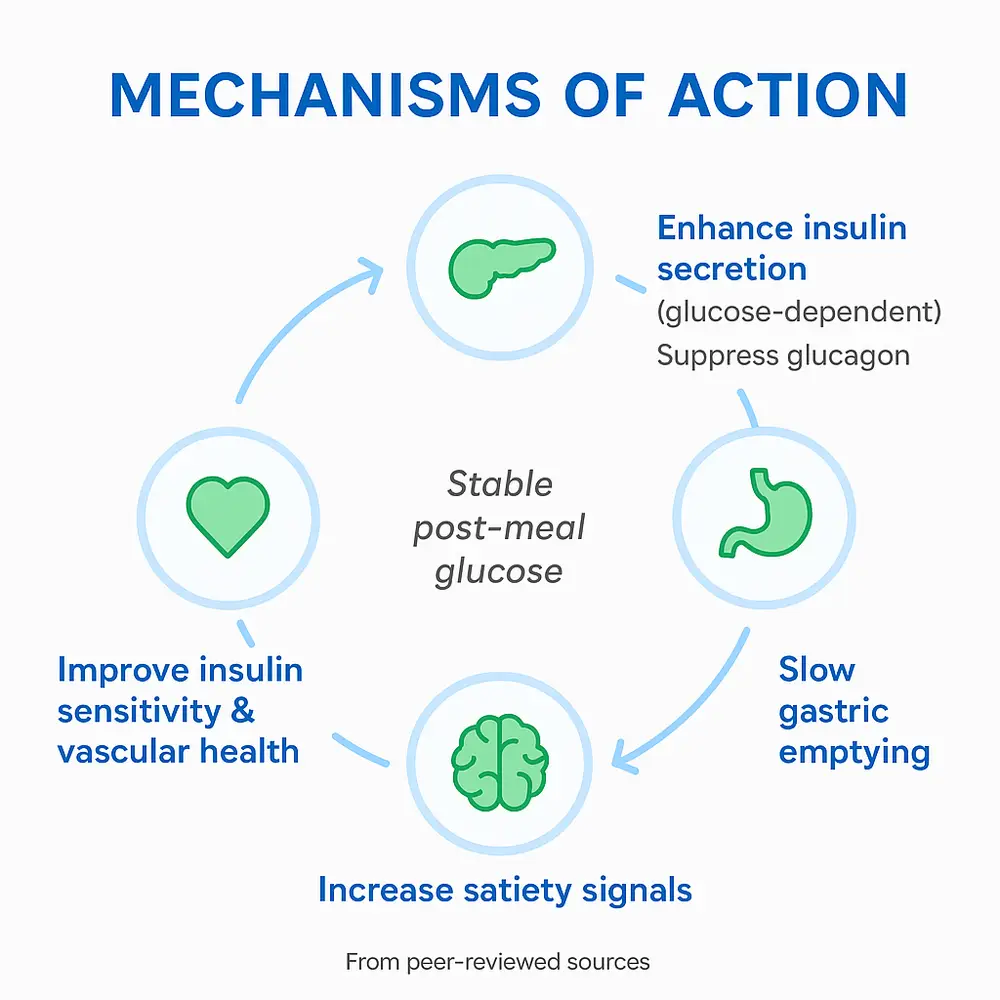
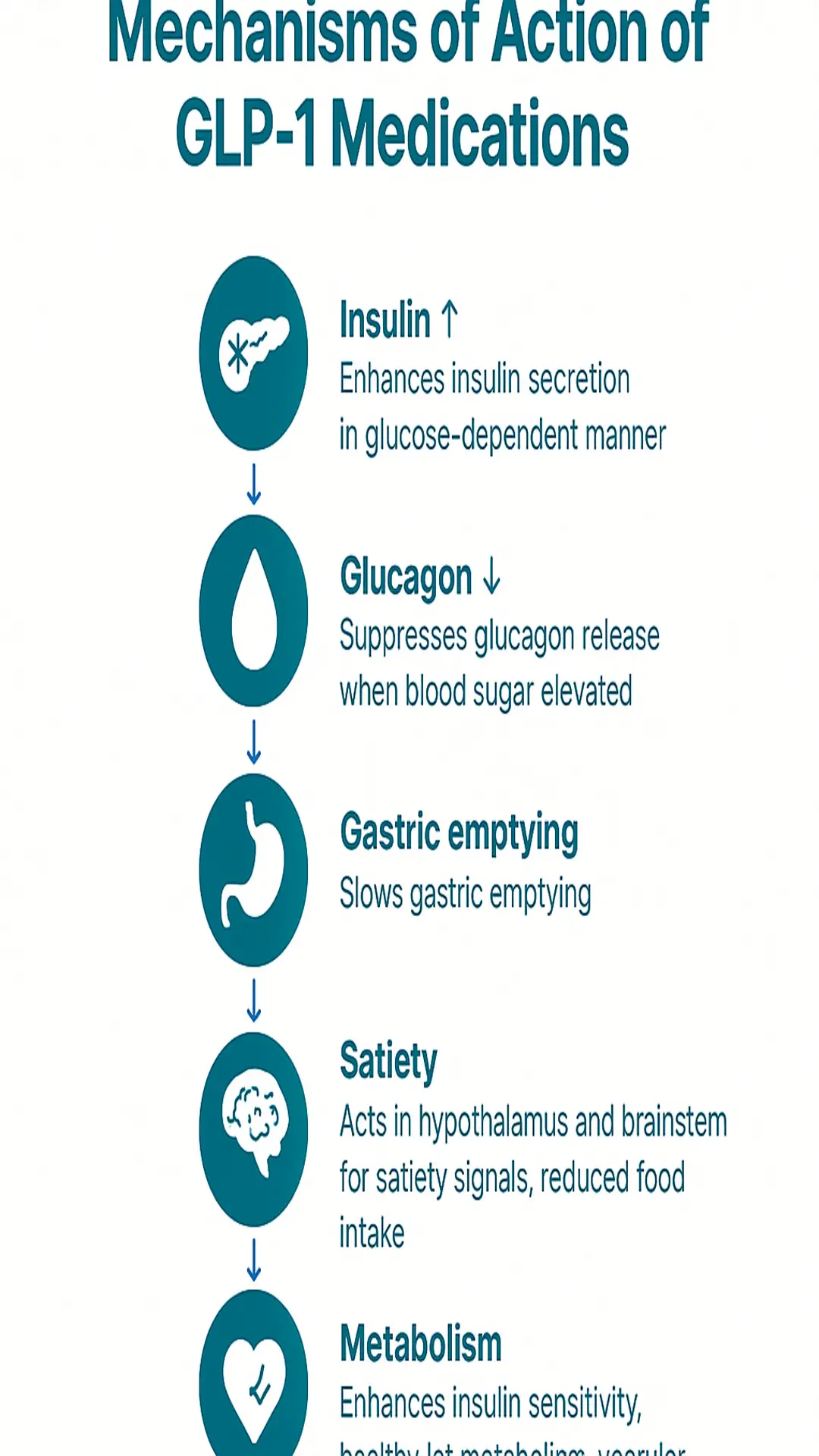
GLP-1 medications work by binding to GLP-1 receptors located on pancreatic beta-cells, which helps enhance insulin secretion in a glucose-dependent manner while suppressing glucagon release when blood sugar is elevated. This mechanism contributes to more stable post-meal glucose levels.
Additionally, these medications slow gastric emptying, which can reduce spikes in blood sugar after eating. Central nervous system effects are also prominent; GLP-1 medications act in the hypothalamus and brainstem to influence satiety signals, potentially supporting reduced food intake and appetite control.
Peripheral actions further include enhancements in insulin sensitivity, promotion of healthy fat metabolism through lipolysis, and contributions to vascular health via endothelial function and reduced inflammation pathways. These multifaceted mechanisms underscore why GLP-1 medications are studied for broader metabolic support.
These statements have not been evaluated by the Food and Drug Administration. These products are not intended to diagnose, treat, cure, or prevent any disease.
Therapeutic Applications
GLP-1 medications are commonly used as an adjunct to lifestyle measures, such as metformin, to support reductions in HbA1c levels and aid in weight management. Specific formulations like semaglutide (as Wegovy) and liraglutide (as Saxenda) have approvals for chronic weight management in individuals with obesity or overweight conditions with related factors.
They also show promise in supporting cardiovascular health in those with elevated risk factors. Research is exploring additional areas, such as liver health in non-alcoholic fatty liver conditions, kidney function support, and hormonal balance in conditions like polycystic ovary syndrome, though these remain under investigation.
Clinical guidelines often recommend GLP-1 medications for patients needing enhanced glycemic and weight support, highlighting their role in personalized metabolic strategies.
These statements have not been evaluated by the Food and Drug Administration. These products are not intended to diagnose, treat, cure, or prevent any disease.
Clinical Evidence
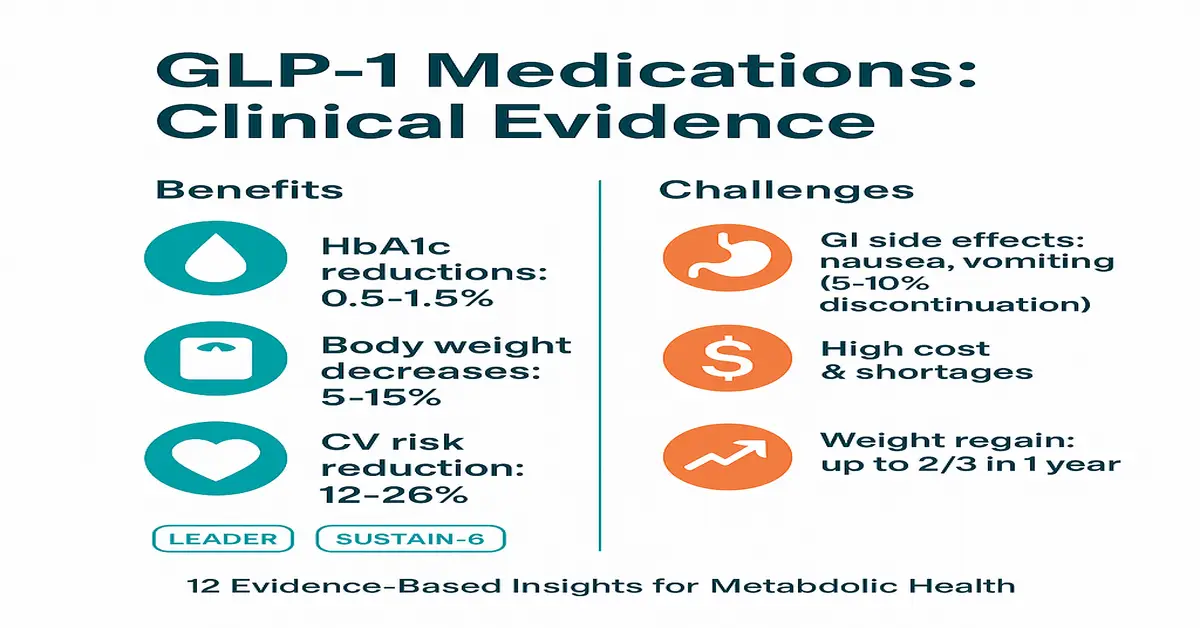
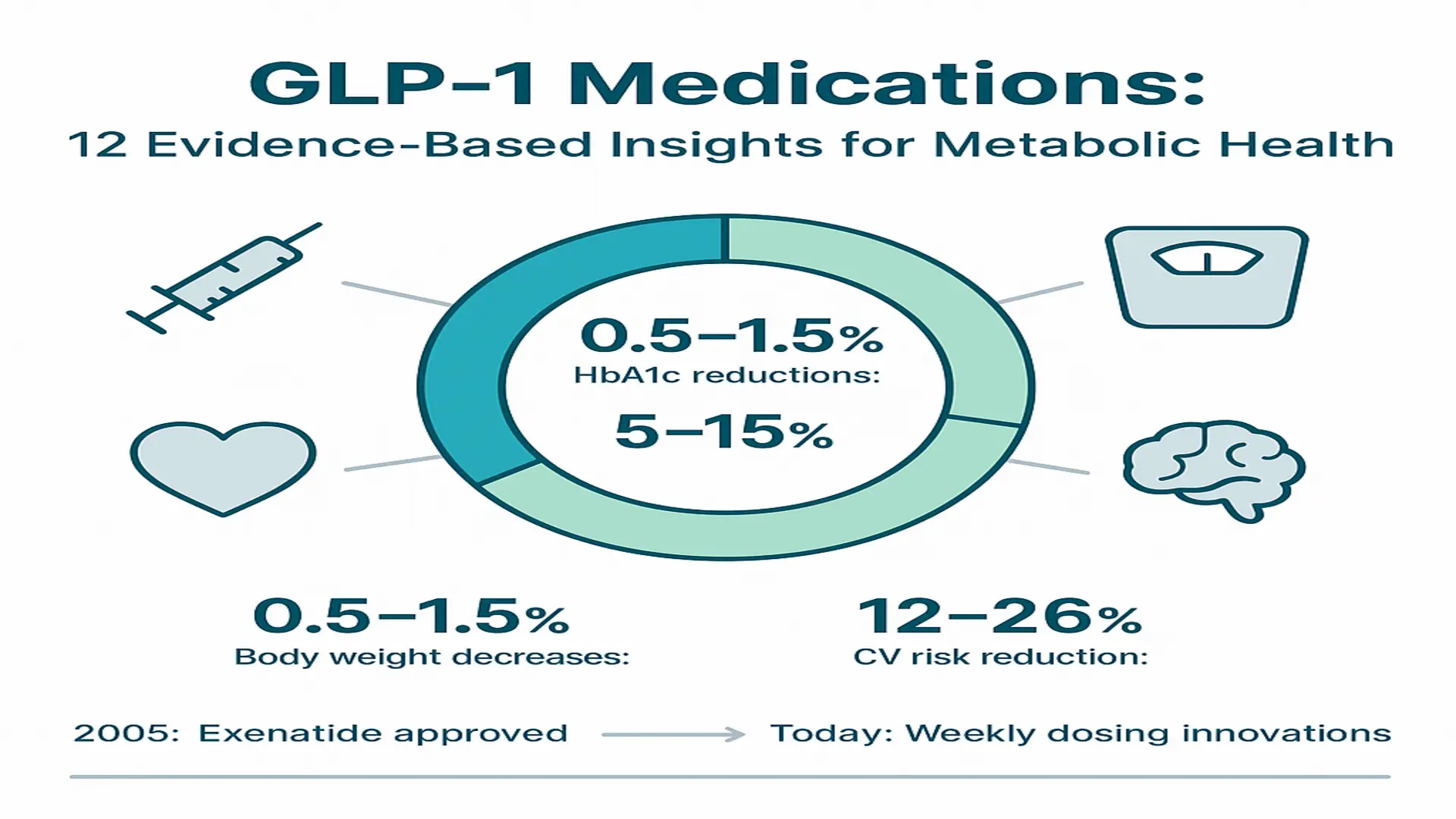
Numerous randomized controlled trials (RCTs) and meta-analyses provide robust data on GLP-1 medications. For instance, studies report average reductions in HbA1c of 0.5-1.5%, body weight decreases of 5-15%, and improvements in waist circumference, supporting their efficacy in metabolic parameters.
Key cardiovascular outcome trials, such as LEADER (liraglutide) and SUSTAIN-6 (semaglutide), indicate relative risk reductions of 12-26% in major adverse cardiovascular events among high-risk populations. Network meta-analyses position semaglutide and tirzepatide (a dual agonist) as top performers for weight and glycemic support compared to placebo or other therapies.
Long-term data from trials extending up to two years confirm sustained effects with a low incidence of hypoglycemia, reinforcing the reliability of GLP-1 medications in clinical practice.
Challenges and Limitations
Despite their benefits, GLP-1 medications are associated with gastrointestinal side effects, including nausea, vomiting, and diarrhea, which contribute to discontinuation rates of 5-10%. Cost remains a significant barrier, with high prices, insurance limitations, and periodic supply shortages affecting accessibility.
Upon stopping treatment, weight regain is common, with up to two-thirds of lost weight returning within a year. Other considerations include rare reports of acute pancreatitis, gallbladder-related issues, and signals under review by regulatory bodies like the FDA and EMA regarding mood effects.
Additionally, a portion of weight loss (20-40%) may involve lean mass, and long-term safety data beyond 2-3 years are still emerging. These factors emphasize the need for monitoring and patient selection.
Future Directions
Innovation in GLP-1 medications includes dual agonists (e.g., GLP-1/GIP like tirzepatide) and triple agonists (adding glucagon), which show potential for greater weight reductions up to 20-25%. Oral versions, such as oral semaglutide, and small-molecule alternatives aim to boost convenience and adherence.
Exploratory research is examining applications in areas like behavioral regulation, neurological health, joint support, and sleep-related breathing issues. Efforts also focus on combination therapies, extended safety profiles, and methods to minimize muscle loss during weight management.
These developments position GLP-1 medications at the forefront of evolving metabolic health strategies.
Conclusion
GLP-1 medications demonstrate strong evidence from clinical trials for supporting glycemic control, meaningful weight loss, and cardiovascular health in metabolic contexts. Meta-analyses affirm their advantages over many comparators, with a generally favorable safety profile for suitable patients.
However, gastrointestinal effects, costs, and potential regain upon discontinuation call for tailored application alongside lifestyle approaches. Advances in multi-agonist formulations and new indications suggest GLP-1 medications will continue shaping metabolic wellness.
Consult healthcare providers for personalized guidance on GLP-1 medications.
References
- Current Perspectives on GLP-1 Agonists in Contemporary Clinical Practice
- Glucagon-Like Peptide-1 Receptor Agonists
- Glucagon-Like Peptide-1 Receptor Agonists – StatPearls
- Glucagon-like peptide-1 receptor: mechanisms and advances
- Efficacy of GLP-1 Receptor Agonists on Weight Loss, BMI, and Waist Circumference
- Comparative effectiveness of GLP-1 receptor agonists on glycaemic control
- Mechanisms of GLP-1 Receptor Agonist-Induced Weight Loss
- The expanding role of GLP-1 receptor agonists: a narrative review
- Mechanisms of Action and Therapeutic Application of Glucagon-Like Peptide 1
- EMA statement on ongoing review of GLP-1 receptor agonists
- GLP-1 single, dual, and triple receptor agonists for treating type 2 diabetes and obesity
- The expanding role of GLP-1 receptor agonists
References
References
- Current Perspectives on GLP-1 Agonists in Contemporary Clinical Practice
- Glucagon-Like Peptide-1 Receptor Agonists
- Glucagon-Like Peptide-1 Receptor Agonists – StatPearls
- Glucagon-like peptide-1 receptor: mechanisms and advances
- Efficacy of GLP-1 Receptor Agonists on Weight Loss, BMI, and Waist Circumference
- Comparative effectiveness of GLP-1 receptor agonists on glycaemic control
- Mechanisms of GLP-1 Receptor Agonist-Induced Weight Loss
- The expanding role of GLP-1 receptor agonists: a narrative review
- Mechanisms of Action and Therapeutic Application of Glucagon-Like Peptide 1
- EMA statement on ongoing review of GLP-1 receptor agonists
- GLP-1 single, dual, and triple receptor agonists for treating type 2 diabetes and obesity
- The expanding role of GLP-1 receptor agonists