
Fat Loss Peptides: 15-20% Weight Reduction in Clinical Trials – A Comprehensive Review
- By Isaac
Introduction
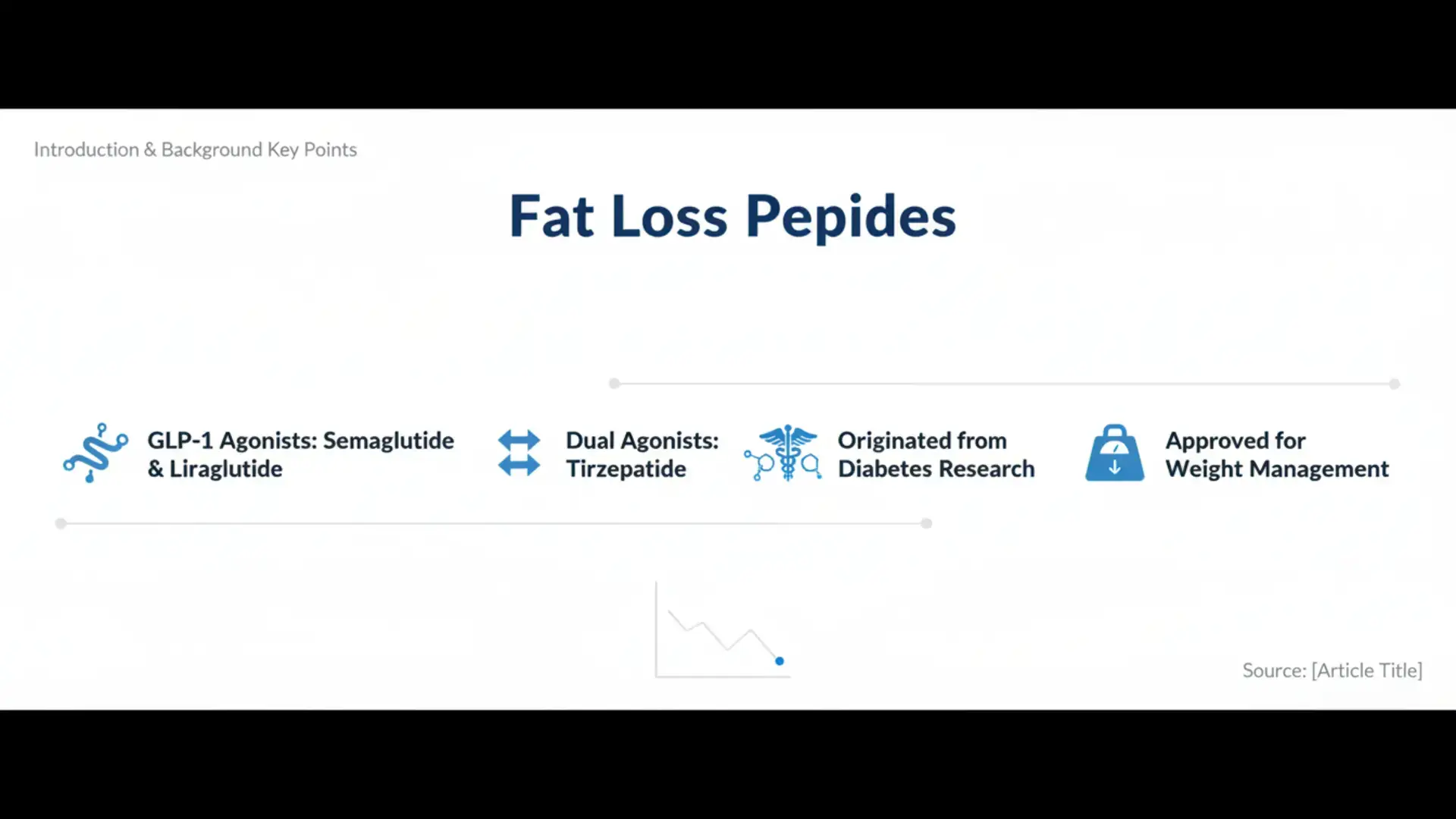
Fat loss peptides, particularly incretin-based therapies such as GLP-1 receptor agonists like semaglutide and liraglutide, as well as dual agonists like tirzepatide, have emerged as significant tools in weight management research. These peptides work by influencing metabolic processes that support body weight reduction, as demonstrated in various clinical studies. Their rise in prominence stems from robust data showing substantial weight loss outcomes in trials involving individuals managing obesity, highlighting their potential role in addressing widespread challenges related to body weight and metabolic health.
This review provides an educational overview of fat loss peptides, drawing from peer-reviewed sources to explore their background, mechanisms of action, therapeutic applications, clinical evidence, challenges, and future directions. By focusing on evidence-based insights, it aims to inform readers about the current state of research without making unsubstantiated claims. These statements have not been evaluated by the Food and Drug Administration. This content is not intended to diagnose, treat, cure, or prevent any disease.
Mechanisms of Action
Fat loss peptides like GLP-1R agonists primarily influence appetite regulation through central brain pathways, modulating neurotransmitter release and potentially supporting increased energy expenditure. Peripherally, they help delay gastric emptying, promote insulin secretion in response to meals, and reduce glucagon release, contributing to improved metabolic balance. These statements have not been evaluated by the Food and Drug Administration. This content is not intended to diagnose, treat, cure, or prevent any disease.
Tirzepatide, a dual GLP-1/GIP co-agonist, builds on these effects by enhancing metabolic flexibility, which may amplify support for weight management. Emerging dual and triple agonists, such as retatrutide incorporating glucagon receptor activation, further target fat metabolism pathways, showing promise in preclinical and early clinical research for promoting body composition changes. These mechanisms highlight how fat loss peptides interact with multiple physiological systems to support energy homeostasis.
Therapeutic Applications
Fat loss peptides are approved for chronic weight management in adults with obesity or overweight conditions accompanied by weight-related comorbidities. In type 2 diabetes contexts, they support both glycemic control and body weight goals concurrently. Research also investigates their role in reducing visceral fat and improving body composition metrics.
Emerging applications include combination therapies, where these peptides are paired with lifestyle interventions to enhance outcomes in weight management programs. Ongoing studies continue to explore their utility in diverse populations seeking metabolic support.
Clinical Evidence
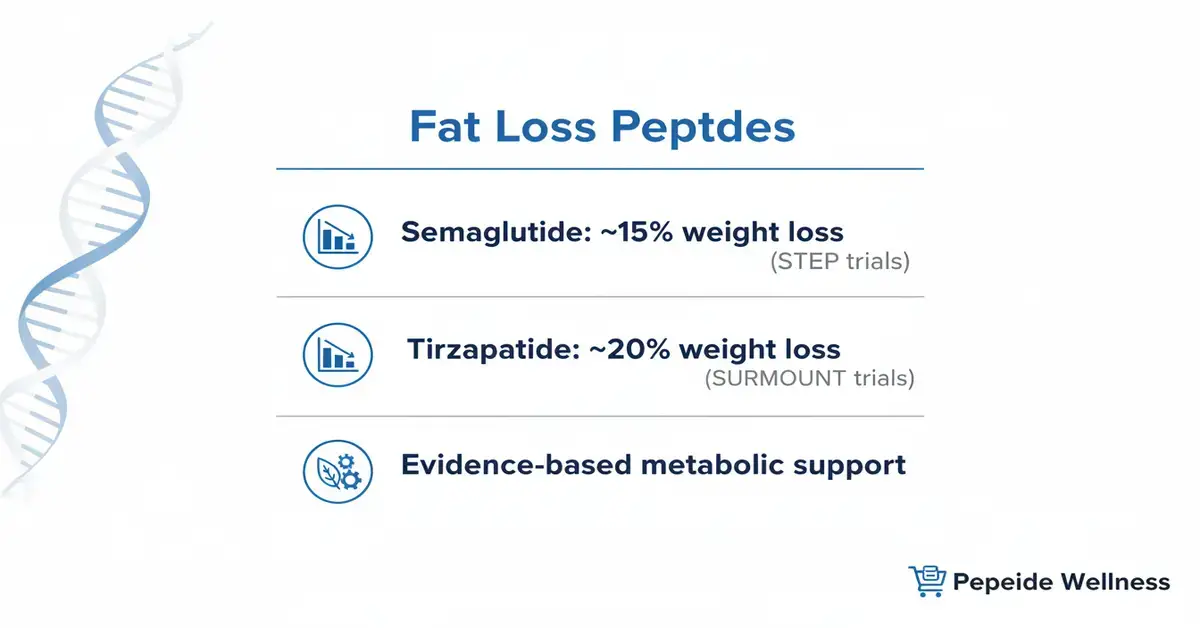
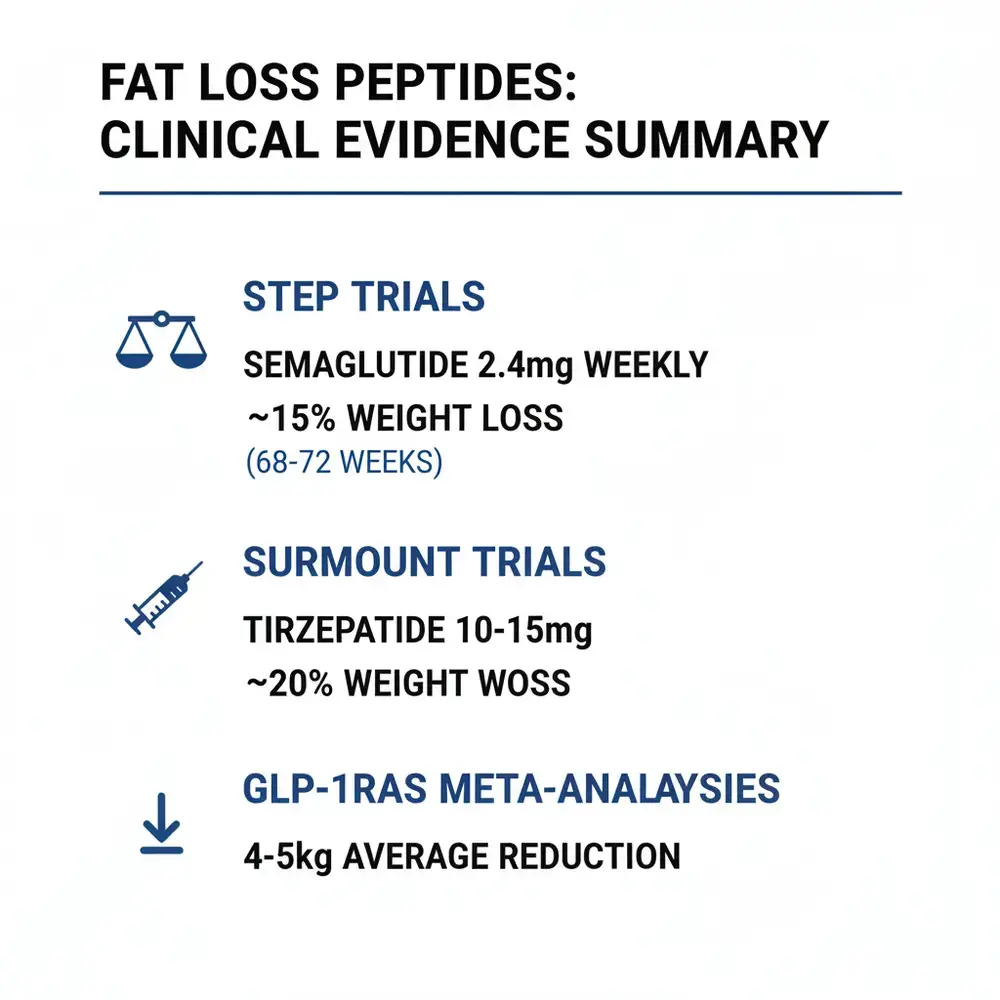
Clinical trials provide substantial data on the effects of fat loss peptides. For example, semaglutide at a 2.4 mg weekly dose supported approximately 15% weight reduction over 68-72 weeks in the STEP trials. Tirzepatide, at 10-15 mg doses, demonstrated around 20% weight loss in the SURMOUNT trials, outperforming semaglutide in direct head-to-head comparisons. These statements have not been evaluated by the Food and Drug Administration. This content is not intended to diagnose, treat, cure, or prevent any disease.
Meta-analyses of GLP-1R agonists indicate average weight reductions of 4-5 kg, with more pronounced effects at higher doses. Across randomized controlled trials (RCTs), consistent reductions in BMI, waist circumference, and fat mass have been observed. Additional studies, such as those examining body composition changes post-GLP-1RA therapy, underscore shifts toward improved fat-to-lean mass ratios, though individual responses vary.
| Trial/Program | Peptide | Key Outcome |
|---|---|---|
| STEP Trials | Semaglutide (2.4 mg weekly) | ~15% weight loss (68-72 weeks) |
| SURMOUNT Trials | Tirzepatide (10-15 mg) | ~20% weight loss |
| Various RCTs/Meta-analyses | GLP-1RAs | 4-5 kg average reduction; BMI/waist improvements |
These findings from peer-reviewed sources emphasize the evidence supporting fat loss peptides in structured research settings.
Challenges and Limitations
Despite promising data, fat loss peptides present several challenges. Common side effects include gastrointestinal issues such as nausea, vomiting, and diarrhea, which can impact tolerability. Studies note that up to 40% of total weight loss may involve lean mass, highlighting the need for strategies to preserve muscle.
High discontinuation rates are reported, often linked to side effects, and weight regain is common upon cessation. Long-term safety data remain limited, with rare reports of events like thyroid-related concerns. These factors underscore the importance of medical supervision in research and approved uses.
Future Directions
The pipeline for fat loss peptides is active, with triple agonists like retatrutide—targeting GLP-1, GIP, and glucagon receptors—aiming for weight reductions exceeding 20%. Oral formulations, such as orforglipron, could enhance accessibility by eliminating injection requirements.
Research is also focusing on mitigating lean mass loss through exercise integration and exploring non-incretin peptides. Head-to-head trials and post-marketing surveillance will provide further insights, though current sources indicate limited adoption of food-derived peptides in broad clinical practice.
Conclusion
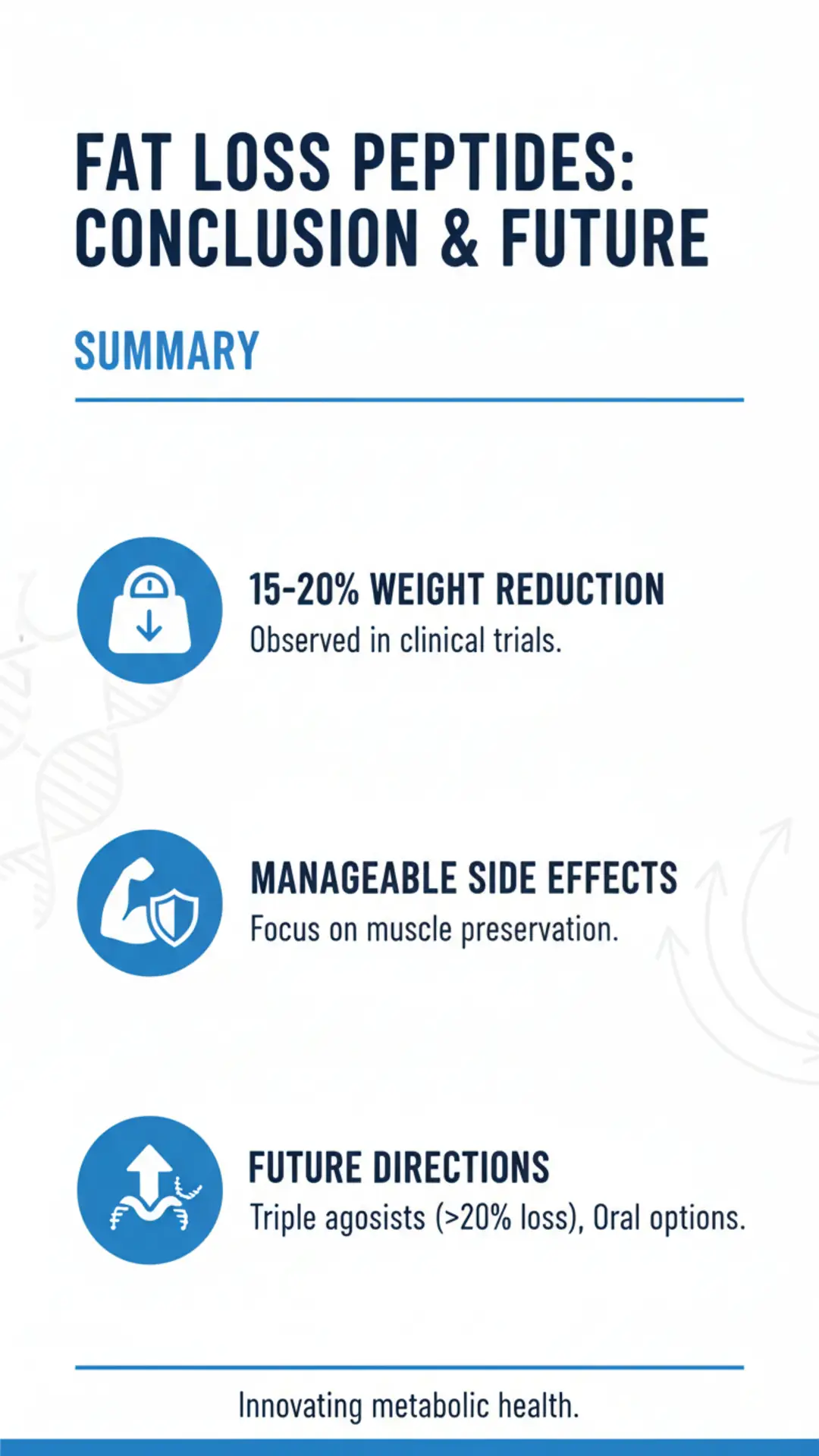
Fat loss peptides, exemplified by incretin mimetics like semaglutide and tirzepatide, offer evidence-based support for substantial weight management, with clinical trials documenting 15-20% reductions alongside generally manageable side effects. Balancing these benefits are challenges like muscle preservation and adherence. As research advances toward multi-agonists and improved formulations, fat loss peptides hold potential to contribute to metabolic health strategies under professional guidance.
References
- Research and prospect of peptides for use in obesity treatment (PMC7604735)
- Efficacy of GLP-1 Receptor Agonists on Weight Loss, BMI, and Waist Circumference (Diabetes Care)
- Efficacy and Safety of Glucagon-Like Peptide-1 Receptor Agonists for Weight Loss (Annals of Internal Medicine)
- Tirzepatide vs semaglutide for weight loss: a systematic review and network meta-analysis (Diabetologia)
- Tirzepatide as Compared with Semaglutide for the Treatment of Obesity (NEJM)
- Recent advances in peptide-based therapies for obesity and type 2 diabetes (ScienceDirect)
- Efficacy of GLP-1 Receptor Agonists on Weight Loss, BMI, and Waist Circumference (PubMed 39841962)
- Body Composition Changes After Bariatric Surgery or GLP-1RA Therapy (JAMA Network Open)
- Peptides and Peptidomimetics as Potential Antiobesity Agents (PMC6388543)
- The effects of human GH and its lipolytic fragment (AOD9604) on fat metabolism (PubMed 11713213)
References
References
- Research and prospect of peptides for use in obesity treatment (PMC7604735)
- Efficacy of GLP-1 Receptor Agonists on Weight Loss, BMI, and Waist Circumference (Diabetes Care)
- Efficacy and Safety of Glucagon-Like Peptide-1 Receptor Agonists for Weight Loss (Annals of Internal Medicine)
- Tirzepatide vs semaglutide for weight loss: a systematic review and network meta-analysis (Diabetologia)
- Tirzepatide as Compared with Semaglutide for the Treatment of Obesity (NEJM)
- Recent advances in peptide-based therapies for obesity and type 2 diabetes (ScienceDirect)
- Efficacy of GLP-1 Receptor Agonists on Weight Loss, BMI, and Waist Circumference (PubMed 39841962)
- Body Composition Changes After Bariatric Surgery or GLP-1RA Therapy (JAMA Network Open)
- Peptides and Peptidomimetics as Potential Antiobesity Agents (PMC6388543)
- The effects of human GH and its lipolytic fragment (AOD9604) on fat metabolism (PubMed 11713213)