
BPC-157: Preclinical Research Insights on Tissue Protection and Repair Mechanisms
- By Isaac
BPC-157: Preclinical Research Insights on Tissue Protection and Repair Mechanisms
BPC-157, a stable synthetic pentadecapeptide derived from a protective protein found in human gastric juice, has garnered attention in preclinical research for its potential role in supporting tissue repair processes. Originally isolated in 1993, studies in animal models have explored its effects on tendons, ligaments, muscles, nerves, and other tissues, highlighting mechanisms that may promote regeneration. While it shows promise in areas like wound healing and sports medicine applications, BPC-157 lacks regulatory approval from agencies such as the FDA or EMA and is not intended for human therapeutic use. These statements have not been evaluated by the Food and Drug Administration. This product is not intended to diagnose, treat, cure, or prevent any disease. This review article summarizes key preclinical evidence, proposed mechanisms, explored applications, and important limitations drawn from peer-reviewed sources, providing an educational overview for those interested in peptide research.
Mechanisms of Action in Preclinical Models
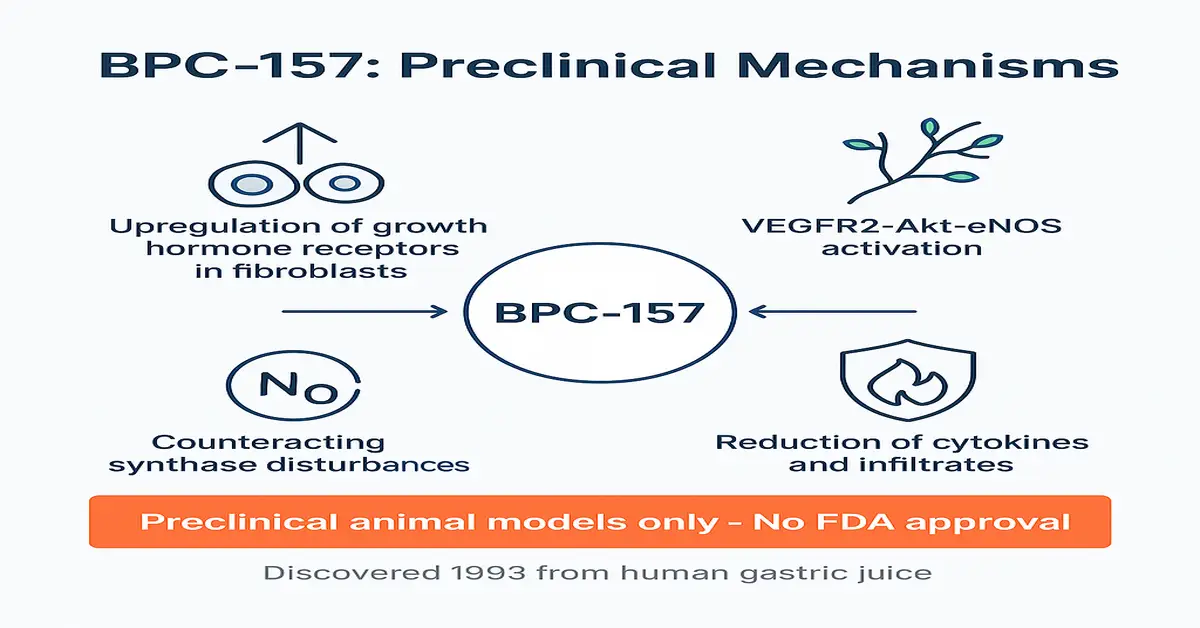
In preclinical research, BPC-157 has been observed to promote tendon fibroblast outgrowth, cell survival, migration, and collagen remodeling in animal studies. It appears to dose-dependently upregulate growth hormone receptor expression in tendon fibroblasts, potentially activating JAK2 phosphorylation pathways.
Additional mechanisms include modulation of angiogenesis through pathways involving VEGFR2, Akt, and eNOS, as well as interactions with the nitric oxide system to address disturbances in NO synthase activity. Studies in rats and mice suggest it may reduce inflammatory infiltrates and pro-inflammatory cytokines while supporting cell proliferation. It has also shown potential in activating collateral pathways to support endothelial function in models of vessel occlusions.
These observations are from preclinical animal models only and have not been evaluated by the Food and Drug Administration. This information is for educational purposes and does not imply benefits in humans.
These multifaceted actions highlight why BPC-157 is of interest in tissue repair research, though mechanisms require further validation beyond animal studies.
Key Pathways Explored
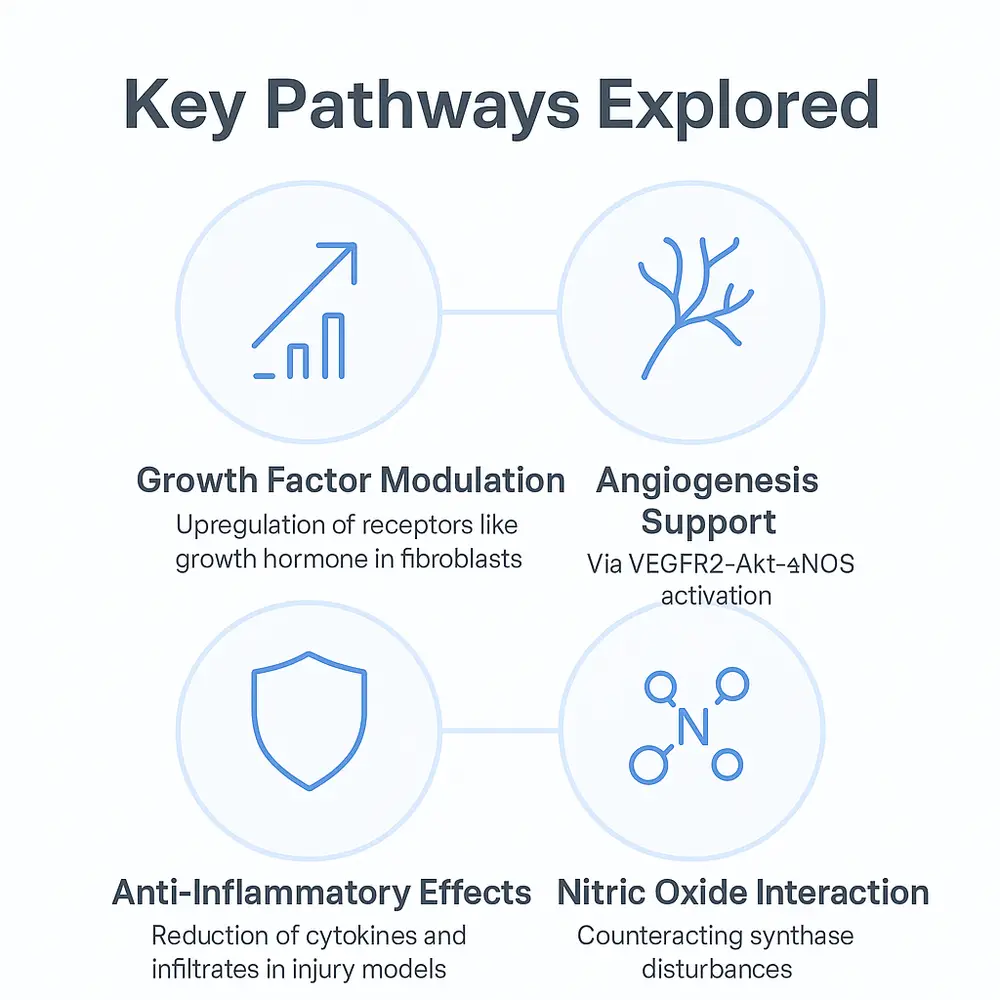
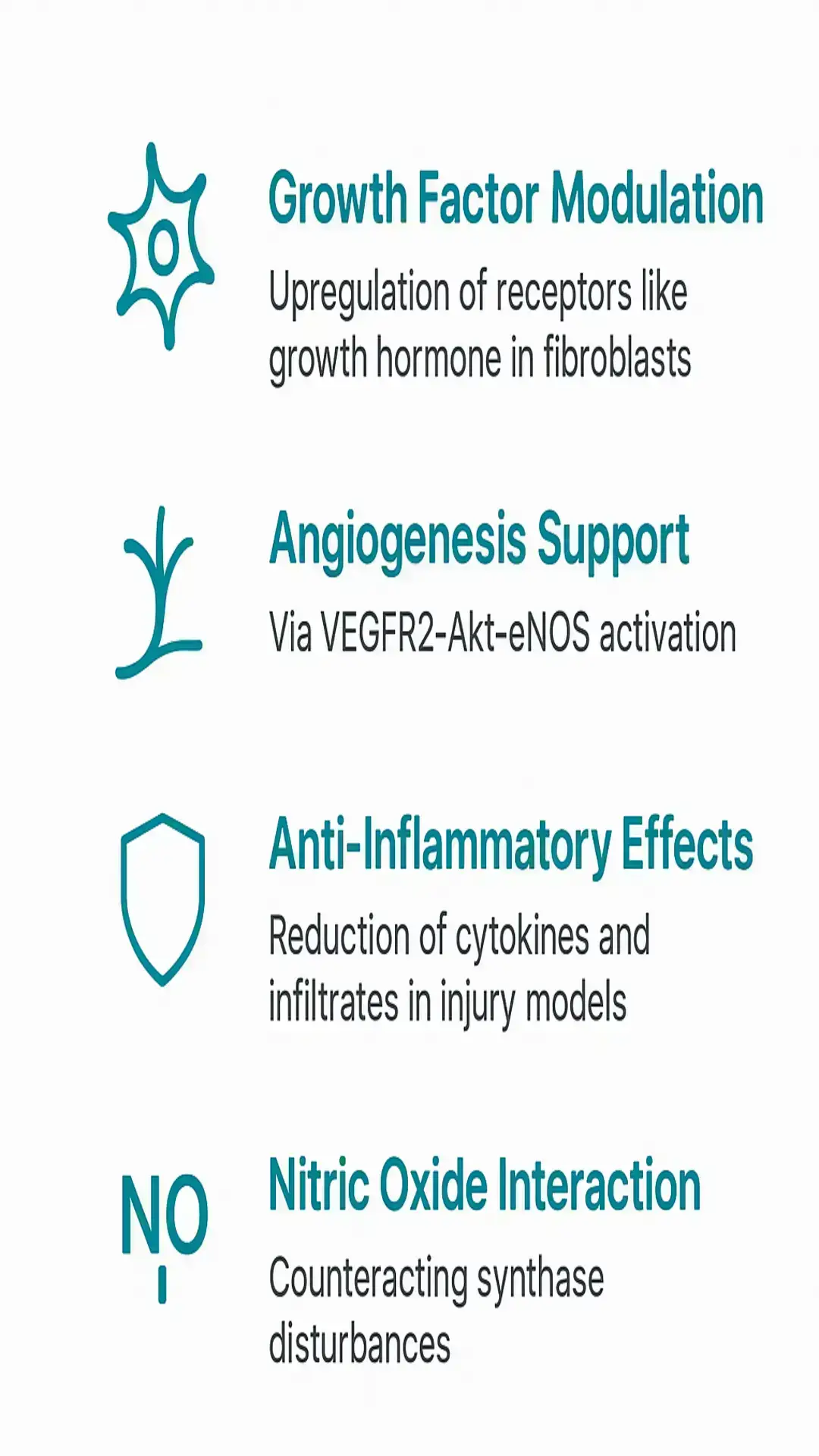
- Growth Factor Modulation: Upregulation of receptors like growth hormone in fibroblasts.
- Angiogenesis Support: Via VEGFR2-Akt-eNOS activation.
- Anti-Inflammatory Effects: Reduction of cytokines and infiltrates in injury models.
- Nitric Oxide Interaction: Counteracting synthase disturbances.
Preclinical Therapeutic Applications
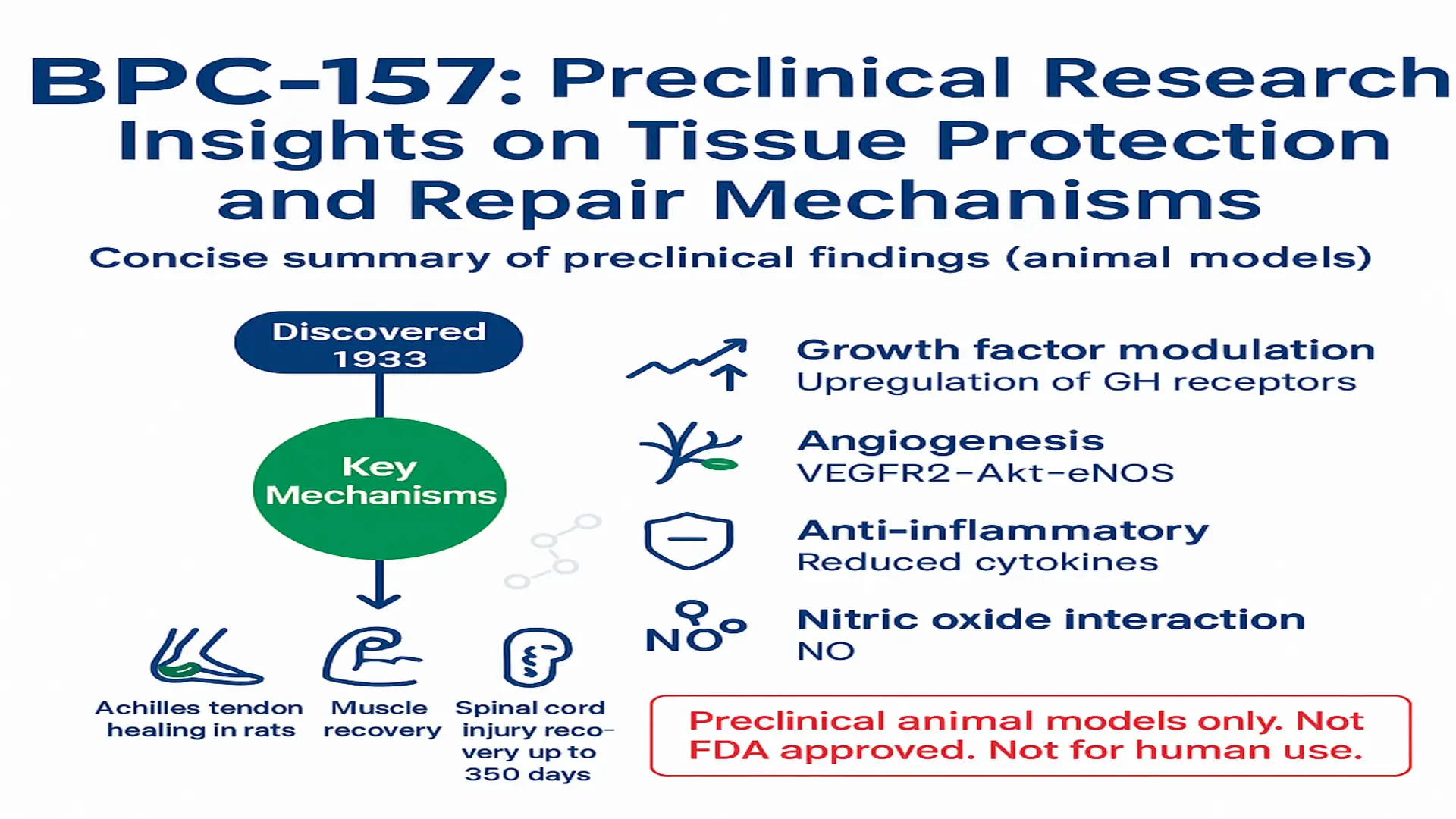
Preclinical studies have examined BPC-157’s effects in various injury models. For instance, in rats with transected Achilles tendons, it accelerated healing, showing improvements in structural, functional, and biomechanical indices. Similarly, in quadriceps muscle transection models, treated animals exhibited enhanced macroscopic and microscopic recovery outcomes.
Research on spinal cord injury in rats indicated functional recovery and reduced spasticity persisting up to 360 days post-injury. Applications have been explored in orthopaedic contexts, such as musculoskeletal injuries involving ligaments and bones, as well as gut protection and models of heart failure.
Limited investigations include intra-articular injections for chronic knee pain models, but these remain preclinical or anecdotal. Overall, these findings position BPC-157 as a candidate for sports medicine research in tendon healing and muscle recovery, strictly within animal models.
All referenced effects are from preclinical studies in animals and are not approved for human use. These statements have not been evaluated by the Food and Drug Administration.
Overview of Clinical Evidence
A systematic review of 36 studies, predominantly level IV/V evidence from animal models, points to potential musculoskeletal healing benefits in preclinical settings. Rat studies consistently show improved tendon-bone healing, reduced tissue defects, and enhanced biomechanical strength.
One small human observation involved 7 out of 12 patients reporting knee pain relief lasting over six months after intra-articular injection, but this lacks control groups or rigorous methodology. Preclinical data supports upregulation of growth factors and inflammation modulation in tendon and muscle injury models.
Notably, no large-scale randomized controlled trials (RCTs) or meta-analyses in humans have been identified in the reviewed sources. Human evidence remains insufficient and of low quality, reinforcing that BPC-157 is not established for clinical use.
Challenges and Limitations of BPC-157 Research
BPC-157 has not received FDA or EMA approval and is classified as a Category 2 bulk drug substance with significant safety risks for compounding due to potential immunogenicity, peptide impurities, and lack of standardized characterization.
Human data is scarce, with research dominated by preclinical rat and mouse studies, and no long-term safety profiles available. It is prohibited by the World Anti-Doping Agency (WADA) as an S0 unapproved substance, restricting use in athletes.
Ethical issues surround unregulated compounding and off-label applications without oversight, alongside risks from injections and unknown dosing. These factors underscore the experimental status of BPC-157.
Future Directions in BPC-157 Research
To advance understanding, future efforts should prioritize large-scale human clinical trials assessing efficacy and safety, particularly for musculoskeletal injuries. Pharmacokinetic and metabolism studies in humans are needed to inform potential dosing guidelines.
Exploration of combinations, such as with other peptides like TB-500, could reveal synergistic effects in preclinical models. Regulatory pathways, like FDA investigational new drug protocols, must be pursued to address approval hurdles.
Further molecular pathway research for central nervous system and cardiovascular applications is warranted, though specific directives beyond the call for human trials are limited in current sources.
Conclusion
BPC-157 preclinical research demonstrates consistent effects on angiogenesis, growth factor modulation, and inflammation reduction in animal models of tendon, muscle, and orthopaedic recovery. A small human signal exists alongside promising animal data, but major limitations—lack of regulatory approval, robust human trials, and safety data—necessitate caution.
BPC-157 warrants measured interest in research contexts, pending rigorous RCTs to substantiate its potential. This review emphasizes education on preclinical insights without endorsing use.
References:
- Emerging Use of BPC-157 in Orthopaedic Sports Medicine (PMC12313605)
- Multifunctionality and Possible Medical Application of the BPC 157 Peptide (MDPI)
- Regeneration or Risk? A Narrative Review of BPC-157 (PMC12446177)
- Pentadecapeptide BPC 157 Enhances the Growth Hormone Receptor (PMC6271067)
- Gastric pentadecapeptide body protection compound BPC 157 (PubMed 30915550)
- Pentadecapeptide BPC 157 and the central nervous system (PMC8504390)
- The promoting effect of pentadecapeptide BPC 157 on tendon healing (PubMed 21030672)
- BPC 157’s effect on healing (PubMed 9403790)
- Certain Bulk Drug Substances for Use in Compounding that May Present Significant Safety Risks (FDA)
References
References:
- Emerging Use of BPC-157 in Orthopaedic Sports Medicine (PMC12313605)
- Multifunctionality and Possible Medical Application of the BPC 157 Peptide (MDPI)
- Regeneration or Risk? A Narrative Review of BPC-157 (PMC12446177)
- Pentadecapeptide BPC 157 Enhances the Growth Hormone Receptor (PMC6271067)
- Gastric pentadecapeptide body protection compound BPC 157 (PubMed 30915550)
- Pentadecapeptide BPC 157 and the central nervous system (PMC8504390)
- The promoting effect of pentadecapeptide BPC 157 on tendon healing (PubMed 21030672)
- BPC 157’s effect on healing (PubMed 9403790)
- Certain Bulk Drug Substances for Use in Compounding that May Present Significant Safety Risks (FDA)