
BPC-157 Peptide: 10 Key Preclinical Insights on Tissue Protection
- By Isaac
BPC-157 Peptide: 10 Key Preclinical Insights on Tissue Protection
Introduction
BPC-157 is a synthetic pentadecapeptide derived from a protein fragment found in human gastric juice. Research in preclinical models has explored its potential cytoprotective and regenerative effects, particularly in supporting tissue repair processes and maintaining homeostasis. This review article provides an educational overview of the preclinical mechanisms, potential applications, available evidence, limitations, and future directions for BPC-157, drawing exclusively from peer-reviewed sources. It emphasizes that all findings are from animal and in vitro studies, with limited human data.
These statements have not been evaluated by the Food and Drug Administration. This product is not intended to diagnose, treat, cure, or prevent any disease. Readers should consult healthcare professionals for personalized advice, as BPC-157 is not approved for human use.
Mechanisms of Action
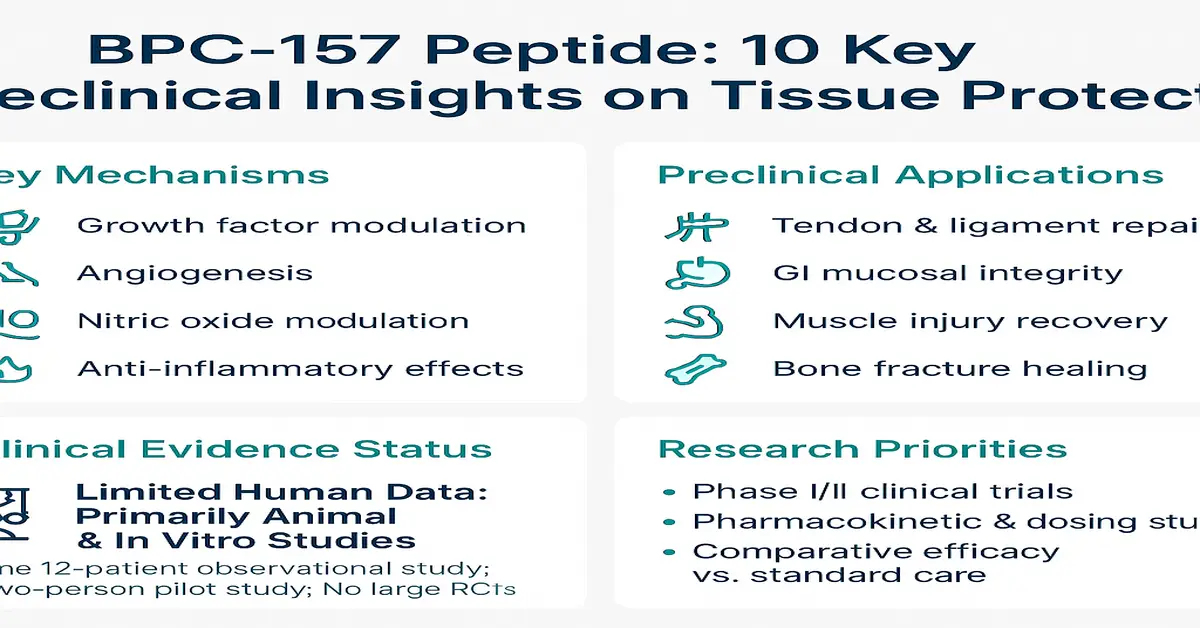
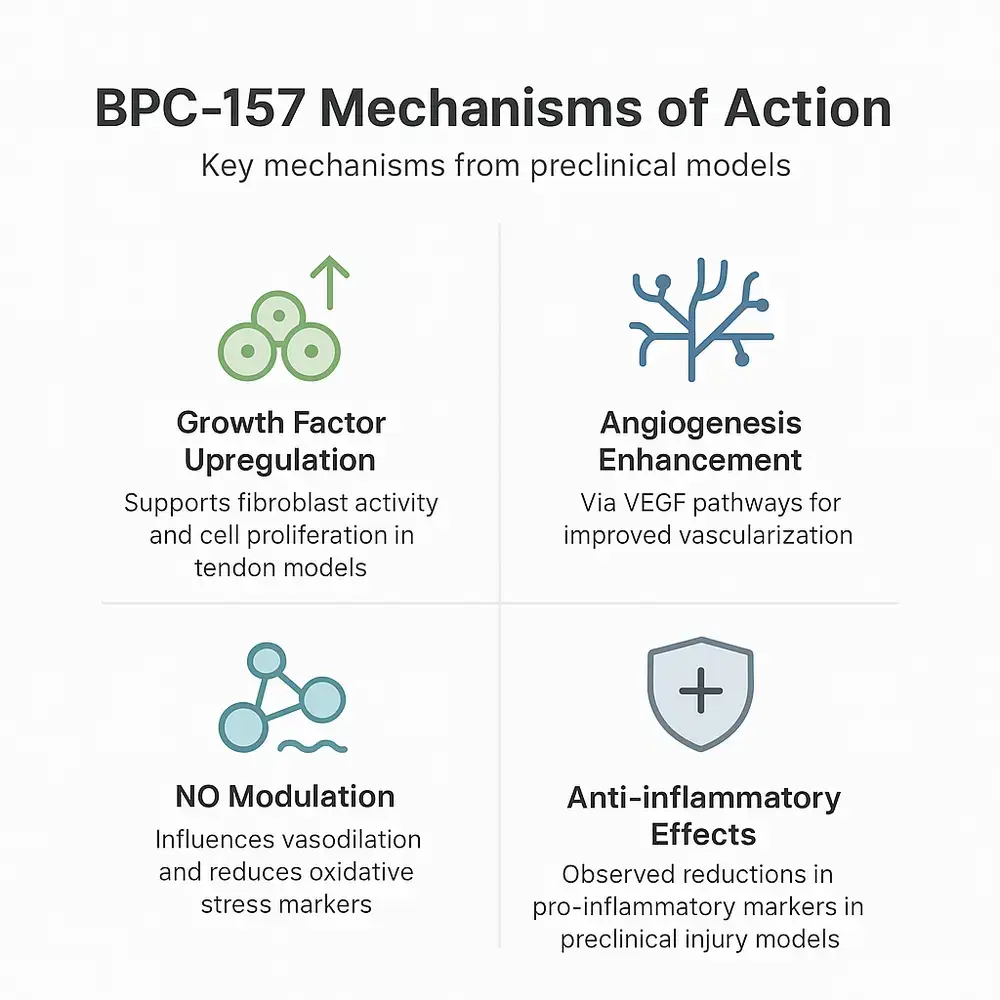
In preclinical models, BPC-157 has been observed to influence several cellular processes key to tissue maintenance. It promotes tendon fibroblast outgrowth and enhances cell survival, migration, and proliferation by upregulating growth factors involved in tissue remodeling. Angiogenesis, the formation of new blood vessels, appears to be regulated by vascular endothelial growth factor (VEGF).
Additionally, BPC-157 modulates nitric oxide (NO) pathways, which play roles in vascular function and the modulation of inflammation. Studies show it exhibits pleiotropic cytoprotective effects, including counteracting certain bleeding tendencies and supporting structural recovery in damaged tissues. In musculoskeletal models, it upregulates pathways linked to cell growth, proliferation, survival, and anti-inflammatory responses.
These statements have not been evaluated by the Food and Drug Administration. This product is not intended to diagnose, treat, cure, or prevent any disease. These mechanisms are derived from in vitro and animal research, providing a foundation for understanding BPC-157’s biological interactions but requiring further validation.
Key mechanisms summarized:
- Growth factor upregulation: Supports fibroblast activity and cell proliferation in tendon models.
- Angiogenesis enhancement: Via VEGF pathways for improved vascularization.
- NO modulation: Influences vasodilation and reduces oxidative stress markers.
- Anti-inflammatory effects: Observed reductions in pro-inflammatory markers in preclinical injury models.
Therapeutic Applications
Preclinical research has explored BPC-157’s applications in various tissue repair scenarios. In animal models of tendon ruptures, ligament tears, muscle injuries, and fractures, it has shown accelerated healing timelines compared to controls. Wound-healing studies, particularly in the skin and gastrointestinal mucosa, provide evidence for repair processes, including in ulcer models.
In orthopedic sports medicine contexts, preclinical data suggest a potential for musculoskeletal soft-tissue injuries, especially in hypovascular and hypocellular tissues such as tendons, where natural recovery is challenging. Neuroprotective effects have been noted in central nervous system models, indicating broader tissue-protective properties. These findings position BPC-157 as a candidate for further study in regenerative applications.
These statements have not been evaluated by the Food and Drug Administration. This product is not intended to diagnose, treat, cure, or prevent any disease. All applications are limited to preclinical evidence and do not include established human protocols.
Notable preclinical applications:
- Tendon and ligament repair in rat models.
- Gastrointestinal mucosal integrity in ulcer-induced rodents.
- Muscle crush injury recovery.
- Bone fracture healing acceleration.
Clinical Evidence
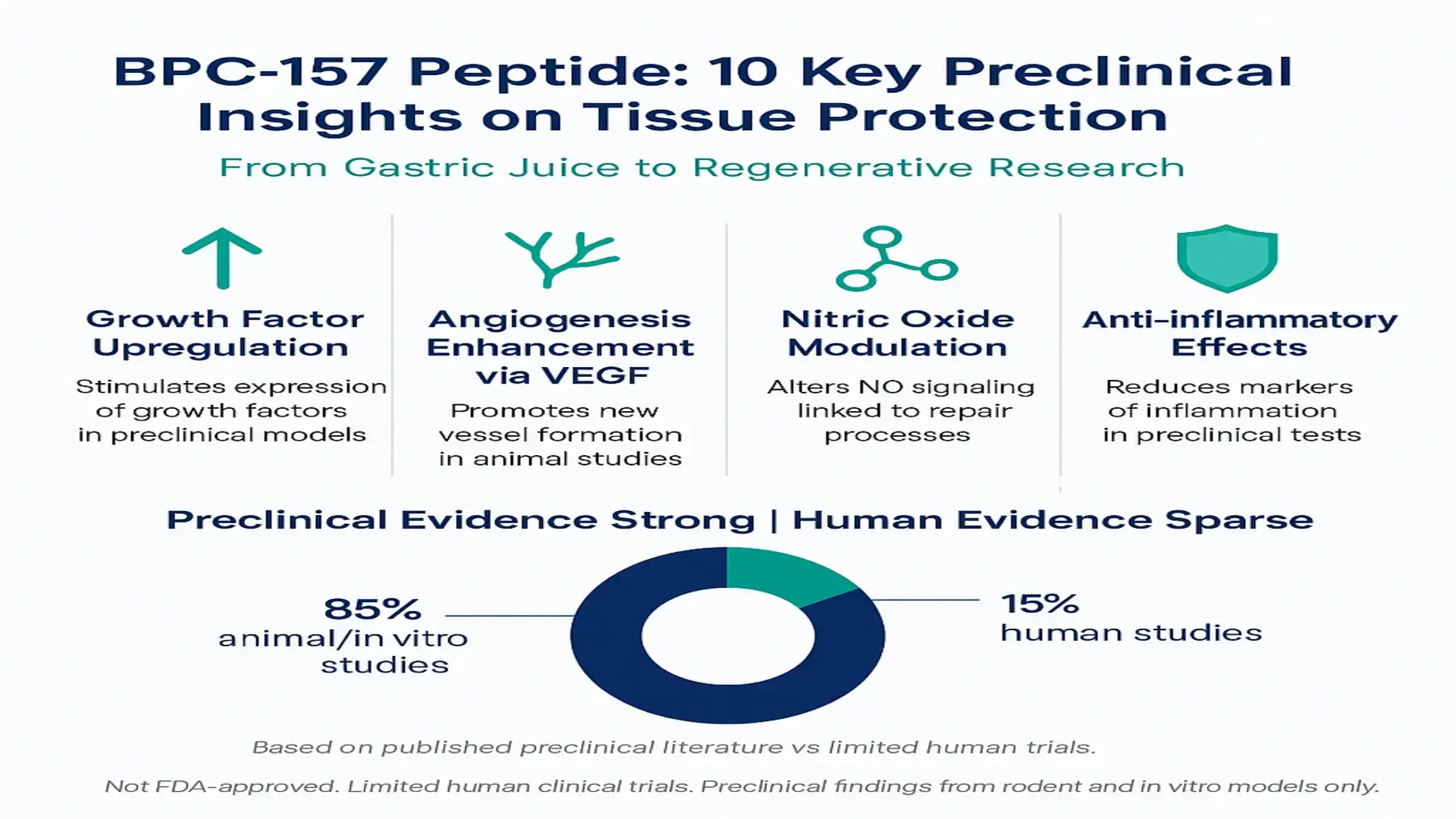
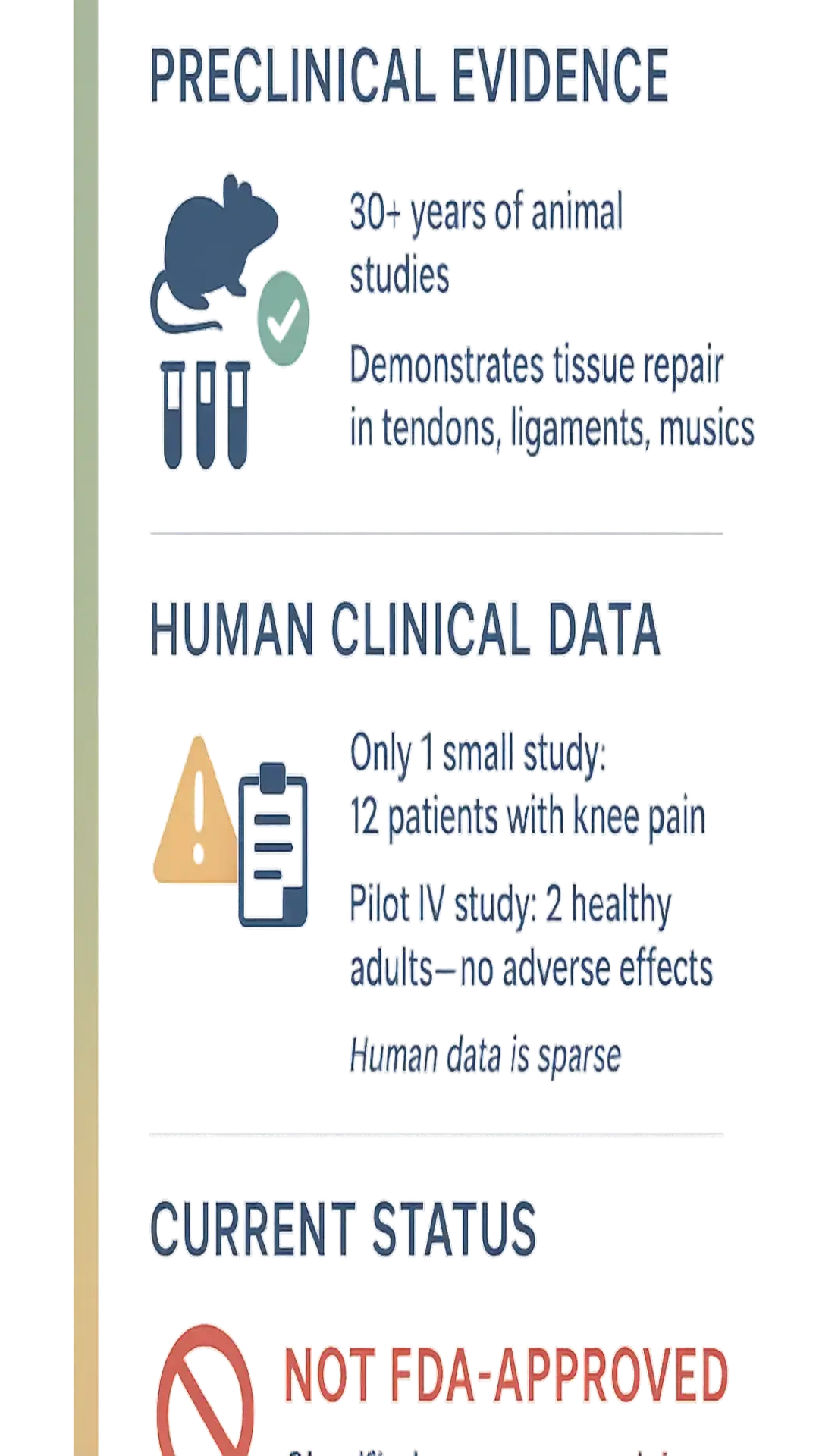
Most evidence for BPC-157 comes from preclinical studies in rats and mice, which consistently show that it promotes tendon healing and musculoskeletal recovery. For example, rodent models of Achilles tendon injuries showed improved functional outcomes with BPC-157 administration.
Human data is sparse. One small observational study involving 12 patients with chronic knee pain reported pain relief in 7 participants after intra-articular injections, with effects persisting for 6 months. A pilot study administered intravenous BPC-157 (up to 20 mg) to two healthy adults, observing no adverse effects and good tolerability. However, no large-scale randomized controlled trials (RCTs) in humans were identified in the reviewed sources.
This limited human evidence underscores the experimental status of BPC-157, with primary reliance on animal and in vitro data. Ongoing research may bridge this gap, but current clinical translation is minimal.
These statements have not been evaluated by the Food and Drug Administration. This product is not intended to diagnose, treat, cure, or prevent any disease.
Challenges and Limitations
Despite promising preclinical data, several challenges hinder BPC-157’s advancement. There is a notable lack of comprehensive human clinical trials, including long-term safety data. BPC-157 is not FDA-approved and is classified as an unapproved drug, particularly when sourced from compounding pharmacies, which raises potential immunogenicity risks.
Anti-doping agencies, such as WADA, prohibit its use due to insufficient evidence of human safety and efficacy. Concerns include unregulated production, which can lead to peptide impurities and unknown risks in human applications. Translation from animal models to clinical practice is unproven, with gaps in optimal dosing, pharmacokinetics, and administration routes in humans.
Researchers emphasize the need for standardized protocols to mitigate these issues. Users should be aware of these limitations when considering research contexts.
Future Directions
To advance BPC-157 research, robust human clinical trials are essential to validate preclinical findings across musculoskeletal, gastrointestinal, and neurological models. Investigations into safety profiles, optimal dosing regimens, and long-term effects in diverse populations are priorities. Combinations with existing therapies, such as physical rehabilitation or other regenerative agents, warrant exploration.
The reviewed sources lack details on specific ongoing trials or regulatory pathways, underscoring the need for updated registries such as ClinicalTrials.gov. Developing standardized, high-purity production methods could address impurity and immunogenicity concerns, facilitating safer research.
Prospective areas include:
- Phase I/II trials for tendon and joint injuries.
- Pharmacokinetic studies in humans.
- Comparative efficacy with standard treatments.
Conclusion
BPC-157 peptide demonstrates multifaceted regenerative effects in preclinical models across tendons, muscles, gastrointestinal tissues, and the central nervous system. Its mechanisms, including growth factor modulation and anti-inflammatory pathways, offer intriguing insights into tissue protection. However, human evidence is confined to small, preliminary studies showing tolerability, with no large RCTs available.
Significant gaps in clinical data, regulatory approval, and safety profiling necessitate caution. High-quality, large-scale trials are required to determine if preclinical promise translates to therapeutic potential. Until then, BPC-157 remains a research compound, not a clinical tool.
These statements have not been evaluated by the Food and Drug Administration. This product is not intended to diagnose, treat, cure, or prevent any disease.
References
- Vasireddi N, et al. Emerging Use of BPC-157 in Orthopaedic Sports Medicine. PubMed. 2025. PMID: 40756949.
- Sikiric P, et al. Pentadecapeptide BPC 157 and the central nervous system. PubMed. 2021. PMID: 34380875.
- Gwyer D, et al. Multifunctionality and Possible Medical Application of the BPC 157 Peptide. Pharmaceuticals (Basel). 2025;18(2):185.
- McGuire FP, et al. Regeneration or Risk? A Narrative Review of BPC-157 for Musculoskeletal Injuries. PMC. 2025. PMC12446177.
- Krivic A, et al. Gastric pentadecapeptide body protection compound BPC 157 and its role in accelerating musculoskeletal soft tissue healing. PubMed. 2019. PMID: 30915550.
- Vasireddi N, et al. Emerging Use of BPC-157 in Orthopaedic Sports Medicine. PMC. 2025. PMC12313605.
- Chang CH, et al. The promoting effect of pentadecapeptide BPC 157 on tendon healing involves tendon outgrowth, cell survival, and cell migration. J Appl Physiol (1985). 2011;110(3):774-80.
- Sikiric P, et al. Stable Gastric Pentadecapeptide BPC 157 and Wound Healing. PubMed. 2021. PMID: 34267654.
- Vukojević J, et al. Safety of Intravenous Infusion of BPC157 in Humans: A Pilot Study. PubMed. 2025. PMID: 40131143.
- Seiwerth S, et al. Pentadecapeptide BPC 157, in Clinical Trials as a Therapy for a Number of Central Nervous System Ailments. Curr Pharm Des. 2020.
References
References
- Vasireddi N, et al. Emerging Use of BPC-157 in Orthopaedic Sports Medicine. PubMed. 2025. PMID: 40756949.
- Sikiric P, et al. Pentadecapeptide BPC 157 and the central nervous system. PubMed. 2021. PMID: 34380875.
- Gwyer D, et al. Multifunctionality and Possible Medical Application of the BPC 157 Peptide. Pharmaceuticals (Basel). 2025;18(2):185.
- McGuire FP, et al. Regeneration or Risk? A Narrative Review of BPC-157 for Musculoskeletal Injuries. PMC. 2025. PMC12446177.
- Krivic A, et al. Gastric pentadecapeptide body protection compound BPC 157 and its role in accelerating musculoskeletal soft tissue healing. PubMed. 2019. PMID: 30915550.
- Vasireddi N, et al. Emerging Use of BPC-157 in Orthopaedic Sports Medicine. PMC. 2025. PMC12313605.
- Chang CH, et al. The promoting effect of pentadecapeptide BPC 157 on tendon healing involves tendon outgrowth, cell survival, and cell migration. J Appl Physiol (1985). 2011;110(3):774-80.
- Sikiric P, et al. Stable Gastric Pentadecapeptide BPC 157 and Wound Healing. PubMed. 2021. PMID: 34267654.
- Vukojević J, et al. Safety of Intravenous Infusion of BPC157 in Humans: A Pilot Study. PubMed. 2025. PMID: 40131143.
- Seiwerth S, et al. Pentadecapeptide BPC 157, in Clinical Trials as a Therapy for a Number of Central Nervous System Ailments. Curr Pharm Des. 2020.