For Research Use Only. Educational content for laboratory research literacy. Not medical advice; not for human use.
Buy BPC-157 peptide for research
If you plan to buy BPC-157 peptide for laboratory use, treat documentation as the first filter. Labs that buy BPC-157 peptide carefully verify COA details, research-use labeling, and batch traceability before procurement.
Use this checklist when you buy BPC-157 peptide so acceptance criteria stay consistent across purity reporting, packaging integrity, and seller transparency. Review related literature on PubMed and program context at NIH.gov, then compare listings in the research peptides catalog.
What to verify when you buy BPC-157 peptide
Before you buy BPC-157 peptide, confirm identity testing, purity method, lot number, and storage guidance. Keep those records with your project files after the order arrives.
Quick Answer
Summary
Buy BPC-157 Peptide decisions for laboratory work are mostly a qualification task, not a simple ecommerce checkout. Interest in the compound is high, but the evidence and regulatory picture still call for strict screening before any order.
That gap between interest and proof is the core issue. FDA states that BPC-157 is not a component of an FDA-approved drug, and PubMed reviews describe the compound as investigational with very limited human evidence, so labs should treat procurement as an SOP-driven vendor review.
5 Checks Before You Buy BPC-157 Peptide Online for Research
Scientific Snapshot
| Topic | Research literacy overview |
| Classification | Educational / laboratory documentation |
| Scientific Focus | Evidence boundaries and sourcing checks |
| Analytical Evaluation | COA and identity documentation |
Key Takeaways
- Labs that Buy BPC-157 Peptide should focus on research-use-only labeling, batch-specific third-party testing, and seller legitimacy, because BPC-157 remains investigational and is not in an FDA-approved drug.
- PubMed reviews report only three pilot human studies, while large clinical trials, a validated dosing regimen, and completed Phase II data are still lacking.
- FDA materials warn that unsafe online products can be counterfeit, contaminated, expired, or otherwise unsafe, so a low price alone is a poor buying signal.
- The safest research purchasing workflow is to verify the COA, lot number, test method (e.g., such as HPLC/MS), vial size, storage details, and business traceability before ordering.
- If a seller makes human-treatment claims, hides documentation, or cannot explain the batch identity, skip the purchase and use a better-documented research source.
Table of Contents
- Buy BPC-157 peptide for research
- Summary
- Introduction
- Summary
- What should a careful buyer prioritize first when they Buy BPC-157 Peptide?
- Is BPC-157 FDA-approved or legally established for human use?
- What Are the 5 Checks Before You Buy BPC-157 Peptide for Research?
- How do you verify a certificate of analysis before you Buy BPC-157 Peptide?
- How do you vet a seller before you Buy BPC-157 Peptide?
- Strengthen Documentation Literacy
Introduction
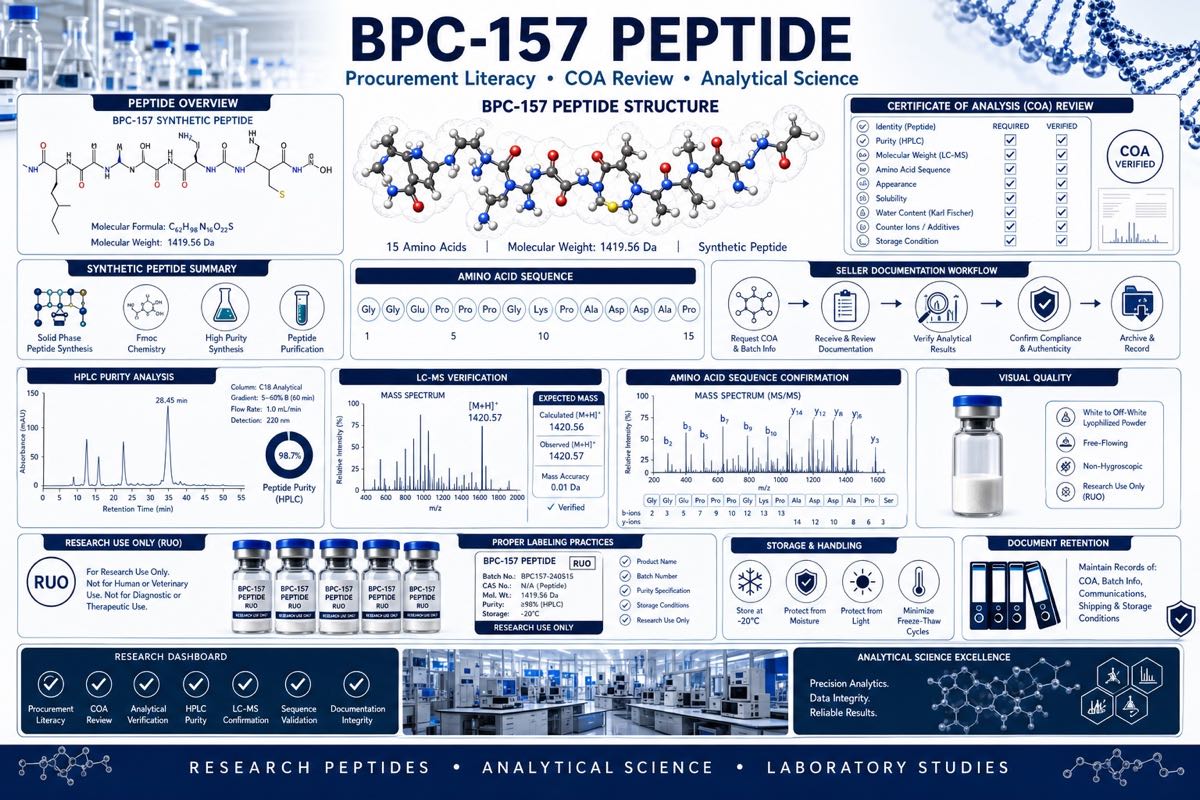
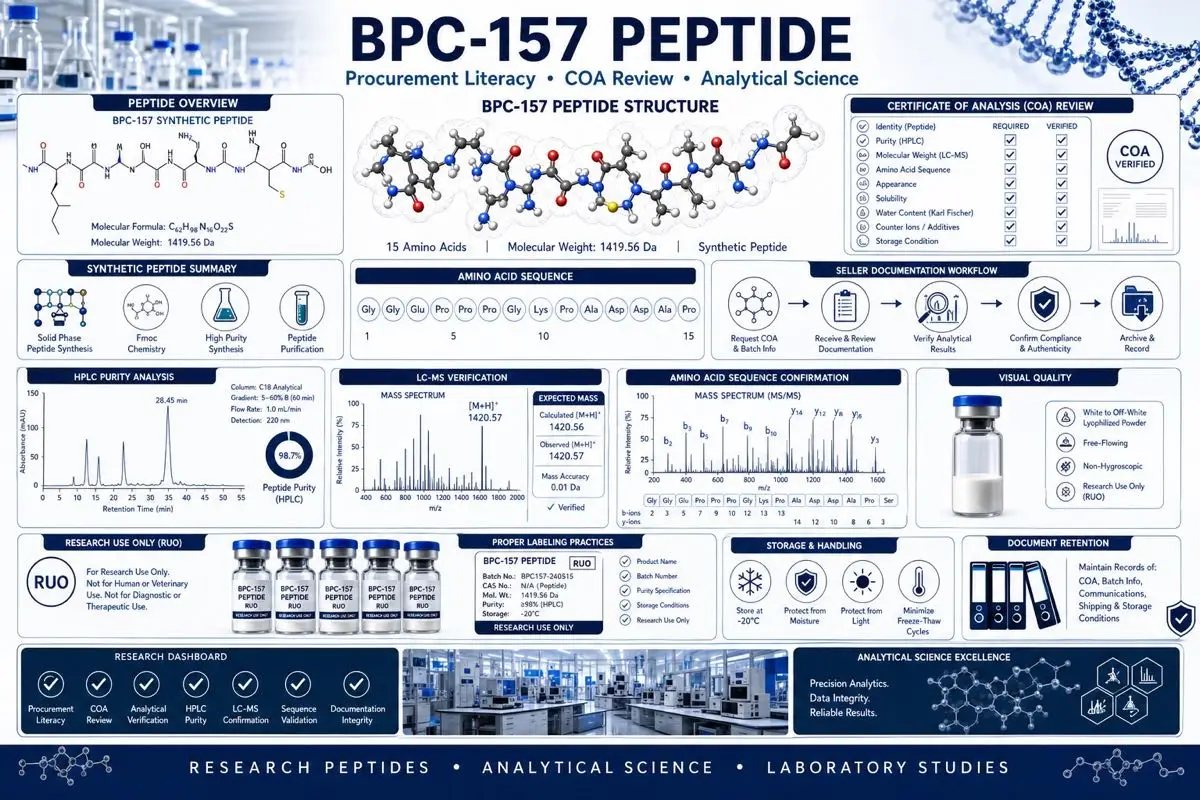
Documentation comes first. FDA and PubMed point to the same baseline: the compound is investigational, so the best criteria before you Buy BPC-157 Peptide are research-only labeling, batch-specific testing, and traceable sourcing.
Start by ignoring the most distracting signals, flashy claims, dramatic testimonials, and bargain pricing. A serious listing should clearly state that the peptide is for research use only, identify the batch, and provide a certificate of analysis that matches the lot being sold. If that basic chain is missing, the rest of the page does not matter.
This is where many buyers make the wrong first move. They compare the milligram count before they confirm identity and status. For a research peptide, identity, purity, and documentation matter before vial size, because an undocumented compound can disrupt an entire study plan.
“Nationwide Peptides lists the compound used when researchers Buy BPC-157 Peptide as ‘For Research Use Only’ and ‘Not for human use,’ which is the baseline positioning serious labs should expect.”
No, BPC-157 is not FDA-approved. FDA and PubMed both indicate that BPC-157 lacks an approved drug status and remains investigational rather than clinically established for human use.
That distinction matters because some online listings blur the line between research material and medicine. FDA says BPC-157 is not a component of an FDA-approved drug. FDA also notes there is no USP or NF drug substance monograph for BPC-157 or its acetate form, and its evaluation weighs against placement on the 503A Bulks List.
A common misconception is that strong preclinical interest means a compound is close to routine clinical use. That is not what the published record shows here. PubMed reviews say BPC-157 has over three decades of preclinical research, yet human pharmacokinetics remain undercharacterized, no validated dosing regimen exists, and no completed Phase II clinical trial is available.
If a seller presents BPC-157 as if it were equivalent to an approved therapeutic, that is a hard stop. For research purchasing, the cleaner signal is explicit investigational positioning.
Review primary literature before laboratory decisions to Buy BPC-157 Peptide: PubMed results on BPC-157.
Five checks matter most. A reliable process to Buy BPC-157 Peptide should screen the listing, the batch, the seller, the format, and the claims before any order is placed.
Use this as a minimum screen, not an advanced audit.
These five checks capture most of the avoidable failure points when labs Buy BPC-157 Peptide online. They do not prove quality on their own, but they quickly separate serious research listings from questionable ones.
COA review should be methodical. HPLC/MS data, lot matching, and batch specificity are the fastest ways to judge whether documents used when you Buy BPC-157 Peptide are useful or just decorative.
Step 1 is identity matching. Compare the lot or batch number on the product listing with the COA. If the numbers do not match, ask for the current batch document before ordering.
Step 2 is method review. A strong COA should indicate how the peptide was analyzed. In this category, HPLC and mass spectrometry are common benchmarks because they speak to purity and molecular identity rather than marketing language.
Step 3 is context. A purity claim like 99%+ is meaningful only if it is tied to a real batch and test method. A generic PDF with no lot number, no date, or no testing context is weaker than a simple but traceable document.
Step 4 is recency and access. If the COA is publicly accessible and easy to review before purchase, that usually signals better process control than a seller who only sends vague screenshots after payment.
A pro tip here: do not confuse a polished label with analytical transparency. The COA is the evidence layer; the label is only the packaging layer.
“Nationwide Peptides offers options to Buy BPC-157 Peptide in 5 mg, 10 mg, and 20 mg vials with a certificate of analysis tied to each batch.”
Seller vetting should look like vendor qualification. FDA guidance and standard lab procurement logic both favor traceability, clear labeling, and business legitimacy over aggressive sales copy.
Step 1 is identity. Check whether the company shows a real U.S. business presence, contact path, shipping terms, and security practices. Anonymous storefronts are poor candidates for research procurement.
Step 2 is category fit. A research peptide supplier should sound like a research supplier. If the site reads like a consumer treatment portal, promises recovery outcomes, or uses disease claims, the positioning is off.
Step 3 is documentation discipline. Look for batch-level COAs, consistent storage language, and a chain-of-custody mindset. These signals matter more than influencer-style endorsements.
There is one nuance worth keeping straight. FDA advice on checking a state board of pharmacy license applies when a site acts as a pharmacy or sells medicines. A research peptide vendor is not the same thing. Still, the warning signs the FDA lists, such as unbelievable prices, unapproved products, and weak traceability, remain useful screening criteria.
Vial size should follow the protocol design. Nationwide Peptides lists 5 mg, 10 mg, and 20 mg sizes, and the right choice depends on assay volume, handling frequency, and waste control, not hype.
Step 1 is scope. Estimate how much material the project actually needs across pilot runs, repeats, and control work. Buying too large a vial that is too large can increase waste if the study window is short.
Step 2 is handling the burden. If the lab expects repeated access after reconstitution, smaller units can make inventory control easier and reduce unnecessary exposure events. If the work requires larger standardized preparations, a bigger vial may simplify prep.
Step 3 is stability planning. Because there is no validated human dosing regimen and the compound remains research-grade, selection when you Buy BPC-157 Peptide should center on experimental consistency, rather than folklore about the “best dose” or “best cycle.” That is a common misconception carried over from non-research discussions.
If the protocol is uncertain, smaller vial formats usually create fewer downstream problems than oversizing the first order.
The difference is usually visible on the page. FDA warnings and standard procurement cues both separate transparent research listings from risky online offers.
A research-grade listing typically includes batch-linked documentation, test language that names methods, explicit research-use-only positioning, and business details that can be verified. A risky listing tends to substitute treatment claims, dramatic promises, anonymous checkout flows, and pricing that looks too good to be true. FDA warns that unsafe online products may be counterfeit, contaminated, expired, or otherwise unsafe, and that risk profile is exactly why documentation matters.
One useful rule is this: if the page sells certainty, be skeptical; if it sells traceability, pay attention. Serious research suppliers usually talk about purity, testing, storage, and COAs, not overstated outcomes.
“Nationwide Peptides describes material for researchers who Buy BPC-157 Peptide as 99% purity, third-party tested, a useful benchmark when comparing research listings.”
The gap is large. PubMed reviews describe decades of preclinical BPC-157 work, yet only three pilot human studies and no completed Phase II trial are available.
That difference should shape how you read every product page. Preclinical evidence can justify scientific interest, but it does not establish an approved formulation, a validated dosing regimen, or a mature safety profile for human use. The 2025 review notes pilot studies involving intra-articular knee pain, interstitial cystitis, and intravenous safety and pharmacokinetics, with no adverse effects reported there, but also stresses the lack of rigorous large-scale trials.
If your research question depends on robust human pharmacokinetics or clinically established dosing, a Buy BPC-157 Peptide path is a poor fit for today’s research. If your work is preclinical or analytical and can tolerate the investigational status, the procurement focus becomes documentation, consistency, and source quality.
This is the key trade-off: scientific interest is real, but certainty is limited.
Several red flags justify walking away. FDA warning themes and standard lab controls both point to the same blockers: hidden identity, hidden testing, and misleading medical claims.
Stop if the seller cannot provide a batch-specific COA, if the label language suggests human-treatment use, or if the site fails to provide clear contact information. Stop if the product name, acetate form, purity claim, or storage instructions shift across the page. Stop if payment methods feel intentionally hard to trace. Stop if the price is so low that it undermines the claimed testing and handling standards.
Another misconception is that all COAs are equal. They are not. A recycled certificate detached from the current lot is weak evidence. The same goes for phrases like “pharmaceutical grade” when the listing does not show the supporting framework that phrase would imply.
In practice, the fastest disqualifier is inconsistency. If the seller cannot keep the basics consistent, the batch control is unlikely to be strong.
Skip a Buy BPC-157 Peptide decision when the protocol needs clinical certainty. FDA status and PubMed reviews both indicate that BPC-157 is not the right choice for work requiring approved human use, validated dosing, or mature pharmacokinetics.
That means a different path may be smarter if the project involves formal therapeutic administration, strict clinical comparability, or regulatory frameworks built around approved drugs. It may also be the wrong fit if your team cannot accept the burden of extra vendor vetting and batch review.
If the requirement is exploratory peptide research with strong sourcing controls, teams can still evaluate whether to Buy BPC-157 Peptide as an investigational material. If the requirement is established human-use evidence, choose a compound with an approved formulation and a better-developed clinical record. That is the cleanest way to protect both the integrity of the study and procurement discipline.
Teams that Buy BPC-157 Peptide inventory should confirm RUO labeling, lot-matched COA files, and seller contactability before funds leave the lab. When you Buy BPC-157 Peptide from a public catalog, treat price as a secondary signal and documentation completeness as the primary filter.
A second reviewer can Ask why a listing is preferred, then cross-check purity method language and storage notes. That second look helps Buy BPC-157 Peptide decisions stay consistent across technicians. Requiring a shared spreadsheet for every Buy BPC-157 Peptide attempt also reduces one-off judgment calls.
Keep outbound literature bookmarks adjacent to the purchasing record so each Buy BPC-157 Peptide order stays paired with the evidence review that justified inclusion. If paperwork is incomplete, pause, request updates, and only then Buy BPC-157 Peptide stock for the intended assay.
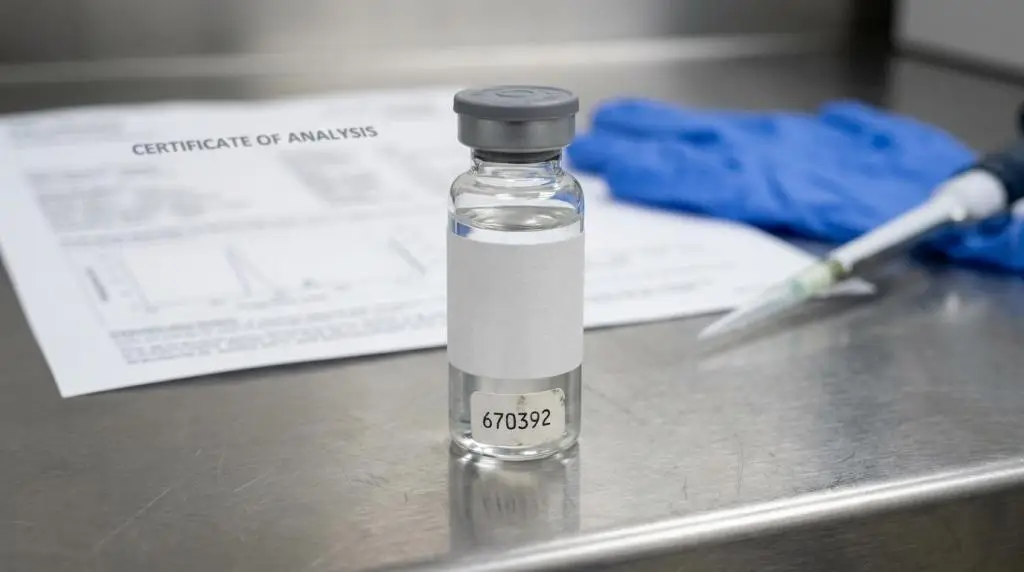
Laboratories that Buy BPC-157 Peptide inventory generally benefit from a written intake checklist that separates commercial claims from analytical evidence. A durable framework records product identity, stated purity method, batch or lot identifiers, storage conditions, and the date each document was reviewed. Keeping this record beside the purchasing decision makes later audit steps simpler when multiple compound classes move through the same receiving workflow.
Documentation should also capture how the supplier presents research-use boundaries. Clear research-use-only language, absence of dosing guidance, and transparent contact details are operational signals. When those elements are missing, purchasing teams can pause and request clarification before committing budget to a vial that may later fail intake review.
Traceability is strongest when each received unit maps to a COA, a supplier invoice, and an internal lot tag. Aligning those three references at receiving prevents orphan vials from entering active inventory. For multi-site groups, a shared spreadsheet or LIMS field that stores the COA file reference, seller name, and verification timestamp keeps procurement history recoverable months later.
If a seller rotates brands or relabels stock, the paperwork trail becomes the only stable identifier. Requiring the seller to reissue a COA under the fulfilled label, and rejecting shipments that arrive without matching paperwork, protects experimental continuity. This is especially useful when teams Buy BPC-157 Peptide across multiple lots purchased weeks apart under similar catalog names.
A practical intake hold is triggered by incomplete purity methods, unreadable chromatograms, mismatched peptide names, or packaging that implies consumer use. Teams can define auto-hold rules so questionable lots remain quarantined until a second reviewer signs off. That second look should focus on whether the analytical package is sufficient for the intended assay design, not on promotional wording.
Once cleared, store the compound under the conditions described on the COA and label the container with an internal code that does not overwrite the supplier lot number. Retaining both identifiers supports later investigations if chromatographic results diverge from earlier baseline measurements. Over time, this procurement discipline turns each Buy BPC-157 Peptide decision into a repeatable laboratory process rather than a one-off purchase.
Summary
Start by ignoring the most distracting signals, flashy claims, dramatic testimonials, and bargain pricing. A serious listing should clearly state that the peptide is for research use only, identify the batch, and provide a certificate of analysis that matches the lot being sold. If that basic chain is missing, the rest of the page does not matter.
What should a careful buyer prioritize first when they Buy BPC-157 Peptide?
This is where many buyers make the wrong first move. They compare the milligram count before they confirm identity and status. For a research peptide, identity, purity, and documentation matter before vial size, because an undocumented compound can disrupt an entire study plan.
Is BPC-157 FDA-approved or legally established for human use?
“Nationwide Peptides lists the compound used when researchers Buy BPC-157 Peptide as ‘For Research Use Only’ and ‘Not for human use,’ which is the baseline positioning serious labs should expect.”
What Are the 5 Checks Before You Buy BPC-157 Peptide for Research?
No, BPC-157 is not FDA-approved. FDA and PubMed both indicate that BPC-157 lacks an approved drug status and remains investigational rather than clinically established for human use.
How do you verify a certificate of analysis before you Buy BPC-157 Peptide?
That distinction matters because some online listings blur the line between research material and medicine. FDA says BPC-157 is not a component of an FDA-approved drug. FDA also notes there is no USP or NF drug substance monograph for BPC-157 or its acetate form, and its evaluation weighs against placement on the 503A Bulks List.
How do you vet a seller before you Buy BPC-157 Peptide?
A common misconception is that strong preclinical interest means a compound is close to routine clinical use. That is not what the published record shows here. PubMed reviews say BPC-157 has over three decades of preclinical research, yet human pharmacokinetics remain undercharacterized, no validated dosing regimen exists, and no completed Phase II clinical trial is available.
Strengthen Documentation Literacy
Use certificate of analysis resources when reviewing research materials discussed in this guide.