
Quick Answer
Is Retatrutide a Peptide?
Yes. The Retatrutide is a synthetic research peptide studied within molecular biology for its relationship with GLP-related peptide pathways, receptor interaction models, amino acid sequence characteristics, and advanced peptide engineering research. Scientific investigations involving Retatrutide focus on molecular structure, pathway analysis, and laboratory-based characterization.
Retatrutide Peptide: Scientific Research, GLP Pathways & Molecular Studies
Scientific Snapshot
| Research Compound | Retatrutide Peptide |
| Research Category | Synthetic GLP-Related Peptide Research |
| Scientific Focus | Multi-Receptor Pathway and Molecular Studies |
| Research Areas | Peptide Biology, Structure Analysis, Computational Modeling |
| Analytical Evaluation | LC-MS Verification / RP-HPLC Analysis |
Quick Facts
| Common Research Name | Retatrutide |
| Peptide Classification | Engineered Peptide Research Compound |
| Scientific Family | GLP-Related Peptide Research |
| Comparison Topic | Retatrutide Peptide vs Tirzepatide Research |
| Study Approach | Molecular Characterization and Analytical Testing |
Key Takeaways
- Retatrutide research focuses on synthetic peptide engineering, molecular pathway studies, and GLP-related receptor research models.
- Researchers study peptide Retatrutide through amino acid sequence analysis, molecular modeling, and laboratory characterization techniques.
- Scientific comparisons involving Retatrutide vs Tirzepatide focus on structural differences and peptide research pathways.
- Analytical technologies such as LC-MS and RP-HPLC support peptide identity research and molecular evaluation.
Table of Contents
Introduction
Retatrutide research represents an expanding area of synthetic peptide science focused on molecular engineering, GLP-related pathways, and peptide receptor research models. Scientists investigate peptide structures to better understand sequence relationships, molecular interactions, and biological research systems.
Research involving peptide Retatrutide explores amino acid characteristics, structural biology, and advanced analytical evaluation methods. These studies contribute to broader scientific understanding of engineered peptide compounds.
Interest in peptides Retatrutide has increased alongside broader GLP peptide research areas, including studies involving GLP-1S Peptide, GLP-2T Peptide, and other molecular pathway investigations.
Scientific comparisons such as Retatrutide vs Tirzepatide evaluate differences in peptide structures, receptor research models, and molecular characteristics rather than direct clinical outcomes.
This Nationwide Peptides research guide explores Retatrutide research peptide studies, molecular pathways, analytical testing methods, peptide characterization, and future developments in GLP-related peptide science.
Research Note
Understanding Retatrutide Through Scientific Research
Retatrutide information is provided for laboratory research and educational purposes only. Scientific evaluation focuses on peptide chemistry, molecular biology, analytical characterization, and experimental research models.
What Is Retatrutide Peptide?
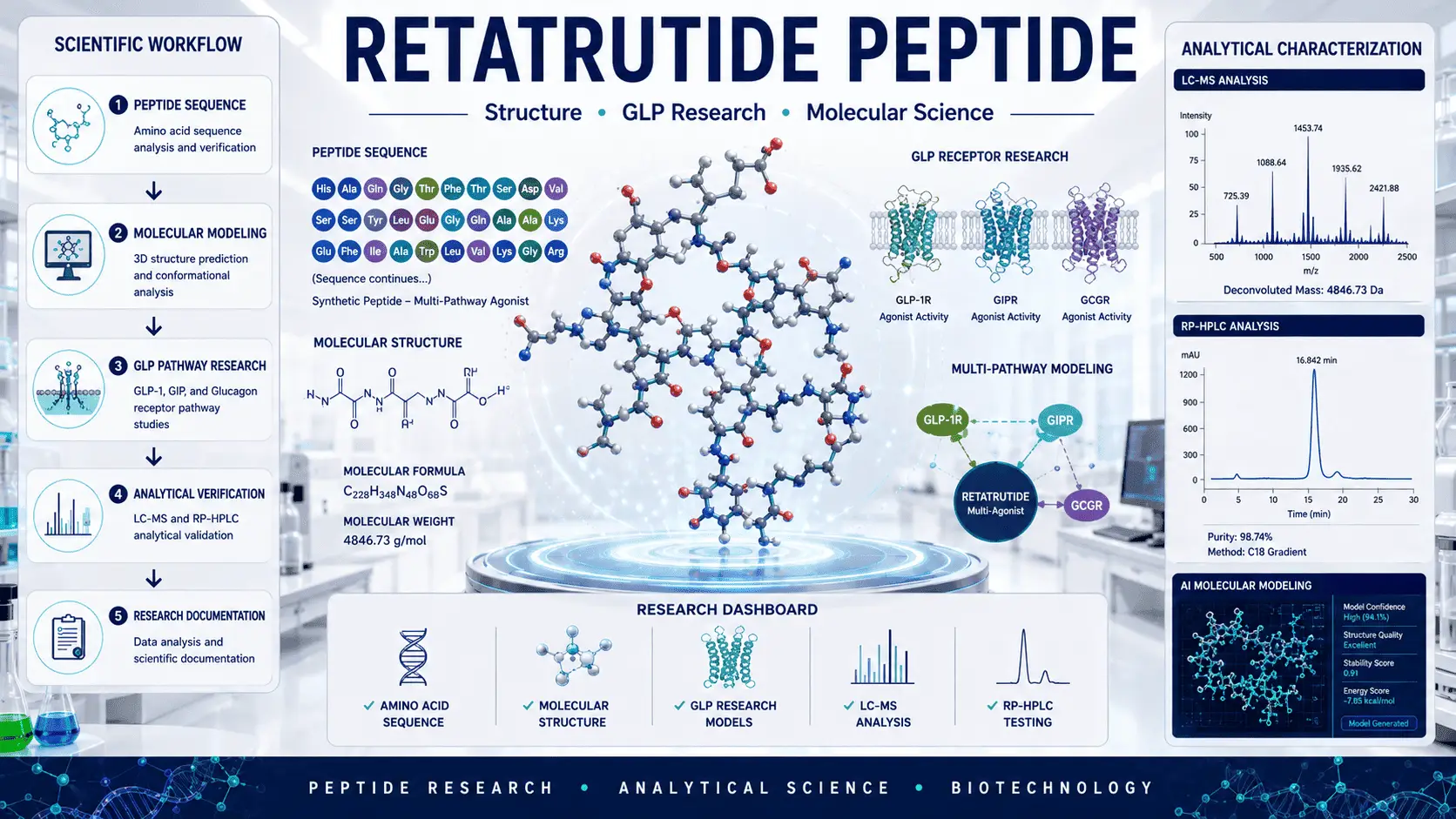
The Retatrutide is a synthetic research peptide studied within molecular biology and peptide science for its engineered structure, receptor pathway research, and amino acid sequence characteristics. Scientific investigations focus on understanding molecular interactions, peptide architecture, and experimental research models.
Researchers examining peptide Retatrutide study its molecular properties through analytical chemistry, computational modeling, and laboratory-based characterization methods.
Retatrutide research peptide studies are part of a growing scientific field focused on understanding GLP-related peptide systems and how structural modifications influence molecular research pathways.
Research Insight
Retatrutide Belongs to an Advanced Peptide Research Category
Engineered peptides are studied to understand how amino acid sequence modifications influence molecular structure, receptor research models, and peptide characteristics within controlled scientific environments.
Retatrutide Structure and Peptide Classification
The molecular structure of Retatrutide is a major focus in peptide chemistry research. Scientists analyze amino acid sequences, structural arrangements, and molecular interactions to better understand peptide design principles.
Analytical technologies allow researchers to investigate structural characteristics and compare engineered peptide systems across different scientific models.
| Scientific Feature | Retatrutide Research Profile |
|---|---|
| Research Compound | Retatrutide Peptide |
| Research Category | Engineered Synthetic Peptide |
| Scientific Area | GLP-Related Molecular Research |
| Primary Study Focus | Peptide Structure and Receptor Pathway Models |
| Analytical Methods | LC-MS / RP-HPLC Characterization |
GLP Pathway Research and Retatrutide Peptide Studies
GLP-related peptide research explores molecular pathways, receptor biology models, and peptide interactions. Scientists investigate these systems to understand relationships between peptide structures and biological research mechanisms.
Research involving peptides Retatrutide examines molecular characteristics within this broader scientific field alongside other GLP-related peptide investigations.
| Research Area | Scientific Focus |
|---|---|
| GLP Pathway Studies | Molecular signaling research models |
| Peptide Engineering | Structure and sequence investigation |
| Receptor Research | Analysis of molecular interactions |
| Computational Biology | Peptide modeling and prediction studies |
GLP-1S Peptide, GLP-2T Peptide and Related Research Areas
GLP-related peptide research includes multiple scientific areas involving engineered peptide structures and molecular pathway investigations. Topics such as GLP-1S Peptide and GLP-2T Peptide are studied within broader peptide research frameworks.
Researchers compare GLP-related peptide systems to better understand differences in molecular structure, sequence characteristics, and experimental research pathways.
Retatrutide Peptide vs Tirzepatide: Scientific Research Comparison
The comparison between Retatrutide vs Tirzepatide is a growing topic within peptide research because both compounds are studied in relation to engineered peptide structures and receptor pathway models.
Scientific comparisons focus on molecular architecture, peptide design approaches, and structural differences rather than direct biological outcomes.
| Research Feature | Retatrutide Research | Tirzepatide Research |
|---|---|---|
| Peptide Category | Engineered peptide research | Engineered peptide research |
| Scientific Focus | Multi-pathway peptide models | GLP-related pathway models |
| Study Approach | Molecular characterization | Molecular characterization |
| Analysis Methods | LC-MS / RP-HPLC | LC-MS / RP-HPLC |
Molecular Characterization of Retatrutide Research Peptides
Molecular characterization helps researchers understand peptide identity, structural properties, and sequence relationships. Modern peptide research combines analytical testing with computational approaches to study complex peptide systems.
Retatrutide research continues to expand through improvements in biotechnology, analytical chemistry, and molecular modeling technologies.
Did You Know?
Peptide Engineering Studies Structure-Function Relationships
Researchers study engineered peptides to understand how sequence design, molecular structure, and peptide modifications influence scientific research models.
Section Summary
Retatrutide research focuses on engineered peptide structures, GLP-related pathway studies, molecular characterization, and analytical evaluation. Comparisons with Tirzepatide and related GLP peptides help researchers explore differences between advanced peptide systems.
Retatrutide Peptide Molecular Pathway Research
Scientific investigations involving the Retatrutide focus on molecular pathway research, engineered peptide structures, and receptor interaction models. Researchers examine how peptide sequences and structural characteristics influence molecular behavior within experimental systems.
Retatrutide research peptide studies contribute to a growing scientific field focused on GLP-related peptide systems, synthetic peptide engineering, and advanced molecular biology research.
Research involving peptide Retatrutide combines analytical chemistry, computational biology, and molecular modeling approaches to better understand peptide architecture and structure-function relationships.
Research Insight
GLP Peptide Research Explores Molecular Communication Systems
Scientists study GLP-related peptides to investigate receptor pathway models, peptide interactions, sequence relationships, and molecular signaling concepts within controlled research environments.
GLP Receptor Research and Retatrutide Studies
GLP-related research examines how engineered peptides interact with molecular systems in experimental models. Scientists investigate peptide structures, receptor biology concepts, and pathway relationships using laboratory-based methods.
Peptides Retatrutide studies are often reviewed alongside other GLP-related research compounds because they contribute to understanding peptide design and molecular pathway investigation.
| Research Area | Scientific Investigation Focus |
|---|---|
| GLP Pathway Models | Molecular signaling research |
| Receptor Studies | Investigation of peptide interaction systems |
| Sequence Research | Amino acid structure analysis |
| Molecular Modeling | Computational peptide investigation |
Multi-Pathway Peptide Research and Structural Analysis
Modern peptide engineering research investigates how structural modifications influence molecular characteristics. Researchers analyze peptide sequences and pathway models to better understand complex peptide systems.
Retatrutide research represents part of this broader scientific effort to evaluate engineered peptides through structural biology and analytical technologies.
| Scientific Topic | Research Purpose |
|---|---|
| Peptide Engineering | Evaluation of designed molecular structures |
| Structural Biology | Study of peptide configuration |
| Pathway Research | Analysis of molecular relationships |
| Analytical Chemistry | Peptide characterization and evaluation |
GLP-1S Peptide and GLP-2T Peptide Research Context
GLP peptide research includes multiple scientific categories involving synthetic peptide structures and molecular pathway studies. GLP-1S Peptide and GLP-2T Peptide research areas contribute to broader investigations into peptide biology.
Comparative research helps scientists evaluate structural differences, sequence modifications, and molecular characteristics across related peptide systems.
Retatrutide Peptide vs Tirzepatide: Molecular Research Differences
The scientific comparison of Retatrutide vs Tirzepatide focuses on understanding differences between engineered peptide structures, molecular designs, and receptor pathway research models.
Researchers examine these peptides individually using analytical testing, structural evaluation, and computational methods to better understand their unique molecular characteristics.
| Comparison Area | Retatrutide Research | Tirzepatide Research |
|---|---|---|
| Research Category | Engineered peptide studies | Engineered peptide studies |
| Scientific Analysis | Multi-pathway molecular research | GLP pathway molecular research |
| Structure Evaluation | Peptide sequence studies | Peptide sequence studies |
| Testing Methods | LC-MS / RP-HPLC | LC-MS / RP-HPLC |
Computational Modeling in Retatrutide Peptide Research
Computational biology has become an important part of advanced peptide science. Researchers use digital modeling tools to investigate molecular structures, theoretical interactions, and peptide sequence relationships.
AI-supported peptide research allows scientists to evaluate complex molecular datasets alongside traditional laboratory-based analytical methods.
Did You Know?
Computational Tools Help Researchers Analyze Complex Peptides
Artificial intelligence and molecular modeling platforms can process peptide sequence data and identify structural patterns that support advanced peptide research.
Section Summary
Retatrutide research explores GLP-related pathways, engineered peptide structures, molecular interactions, and computational modeling. Comparisons with Tirzepatide and related GLP peptides help researchers understand differences across peptide research systems.
Retatrutide Peptide Synthesis and Molecular Characterization
Scientific research involving the Retatrutide relies on advanced peptide synthesis methods, molecular characterization, and analytical evaluation techniques. Researchers examine peptide identity, amino acid sequence properties, and structural characteristics through controlled laboratory processes.
As an engineered research peptide, peptide Retatrutide studies focus on understanding molecular design, sequence relationships, and peptide chemistry. Analytical technologies help researchers evaluate structural information and scientific consistency.
Modern Retatrutide research peptide evaluation commonly involves methods such as liquid chromatography-mass spectrometry (LC-MS), reverse-phase high-performance liquid chromatography (RP-HPLC), and computational analysis.
Quality Science Insight
Analytical Verification Supports Peptide Research Quality
Reliable peptide research depends on accurate molecular characterization. Technologies such as LC-MS and RP-HPLC help researchers evaluate peptide identity, molecular properties, and analytical profiles.
Solid-Phase Peptide Synthesis and Retatrutide Research
Solid-phase peptide synthesis (SPPS) is an established approach used within synthetic peptide chemistry. This process allows researchers to develop defined peptide sequences for molecular investigation and analytical study.
Retatrutide peptide synthesis research focuses on sequence design, molecular structure, and characterization methods that support scientific analysis of engineered peptide systems.
| Synthesis Research Stage | Scientific Purpose |
|---|---|
| Amino Acid Assembly | Development of defined peptide sequences |
| Structural Evaluation | Investigation of molecular characteristics |
| Purification Research | Analysis of peptide composition |
| Analytical Confirmation | Scientific verification using testing methods |
LC-MS Verification in Retatrutide Peptide Research
Liquid chromatography-mass spectrometry is widely used in peptide research to investigate molecular identity, mass characteristics, and structural information.
For peptides Retatrutide studies, LC-MS analysis helps researchers compare observed molecular data with expected peptide characteristics during scientific evaluation.
| LC-MS Analysis Area | Research Information Provided |
|---|---|
| Molecular Identity | Peptide characterization research |
| Mass Analysis | Molecular weight evaluation |
| Structural Information | Sequence-related investigation |
| Analytical Documentation | Research data reporting |
RP-HPLC Analysis and Peptide Purity Research
Reverse-phase high-performance liquid chromatography is an analytical method used in peptide science to study separation characteristics, purity profiles, and molecular composition.
RP-HPLC research provides additional analytical information that supports molecular evaluation of synthetic peptide systems including Retatrutide peptide.
| RP-HPLC Research Area | Scientific Application |
|---|---|
| Chromatographic Analysis | Evaluation of peptide separation patterns |
| Purity Profile Research | Study of molecular composition |
| Analytical Comparison | Research consistency evaluation |
| Quality Documentation | Scientific reporting support |
Retatrutide Peptide Stability Research
Peptide stability research examines how molecular structures behave under controlled scientific conditions. Researchers investigate structural integrity, sequence characteristics, and factors that may influence peptide properties.
Studies involving Retatrutide research peptide stability contribute to broader understanding of engineered peptide chemistry and molecular behavior.
Quality Evaluation Standards in GLP Peptide Research
Advanced GLP peptide research requires detailed analytical evaluation. Scientists use multiple characterization techniques to investigate peptide identity, structure, and molecular consistency.
This approach supports research involving Retatrutide peptide, GLP-1S Peptide, GLP-2T Peptide, and related peptide systems through evidence-based analytical methods.
Did You Know?
Multiple Analytical Methods Improve Peptide Characterization
Researchers often combine LC-MS, RP-HPLC, sequencing technologies, and computational tools to gain a more complete understanding of peptide structures and molecular characteristics.
Section Summary
Retatrutide peptide research uses synthesis science, LC-MS verification, RP-HPLC analysis, molecular characterization, and stability studies to investigate peptide structure, identity, and scientific properties.
Research Compound Profile
Retatrutide Peptide Research Profile
Nationwide Peptides provides research-focused peptide information designed to support scientific understanding of synthetic peptide compounds, analytical testing methods, and molecular characterization standards.
The Retatrutide peptide is studied within peptide science for its engineered structure, GLP-related molecular pathway research, amino acid sequence characteristics, and advanced peptide biology investigations.
| Research Attribute | Scientific Profile |
|---|---|
| Compound Name | Retatrutide Peptide |
| Research Category | Synthetic GLP-Related Peptide Research |
| Scientific Classification | Engineered Peptide Research Compound |
| Research Focus | Molecular Pathways, Peptide Structure, Receptor Models |
| Analytical Methods | LC-MS and RP-HPLC Characterization |
Retatrutide Peptide Analytical Research Standards
Scientific evaluation of Retatrutide research peptide materials depends on molecular-level analysis, identity confirmation, and analytical characterization. Researchers rely on detailed testing methods to better understand peptide composition and structure.
Quality-focused peptide research uses multiple analytical approaches to examine molecular characteristics, sequence information, and consistency within experimental studies.
| Quality Research Area | Scientific Evaluation Method |
|---|---|
| Peptide Identity | Mass spectrometry-based molecular verification |
| Sequence Characteristics | Amino acid structure evaluation |
| Purity Profile Research | RP-HPLC chromatographic analysis |
| Molecular Properties | Structural characterization studies |
Quality Verification Insight
Third-Party Testing Supports Research Transparency
Independent analytical testing provides additional scientific documentation by evaluating peptide identity, purity characteristics, and molecular profiles through established laboratory methods.
Nationwide Peptides supports research transparency through third-party analytical verification and Certificate of Analysis (COA) documentation for research materials.
Certificate of Analysis (COA) and Peptide Documentation
A Certificate of Analysis provides researchers with analytical documentation related to peptide testing results. COA information commonly includes scientific data generated through analytical chemistry methods.
For Retatrutide peptide research, documentation helps researchers review analytical information associated with molecular characterization and testing procedures.
| COA Information | Research Importance |
|---|---|
| Identity Testing | Supports molecular confirmation research |
| Purity Analysis | Provides chromatographic evaluation data |
| Testing Method | Documents analytical techniques used |
| Research Traceability | Supports scientific record keeping |
Retatrutide and GLP Peptide Research Applications
Research involving peptide Retatrutide contributes to scientific areas focused on GLP-related pathways, peptide engineering, molecular biology, and computational modeling.
Related research areas involving GLP-1S Peptide, GLP-2T Peptide, and Retatrutide peptide vs Tirzepatide comparisons continue expanding scientific understanding of engineered peptide systems.
| Scientific Discipline | Research Connection |
|---|---|
| Peptide Chemistry | Structure and sequence investigation |
| Molecular Biology | Pathway research models |
| Analytical Science | Testing and characterization methods |
| Computational Research | AI-supported peptide modeling |
Explore Retatrutide Peptide Research
Learn more about Retatrutide peptide research, GLP-related peptide science, analytical testing standards, and molecular characterization through Nationwide Peptides.
Research Use Statement
Retatrutide peptide information is provided strictly for laboratory research and educational purposes. Research compounds discussed are not intended for human consumption, veterinary use, therapeutic applications, diagnosis, treatment, or clinical use.
Did You Know?
COA Documentation Helps Researchers Review Analytical Data
Certificates of Analysis provide researchers with testing information generated from analytical techniques such as chromatography and mass spectrometry.
Future Directions in Retatrutide Peptide Research
Future research involving the Retatrutide peptide continues to advance through developments in peptide engineering, molecular biology, computational modeling, and analytical chemistry. Scientists are exploring how peptide structures and sequence modifications influence molecular characteristics within research environments.
Retatrutide research peptide studies represent part of a broader scientific effort to understand GLP-related peptide systems, receptor pathway models, and engineered peptide structures.
As peptide science evolves, technologies such as artificial intelligence, molecular simulations, and next-generation analytical platforms are becoming increasingly important for studying peptide Retatrutide and related compounds.
Research Insight
AI Is Expanding the Future of Peptide Engineering
Artificial intelligence allows researchers to analyze peptide sequences, predict structural patterns, process molecular datasets, and investigate theoretical peptide interactions through computational models.
AI Molecular Modeling in Retatrutide Peptide Studies
Computational biology has become an important field within advanced peptide research. AI-assisted platforms can evaluate amino acid sequences, molecular configurations, and structural relationships using large scientific datasets.
For peptides Retatrutide research, computational modeling provides additional approaches for studying peptide architecture alongside traditional laboratory analysis methods.
| Technology | Research Application |
|---|---|
| AI Structure Prediction | Peptide sequence and molecular modeling research |
| Molecular Simulation | Theoretical peptide interaction analysis |
| Machine Learning Models | Large-scale molecular dataset evaluation |
| Bioinformatics | Peptide sequence interpretation studies |
Retatrutide Peptide vs Tirzepatide: Future Research Comparison
The scientific comparison of Retatrutide peptide vs Tirzepatide continues to receive attention because both compounds are studied within advanced peptide engineering and GLP-related research fields.
Researchers evaluate these peptide systems by examining molecular architecture, sequence design, receptor research models, and analytical characteristics.
| Research Comparison | Retatrutide Peptide | Tirzepatide Research |
|---|---|---|
| Scientific Category | Engineered GLP-related peptide research | Engineered GLP-related peptide research |
| Research Focus | Multi-pathway molecular models | Peptide receptor pathway models |
| Analysis Area | Sequence and structure research | Sequence and structure research |
| Future Technology | AI modeling and analytical testing | AI modeling and analytical testing |
Future of GLP-1S Peptide and GLP-2T Peptide Research
The future of GLP peptide research involves continued investigation into molecular structures, sequence relationships, and receptor pathway models. Related research areas including GLP-1S Peptide and GLP-2T Peptide contribute to the broader understanding of peptide science.
Scientists continue applying analytical technologies and computational approaches to compare different peptide systems and understand molecular characteristics.
Next-Generation Analytical Technologies in Peptide Research
Advanced peptide research increasingly combines laboratory testing with digital technologies. Modern analytical platforms allow researchers to evaluate peptide identity, molecular structure, and sequence information with greater detail.
| Technology | Scientific Contribution |
|---|---|
| High-Resolution LC-MS | Molecular identity characterization |
| Advanced RP-HPLC | Peptide composition analysis |
| Peptide Sequencing | Amino acid structure investigation |
| Computational Platforms | AI-supported molecular research |
Related Nationwide Peptides Research Topics
Continue Exploring GLP Peptide Science
Explore additional research topics covering GLP-related peptides, analytical testing, molecular pathways, and synthetic peptide science.
GLP Research Cluster
Analytical Science Cluster
Future Peptide Science Cluster
Did You Know?
AI Systems Are Accelerating Molecular Research Analysis
Machine learning tools can analyze large molecular datasets and help researchers identify peptide structure patterns, sequence relationships, and theoretical molecular interactions.
Section Summary
Future Retatrutide peptide research is advancing through AI molecular modeling, computational biology, analytical testing technologies, and GLP-related peptide studies. These tools continue expanding scientific understanding of engineered peptide systems.
Frequently Asked Questions About Retatrutide Peptide
1. Is Retatrutide a peptide?
Yes. The Retatrutide peptide is studied as an engineered synthetic peptide within molecular biology research. Scientific investigations focus on peptide structure, amino acid sequence characteristics, receptor pathway models, and analytical characterization.
2. What is Retatrutide peptide research focused on?
Retatrutide research peptide studies focus on GLP-related molecular pathways, peptide engineering, structural biology, receptor research models, and laboratory-based analytical evaluation.
3. What does peptide Retatrutide mean in research?
The term peptide Retatrutide refers to scientific studies involving the Retatrutide molecule as a peptide-based research compound. Researchers investigate its molecular structure, sequence properties, and peptide characteristics.
4. Why are peptides Retatrutide studied in GLP research?
Peptides Retatrutide studies are connected with GLP-related peptide research because scientists examine molecular pathways, receptor models, and engineered peptide structures within this field.
5. What is the difference between Retatrutide peptide vs Tirzepatide?
Retatrutide peptide vs Tirzepatide research comparisons focus on molecular structure differences, peptide engineering approaches, receptor pathway research models, and analytical characteristics.
6. How does Retatrutide relate to GLP peptide research?
Retatrutide is studied within GLP-related peptide research areas where scientists investigate molecular signaling systems, peptide structures, and receptor interaction models.
7. What are GLP-1S Peptide and GLP-2T Peptide research areas?
GLP-1S Peptide and GLP-2T Peptide research areas involve scientific investigations into GLP-related molecular pathways, peptide structures, and experimental research models.
8. How is Retatrutide peptide analyzed scientifically?
Researchers analyze Retatrutide peptide using analytical technologies such as LC-MS, RP-HPLC, peptide sequencing approaches, and computational molecular modeling methods.
9. Why is LC-MS important for peptide characterization?
Liquid chromatography-mass spectrometry helps researchers evaluate peptide identity, molecular mass characteristics, and structural information during analytical peptide studies.
10. What does RP-HPLC show in peptide research?
RP-HPLC is used in peptide science to investigate chromatographic profiles, molecular composition, and peptide purity characteristics during laboratory analysis.
11. How does AI support Retatrutide peptide research?
Artificial intelligence supports peptide research by analyzing amino acid sequences, predicting structural patterns, processing molecular datasets, and assisting computational peptide modeling.
12. Why are engineered peptides important in biotechnology research?
Engineered peptides allow researchers to study molecular design principles, structure-function relationships, receptor models, and advanced peptide science applications.
Scientific Resources & References
The following scientific resources explore GLP-related peptide research, Retatrutide studies, peptide chemistry, molecular analysis, and computational peptide science.
- Retatrutide Research StudiesScientific literature exploring Retatrutide peptide structure and molecular research.
- GLP Peptide Pathway ResearchResearch exploring GLP-related peptide systems and molecular biology.
- Retatrutide and Tirzepatide Research ComparisonScientific literature reviewing advanced GLP-related peptide research areas.
- Peptide Engineering ResearchStudies covering peptide design, molecular engineering, and structural biology.
- LC-MS Peptide CharacterizationMass spectrometry methods used for peptide identity and molecular analysis.
- RP-HPLC Peptide AnalysisChromatography research involving peptide separation and purity evaluation methods.
- AI Protein Structure Prediction ResearchJumper J, et al. Highly accurate protein structure prediction with AlphaFold.
Final Takeaway
Retatrutide Peptide Research Represents an Expanding Area of GLP Peptide Science
Retatrutide peptide research contributes to scientific understanding of engineered peptides, GLP-related molecular pathways, receptor research models, and advanced peptide characterization. Modern analytical technologies including LC-MS, RP-HPLC, sequencing tools, and AI molecular modeling continue expanding peptide research capabilities.
Research Disclaimer
Nationwide Peptides supplies research compounds exclusively for legitimate laboratory and scientific research purposes. Products and information discussed are intended for analytical, educational, and experimental research use only. They are not intended for human consumption, veterinary use, therapeutic applications, diagnosis, disease treatment, or clinical use. Researchers are responsible for ensuring compliance with all applicable regulations and institutional requirements.