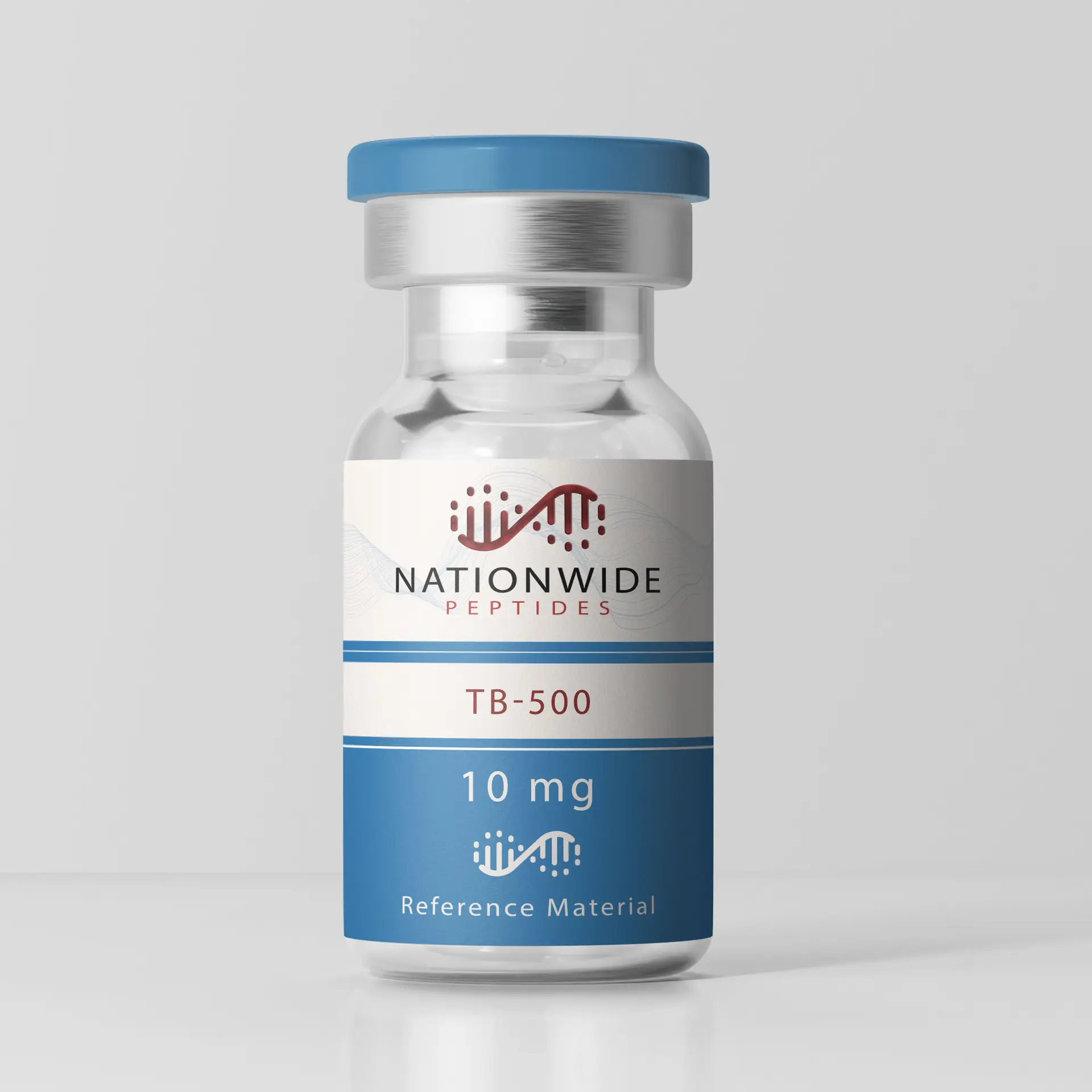
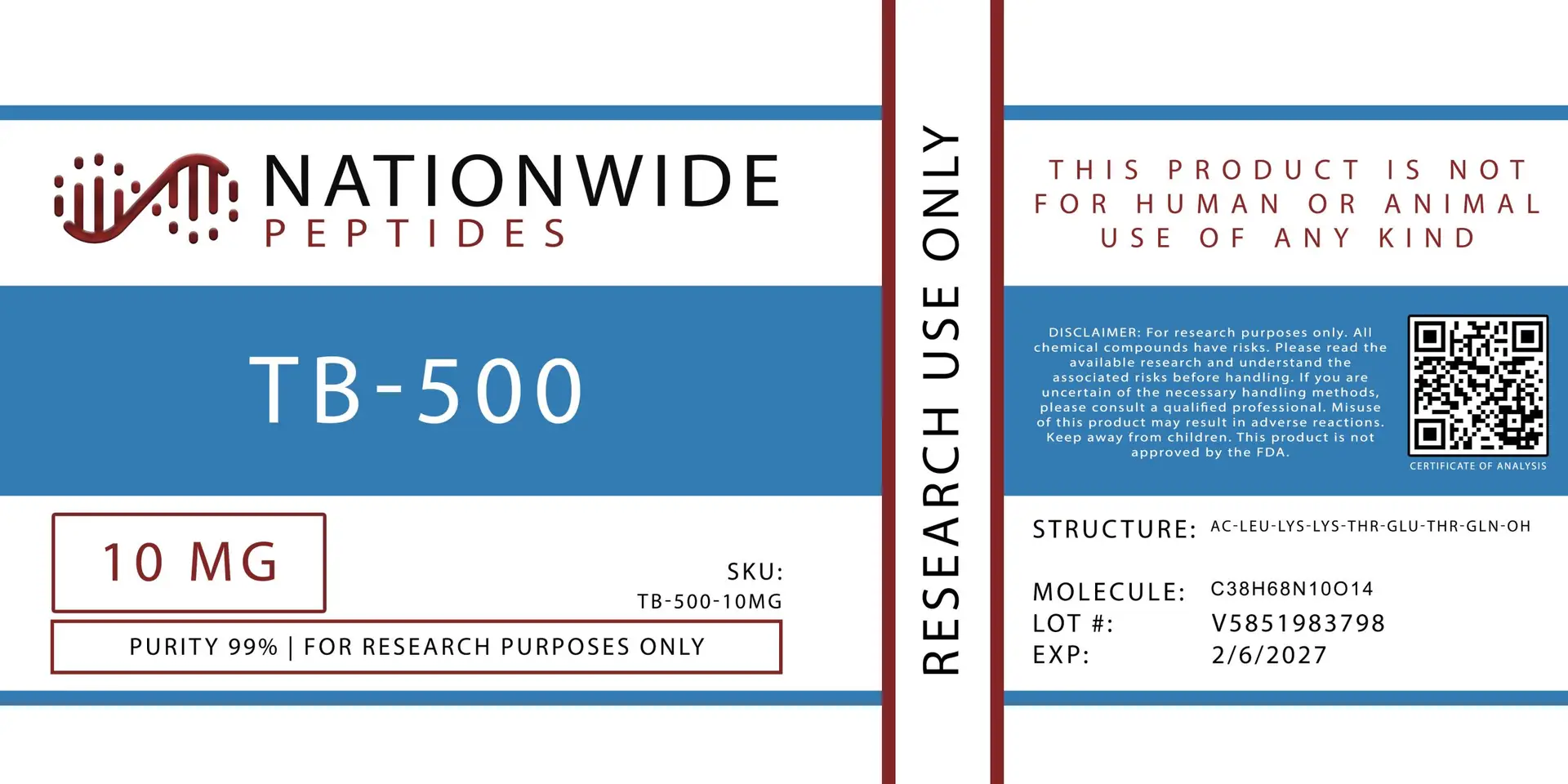




For Research Use Only. Not for human use.
Overview
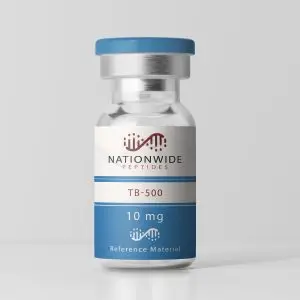
Laboratory-grade TB-500 Peptide (TB4) presents as a synthetic fragment related to thymosin beta-4 sequences used in actin-binding and cell-migration studies. Nationwide lists this SKU for controlled research programs focused on cytoskeletal dynamics, wound-model assays, and peptide-pathway characterization—not for clinical, veterinary, or consumer use.
Research buyers specify TB-500 Peptide (TB4) when protocols require a characterized input for cytoskeletal dynamics, wound-model assays, and peptide-pathway characterization. Typical deployments include cell-based or cell-free assays, method development plates, and pathway-mapping models executed under institutional laboratory SOPs.
Use this entry when laboratory purchasing needs a stable research SKU for assay construction and notebook traceability. All handling of TB-500 Peptide (TB4) must remain inside institutional research-use boundaries.
Research Context for TB-500 Peptide (TB4)
Work involving TB-500 Peptide (TB4) typically focuses on in vitro systems, assay development, and mechanistic model studies.
Teams confirm lot details before setup so conditions stay traceable across repeats and collaborative sites.
Published literature can inform starting ranges for related experimental designs. Each laboratory should still validate performance with its own instruments, plates, and detection chemistry.
Pilot runs are useful before committing larger plate sets, especially when detection chemistry or incubation windows are being optimized.
Documented Attributes
Key catalog attributes for this material include:
- Research-grade material intended for laboratory investigation only
- Catalog labeling aligned with research procurement channels
- Suitable for method development and comparative assay workflows
- Documentation packages available where provided for the listed lot
Laboratory Handling Notes
Receiving and Identity Checks
Before opening a vial of TB-500 Peptide (TB4), confirm the physical label against the purchase order and packing list.
Retain outer packaging until identity checks are complete, and report damaged seals to purchasing before experimental work continues.
Reconstitution and Aliquoting
Handle this material according to institutional SOPs for weighing, reconstitution, aliquoting, and storage.
Record lot identifiers in laboratory notebooks before reconstitution. Verify solvent compatibility and storage temperature against your validated process.
Prepare assay buffers and consumables before opening the vial to reduce hold time. Keep unused aliquots labeled with date, solvent, and concentration for later repeats.
Chain of Custody
Keep chain-of-custody notes with inventory checks when material moves between freezers or benches.
Use dedicated spatulas and clean balances to avoid cross-contamination between catalog items. Schedule thaw cycles intentionally rather than repeated freeze-thaw of the same aliquot.
Secondary containment trays reduce spill risk during multi-step reconstitution. Cold-chain interruptions should be noted even when the vial remains sealed.
Why Laboratories Source TB-500 Peptide (TB4)
Procurement and research teams often select this catalog item because it supports:
- Clear research-use labeling for compliance-aligned purchasing
- Consistent product identification across multi-lot studies
- Fit for reference, screening, and mechanistic laboratory models
- Straightforward catalog support for planning and documentation
Study Planning and Quality Documentation
Before starting experimental work with TB-500 Peptide (TB4), review any COA or quality files provided with the shipment.
Align your protocol with institutional research requirements and keep use within the labeled research context.
File catalog documentation with the study records at receipt. These steps help keep experiments comparable over time when using TB-500 Peptide (TB4) in sequential study phases.
Method Development Tips
Method development often begins with small pilot plates before larger screening panels.
Document buffer lots, incubation times, and detection settings alongside the material lot number.
If results diverge from historical baselines, re-check reconstitution volume and storage history first. Shared equipment logs help explain variance when multiple operators run the same protocol.
Inventory and Training
Update digital inventory immediately after opening a new lot of TB-500 Peptide (TB4).
Training new staff on labeling conventions reduces mix-ups across similar catalog SKUs. When transferring methods between sites, share both the written SOP and the lot metadata package.
Dispose of residual solutions according to institutional chemical hygiene rules. Do not repurpose research materials for any non-laboratory application.
Periodic inventory reconciliation keeps expired or depleted lots from entering active workflows. For related catalog options, browse adjacent research categories on this site after confirming your assay needs.
For Research Use Only. Not for human or animal use. Not intended to diagnose, treat, cure, or prevent any disease.