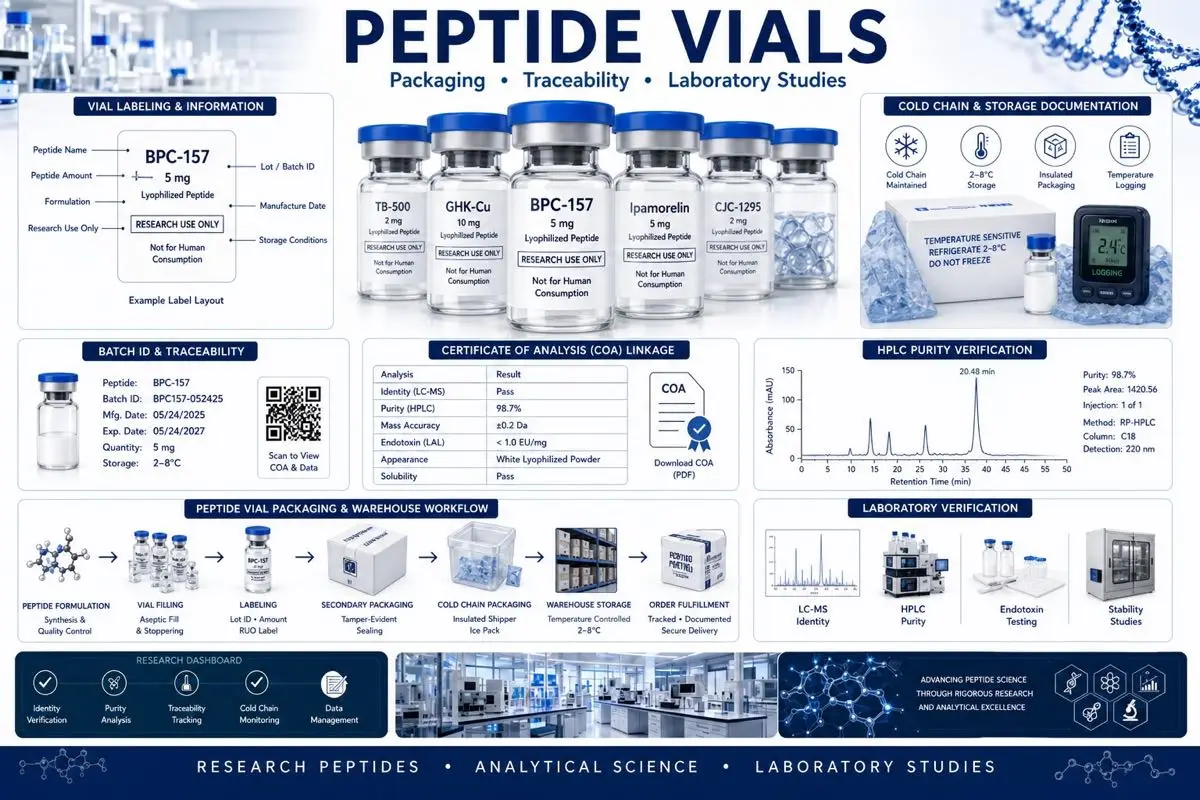
For Research Use Only. Educational content for laboratory research literacy. Not medical advice; not for human use.
Peptide vials for laboratory teams
This section summarizes how peptide vials topics are handled in documentation-first laboratory workflows. Teams evaluating peptide vials should prioritize certificates of analysis, research-use labeling, and lot traceability before procurement decisions.
For primary literature on peptide vials, start with PubMed and program context at NIH.gov. Review related materials in the research peptides catalog.
Documentation checks related to peptide vials
When peptide vials appears in a protocol plan, keep identity testing method, purity report, storage guidance, and supplier transparency notes with the project file. Clear records make research vials comparisons across lots more reliable for research continuity.
Quick Answer
What Should Labs Check in Peptide Vials?
research vials are part of the stability and documentation system for laboratory materials. Researchers should verify seal integrity, moisture and oxygen protection, labeling, shipping controls, and batch paperwork before relying on a shipment for experimental work.
Peptide Vials: Packaging, Stability Controls & Laboratory Documentation
Scientific Snapshot
| Topic | Peptide vials and research packaging |
| Primary Focus | Container-closure integrity and lyophilized stability |
| Key Risks | Moisture ingress, oxygen exposure, light, temperature swings |
| Documentation | COA, lot labeling, shipping presentation |
| Use Boundary | Laboratory research education only |
Quick Facts
| Common Format | Lyophilized material in sealed glass peptide vials |
| Closure System | Stopper + crimp seal as one integrity unit |
| Transit Controls | Insulation, light protection, rapid dispatch |
| Related Pages | COA hub, shipping and payments guidance |
| Evidence Lens | FDA container-closure principles + published stability literature |
Key Takeaways
- Peptide vials should be judged as a full container-closure system, not just glassware.
- Moisture, oxygen, light, and temperature control are the main packaging risks for lyophilized materials.
- Strong peptide vials pairing includes clear lot labels and easy-to-retrieve COA documentation.
- Shipping and secondary packaging matter as much as the primary seal for research reliability.
Table of Contents
Introduction
research vials are not a minor packaging choice for laboratory materials. They sit inside the stability strategy, contamination-control plan, and documentation chain that support reproducible work. That point becomes more important with lyophilized materials, where the container-closure system must protect against moisture, oxygen, light, and temperature shifts from filling through delivery and storage.
Review primary literature on lyophilized stability via PubMed results on lyophilized peptide stability and moisture, and compare documentation habits using our certificate of analysis resources.
Research Note
Educational Boundary for Packaging Guidance
This guide is for laboratory research education. It summarizes packaging and documentation themes for research vials without implying approved medical use or replacing institutional quality procedures.
Why Peptide Vial Design Matters for Stability
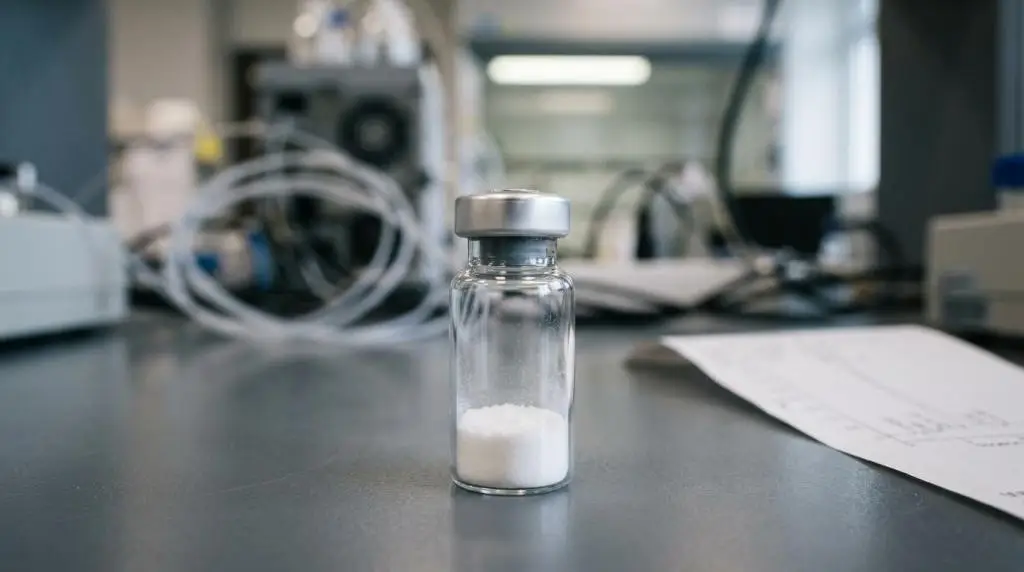
A set of research vials has one job on paper and several jobs in practice. The system must preserve identity, support batch traceability, maintain the physical state of lyophilized material, and reduce exposure to factors that can alter quality. That means the vial body, stopper, crimp, headspace conditions, and outer packaging all matter when laboratories screen packaging systems.
FDA guidance on current good manufacturing practice makes the expectation clear: container-closure systems must protect contents against foreseeable external factors during storage and use that can cause deterioration or contamination. 21 CFR 211.94 states the same principle in regulatory language. For research settings, the translation is direct—if peptide vials and seals cannot reliably protect the material, packaging is not doing its job.
Published peptide literature adds a second layer. A 2023 article on lyophilized peptide standards reported that residual moisture and oxygen content are important quality attributes affecting stability. That finding connects packaging decisions for research vials to measurable outcomes: a sealed look is not enough if the internal environment is poorly controlled.
| Vial feature | Main risk controlled | What researchers should verify |
|---|---|---|
| Borosilicate glass vial | Chemical compatibility, physical protection | Appropriate material and intact body |
| Stopper and crimp seal | Moisture ingress, oxygen ingress, contamination | Uniform seal, no lift, no distortion |
| Controlled headspace | Oxidation and instability risk | Supplier handling notes, inert gas use if stated |
| Lyophilized presentation | Improved storage stability profile | Dry cake or powder appearance, no collapse or meltback |
| Light-protective packaging | Photostability risk | Amber vial or opaque secondary packaging |
| Cold-chain transit materials | Temperature swings during shipping | Insulated packaging and temperature-conscious dispatch |
Container-Closure Integrity Requirements for Peptide Vials
The phrase researchers should keep in view is container-closure integrity. It refers to the ability of sealed peptide vials to block contamination and environmental ingress. FDA guidance notes that a sealed container-closure system that does not maintain adequate integrity is unsuitable for sterile products. That principle remains useful beyond sterile applications because peptide stability still depends on exclusion of moisture, oxygen, and particulates from the sealed container.
FDA also notes that closed vial filling can reduce contamination risk by isolating the process from operators and the surrounding room environment. That is not only a manufacturing detail. It signals that peptide handling quality begins before vials are capped. Good packaging performance is built into filling, stoppering, and sealing rather than added at the end.
For lyophilized materials, the stopper-to-vial interface deserves special attention. A 2019 storage study on freeze-dried materials reported that moisture uptake can occur through stopper-to-cake transfer, transmission through the stopper itself, or microleaks at the stopper-to-vial interface. That is a strong reminder that sealed vials should be assessed as systems, not as separate parts.
When researchers evaluate vial systems, a few packaging details tend to separate stronger systems from weaker ones:
- Seal integrity: consistent crimping, no visible stopper displacement, no damaged aluminum cap
- Headspace control: packaging steps that reduce oxygen exposure before final sealing
- Barrier performance: stopper and closure materials chosen to limit moisture permeation
- Process control: filling and sealing practices that reduce contamination exposure
- Clear lot labeling on each vial
- Intact tamper-evident presentation
Lyophilized Peptide Packaging and Transit Protection

Lyophilization is often preferred for research peptides because it supports a more stability-friendly presentation than a pre-mixed liquid. Still, freeze-drying is only half the equation. Once material is in research vials, packaging has to preserve that dry state through storage and shipping.
Temperature control is part of that protection, but not the whole story. Material can be packed cold and still lose quality if research vials allow moisture ingress. It can also be well sealed and still face risk if exposed to repeated thermal cycling or unnecessary light. The strongest packaging setups combine several controls rather than relying on one.
In practice, researchers should look for packaging systems that support the primary container at multiple levels:
- insulated transit materials
- sealed primary containers
- light-protective secondary packaging
- cold-chain aware shipping methods
- handling guidance tied to the batch format
A research-focused supplier may also use inert gas packaging for lyophilized units. That choice fits published concern around oxygen content as a stability attribute. When combined with a properly sealed stopper and crimp, it creates a better environment for long-distance transit and controlled storage after sealing.
Moisture, Oxygen, and Light Risks in Peptide Vial Storage
Among external threats to lyophilized materials, moisture is often underestimated. Researchers can visually inspect sealed units and still miss a subtle gain in residual moisture. The material may remain apparently intact while chemical or physical stability begins to shift. That is why closure quality and storage discipline matter so much for dry-state materials.
The 2023 published work on peptide standards is useful because it identifies residual moisture and oxygen content as meaningful quality attributes. Those parameters sit close to real-world packaging decisions for sealed lyophilized units: how dry the product is at fill, how well headspace is managed, how effectively the stopper resists permeation, and how consistent the seal remains over time.
Light protection also deserves attention, especially when peptide-specific photostability data are limited. If the supplier does not provide a detailed photostability profile, it is prudent for labs to favor packaging that reduces unnecessary exposure. Amber glass, opaque pouches, and prompt cold storage after receipt all support a conservative stability posture.
A practical storage review should include:
- Residual moisture: lower and better controlled values support dry-state stability
- Oxygen exposure: reduced headspace oxygen can help protect sensitive materials
- Photostability: amber or opaque packaging reduces avoidable light stress
- Temperature variation: fewer swings help preserve batch consistency
- Receipt condition checks on arrival
What Researchers Should Verify Before Ordering Peptide Vials
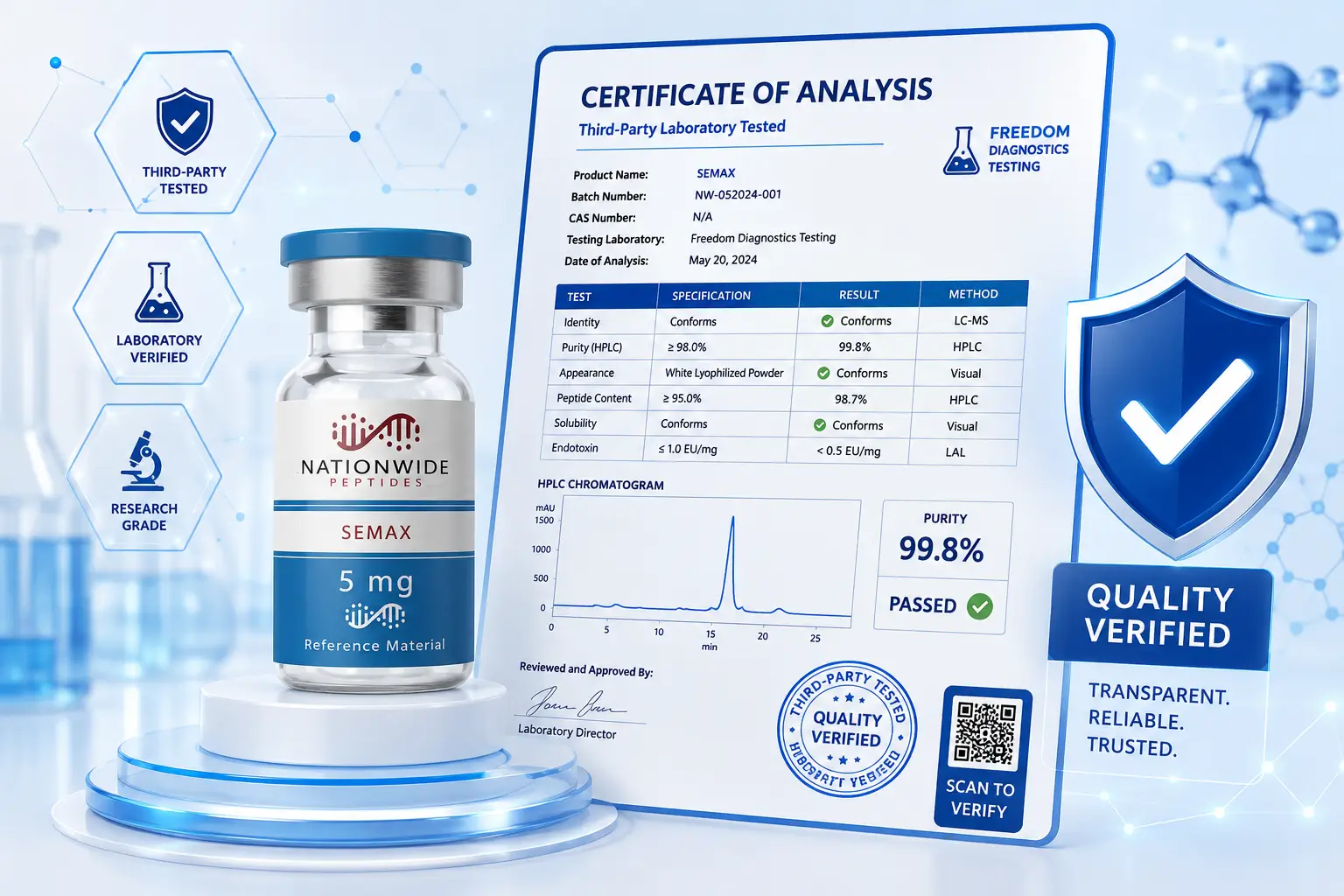
Strong packaging claims are most useful when backed by documentation. Researchers should review not only purity data but also signals that the batch was handled with care from synthesis through filling and shipment.
Certificates of Analysis remain one of the clearest starting points. Batch-specific HPLC and MS data can confirm identity and purity, while lot information supports traceability inside the lab. Public access to batch documentation is especially helpful for institutions that need clean procurement records and easier audit trails for each lot.
Researchers may also want to confirm whether the supplier provides details on vial presentation, shipping method, and storage recommendations upon arrival. Those details reveal operational discipline. A supplier that thinks carefully about vial packaging often thinks carefully about chain of custody, labeling, and fulfillment timing as well.
Before placing an order, it helps to verify:
- Batch analytics: third-party HPLC/MS data and a downloadable Certificate of Analysis
- Vial format: lyophilized presentation in sealed glass vials with no fillers or additives if stated
- Packaging controls: protection from moisture, light, and temperature swings during transit
- Label traceability: lot number, compound name, strength, and storage information
- Shipping standards: insulated materials, rapid dispatch, and damage reporting procedures
- Bulk pricing options where relevant
- Secure ordering systems
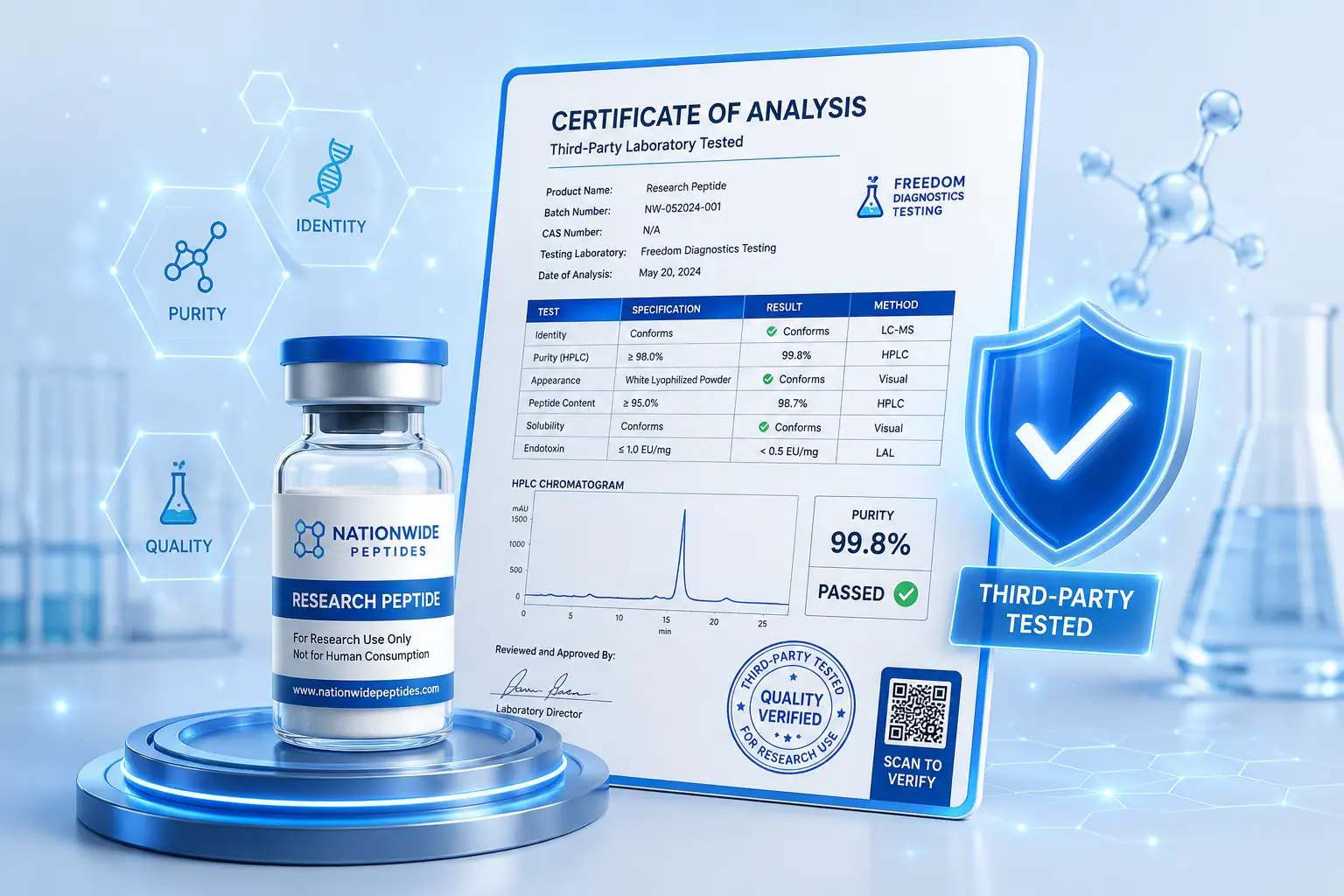
Peptide Vial Labeling and Documentation for Laboratory Traceability
Good packaging is physical and informational at the same time. A well-sealed unit still creates friction if the label is incomplete, the lot cannot be tracked quickly, or the documentation package is difficult to retrieve. Research teams benefit when each vial supports immediate identification and efficient recordkeeping.
At minimum, the vial and accompanying records should make it easy to confirm what was received, which lot it belongs to, and what analytical data apply to that lot. That becomes more useful in long-term projects where multiple shipments may be compared across time. Clear traceability reduces mix-ups and supports better reproducibility.
This is one reason many advanced labs prefer suppliers that pair high-purity materials with publicly accessible batch records and consistent labeling standards. When the vial, the COA, and the shipping presentation all point to the same disciplined process, packaging stops being a passive container and becomes part of the quality system supporting the research.
Peptide Vial Packaging Standards That Support Better Lab Outcomes
The strongest packaging setup is not defined by appearance. It is defined by protection. FDA expectations around container-closure performance, published evidence on residual moisture and oxygen, and storage data on freeze-dried materials all point to the same practical standard: sealed lyophilized vials, strong closure integrity, protection from moisture and light, and controlled shipping conditions.
For laboratories sourcing materials in the United States, that makes vendor screening more focused. Ask whether the vial system is designed to resist external stressors. Ask whether batch documentation is easy to verify. Ask whether the shipping method respects the sensitivity of lyophilized compounds. Those questions lead to better packaging decisions, and better packaging decisions support cleaner research inputs.
Documentation Habit
Keep Peptide Vials Linked to Primary Evidence
When staff train on packaging intake, pair every packaging claim with a citation or COA field. That habit keeps educational language aligned with laboratory records and reduces overstatement.
Revisit acceptance criteria for packaging quarterly. Packaging practices and literature evolve, and older secondary summaries can overstate certainty about moisture or oxygen controls.
Store photos of received units beside lot paperwork. Visual receipt notes help teams compare seal presentation across vendors without relying on memory alone.
Lab Intake
Operational Checklist for Peptide Vials Intake
Build a short intake form that forces reviewers to confirm seal condition, label completeness, and secondary packaging before research vials enter inventory. A fixed checklist reduces skipped steps during busy receiving days.
Ask receiving staff to photograph research vials under consistent lighting. Side-by-side archives make it easier to compare seal quality across suppliers without relying on informal notes.
Link each intake record for research vials to the matching COA file name and lot number. That adjacency keeps analytical evidence next to physical packaging observations.
Train new technicians on what acceptable research vials look like versus common transit damage patterns. Short drills with rejected examples teach judgment faster than policy text alone.
Review research vials packaging failures in a monthly quality huddle. Capture whether issues came from primary seals, insulation gaps, labeling errors, or documentation delays so corrective actions stay specific.
Did You Know
Published lyophilized-peptide standards treat residual moisture and oxygen as quality attributes—exactly the variables that packaging and sealing choices for peptide vials are meant to control.
Training
Training Scenarios for Peptide Vials Receiving Teams
Give trainees three mock shipment photos and ask which units meet acceptance criteria for seal presentation and label completeness. Capture missed checks into a living FAQ so peptide vials intake guidance stays practical.
Ask trainees to rewrite a hyperbolic packaging claim into research-only language. Rewrite drills build judgment faster than memorizing definitions about moisture or oxygen alone.
Rotate reviewers so familiar vendors do not always soft-pass. Fresh eyes catch expired certificates, vague method descriptions, and inconsistent labeling on peptide vials.
Close each drill by mapping one finding to PubMed or COA evidence. That habit keeps packaging conversations tied to primary sources rather than vendor slogans.
Closing Boundary
Educational pages about peptide vials should keep research-use-only tone explicit. Packaging quality supports laboratory reliability; it does not imply approved clinical use.
Procurement
Vendor Comparison Worksheet for Peptide Vials
Build a simple scorecard that rates seal presentation, label clarity, secondary packaging, shipping insulation, and COA accessibility. Scoring peptide vials this way keeps purchasing debates tied to observable criteria.
Weight documentation as heavily as physical packaging. A beautiful vial with missing lot paperwork still creates friction for peptide vials intake and long-term traceability.
Record whether packaging claims are backed by process descriptions or analytical data. That distinction prevents marketing language from being treated as measured stability evidence for peptide vials.
Revisit the scorecard after every rejected shipment. Updating the form with real failure modes improves screening of peptide vials faster than generic supplier questionnaires.
Share the final matrix with both receiving and research staff. Cross-team visibility reduces conflicting standards about what acceptable peptide vials look like on arrival.
Research Reminder
Container-closure integrity is a system property. Evaluating peptide vials means evaluating glass, stopper, crimp, headspace, and secondary packaging together—not in isolation.
Handoff
Inventory Handoff Notes After Receiving
After intake passes, write a short handoff note that states storage location, lot number, and any packaging observations worth monitoring. Clear handoffs reduce repeated questions from research staff who were not present at receiving.
Keep the note factual and dated. Avoid interpretive claims about stability; record only what was observed on seal, label, and secondary packaging at arrival.
Peptide Vials FAQ
Why does vial packaging matter beyond appearance?
Sealed vials protect lyophilized materials from moisture, oxygen, light, and contamination while carrying lot identity into laboratory records.
What is container-closure integrity?
It is the sealed system performance of the sealed system—glass, stopper, and crimp working together to limit environmental ingress.
Should laboratories review COAs with each shipment?
Yes. Each lot should be paired with lot-specific analytical documentation so identity, purity, and traceability stay connected.
How should shipments be checked on receipt?
Inspect seals, labels, secondary packaging, and transit condition notes, then file COA and lot details before storage.
Review Documentation Standards
Compare certificate of analysis practices used alongside packaging reviews for research materials.