Quick Answer
What Should Labs Expect from a Peptide Warehouse?
A peptide warehouse should reduce procurement uncertainty for laboratory teams. That means domestic fulfillment, batch-level verification, public Certificates of Analysis, and shipping practices that support lyophilized research materials—not vague inventory claims.
Peptide Warehouse: USA Sourcing, Documentation & Lab Procurement
Scientific Snapshot
| Topic | Peptide warehouse sourcing for laboratory research |
| Primary Focus | Batch verification, COAs, domestic fulfillment |
| Material Format | Lyophilized research peptides and related lab supplies |
| Documentation | Third-party HPLC/MS and public Certificates of Analysis |
| Use Boundary | Laboratory research procurement education only |
Quick Facts
| Supplier Context | Nationwide Peptides, Sevierville, Tennessee |
| Buyer Profile | Qualified researchers, laboratories, institutions |
| Core Offerings | Research peptides, peptide blends, bacteriostatic water |
| Verification | Third-party HPLC/MS with downloadable COAs |
| Fulfillment | USA-based peptide warehouse shipping |
Key Takeaways
- A peptide warehouse is useful when it reduces uncertainty with batch data, not only inventory depth.
- Public COAs and chromatograms make peptide warehouse screening faster for institutional review.
- Lyophilized format plus clear shipping practices supports controlled laboratory storage workflows.
- Research-only positioning keeps peptide warehouse procurement aligned with laboratory use boundaries.
Table of Contents
Introduction
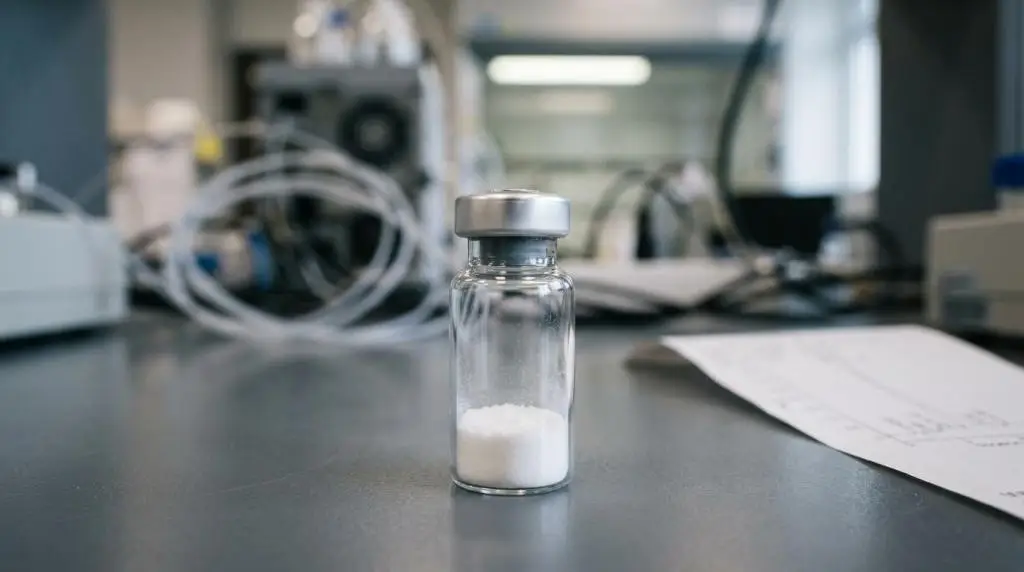
When you need a peptide warehouse, you are not just looking for inventory. You need a U.S. supplier that can provide batch-level verification, dependable shipping, and documentation your lab can review before you place an order. Nationwide Peptides is an American-owned research peptide supplier based in Sevierville, Tennessee, serving qualified researchers, laboratories, and institutions across the United States.
Review lyophilized storage literature via PubMed results on lyophilized peptide storage stability, and compare documentation habits using our certificate of analysis resources when evaluating any research supplier.
Research Note
Educational Boundary for Procurement Guidance
This page is for laboratory research education. Discussions of a peptide warehouse focus on documentation, fulfillment, and research-use sourcing—not medical advice or approved clinical use.
USA Peptide Warehouse Operations for Research Procurement
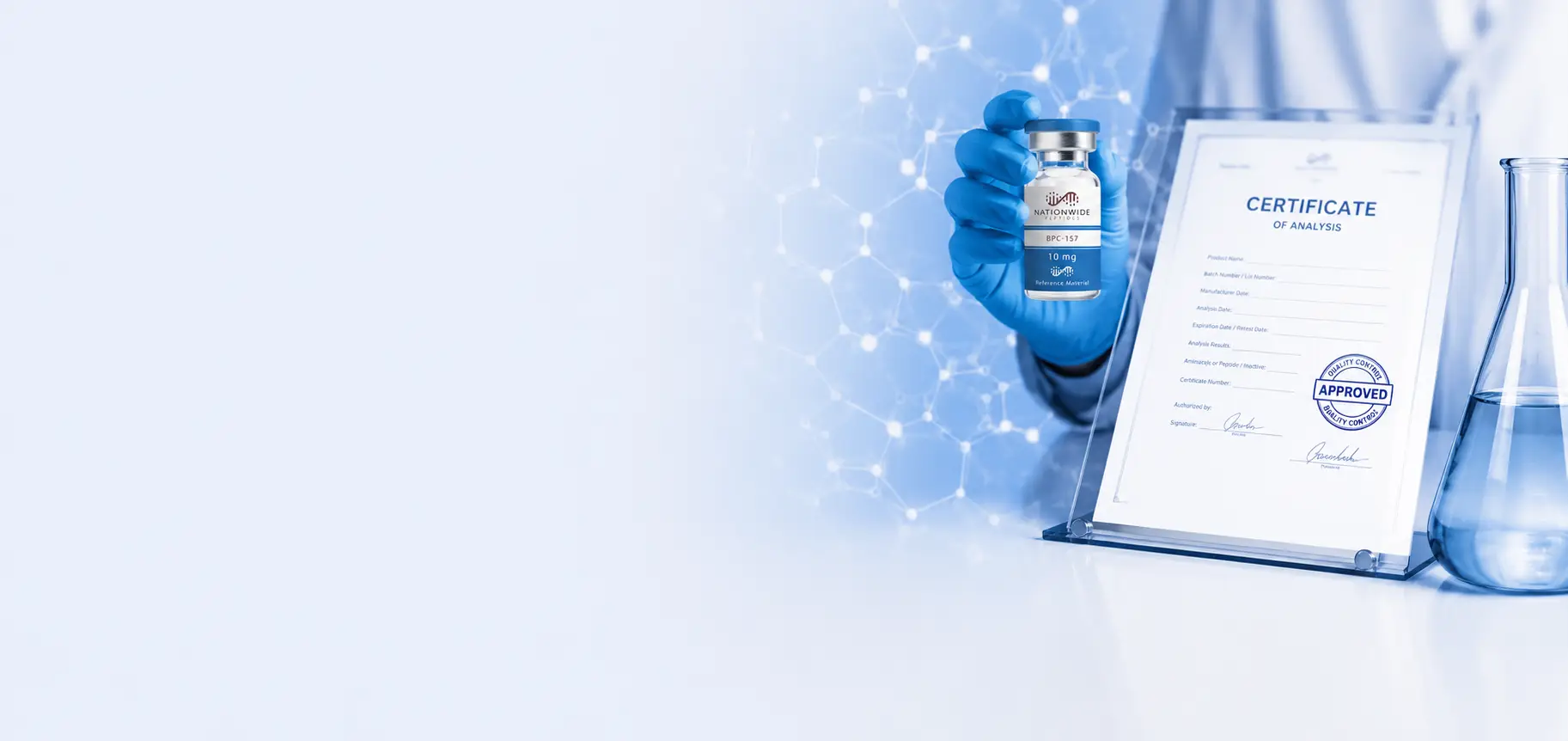
A peptide warehouse is only useful if it reduces uncertainty. Nationwide Peptides pairs U.S.-based fulfillment with publicly accessible batch documentation, third-party testing, and rapid nationwide shipping. The listed business address is 236 E. Main St, Ste 47, Sevierville, TN 37862, USA, which gives research buyers a clear domestic point of contact instead of an anonymous offshore supply chain.
For research teams, that matters in practical ways. You can review Certificates of Analysis with chromatograms on product pages and via QR code, confirm purity data before purchase, and source from a peptide warehouse that presents itself as research-only rather than blurring channels.
Nationwide Peptides is especially relevant when your lab needs more than a product listing. Buyers who want traceable sourcing, USA-made materials, full chain-of-custody documentation, and support from a team that understands research workflows get more value from a disciplined research supplier than from generic e-commerce fulfillment.
Nationwide Peptides supplies research peptides, peptide blends, and bacteriostatic water for laboratory use only. The focus is straightforward: give biotech, regenerative medicine, and health sciences teams access to 99%+ pure, third-party-tested compounds, public Certificates of Analysis, and a secure ordering process that supports repeatable procurement from one research-focused supplier.
Research Peptides, Blends, and Lab Supplies with Batch-Level Clarity
A focused research catalog helps teams order materials without sorting through unclear categories or incomplete documentation. Nationwide Peptides supplies individual research peptides, peptide blends, and bacteriostatic water for U.S. laboratories and institutions.
Here is what laboratories commonly source from this sourcing model:
- Research peptides: Lyophilized compounds manufactured under strict GMP-compliant conditions and verified by independent analytical laboratories
- Peptide blends: Multi-compound research options for labs managing defined project requirements
- Lab supplies: Bacteriostatic water to support laboratory handling workflows
That focus helps simplify procurement. Instead of spreading sourcing across multiple vendors, teams can centralize core peptide purchases with one research-only supplier that publishes batch data, maintains secure encrypted ordering, and offers bulk pricing for long-term projects.
If your lab runs recurring studies or staged purchasing schedules, budgeting becomes easier with free U.S. shipping on orders over $200 and pricing support for larger or ongoing orders through domestic fulfillment.
Third-Party HPLC/MS Testing and Public Certificates of Analysis
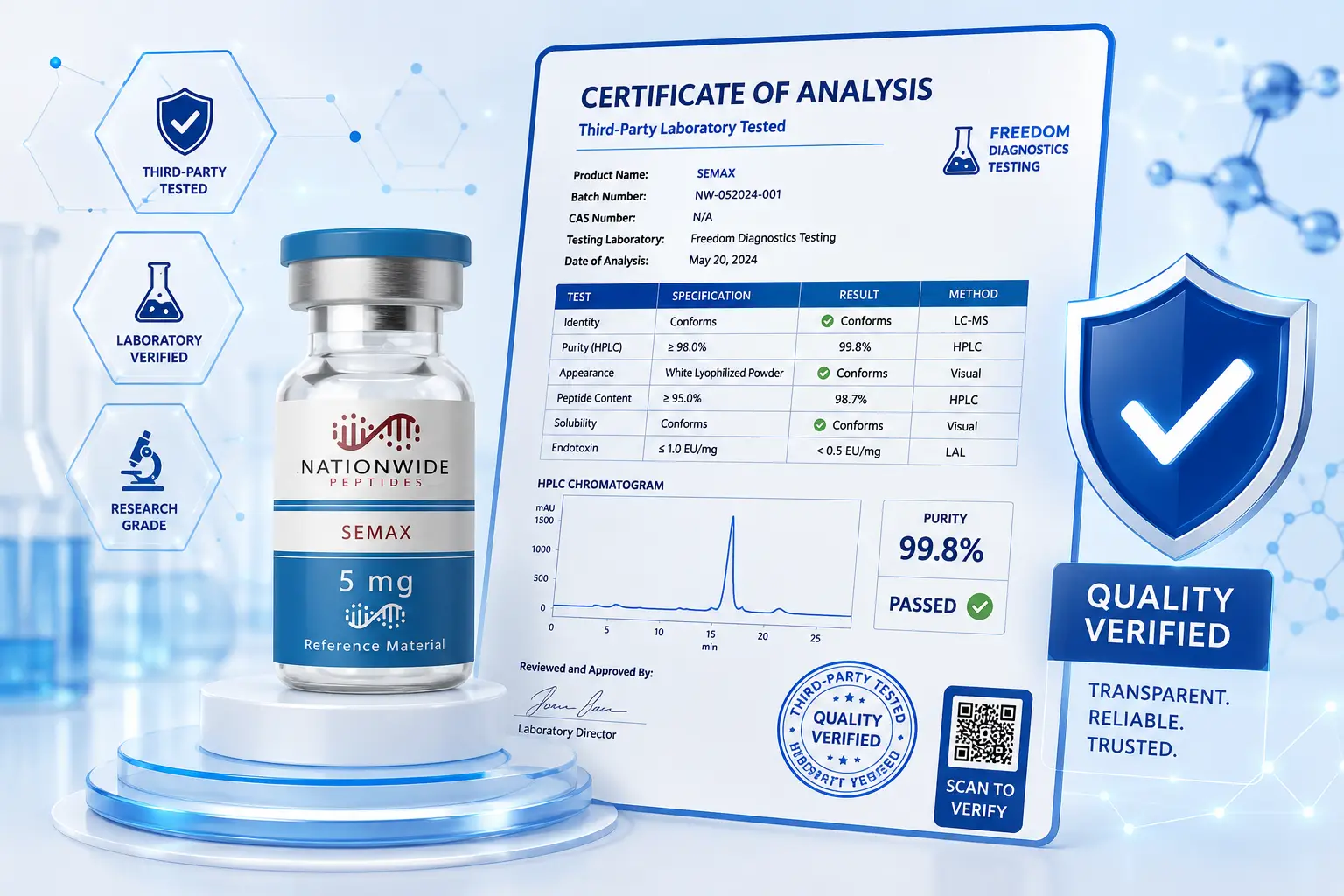
Documentation is where many suppliers become difficult to evaluate. A strong supplier makes third-party testing central rather than an afterthought. Every peptide is described as undergoing third-party HPLC-MS and purity verification before release, with downloadable Certificates of Analysis accompanying each order.
That gives usable proof, not vague quality language. You can compare batches, review chromatograms, confirm the stated purity level, and keep records aligned with internal purchasing or lab documentation needs when working with a research supplier.
Nationwide Peptides also states that peptides are produced via solid-phase peptide synthesis, followed by HPLC purification to 99% or higher and mass spectrometry confirmation. For labs that care about analytical transparency, those process details clarify how material was made and how identity and purity were checked before a shipment leaves fulfillment.
This is also where a transparent supplier stands apart from suppliers that rely on thin labeling or private documentation. In environments where certificate and source documentation matter—especially when institutions review supply channels—public COAs are a practical advantage.
Lyophilized Handling, Storage Stability, and Nationwide Shipping
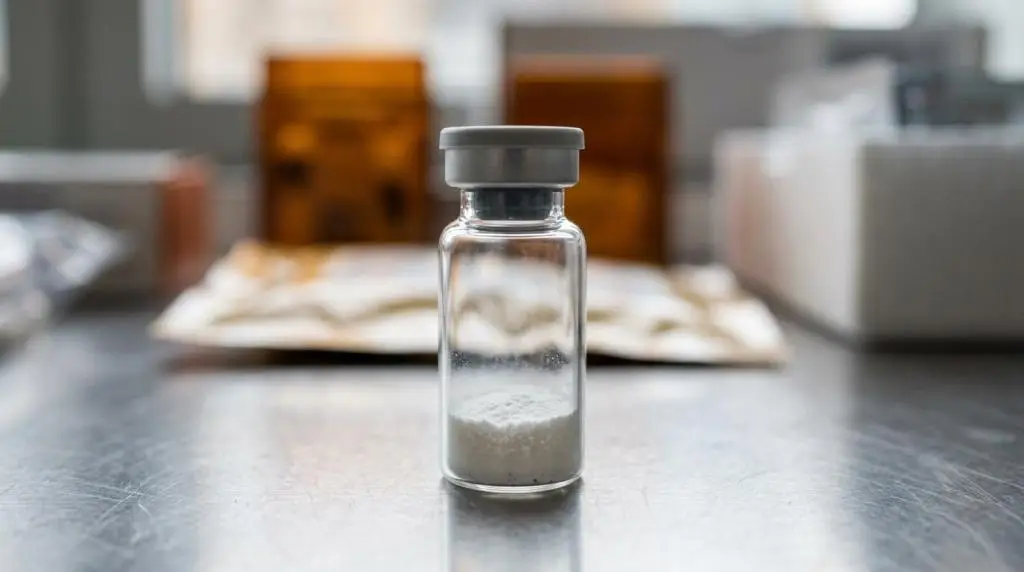
Storage and handling affect whether a shipment remains useful when it reaches your facility. A research-focused supplier supplies lyophilized peptides, which aligns with common academic handling practices for longer-term stability. Published peptide-handling guidance supports lyophilized storage and low-temperature conditions for extended storage, and it also emphasizes careful preparation before reconstitution to limit moisture exposure.
That means your supplier choice affects more than convenience. When lyophilized material ships with documentation and clear batch identity, your team starts from a format that supports controlled storage workflows in the lab.
Shipping speed is part of that equation. Nationwide Peptides states that orders placed after 12 PM EST ship the next day, Monday through Friday, helping labs reduce delays when a project timeline depends on incoming material. For many buyers, a domestic fulfillment partner is valuable because it cuts down on customs uncertainty, long international transit windows, and less predictable communication.
Secure encrypted ordering combines with that speed so purchasing can move faster without sacrificing basic transaction security or documentation access from the supplier.
When a Peptide Warehouse Is the Right Fit for Your Lab
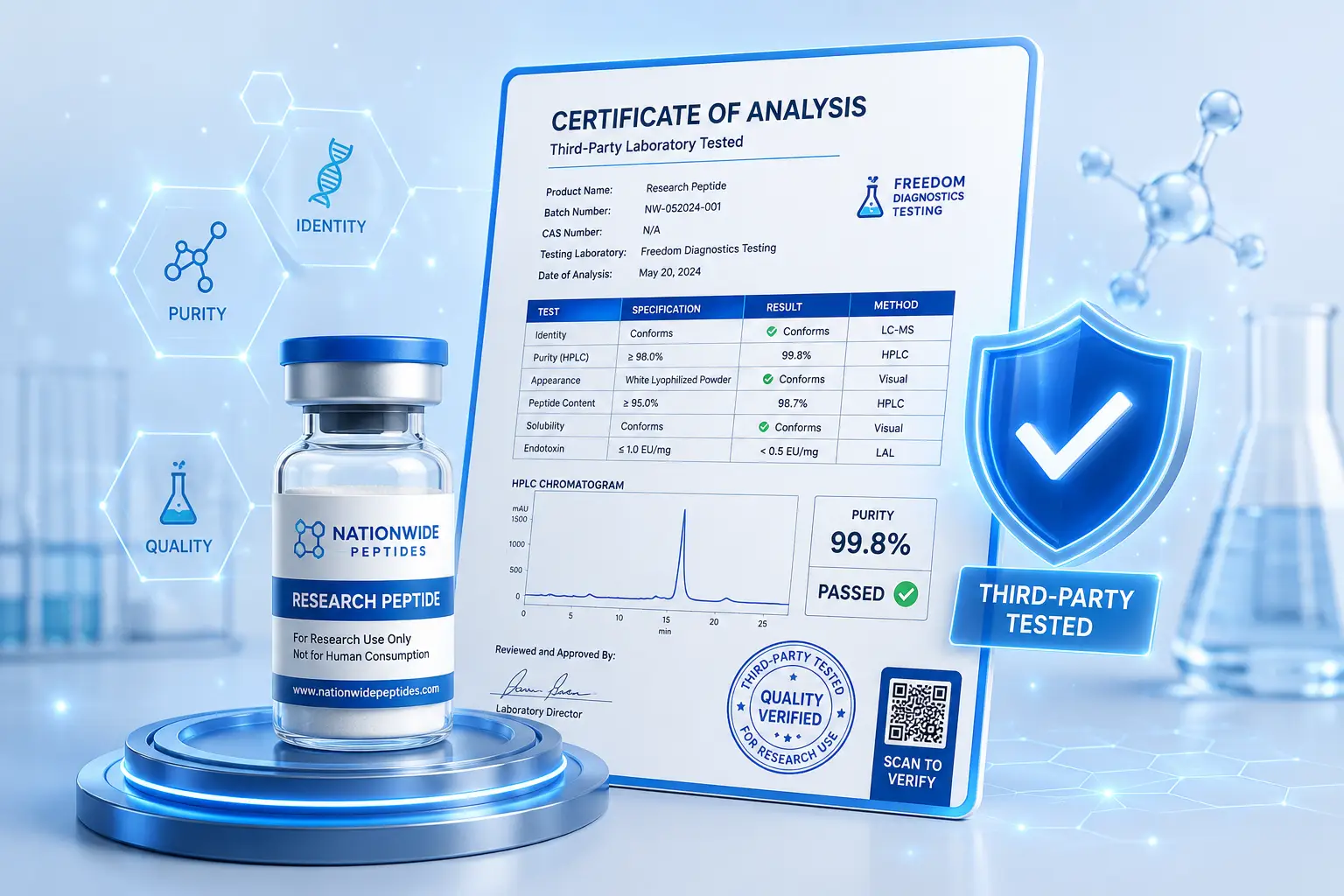
Not every supplier fits every procurement model. This sourcing model is the right choice when your team needs verifiable materials, domestic fulfillment, and a research-focused supply partner.
A strong fit looks like this:
- Public batch verification: Certificates of Analysis with chromatograms available on product pages and by QR code before or during procurement review
- U.S.-based fulfillment: A domestic supplier in Sevierville, Tennessee, with fast nationwide shipping instead of international routing
- Long-term project support: Bulk pricing, repeat ordering, and consistent documentation for ongoing research programs
- Research-only positioning: A supplier that clearly serves laboratory and pre-clinical applications
- Additive-free material: Peptides with zero fillers or additives when that specification is required
If your institution has internal review steps, a transparent supplier helps by making the core buying questions easier to answer: what the batch is, how it was tested, where it ships from, and how the order will be documented.
Order from a Tennessee-Based Peptide Warehouse with Clear Documentation
Nationwide Peptides gives U.S. researchers a more usable way to source peptides: research-grade compounds, third-party HPLC/MS verification, downloadable COAs, lyophilized format, secure ordering, and fast domestic shipping from Tennessee.
If your lab needs a supplier that makes sourcing clearer from the start, review the available products, check the batch documentation, and place your order with Nationwide Peptides.
Documentation Habit
Keep Peptide Warehouse Claims Linked to Primary Evidence
When staff evaluate a supplier, pair every packaging or purity claim with a COA field or citation. That habit keeps educational language aligned with laboratory records.
Date secondary summaries used in procurement training. Older marketing pages can overstate certainty about testing or shipping practices for any supplier.
Store intake notes beside lot paperwork so supplier comparisons stay objective across vendors and quarters.
Lab Intake
Operational Checklist for Peptide Warehouse Orders
Build a short intake form that confirms COA availability, lot labeling, seal condition, and shipping presentation before materials enter inventory.
Ask receiving staff to photograph shipments under consistent lighting. Side-by-side archives make it easier to compare fulfillment quality across suppliers.
Link each intake record to the matching COA file name and lot number. That adjacency keeps analytical evidence next to physical receiving observations from the shipment.
Train technicians on what acceptable documentation looks like versus incomplete certificates. Short drills with rejected examples teach judgment faster than policy text alone.
Evidence Practice
Bibliography Cadence for Peptide Warehouse Reviews
Keep a living bibliography that separates peer-reviewed lyophilized-stability papers from supplier process descriptions. When teams discuss sourcing, that separation prevents mixing marketing copy with experimental findings.
Require dual review before publishing internal SOPs about research intake: one reviewer checks citations, another checks research-use tone.
Map each training module to on-site COA and shipping pages so staff stay inside verified resources while learning sourcing standards.
Re-open PubMed queries on lyophilized storage each quarter so procurement education stays aligned with current laboratory literature.
Procurement
Vendor Comparison Worksheet for Peptide Warehouse Screening
Build a scorecard that rates COA accessibility, batch clarity, shipping predictability, research-only labeling, and support responsiveness. Scoring a supplier this way keeps purchasing debates tied to observable criteria.
Weight documentation as heavily as fulfillment speed. A fast supplier with missing lot paperwork still creates friction for institutional review.
Record whether packaging or purity claims are backed by process descriptions or analytical data. That distinction prevents marketing language from being treated as measured evidence.
Revisit the scorecard after every rejected shipment. Updating the form with real failure modes improves supplier screening faster than generic supplier questionnaires.
Share the final matrix with both receiving and research staff. Cross-team visibility reduces conflicting standards about what an acceptable research supplier looks like in practice.
Practical Tip
A consistent photography setup for received lots—same angle, lighting, and scale card—makes supplier comparisons objective during supplier reviews.
Training
Training Scenarios for Peptide Warehouse Receiving Teams
Give trainees three mock documentation packets and ask which ones meet acceptance criteria for COA completeness and lot labeling. Capture missed checks into a living FAQ so intake guidance stays practical.
Ask trainees to rewrite a hyperbolic supplier claim into research-only language. Rewrite drills build judgment faster than memorizing definitions about HPLC or shipping alone.
Rotate reviewers so familiar vendors do not always soft-pass. Fresh eyes catch expired certificates, vague method descriptions, and inconsistent labeling from any supplier.
Close each drill by mapping one finding to PubMed or COA evidence. That habit keeps sourcing conversations tied to primary sources rather than slogans.
Closing Boundary
Educational pages about research sourcing should keep research-use-only tone explicit. Documentation quality supports laboratory reliability; it does not imply approved clinical use.
Handoff
Inventory Handoff Notes After Research Receiving
After intake passes, write a short handoff note that states storage location, lot number, and packaging observations worth monitoring. Clear handoffs reduce repeated questions from research staff who were not present at receiving.
Keep the note factual and dated. Avoid interpretive claims about stability; record only what was observed on seals, labels, and secondary packaging at arrival.
Attach the matching COA filename to the handoff note so analytical evidence stays adjacent to physical receiving records during audits.
Review handoff quality monthly. Incomplete notes usually signal rushed intake rather than unclear materials, and correcting that habit improves procurement reliability over time.
Research Reminder
Batch documentation and domestic fulfillment are complementary controls. One without the other still leaves research buyers with avoidable uncertainty.
Source Hygiene
Source Hygiene for Research Procurement Pages
Prefer primary analytical records and peer-reviewed storage literature over marketing PDFs when writing internal explainers about sourcing. Secondary sales copy can compress nuance around testing and shipping claims.
When citing supplier process language, record whether the claim is manufacturing description, analytical result, or fulfillment SOP. Mixing those categories creates false confidence during vendor comparisons.
Archive rejected drafts that implied approved medical use while describing research materials. Keeping those examples in training folders reinforces research-only boundaries for new writers.
Re-open PubMed queries on lyophilized storage each quarter so procurement education stays aligned with current laboratory literature rather than static talking points.
Cadence
Receiving Desk Cadence for Research Shipments
Set a simple receiving cadence: open parcels the same day they arrive when staffing allows, photograph outer packaging when damage is suspected, and file lot numbers before materials move into shared freezers or cabinets.
Same-day intake reduces the chance that research staff pull vials before documentation is attached. Delayed paperwork is a common source of mismatched lot records during later audits.
Train backups so intake quality does not depend on one person. A short checklist and shared folder structure usually outperform long prose SOPs that nobody opens under time pressure.
Escalate ambiguous labeling immediately rather than guessing. Ambiguous lots should remain quarantined until supplier documentation clarifies identity and analytical status.
Audit Trail
Keeping Audit Trails Lightweight but Complete
Audit trails for research materials do not need heavy enterprise software on day one. A dated folder for COAs, a receiving log, and consistent lot naming already give reviewers enough structure to reconstruct decisions.
Record who accepted the shipment and who filed the COA. Dual ownership reduces gaps when one team member is out and a reviewer asks for evidence weeks later.
Avoid rewriting historical notes after the fact. If a correction is required, add a dated amendment instead of editing the original line so the chronology remains trustworthy.
Quarterly spot checks of five random lots usually reveal whether intake discipline is holding. Spot checks beat annual cleanups that try to reconstruct missing paperwork after materials are already consumed.
Packaging Log
Packaging Observations Worth Logging on Arrival
Log seal integrity, label clarity, and secondary packaging condition before materials enter shared inventory. Those three observations catch most preventable intake errors without requiring specialized equipment at the receiving desk.
Photograph damaged cartons before discarding outer packaging when damage is visible. Visual records help resolve carrier disputes and clarify whether issues began in transit or earlier in the supply chain.
Note temperature indicators when they are present on the carton. Indicator readings should be filed with the lot record even when the reading is within expected range, because later questions often ask whether cold-chain evidence existed at intake.
Keep packaging notes short and factual. Opinion language about supplier quality belongs in vendor reviews, not in the receiving log that auditors will treat as primary evidence.
Vendor Scorecard
Building a Simple Vendor Scorecard for Research Materials
A practical vendor scorecard for research materials usually includes documentation completeness, labeling consistency, shipment condition, and response time when lot questions arise. Weight those factors according to your laboratory risk tolerance rather than copying a generic procurement template.
Score each shipment, not only annual reviews. Per-shipment scoring reveals drift earlier than yearly vendor meetings that rely on memory.
Share scorecard results with purchasing and receiving so both teams see the same pattern. Split visibility is a common reason labs keep reordering from suppliers that repeatedly fail intake checks.
Retire suppliers that repeatedly miss COA delivery or labeling clarity. Speed alone does not compensate for documentation gaps in research procurement.
Peptide Warehouse FAQ
What makes a peptide warehouse useful for labs?
A research supplier is useful when it pairs inventory with batch verification, public COAs, and predictable domestic fulfillment for research procurement.
Should laboratories review COAs before ordering?
Yes. COAs and chromatograms help confirm identity and purity claims before materials enter laboratory inventory from a verified supplier.
Why prefer USA fulfillment?
Domestic fulfillment can reduce customs delays and improve communication while keeping research materials closer to controlled shipping timelines.
What should receiving teams check after a research shipment arrives?
Confirm lot labels, COA match, seal condition, and secondary packaging, then file documentation before storage.
Review Documentation Standards
Compare certificate of analysis practices used when screening research suppliers for laboratory materials.