
Cheapest GLP-1 Peptides: Insights from Peer-Reviewed Research on Glucagon-Like Peptide-1
- By Isaac
Introduction
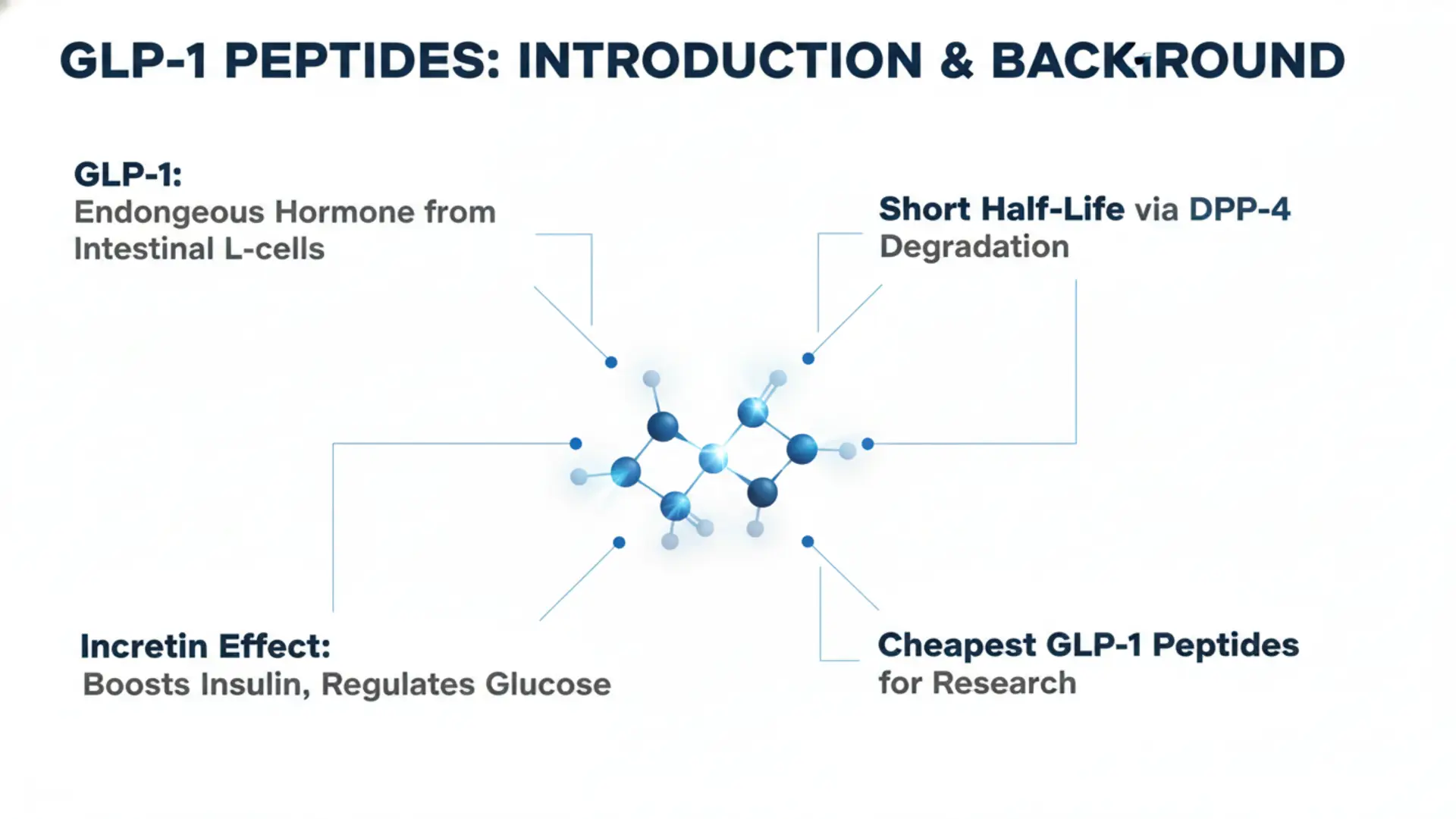
Glucagon-like peptide-1 (GLP-1) is an endogenous peptide hormone derived from proglucagon, primarily secreted by intestinal L-cells in response to nutrient ingestion. Research on GLP-1 has expanded significantly, with interest in the cheapest GLP-1 peptides for laboratory and preclinical investigations growing due to their potential utility in metabolic studies. Peer-reviewed studies highlight GLP-1’s role in glucose homeostasis and appetite regulation, prompting exploration of cost-effective GLP-1 formulations. The cheapest GLP-1 peptides available for research enable broader access to experiments examining incretin effects without compromising quality. This article reviews evidence from human and animal studies on GLP-1, emphasizing mechanisms, applications under investigation, and limitations. While the cheapest GLP-1 options facilitate ongoing research, evidence remains preliminary in many areas. Studies suggest GLP-1 receptor agonists (GLP-1RAs) like semaglutide and liraglutide have been examined in metabolic contexts, but affordability of the cheapest GLP-1 peptides supports further inquiry.
Mechanisms of Action
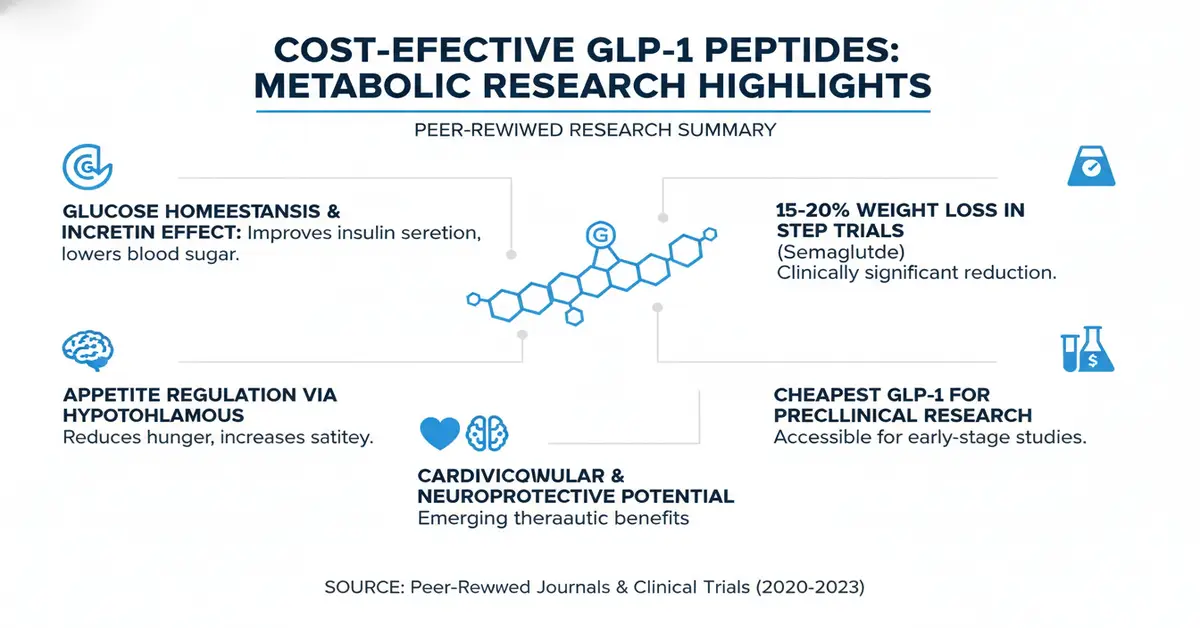
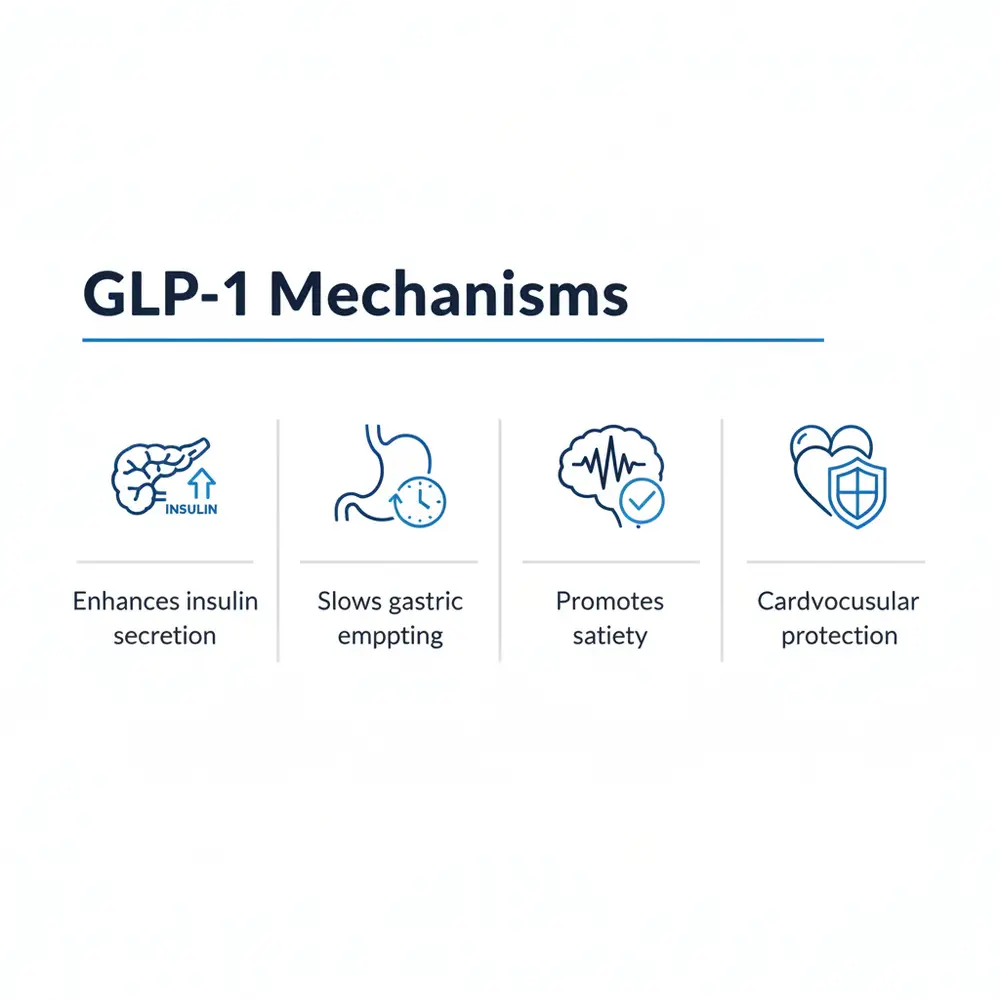
GLP-1 exerts effects via the GLP-1 receptor (GLP-1R), a class B G-protein-coupled receptor activating adenylate cyclase, elevating cyclic AMP (cAMP), and stimulating protein kinase A (PKA). In pancreatic beta cells, this glucose-dependently enhances insulin exocytosis while suppressing glucagon from alpha cells during hyperglycemia. Animal studies show GLP-1 slows gastric emptying through vagal afferents and brainstem signaling, reducing postprandial glucose excursions.
Central mechanisms involve hypothalamic GLP-1R neurons in the arcuate, paraventricular, and dorsomedial nuclei, promoting satiety via pro-opiomelanocortin neuron activation and neuropeptide Y/agouti-related peptide inhibition. Neuroimaging in humans and optogenetic rodent experiments reveal GLP-1RAs modulate reward pathways in the nucleus accumbens. Peripheral actions include endothelial protection and anti-inflammatory effects via AMPK and PI3K pathways. Research with the cheapest GLP-1 peptides confirms dose-dependent cAMP elevation in cell lines. Preclinical data suggest cardiovascular benefits through nitric oxide production, though human translation varies. Brain-gut axis integration, as studied in non-human primates, links GLP-1 to energy expenditure via sympathetic outflow.
Therapeutic Applications
GLP-1 has been studied for applications in type 2 diabetes management, where analogs mimic incretin effects. Preclinical rodent models indicate potential in obesity research through appetite suppression. Cardiovascular outcome trials explore GLP-1RAs alongside standard care. Neuroprotective roles are under investigation in animal Parkinson’s models via anti-inflammatory pathways. Renal protection has been observed in diabetic mouse kidneys, linked to reduced fibrosis.
Investigations into polycystic ovary syndrome involve GLP-1’s effects on ovulation in rodent fertility studies. Skin and wound healing research in rats shows accelerated repair via angiogenesis promotion. The cheapest GLP-1 peptides support these diverse preclinical applications, enabling cost-effective hypothesis testing. Non-alcoholic steatohepatitis studies in mice report reduced hepatic lipids. Cognitive studies in aged rodents suggest hypothalamic GLP-1R modulation of memory. Evidence for longevity applications remains exploratory, with mouse lifespan extensions noted in multi-omic analyses. All findings are preliminary, requiring human validation.
Clinical Evidence
Randomized controlled trials (RCTs) like SUSTAIN and PIONEER evaluated semaglutide, showing HbA1c reductions of 1.5-2% and weight loss of 4-6 kg over 52 weeks in type 2 diabetes patients versus placebo. STEP trials in overweight/obese individuals reported 15-20% weight reduction with semaglutide 2.4 mg weekly, sustained at 68 weeks. Liraglutide RCTs (SCALE, LEADER) demonstrated 5-8% weight loss and reduced major adverse cardiovascular events by 13-26%.
Network meta-analyses of 18+ RCTs confirm semaglutide’s superior weight loss over liraglutide (13.8% vs. 7.8%). Real-world studies in 3000+ patients showed 10%+ weight reduction with persistent use. Glycemic control improvements were consistent across ethnicities, though Asian subgroups showed smaller weight effects. Cardiovascular trials (REWIND, EXSCEL) reported hazard ratios of 0.87-0.91 for composite endpoints. Limited type 1 diabetes data indicate 5-10% weight loss. Pediatric obesity trials are emerging. The cheapest GLP-1 peptides indirectly inform these via analog design. Evidence is strongest for metabolic outcomes, weaker for others.
Challenges and Limitations
Gastrointestinal side effects like nausea (20-40% incidence) and vomiting limit tolerability, often leading to discontinuation in 20-30% of participants within one year. Cost barriers restrict access, though research into the cheapest GLP-1 alternatives aims to address this. Weight regain occurs post-discontinuation, with 2/3 of loss reversed in 1 year per STEP extensions.
Muscle mass loss (up to 40% of total) accompanies fat reduction, per DEXA scans. Rare events include pancreatitis (OR 1.4) and gallbladder disease. Long-term safety data beyond 5 years are sparse. Heterogeneity in response relates to genetics and baseline BMI. Pregnancy data show no clear fetal risks but advise discontinuation. Observational biases confound real-world evidence. Hypoglycemia risk is low but increases with insulin. Injection-site reactions affect 10%. Equity issues arise from supply shortages favoring higher-income groups. The cheapest GLP-1 peptides mitigate research costs but not clinical scalability.
Future Directions
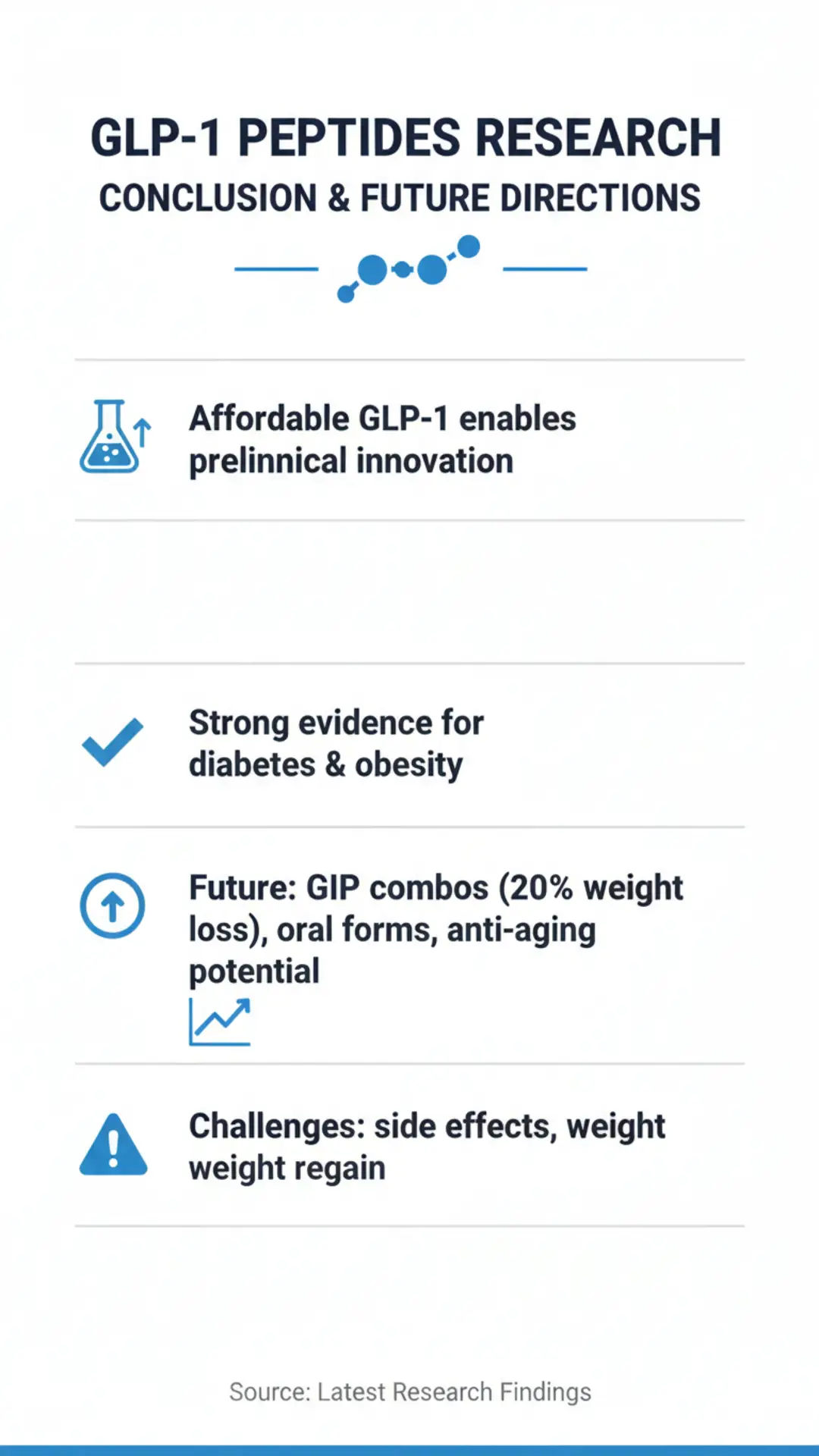
Combination therapies with GIP agonists (e.g., tirzepatide) show enhanced effects in phase 3 trials, with 20%+ weight loss. Oral semaglutide advancements reduce injection needs. Multi-omic mouse studies suggest anti-aging potential via hypothalamic GLP-1R, counteracting age-related transcriptomes. Ongoing trials (NCT04122716) probe exercise synergies.
Neurological trials target Alzheimer’s and addiction, with phase 2 data on cognitive scores. Cardiovascular-renal-metabolic endpoints in SELECT trial follow 17,000+ participants. Small-molecule GLP-1RAs promise oral bioavailability. Longevity research in non-human primates explores low-dose regimens. Personalized dosing via pharmacogenomics is proposed. Equity-focused studies assess the cheapest GLP-1 access in low-resource settings. Pediatric and geriatric trials expand populations. Biomarker discovery for responders is prioritized.
Conclusion
Peer-reviewed research on GLP-1 underscores its physiological roles in metabolism and potential research utility, with the cheapest GLP-1 peptides enabling widespread preclinical exploration. Clinical evidence supports investigation in diabetes and obesity contexts, though challenges like side effects and regain persist. Future studies may broaden applications, emphasizing the value of affordable cheapest GLP-1 options for innovation. Preliminary findings warrant cautious interpretation.
References
Li Y, et al. Glucagon-Like Peptide-1 and Hypothalamic Regulation of Satiation: Cognitive and Neural Insights from Human and Animal Studies. ResearchGate. 2024. https://www.researchgate.net/publication/391391734Glucagon-LikePeptide-1andHypothalamicRegulationofSatiationCognitiveandNeuralInsightsfromHumanandAnimalStudies
Wang J, et al. Mechanisms of action and therapeutic applications of GLP-1 and GIP receptor agonists. Frontiers in Endocrinology. 2024. https://www.frontiersin.org/journals/endocrinology/articles/10.3389/fendo.2024.1431292/full
Drucker DJ. Glucagon-like peptide 1 (GLP-1). Physiological Reviews. 2007. https://pmc.ncbi.nlm.nih.gov/articles/PMC6812410/
Ussher JR, et al. Glucagon-like peptide 1 receptor agonists: cardiovascular benefits and mechanisms of action. Nature Reviews Cardiology. 2023. https://www.glucagon.com/pdfs/UssherNRC2023.pdf
Wilding JPH, et al. Once-Weekly Semaglutide in Adults with Overweight or Obesity. New England Journal of Medicine. 2021. https://www.nejm.org/doi/full/10.1056/NEJMoa2032183
Tamayo-Trujillo R, et al. Molecular mechanisms of semaglutide and liraglutide as a therapeutic option for obesity. Frontiers in Nutrition. 2024. https://www.frontiersin.org/journals/nutrition/articles/10.3389/fnut.2024.1398059/full
Bjerre Knudsen L, et al. Body-wide multi-omic counteraction of aging with GLP-1R agonism. Cell Metabolism. 2024. https://www.sciencedirect.com/science/article/pii/S1550413125004747
Nauck MA, et al. The Physiology of Glucagon-like Peptide 1. Physiological Reviews. 2007. https://journals.physiology.org/doi/full/10.1152/physrev.00034.2006
Lee CH, et al. Exploring the Side Effects of GLP-1 Receptor Agonist. Diabetes & Metabolism Journal. 2024. https://www.e-dmj.org/journal/view.php?number=2974
Yabe D, et al. GLP-1 physiology and pharmacology along the gut-brain axis. Journal of Clinical Investigation. 2024. https://www.jci.org/articles/view/194744
References
References
Li Y, et al. Glucagon-Like Peptide-1 and Hypothalamic Regulation of Satiation: Cognitive and Neural Insights from Human and Animal Studies. ResearchGate. 2024. https://www.researchgate.net/publication/391391734Glucagon-LikePeptide-1andHypothalamicRegulationofSatiationCognitiveandNeuralInsightsfromHumanandAnimalStudies
Wang J, et al. Mechanisms of action and therapeutic applications of GLP-1 and GIP receptor agonists. Frontiers in Endocrinology. 2024. https://www.frontiersin.org/journals/endocrinology/articles/10.3389/fendo.2024.1431292/full
Drucker DJ. Glucagon-like peptide 1 (GLP-1). Physiological Reviews. 2007. https://pmc.ncbi.nlm.nih.gov/articles/PMC6812410/
Ussher JR, et al. Glucagon-like peptide 1 receptor agonists: cardiovascular benefits and mechanisms of action. Nature Reviews Cardiology. 2023. https://www.glucagon.com/pdfs/UssherNRC2023.pdf
Wilding JPH, et al. Once-Weekly Semaglutide in Adults with Overweight or Obesity. New England Journal of Medicine. 2021. https://www.nejm.org/doi/full/10.1056/NEJMoa2032183
Tamayo-Trujillo R, et al. Molecular mechanisms of semaglutide and liraglutide as a therapeutic option for obesity. Frontiers in Nutrition. 2024. https://www.frontiersin.org/journals/nutrition/articles/10.3389/fnut.2024.1398059/full
Bjerre Knudsen L, et al. Body-wide multi-omic counteraction of aging with GLP-1R agonism. Cell Metabolism. 2024. https://www.sciencedirect.com/science/article/pii/S1550413125004747
Nauck MA, et al. The Physiology of Glucagon-like Peptide 1. Physiological Reviews. 2007. https://journals.physiology.org/doi/full/10.1152/physrev.00034.2006
Lee CH, et al. Exploring the Side Effects of GLP-1 Receptor Agonist. Diabetes & Metabolism Journal. 2024. https://www.e-dmj.org/journal/view.php?number=2974
Yabe D, et al. GLP-1 physiology and pharmacology along the gut-brain axis. Journal of Clinical Investigation. 2024. https://www.jci.org/articles/view/194744