
GLP-1 Online: Insights into Glucagon-Like Peptide-1 Research
- By Isaac
Introduction
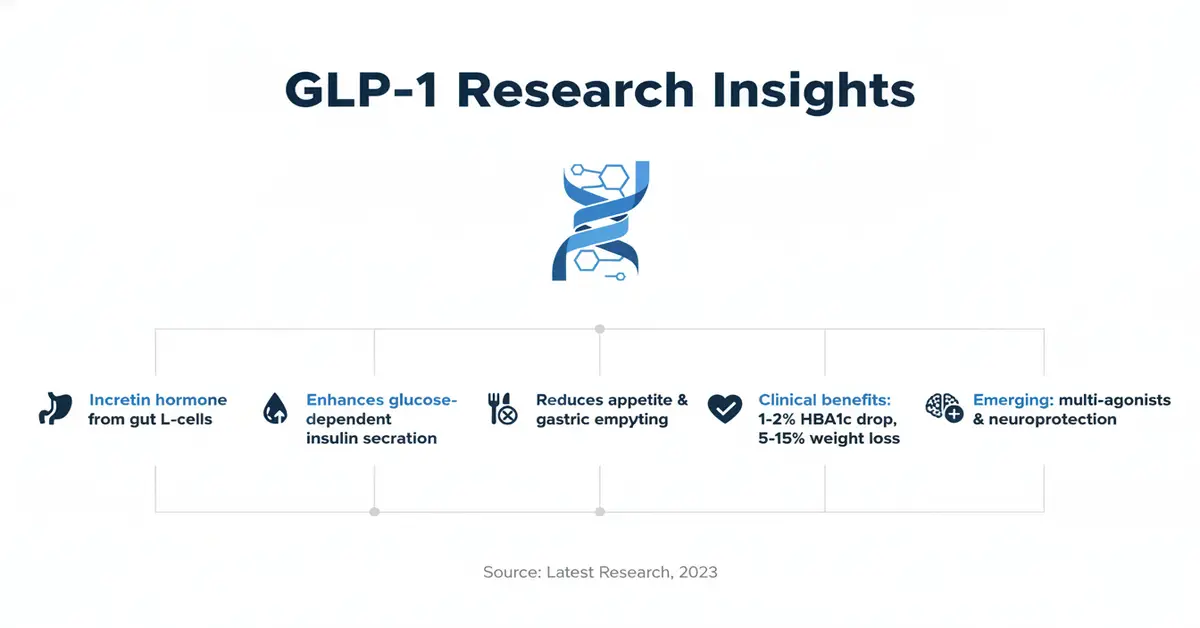
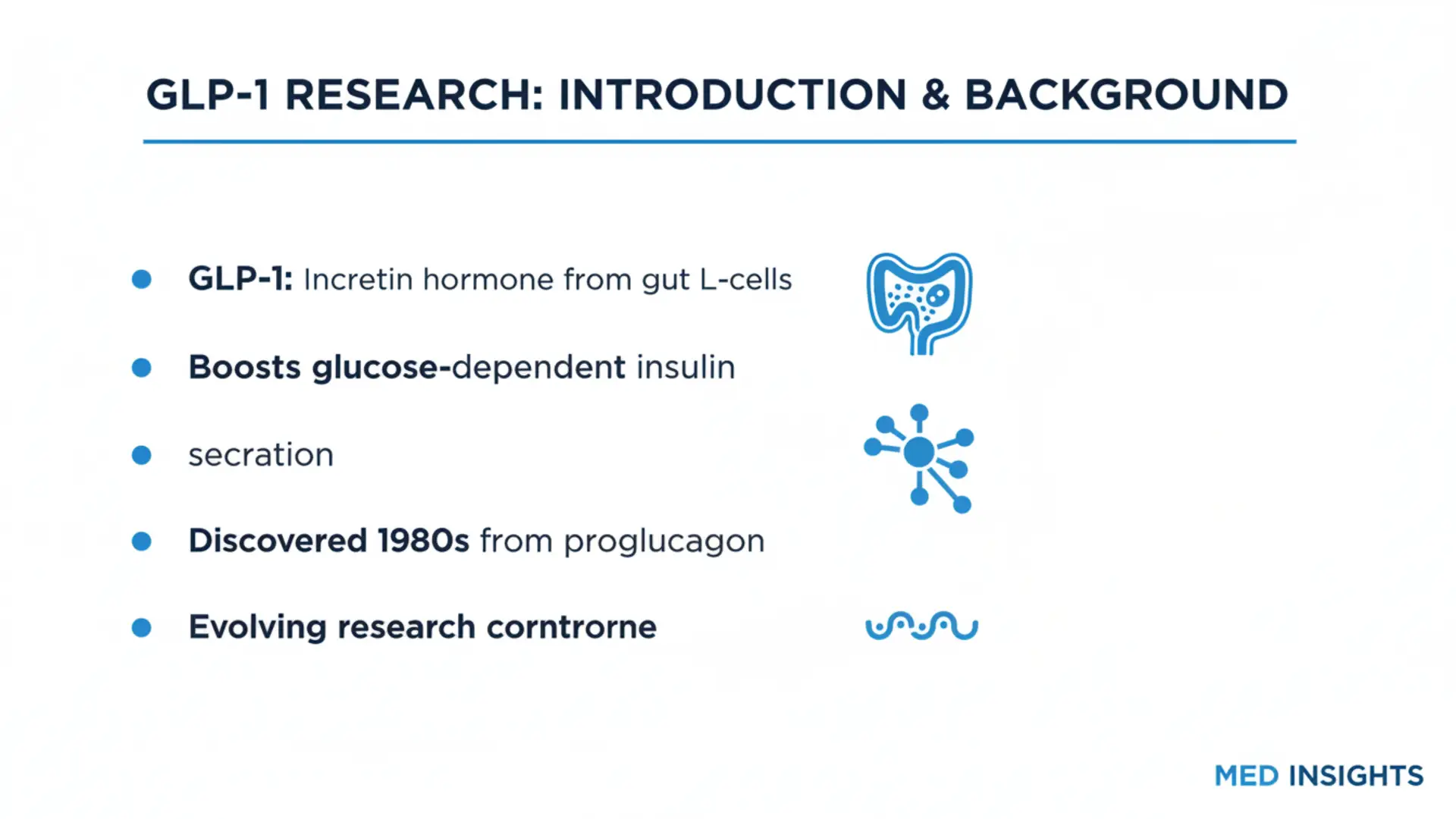
Glucagon-like peptide-1 (GLP-1) has emerged as a focal point in peptide research, with extensive studies exploring its physiological roles. GLP-1, an incretin hormone derived from proglucagon, is produced in intestinal L-cells and has been the subject of numerous peer-reviewed investigations available online through databases like PubMed. Interest in GLP-1 online has grown due to its potential implications in metabolic research, prompting researchers to access GLP-1-related studies digitally. This article reviews evidence from peer-reviewed literature on GLP-1, emphasizing mechanisms, applications under study, and limitations of the evidence. While GLP-1 receptor agonists (GLP-1RAs) have been examined in preclinical and clinical settings, findings remain preliminary and context-specific. Online access to GLP-1 research facilitates broader scientific discourse, but interpretations must align with available data.
Mechanisms of Action
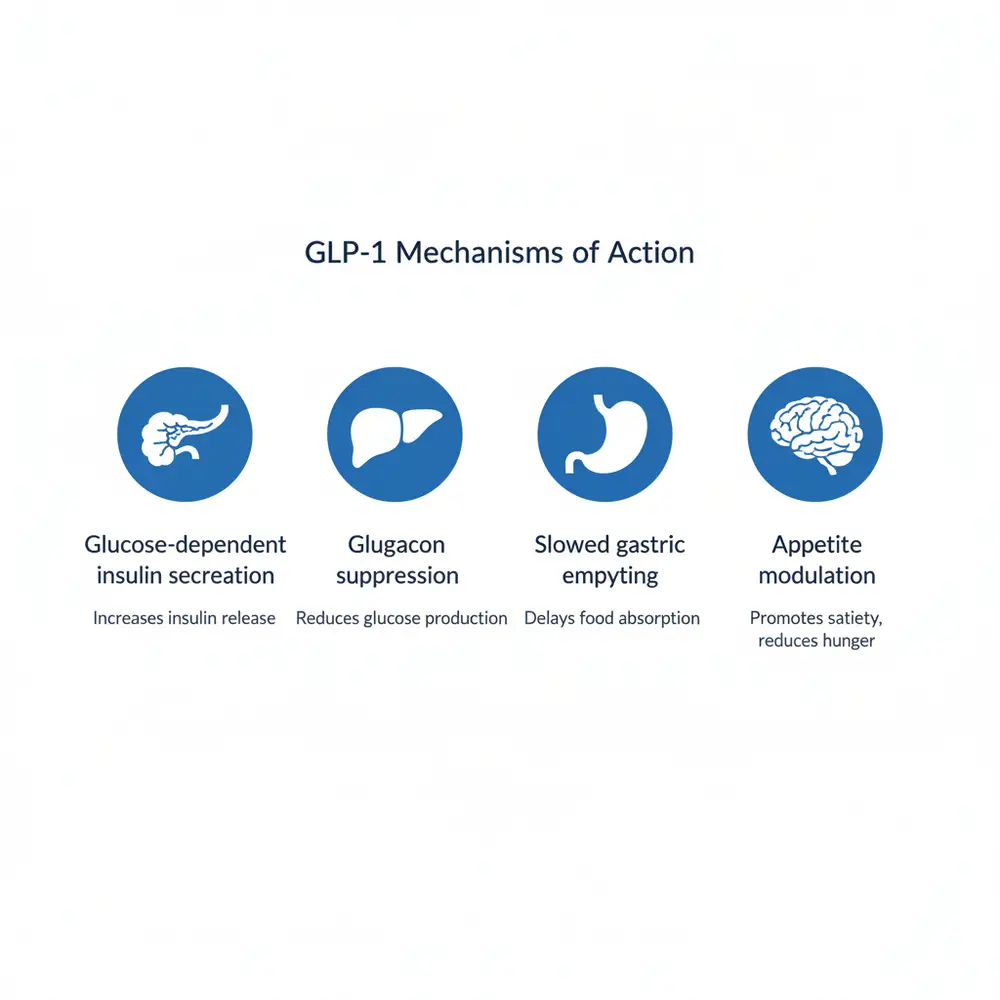
GLP-1 exerts its effects primarily by binding to the GLP-1 receptor (GLP-1R), a G protein-coupled receptor expressed in pancreatic islets, the brain, the heart, and the gastrointestinal tract. Activation of GLP-1R stimulates adenylate cyclase, increasing cyclic AMP (cAMP) levels, which enhances insulin exocytosis from beta-cells in a glucose-dependent manner. Preclinical studies in rodents demonstrate that GLP-1 inhibits glucagon release from alpha-cells, reducing hepatic glucose output. Additionally, GLP-1 slows gastric emptying via vagal afferents and central nervous system signaling, as shown in animal models. In the brain, activation of GLP-1Rs in hypothalamic regions modulates appetite, with rodent data indicating reduced food intake. Cardiovascular preclinical findings suggest GLP-1 promotes vasodilation and endothelial protection through nitric oxide pathways. These mechanisms, detailed in peer-reviewed online reviews, highlight GLP-1’s pleiotropic actions, though their human translation requires caution. GLP-1 online literature emphasizes receptor-specific signaling, including beta-arrestin pathways in newer analogs.
Therapeutic Applications
Research has explored GLP-1RAs for metabolic conditions, with preclinical and early clinical studies noting effects on glucose homeostasis. In type 2 diabetes models, GLP-1 has been studied for its ability to augment insulin secretion without increasing the risk of hypoglycemia. Animal research on obesity shows that GLP-1 reduces food intake and body weight through central mechanisms. Cardiovascular applications under investigation include cardioprotection in ischemia-reperfusion models, where GLP-1 preconditioning preserved myocardial function. Neuroprotective potential has been examined in Alzheimer’s disease rodent models, with GLP-1 analogs reducing amyloid-beta toxicity. Liver studies in non-alcoholic fatty liver disease (NAFLD) animal models suggest GLP-1 mitigates steatosis through anti-inflammatory pathways. Renal protection has been observed in preclinical models of diabetic nephropathy. These areas represent ongoing GLP-1 research interests available online, but evidence is largely preclinical or from small human cohorts. GLP-1 online studies stress conditional language, as broader applications await robust trials.
Clinical Evidence
Human studies on GLP-1RAs, accessible via online databases, primarily focus on type 2 diabetes and obesity. A StatPearls review summarizes trials in which GLP-1RAs such as semaglutide lowered HbA1c by 1-2% and promoted 5-15% weight loss in overweight participants. Meta-analyses of randomized controlled trials (RCTs) report cardiovascular risk reductions in diabetes patients, with hazard ratios for major events around 0.85-0.90. In obesity trials such as STEP, semaglutide produced sustained weight loss over 68 weeks. NAFLD clinical data indicate histological improvements in steatosis with liraglutide. Neurological pilots suggest cognitive benefits in mild cognitive impairment, though limited by small samples. Real-world evidence from registries shows GLP-1RA persistence challenges but glycemic control in diabetes. Pediatric and pregnancy studies are sparse, with no approvals noted. Online-accessible meta-analyses grade much evidence as moderate, citing heterogeneity. GLP-1 online clinical summaries highlight these findings while noting preliminary status.
Challenges and Limitations
Despite promising data, GLP-1 research faces hurdles. Gastrointestinal adverse events, including nausea (up to 40% incidence), vomiting, and diarrhea, dominate clinical trial reports, often leading to discontinuation. Meta-analyses quantify increases in pancreatitis risk (odds ratio ~1.5) and gastroparesis risk. Long-term safety remains understudied, with online reviews flagging potential thyroid C-cell tumors from rodent data, though human relevance is debated. Access and cost limit broader use, as highlighted in pharmacoeconomic analyses. Heterogeneity among GLP-1RA formulations affects comparability, and weight regain after discontinuation is common. Limited diversity in trials (e.g., underrepresentation of certain ethnicities) constrains generalizability. Preclinical-to-human translation gaps persist, with brain penetration varying by analog. GLP-1 online pharmacovigilance data underscore reporting biases in adverse events. These challenges emphasize the need for cautious interpretation of GLP-1 studies.
Future Directions
Emerging GLP-1 research online points to multi-agonists like tirzepatide (GLP-1/GIP) and retatrutide (GLP-1/GIP/glucagon), showing superior weight loss in phase 2/3 trials. Oral formulations address injection barriers, with semaglutide demonstrating feasibility. Neurodegenerative trials explore GLP-1RAs in Parkinson’s and Alzheimer’s, with ongoing RCTs assessing biomarkers. Cardiovascular outcome trials expand to heart failure subgroups. Studies on NAFLD and chronic kidney disease are advancing, incorporating non-invasive endpoints. Pediatric obesity and polycystic ovary syndrome pilots are recruiting. Personalized medicine via GLP-1R pharmacogenomics is proposed. Long-term registries will clarify durability and the incidence of rare events. GLP-1 online trial databases, such as ClinicalTrials.gov, list over 1,000 active studies, signaling robust momentum. Future work prioritizes head-to-head comparisons and combination therapies.
Conclusion
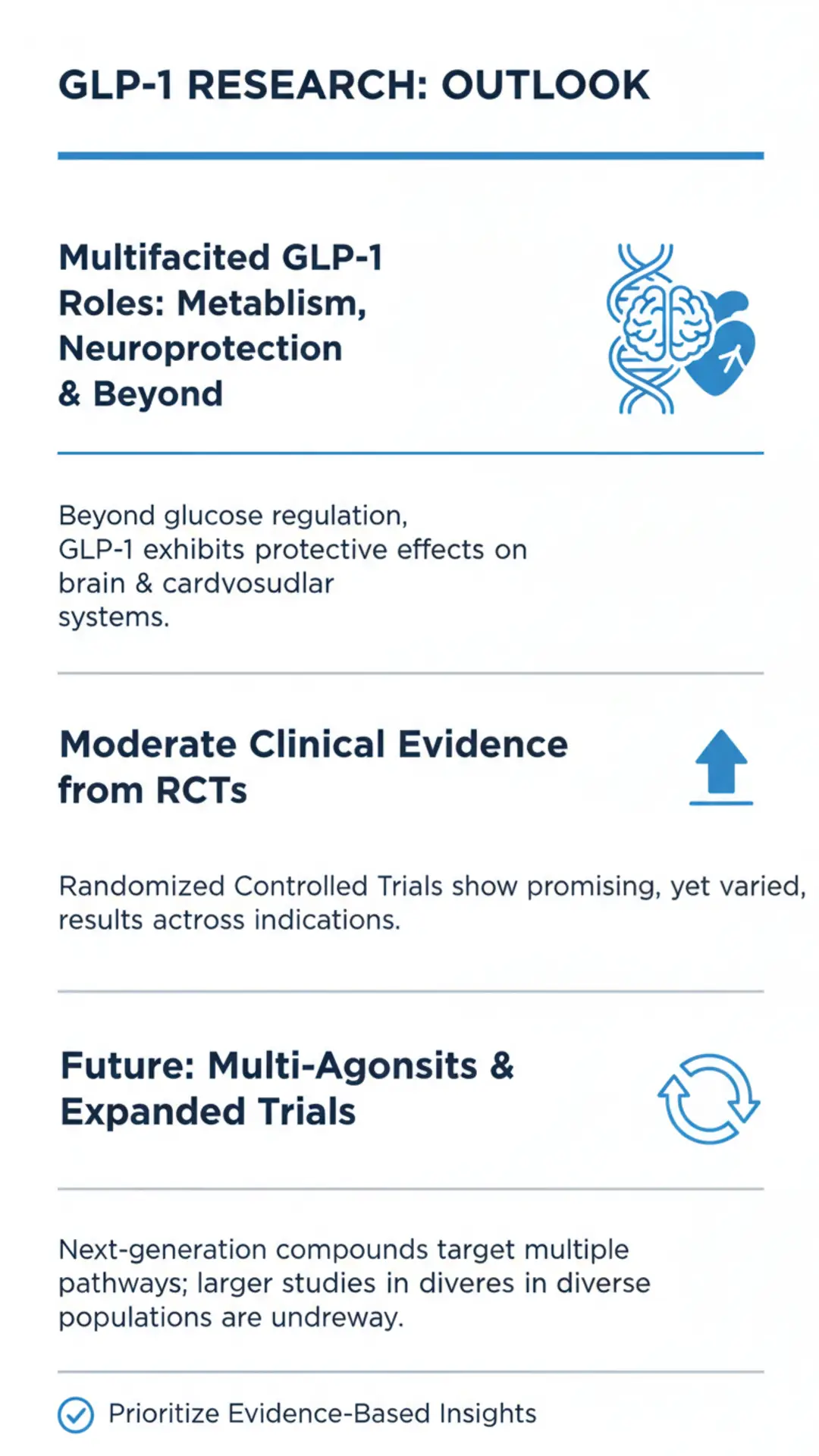
GLP-1 research, readily available online, illuminates a multifaceted peptide with studied roles in metabolism, neuroprotection, and beyond. Preclinical mechanisms involving GLP-1R signaling underpin explorations into diabetes, obesity, and organ protection, supported by moderate clinical evidence from RCTs and meta-analyses. Challenges like gastrointestinal effects and data gaps persist, underscoring preliminary findings. Future multi-agonist developments and expanded trials promise deeper insights. Researchers accessing GLP-1 online resources must prioritize evidence-based interpretations to foster informed scientific progress.
References
Drucker DJ. Mechanisms of Action and Therapeutic Application of Glucagon-like Peptide-1. Cell Metabolism. 2018. https://www.sciencedirect.com/science/article/pii/S1550413118301797
Liu QK et al. Mechanisms of action and therapeutic applications of GLP-1 receptor agonists for reproductive diseases. Experimental & Molecular Medicine. 2024. https://pmc.ncbi.nlm.nih.gov/articles/PMC11304055/
Collins L et al. Glucagon-Like Peptide-1 Receptor Agonists. StatPearls. 2024. https://www.ncbi.nlm.nih.gov/books/NBK551568/
Moiz A et al. The expanding role of GLP-1 receptor agonists. eClinicalMedicine. 2025. https://pmc.ncbi.nlm.nih.gov/articles/PMC12303005/
Tsiampali C et al. Animal studies on glucagon-like peptide-1 receptor agonists in non-alcoholic fatty liver disease. PubMed. 2024. https://pubmed.ncbi.nlm.nih.gov/38472647/
Drucker DJ. Discovery, characterization, and clinical development of the glucagon-like peptide 1 receptor agonists. PMC. 2017. https://pmc.ncbi.nlm.nih.gov/articles/PMC5707151/
Kim JA et al. Exploring the Side Effects of GLP-1 Receptor Agonist. PMC. 2025. https://pmc.ncbi.nlm.nih.gov/articles/PMC12270588/
Richards JR et al. Highway to the danger zone? A cautionary account that GLP-1 receptor agonists do not go there. PMC. 2024. https://pmc.ncbi.nlm.nih.gov/articles/PMC11144546/
Friedman JM. The discovery and development of GLP-1-based drugs. PMC. 2024. https://pmc.ncbi.nlm.nih.gov/articles/PMC11441540/
Drucker DJ. The GLP-1 journey: from discovery science to therapeutic impact. PMC. 2024. https://pmc.ncbi.nlm.nih.gov/articles/PMC10786682/
References
References
Drucker DJ. Mechanisms of Action and Therapeutic Application of Glucagon-like Peptide-1. Cell Metabolism. 2018. https://www.sciencedirect.com/science/article/pii/S1550413118301797
Liu QK et al. Mechanisms of action and therapeutic applications of GLP-1 receptor agonists for reproductive diseases. Experimental & Molecular Medicine. 2024. https://pmc.ncbi.nlm.nih.gov/articles/PMC11304055/
Collins L et al. Glucagon-Like Peptide-1 Receptor Agonists. StatPearls. 2024. https://www.ncbi.nlm.nih.gov/books/NBK551568/
Moiz A et al. The expanding role of GLP-1 receptor agonists. eClinicalMedicine. 2025. https://pmc.ncbi.nlm.nih.gov/articles/PMC12303005/
Tsiampali C et al. Animal studies on glucagon-like peptide-1 receptor agonists in non-alcoholic fatty liver disease. PubMed. 2024. https://pubmed.ncbi.nlm.nih.gov/38472647/
Drucker DJ. Discovery, characterization, and clinical development of the glucagon-like peptide 1 receptor agonists. PMC. 2017. https://pmc.ncbi.nlm.nih.gov/articles/PMC5707151/
Kim JA et al. Exploring the Side Effects of GLP-1 Receptor Agonist. PMC. 2025. https://pmc.ncbi.nlm.nih.gov/articles/PMC12270588/
Richards JR et al. Highway to the danger zone? A cautionary account that GLP-1 receptor agonists do not go there. PMC. 2024. https://pmc.ncbi.nlm.nih.gov/articles/PMC11144546/
Friedman JM. The discovery and development of GLP-1-based drugs. PMC. 2024. https://pmc.ncbi.nlm.nih.gov/articles/PMC11441540/
Drucker DJ. The GLP-1 journey: from discovery science to therapeutic impact. PMC. 2024. https://pmc.ncbi.nlm.nih.gov/articles/PMC10786682/