
Sermorelin Injections: Research Insights on Sermorelin Peptide Studies
- By Isaac
Introduction
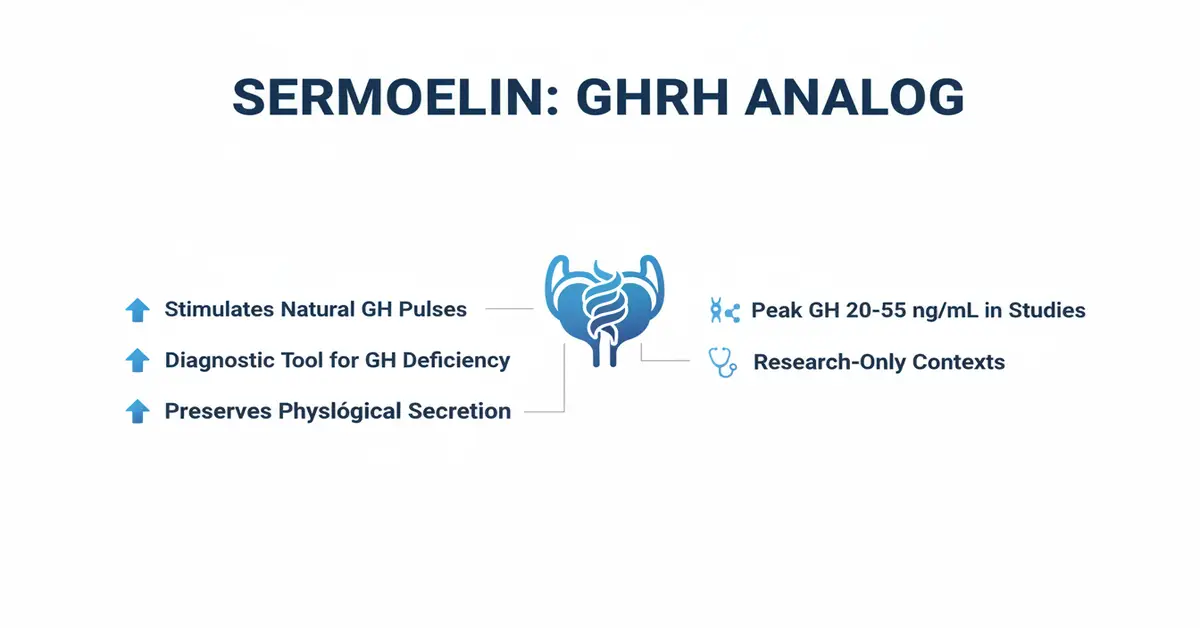
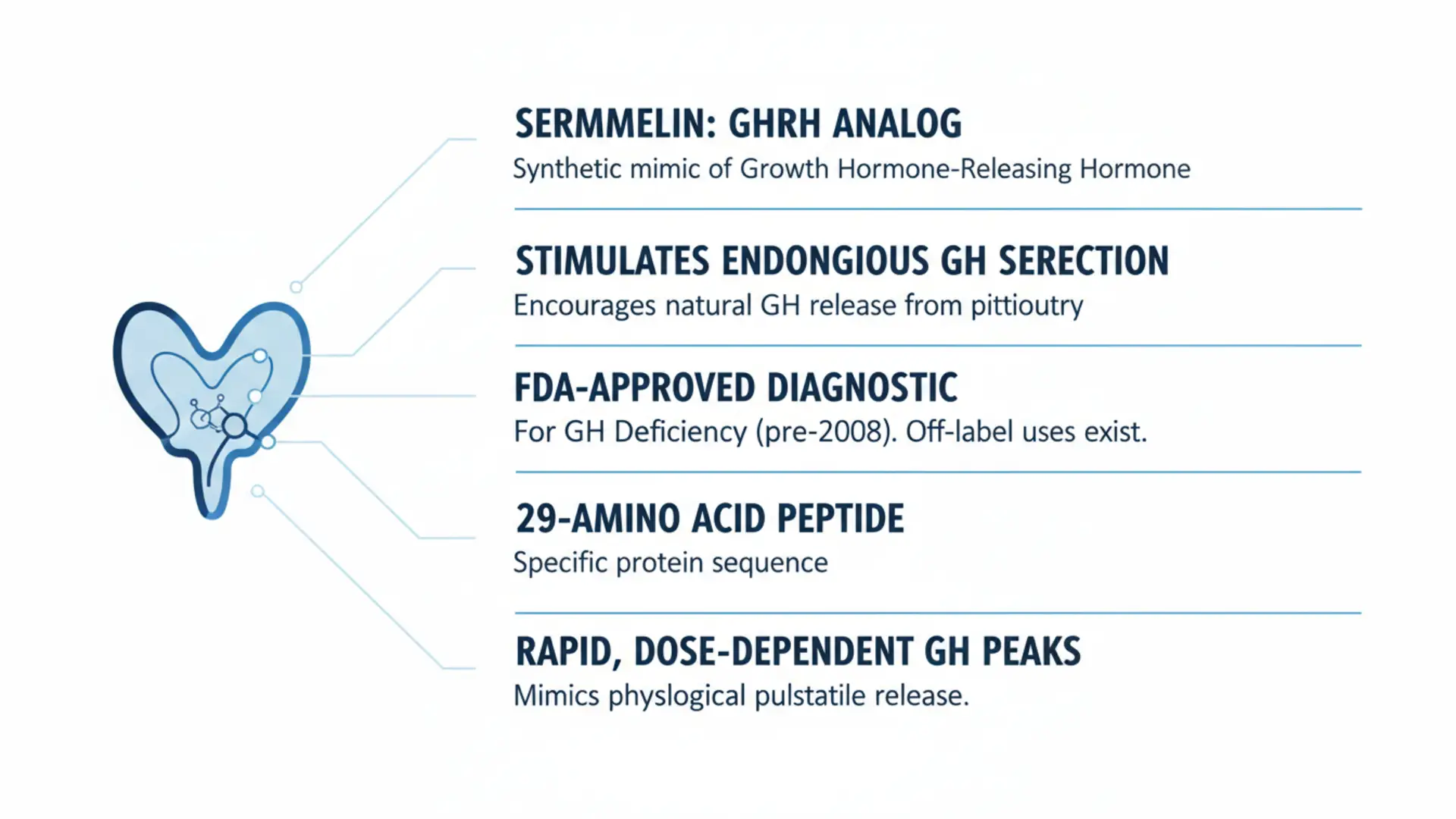
Sermorelin, a synthetic peptide analog of growth hormone-releasing hormone (GHRH), has been the subject of peer-reviewed research exploring its potential to stimulate endogenous growth hormone (GH) secretion. Studies have primarily examined sermorelin injections for diagnostic purposes in growth hormone deficiency, with investigations into their physiological effects in both pediatric and adult populations. Research indicates that sermorelin injections mimic the natural GHRH(1-29) sequence, prompting interest in applications such as assessing pituitary function. While interest in sermorelin injections has become a common search topic among those following peptide research, scientific literature emphasizes preliminary findings from controlled studies. This article reviews evidence from peer-reviewed sources on sermorelin injections, highlighting mechanisms, applications, and limitations observed in human and animal models. Evidence remains limited, and sermorelin has been studied primarily in diagnostic contexts rather than broad therapeutic use.
Mechanisms of Action
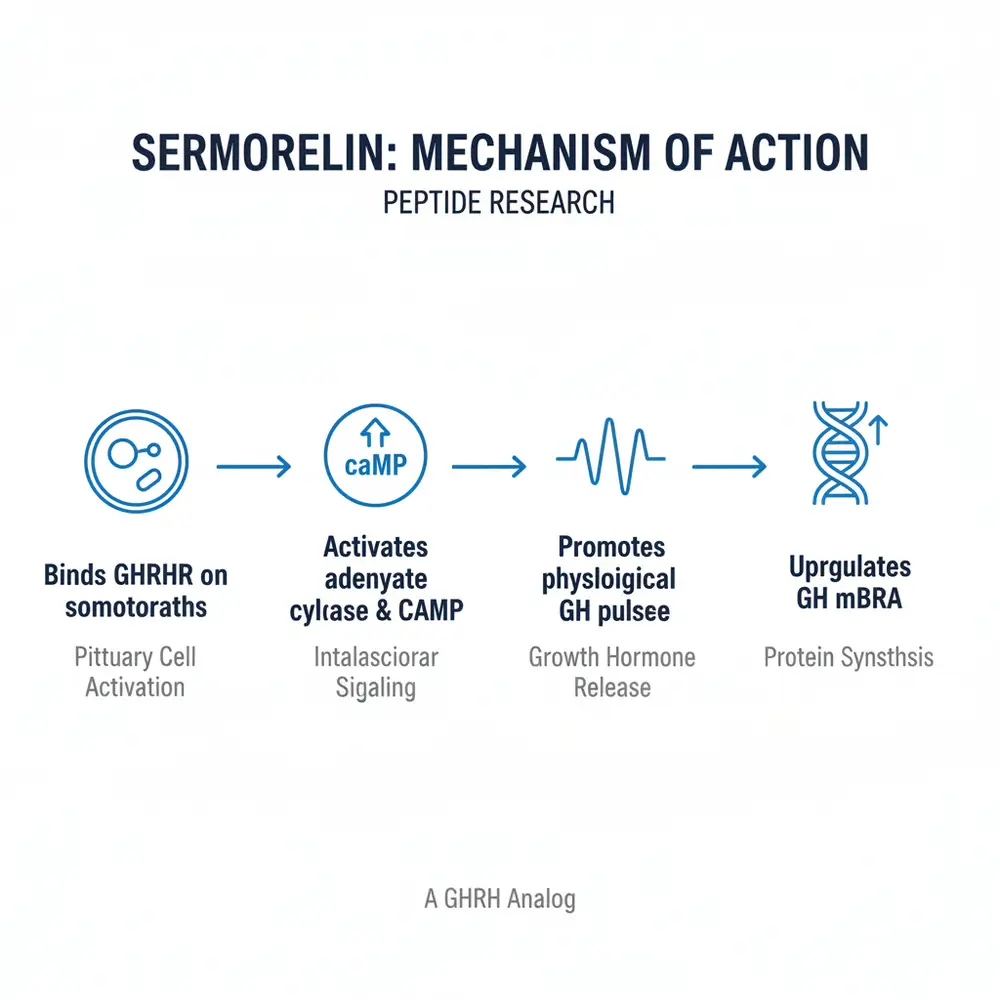
Sermorelin exerts its effects by binding to GHRH receptors (GHRHR) on pituitary somatotroph cells, activating adenylate cyclase and increasing intracellular cAMP levels. This cascade enhances GH synthesis and secretion via protein kinase A pathways, as evidenced in vitro studies with rat pituitary cells. Unlike direct GH administration, sermorelin injections promote physiological pulsatility, potentially preserving feedback mechanisms involving somatostatin.
Preclinical findings suggest sermorelin upregulates hGH mRNA transcription, expanding pituitary reserve over time. In healthy adults, intravenous sermorelin injections (1 mcg/kg) elicited peak GH levels of 20-55 ng/mL within 15-30 minutes, per pharmacokinetic analyses. Animal studies further indicate downstream modulation of insulin-like growth factor-1 (IGF-1) without direct hepatic stimulation, distinguishing it from GH therapy. Research has observed no significant impact on cortisol, prolactin, or thyroid hormones, supporting specificity. These mechanisms position sermorelin injections as a model for studying somatotropic axis dynamics, though human translation requires caution due to inter-individual variability.
Therapeutic Applications
Research has investigated sermorelin injections primarily for diagnosing GH deficiency, where it serves as a standardized provocative agent. In pediatric studies, subcutaneous sermorelin injections (30 mcg/kg) distinguished idiopathic GH deficiency from normal pituitary function with high sensitivity. Adult applications have been explored in GH insufficiency associated with aging, with preclinical findings suggesting potential support for metabolic and body composition parameters in experimental settings.
Few studies have examined sermorelin in hypogonadal males, noting concurrent FSH and LH stimulation alongside GH, suggesting broader endocrine interactions. Animal models of aging have shown sermorelin injections influencing tissue repair pathways via GH/IGF-1 signaling. Off-label research contexts, such as recovery from exercise or sleep-related GH pulses, stem from these observations, but evidence is preliminary. Interest in sermorelin injections often aligns with investigations into longevity models, yet peer-reviewed data underscores the primacy of diagnosis over expansive applications. No studies endorse sermorelin for routine disease treatment, emphasizing research-only contexts.
Clinical Evidence
Peer-reviewed clinical trials on sermorelin injections are predominantly diagnostic. A 1997 review of pediatric data reported that single-dose sermorelin injections (1 mg) provoked GH >10 ng/mL in 92% of normal children versus 18% with deficiency, establishing diagnostic utility. In adults, a key study administered nightly sermorelin injections (30 mcg/kg) to individuals with adult-onset GH insufficiency, observing IGF-1 increases approaching youthful levels after 6 weeks, alongside improved nitrogen retention.
A 2006 analysis compared sermorelin to recombinant GH, finding comparable IGF-1 elevation but fewer disruptions to pulsatile secretion. Safety profiles in these trials noted mild injection-site reactions, with no serious adverse events in short-term use. A 2020 review in hypogonadal contexts reported sermorelin injections stimulating GH alongside gonadotropins, with favorable tolerability. Pediatric growth promotion trials showed modest gains in height velocity (4-6 cm/year) but did not demonstrate superiority over GH. Human trials remain small (n<50 per arm), with follow-up <1 year. Research on sermorelin injections reflects these findings, but larger, long-term RCTs are absent, limiting generalizability.
Animal evidence supports translation: Rat studies confirmed dose-dependent GH release, with chronic sermorelin injections enhancing somatotroph hyperplasia without desensitization. Overall, clinical evidence positions sermorelin injections as a research tool for evaluating the GH axis, with preliminary adult data suggesting physiological mimicry.
Challenges and Limitations
Key challenges in sermorelin research include limited large-scale human trials and the post-2008 discontinuation of commercial supply, which has hindered accessibility. Diagnostic specificity varies with age and comorbidities, as elderly subjects exhibit attenuated GH responses to sermorelin injections. Potential immunogenicity arises from repeated dosing, though incidence remains low (<5%) in studies.
Pharmacokinetic variability—half-life ~10-20 minutes—necessitates frequent administration, complicating compliance. Interactions with somatostatin tone or obesity blunt efficacy, per observational data. Long-term safety data are scarce; theoretical concerns include GH-related risks like glucose dysregulation, which has not been confirmed in sermorelin-specific trials. Pediatric use faced regulatory hurdles due to inconsistent growth responses versus GH. Interest in sermorelin injections for non-research purposes raises compliance issues, as evidence indicates utility is limited to controlled settings. Heterogeneity in assays and populations underscores the need for standardized protocols.
Future Directions
Ongoing research may use sermorelin injections in combination with ghrelin mimetics to amplify GH pulses. Advances in peptide stabilization could extend half-life, improving the feasibility of research. Human trials exploring neuroimaging or metabolic endpoints in aging cohorts represent promising avenues, building on diagnostic foundations. Animal models integrating sermorelin with exercise paradigms could elucidate recovery mechanisms.
Pharmacogenomic studies might identify GHRHR polymorphisms that predict response and refine research cohorts. As biosimilars emerge, renewed diagnostic validation trials are anticipated. Integration with wearable GH monitoring could enable real-time feedback in studies. Despite these prospects, emphasis must remain on preliminary evidence to guide ethical research on sermorelin injections without overextrapolation.
Conclusion
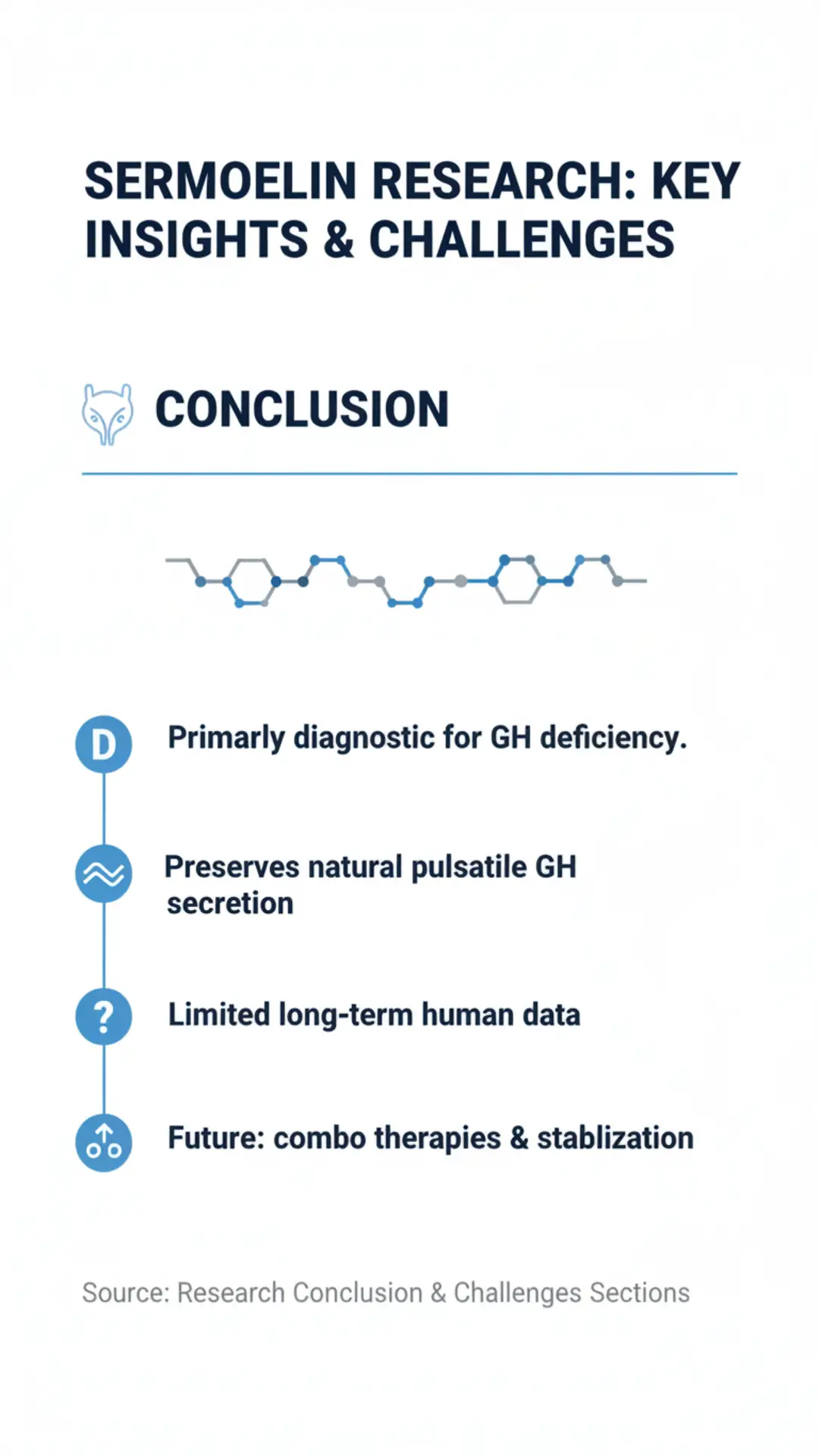
Peer-reviewed studies on sermorelin injections highlight its role as a GHRH analog stimulating physiological GH secretion, primarily in diagnostic contexts for GH deficiency. Preclinical and limited clinical evidence suggest mechanisms preserving pulsatile dynamics, with applications explored in pediatric diagnosis and adult insufficiency models. While interest in sermorelin injections is growing among researchers, challenges such as sparse long-term data and variability persist. Future investigations may expand mechanistic insights, but the current literature emphasizes conditional findings from controlled studies.
References
Walker RF. Sermorelin: A better approach to management of adult-onset growth hormone insufficiency? Clinical Interventions in Aging. 2006. https://www.ncbi.nlm.nih.gov/pmc/articles/PMC2699646/
Prakash A, Goa KL. Sermorelin: a review of its use in the diagnosis and treatment of children with idiopathic growth hormone deficiency. Drugs. 1997. https://pubmed.ncbi.nlm.nih.gov/18031173/
Sinha DK, Balasubramanian R, Tena G, DePusco C, Lemme M, Patel S, Yuen KCJ. Beyond the androgen receptor: the role of growth hormone secretagogues in the modern management of body composition in hypogonadal males. American Journal of Men’s Health. 2020. https://www.ncbi.nlm.nih.gov/pmc/articles/PMC7108996/
Heiman ML, Nekola MV, Murphy WA, Lance VA, Coy DH. Structure-function relationships of growth hormone-releasing factor analogs. Peptides. 1985. https://pubmed.ncbi.nlm.nih.gov/2415624/
Teichman SL, Neuwirth R, Middleton G, Wen J, Higgins JP, Kim A. Prolonged stimulation of growth hormone (GH) and insulin-like growth factor I secretion by CJC-1295, a long-acting analog of GH-releasing hormone, in healthy adults. Journal of Clinical Endocrinology & Metabolism. 2006. https://pubmed.ncbi.nlm.nih.gov/16352683/
References
References
Walker RF. Sermorelin: A better approach to management of adult-onset growth hormone insufficiency? Clinical Interventions in Aging. 2006. https://www.ncbi.nlm.nih.gov/pmc/articles/PMC2699646/
Prakash A, Goa KL. Sermorelin: a review of its use in the diagnosis and treatment of children with idiopathic growth hormone deficiency. Drugs. 1997. https://pubmed.ncbi.nlm.nih.gov/18031173/
Sinha DK, Balasubramanian R, Tena G, DePusco C, Lemme M, Patel S, Yuen KCJ. Beyond the androgen receptor: the role of growth hormone secretagogues in the modern management of body composition in hypogonadal males. American Journal of Men’s Health. 2020. https://www.ncbi.nlm.nih.gov/pmc/articles/PMC7108996/
Heiman ML, Nekola MV, Murphy WA, Lance VA, Coy DH. Structure-function relationships of growth hormone-releasing factor analogs. Peptides. 1985. https://pubmed.ncbi.nlm.nih.gov/2415624/
Teichman SL, Neuwirth R, Middleton G, Wen J, Higgins JP, Kim A. Prolonged stimulation of growth hormone (GH) and insulin-like growth factor I secretion by CJC-1295, a long-acting analog of GH-releasing hormone, in healthy adults. Journal of Clinical Endocrinology & Metabolism. 2006. https://pubmed.ncbi.nlm.nih.gov/16352683/