
GLP-1 Agonists for Type 2 Diabetes: An Evidence-Based Research Overview
- By Isaac
Introduction
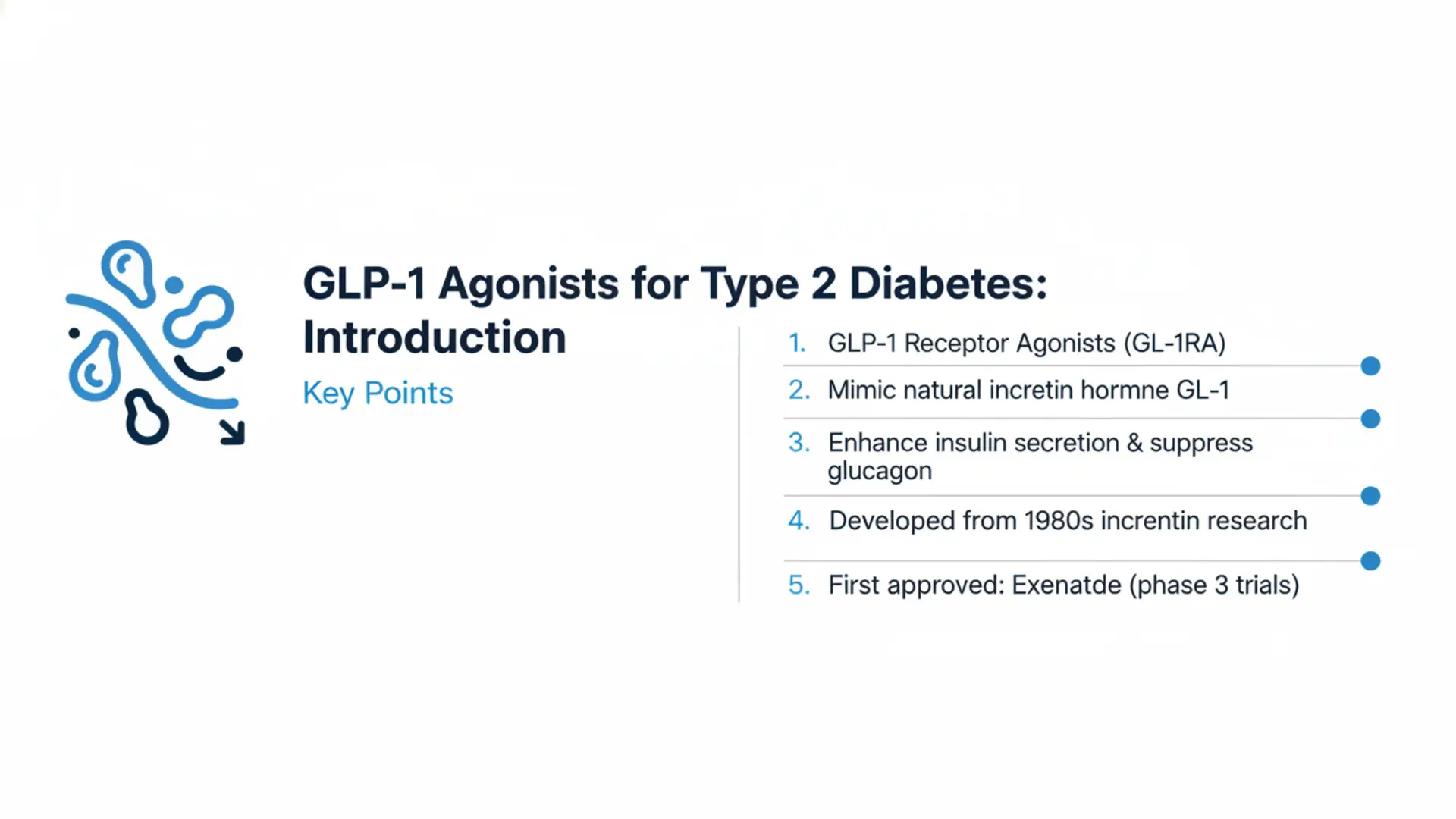
GLP-1 agonists for type 2 diabetes have garnered significant attention in scientific literature due to their role in metabolic research. These peptide-based compounds, known as glucagon-like peptide-1 receptor agonists (GLP-1RAs), mimic the actions of the endogenous incretin hormone GLP-1. Research has explored GLP-1 agonists for type 2 diabetes in the context of glycemic parameters and associated factors. Studies indicate that GLP-1 agonists for type 2 diabetes may influence insulin dynamics and appetite regulation, though evidence remains centered on controlled trials. This article reviews peer-reviewed findings on GLP-1 agonists for type 2 diabetes, covering background, mechanisms, and clinical data while emphasizing limitations. Peer-reviewed sources highlight that GLP-1 agonists for type 2 diabetes have been investigated primarily in adults with elevated HbA1c levels. Systematic reviews underscore the need for cautious interpretation, as outcomes vary across populations. The following sections detail research on GLP-1 agonists for type 2 diabetes from human and animal studies.
Mechanisms of Action
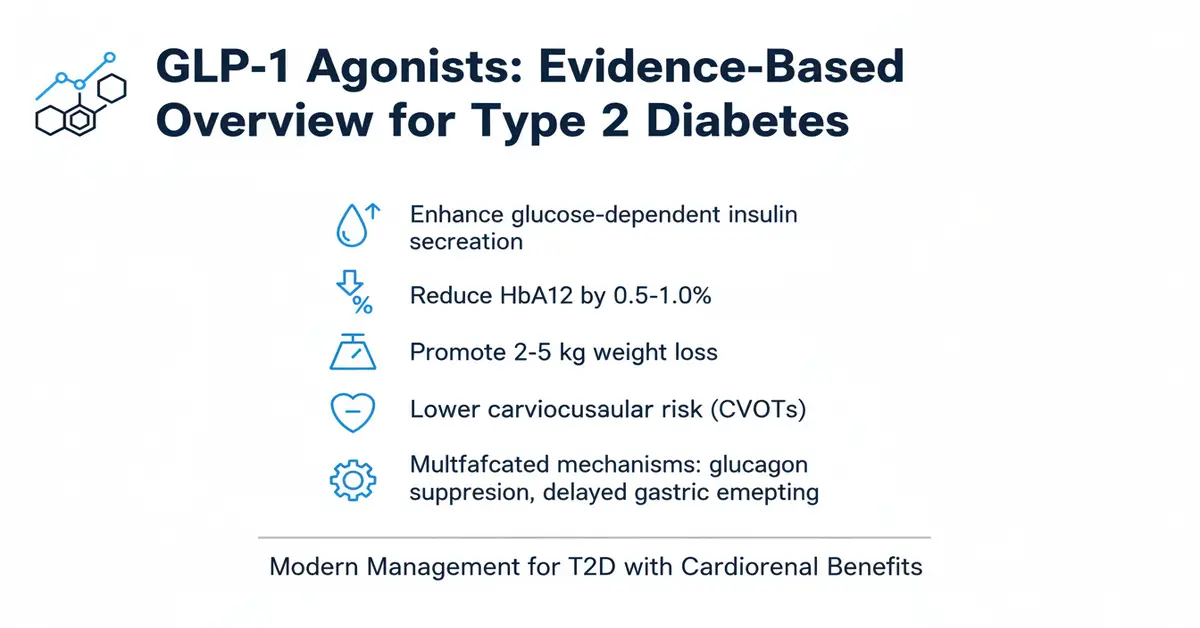
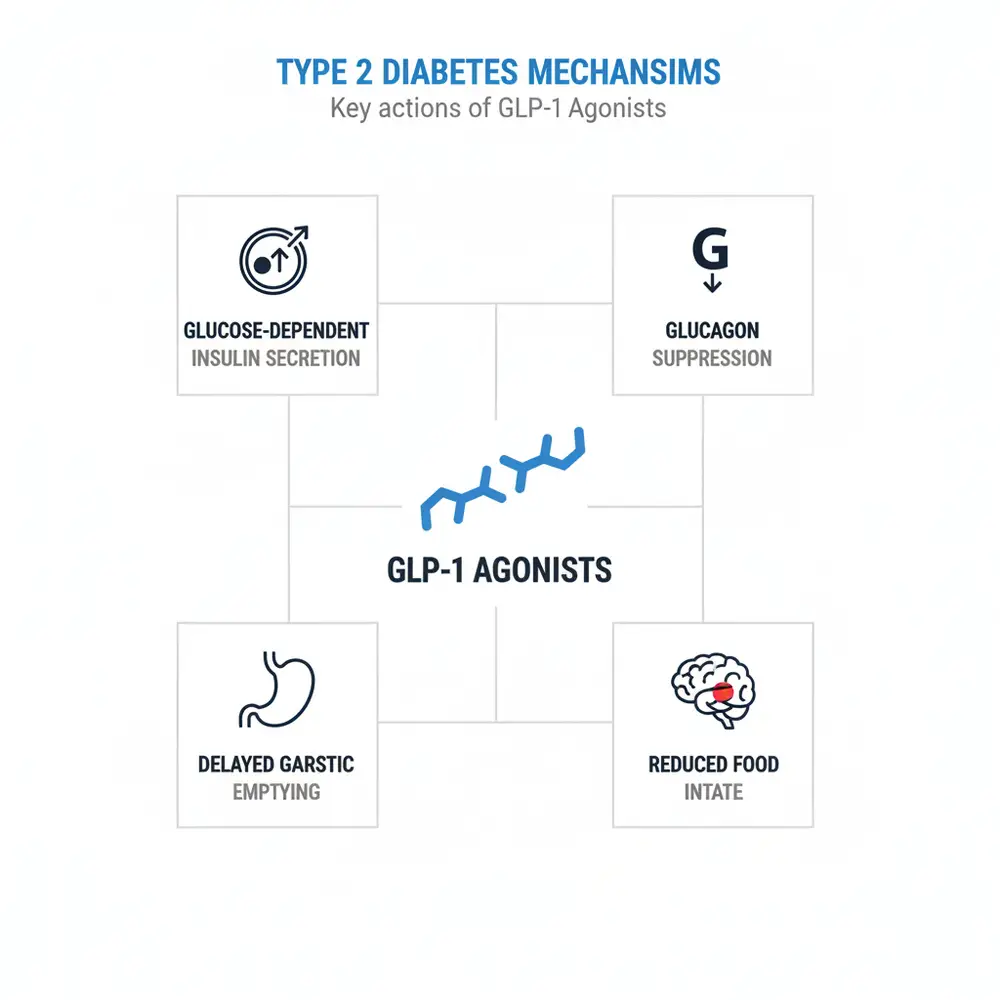
Research on mechanisms of GLP-1 agonists for type 2 diabetes centers on GLP-1 receptor activation in multiple tissues. GLP-1 agonists for type 2 diabetes enhance glucose-dependent insulin secretion from pancreatic beta cells, as shown in isolated islet studies. Suppression of glucagon release during hyperglycemia represents another key mechanism of GLP-1 agonists for type 2 diabetes, observed in human clamp experiments. Delayed gastric emptying, mediated by vagal afferent signaling, contributes to postprandial glucose modulation by GLP-1 agonists for type 2 diabetes. Central nervous system effects, including hypothalamic activation, have been linked to reduced food intake in rodent models using GLP-1 agonists for type 2 diabetes. Cardiovascular preclinical findings suggest GLP-1 agonists for type 2 diabetes may promote endothelial function via nitric oxide pathways. Renal studies indicate potential natriuretic effects from GLP-1 agonists for type 2 diabetes in animal glomeruli. These multifaceted actions of GLP-1 agonists for type 2 diabetes are supported by in vitro receptor binding assays. Overall, mechanisms of GLP-1 agonists for type 2 diabetes appear tissue-specific and dose-dependent.
Therapeutic Applications
GLP-1 agonists for type 2 diabetes have been studied in contexts beyond glycemic control, including weight-related outcomes. Clinical guidelines reference GLP-1 agonists for type 2 diabetes when metformin alone proves insufficient. Research has examined GLP-1 agonists for type 2 diabetes in patients with cardiovascular risk factors, noting associations with lipid profiles. Applications of GLP-1 agonists for type 2 diabetes extend to combination therapies with SGLT2 inhibitors in observational cohorts. Studies in obese subgroups explore GLP-1 agonists for type 2 diabetes for body composition changes. Renal-focused investigations assess the use of GLP-1 agonists for type 2 diabetes in albuminuric populations. Hepatic fat reduction has been observed in MRI-based trials of GLP-1 agonists for type 2 diabetes. These potential applications of GLP-1 agonists for type 2 diabetes remain investigational, with evidence primarily from short-term studies. Long-term data on GLP-1 agonists for type 2 diabetes in diverse ethnic groups are emerging.
Clinical Evidence
Numerous randomized controlled trials (RCTs) and meta-analyses provide clinical evidence on the use of GLP-1 agonists for type 2 diabetes. A 2020 systematic review in Diabetes, Obesity and Metabolism analyzed 76 RCTs, reporting mean HbA1c reductions of 0.5-1.0% with GLP-1 agonists for type 2 diabetes versus placebo. Cardiovascular outcome trials like LEADER (liraglutide) demonstrated hazard ratios below 1 for major adverse cardiovascular events (MACE) in high-risk patients using GLP-1 agonists for type 2 diabetes. SUSTAIN-6 with semaglutide showed similar findings for GLP-1 agonists for type 2 diabetes in type 2 diabetes cohorts. A BMJ network meta-analysis (2024) ranked GLP-1 agonists for type 2 diabetes highly for weight reduction, with an average 2-5 kg loss. Pooled data from 13 CVOTs indicated renal benefits, such as regression of albuminuria, with GLP-1 agonists in type 2 diabetes. Head-to-head trials comparing GLP-1 agonists with insulin showed lower rates of hypoglycemia in people with type 2 diabetes. Animal studies corroborate human findings, with db/db mice showing improved beta-cell mass in response to GLP-1 agonists in type 2 diabetes. Evidence for GLP-1 agonists for type 2 diabetes is strongest in adults aged 40-70 years.
Challenges and Limitations
Despite research progress, challenges persist with GLP-1 agonists for type 2 diabetes. Gastrointestinal adverse events, including nausea and vomiting, affect 20-40% of participants in RCTs of GLP-1 agonists for type 2 diabetes. Dose escalation mitigates, but does not eliminate, these issues in GLP-1 agonist studies for type 2 diabetes. Injection-site reactions and potential signs of pancreatitis are limitations of GLP-1 agonists for type 2 diabetes. Cost barriers limit accessibility of GLP-1 agonists for type 2 diabetes in real-world settings. Adherence data show 30-50% discontinuation rates within one year among patients receiving GLP-1 agonists for type 2 diabetes. Heterogeneity in response, influenced by baseline BMI, poses challenges for personalizing GLP-1 agonist treatment in type 2 diabetes. Limited pediatric data restrict the use of GLP-1 agonists for type 2 diabetes. Long-term safety beyond five years remains understudied for GLP-1 agonists for type 2 diabetes. Meta-analyses highlight the risk of publication bias in early GLP-1 agonist trials for type 2 diabetes.
Future Directions
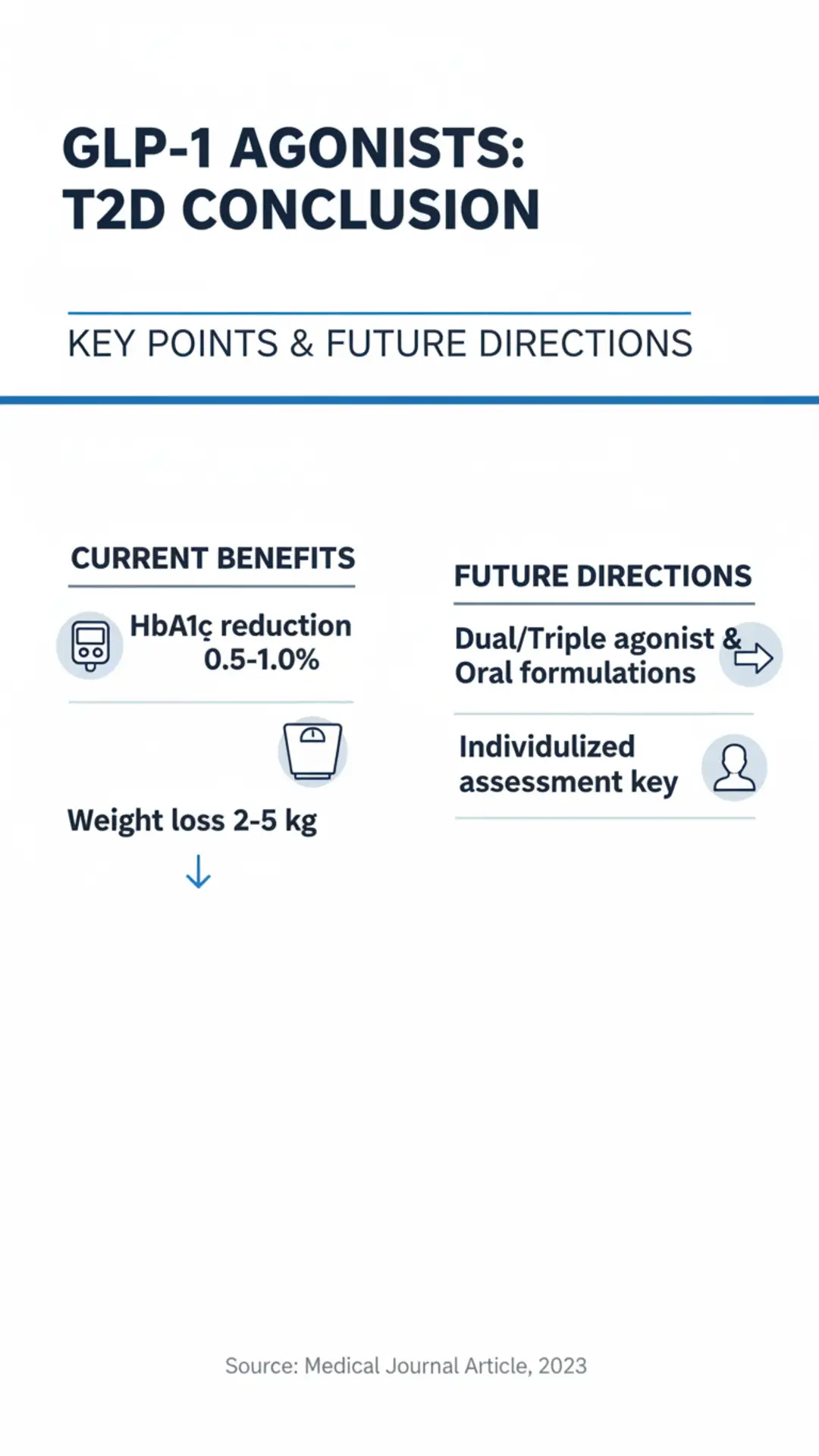
Ongoing research aims to advance GLP-1 agonists for type 2 diabetes by targeting multiple receptors. Dual GLP-1/GIP agonists, such as tirzepatide, are being evaluated for enhanced efficacy in type 2 diabetes trials. Oral formulations aim to improve convenience over injectable GLP-1 agonists for type 2 diabetes. Precision medicine approaches using pharmacogenomics may optimize the selection of GLP-1 agonists for type 2 diabetes. Large-scale registries will clarify real-world outcomes of GLP-1 agonists for type 2 diabetes. Triple agonists (GLP-1/GIP/glucagon) enter phase 3 for type 2 diabetes endpoints. Neuroprotective extensions of GLP-1 agonists for type 2 diabetes warrant longitudinal studies. Pediatric and geriatric trials are planned for GLP-1 agonists for type 2 diabetes. Head-to-head comparisons with emerging therapies will refine the positioning of GLP-1 agonists for type 2 diabetes. These directions promise refined applications of GLP-1 agonists for type 2 diabetes.
Conclusion
Peer-reviewed literature provides a robust foundation for understanding GLP-1 agonists for type 2 diabetes. Studies highlight mechanisms such as insulin potentiation and clinical associations with HbA1c and weight changes when using GLP-1 agonists for type 2 diabetes. While CVOTs show encouraging data for GLP-1 agonists in type 2 diabetes, gastrointestinal tolerability and cost remain hurdles. Future multi-agonists and oral options may expand research on GLP-1 agonists for type 2 diabetes. Evidence supporting the use of GLP-1 agonists for type 2 diabetes underscores the importance of individualized assessment. Further investigation will clarify the role of GLP-1 agonists in type 2 diabetes and metabolic research.
References
Auld D, et al. A review of GLP-1 receptor agonists in type 2 diabetes. Diabetes Obes Metab. 2020. https://pmc.ncbi.nlm.nih.gov/articles/PMC7540167/
Nauck MA, et al. GLP-1 receptor agonists in the treatment of type 2 diabetes. Lancet Diabetes Endocrinol. 2020. https://pubmed.ncbi.nlm.nih.gov/33068776/
Sattar N, et al. Glucagon-like receptor agonists and next-generation incretin-based therapies. Lancet. 2025. https://www.thelancet.com/journals/lancet/article/PIIS0140-6736(25)02105-1/fulltext
Wang W, et al. Glucagon-like peptide-1 receptor agonist treatment reduces body weight. Diabetes Obes Metab. 2025. https://dom-pubs.onlinelibrary.wiley.com/doi/10.1111/dom.70188
Li Y, et al. Comprehensive evaluation of GLP-1 receptor agonists. Nat Commun. 2025. https://www.nature.com/articles/s41467-025-67701-9
Secher A, et al. Comparative effectiveness of GLP-1 receptor agonists on glycaemic control. BMJ. 2024. https://www.bmj.com/content/384/bmj-2023-076410
Abd El Aziz M, et al. Insulin Versus Established GLP-1 Receptor Agonists. Cureus. 2024. https://www.cureus.com/articles/408386-insulin-versus-established-glp-1-receptor-agonists-dpp-4-inhibitors-and-sglt-2-inhibitors-for-uncontrolled-type-2-diabetes-mellitus-a-systematic-review-and-meta-analysis-of-randomized-controlled-trials
Wang X, et al. Mechanisms of action and therapeutic applications of GLP-1. Front Endocrinol. 2024. https://www.frontiersin.org/journals/endocrinology/articles/10.3389/fendo.2024.1431292/full
Alfaris N, et al. GLP-1 single, dual, and triple receptor agonists. EClinicalMedicine. 2024. https://www.sciencedirect.com/science/article/pii/S2589537024003614
Melson E, et al. What is the pipeline for future medications for obesity? Int J Obes. 2025. https://www.nature.com/articles/s41366-024-01473-y
References
References
Auld D, et al. A review of GLP-1 receptor agonists in type 2 diabetes. Diabetes Obes Metab. 2020. https://pmc.ncbi.nlm.nih.gov/articles/PMC7540167/
Nauck MA, et al. GLP-1 receptor agonists in the treatment of type 2 diabetes. Lancet Diabetes Endocrinol. 2020. https://pubmed.ncbi.nlm.nih.gov/33068776/
Sattar N, et al. Glucagon-like receptor agonists and next-generation incretin-based therapies. Lancet. 2025. https://www.thelancet.com/journals/lancet/article/PIIS0140-6736(25)02105-1/fulltext
Wang W, et al. Glucagon-like peptide-1 receptor agonist treatment reduces body weight. Diabetes Obes Metab. 2025. https://dom-pubs.onlinelibrary.wiley.com/doi/10.1111/dom.70188
Li Y, et al. Comprehensive evaluation of GLP-1 receptor agonists. Nat Commun. 2025. https://www.nature.com/articles/s41467-025-67701-9
Secher A, et al. Comparative effectiveness of GLP-1 receptor agonists on glycaemic control. BMJ. 2024. https://www.bmj.com/content/384/bmj-2023-076410
Abd El Aziz M, et al. Insulin Versus Established GLP-1 Receptor Agonists. Cureus. 2024. https://www.cureus.com/articles/408386-insulin-versus-established-glp-1-receptor-agonists-dpp-4-inhibitors-and-sglt-2-inhibitors-for-uncontrolled-type-2-diabetes-mellitus-a-systematic-review-and-meta-analysis-of-randomized-controlled-trials
Wang X, et al. Mechanisms of action and therapeutic applications of GLP-1. Front Endocrinol. 2024. https://www.frontiersin.org/journals/endocrinology/articles/10.3389/fendo.2024.1431292/full
Alfaris N, et al. GLP-1 single, dual, and triple receptor agonists. EClinicalMedicine. 2024. https://www.sciencedirect.com/science/article/pii/S2589537024003614
Melson E, et al. What is the pipeline for future medications for obesity? Int J Obes. 2025. https://www.nature.com/articles/s41366-024-01473-y