
GLP-1 Drugs: 10 Key Insights from Clinical Trials and Meta-Analyses
- By Isaac
GLP-1 Drugs: 10 Key Insights from Clinical Trials and Meta-Analyses
Introduction
GLP-1 receptor agonists (GLP-1RAs), often referred to as GLP-1 drugs, are a class of incretin mimetics designed to activate GLP-1 receptors. These receptors play a role in regulating glucose homeostasis and appetite control. Originally developed primarily for supporting glycemic management in adults with type 2 diabetes, GLP-1 drugs have shown expanding applications in areas such as weight management and cardiovascular health based on clinical research.
This review article synthesizes evidence from recent meta-analyses and randomized controlled trials (RCTs) examining the efficacy, safety profile, and potential emerging uses of GLP-1 drugs. Key examples include semaglutide, liraglutide, and dulaglutide, which have received approvals from regulatory bodies like the FDA and EMA for specific indications related to glycemic control and weight management in eligible adults. By drawing on high-quality studies, this article aims to provide an educational overview for readers interested in the evolving research landscape surrounding GLP-1 drugs.
Mechanisms of Action
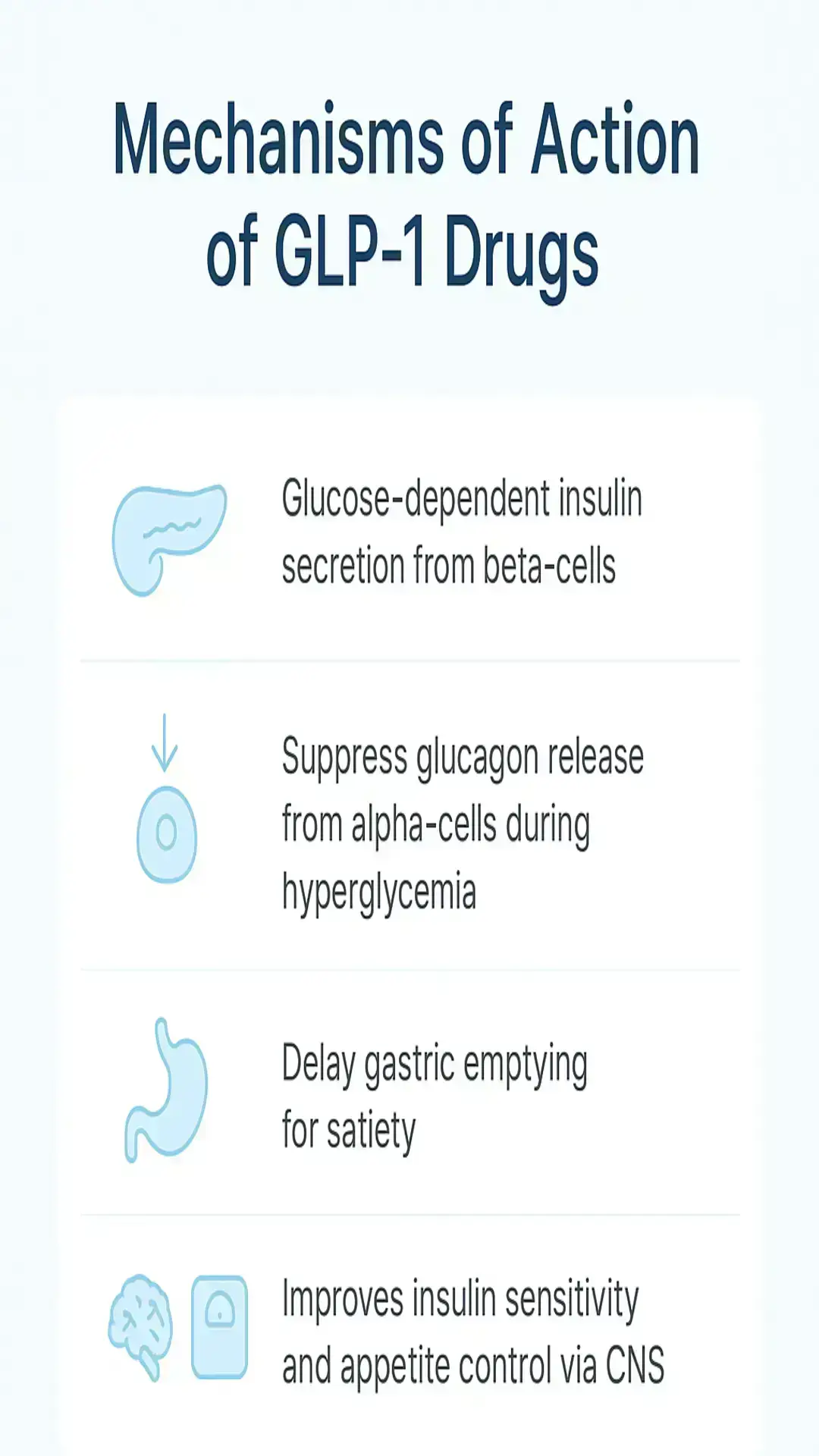
GLP-1 drugs exert their effects by binding to GLP-1 receptors located on pancreatic beta-cells, where they promote glucose-dependent insulin secretion. This mechanism helps modulate insulin release in response to elevated blood glucose levels. Additionally, these agents suppress glucagon release from pancreatic alpha-cells specifically during hyperglycemic conditions, which may contribute to reduced hepatic glucose production.
Other actions include delaying gastric emptying, which can promote feelings of satiety through effects on the central nervous system, potentially leading to lower caloric intake. Research also indicates improvements in insulin sensitivity and glucagonostatic effects under hyperglycemic states. Dual agonists, such as those combining GLP-1 with GIP (glucose-dependent insulinotropic polypeptide), further enhance these pathways by incorporating additional mechanisms, like glucagonotropic effects during hypoglycemia, offering a more comprehensive approach to metabolic regulation.
These mechanisms are supported by preclinical and clinical studies, providing a foundation for understanding how GLP-1 drugs influence glucose homeostasis and energy balance.
Therapeutic Applications
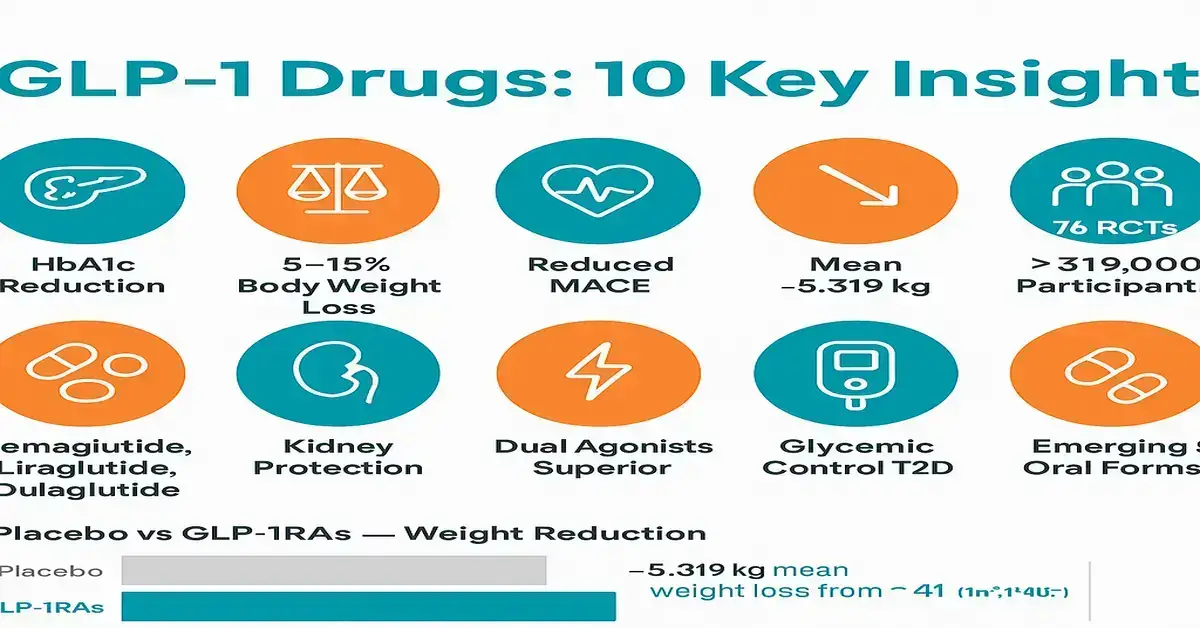
Clinical research has explored GLP-1 drugs for supporting glycemic control in adults with type 2 diabetes, where they have been shown to reduce HbA1c levels through enhanced insulin secretion and suppressed glucagon. In weight management for individuals with obesity or overweight accompanied by comorbidities, studies report average body weight reductions ranging from 5% to 15%.
Evidence from cardiovascular outcome trials suggests benefits in reducing major adverse cardiovascular events (MACE) among adults with type 2 diabetes and established cardiovascular disease. Emerging data also point to potential protective effects on kidney function and applications in metabolic dysfunction-associated steatotic liver disease (MASLD).
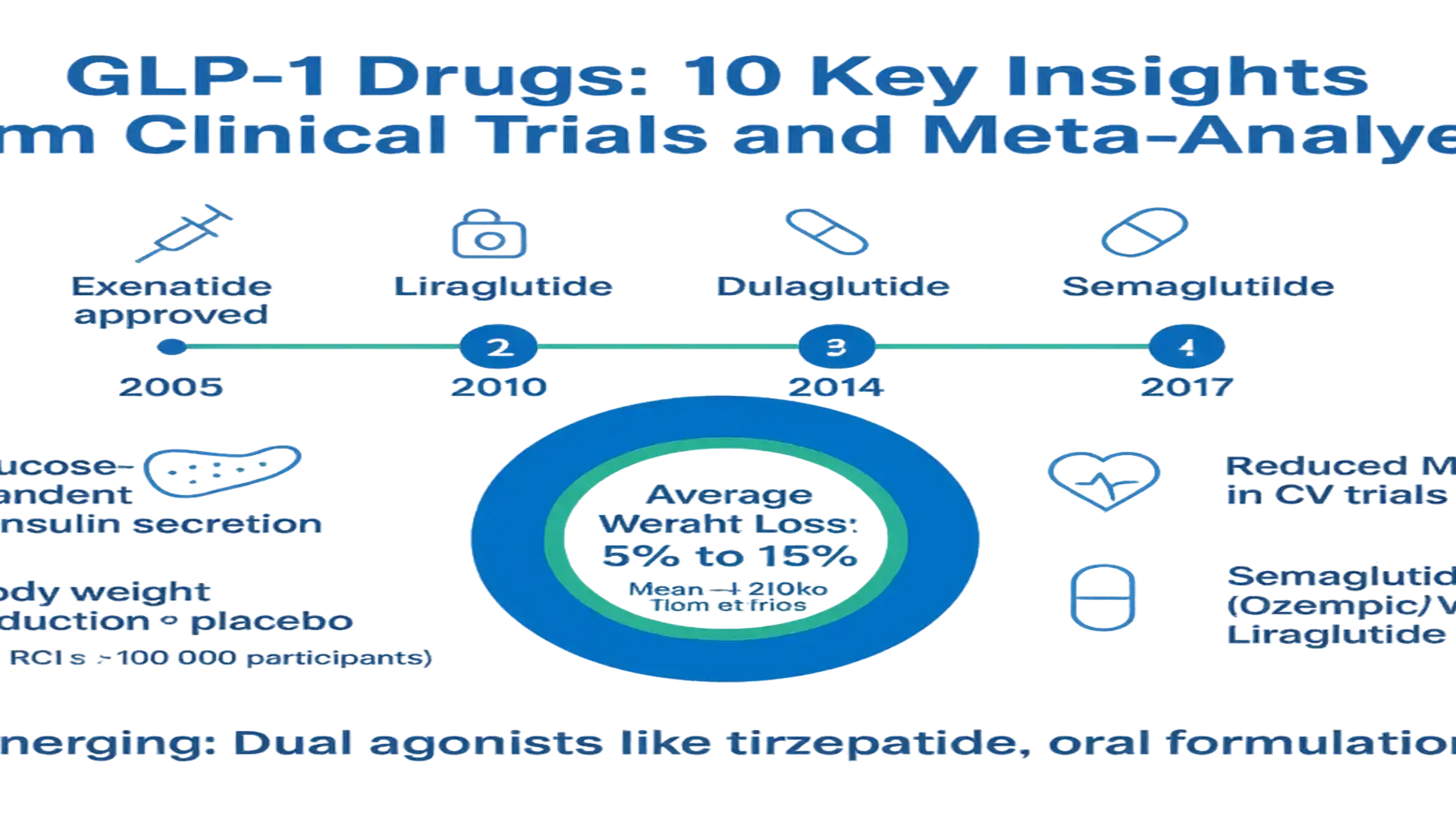
Regulatory approvals by the FDA and EMA include indications for adults with type 2 diabetes (e.g., liraglutide, semaglutide, dulaglutide) and for weight management (e.g., semaglutide as Wegovy). These applications are backed by trial data, though individual responses may vary.
Clinical Evidence
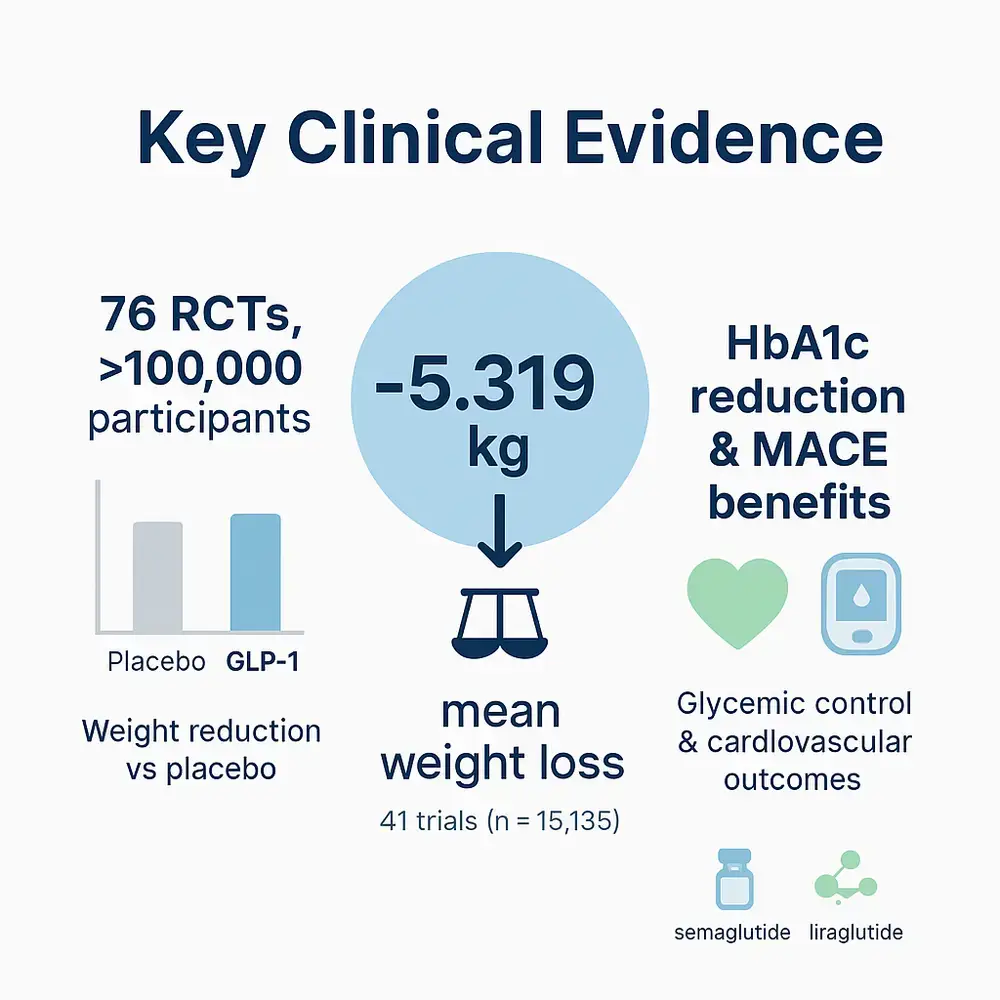
A meta-analysis of 76 RCTs involving over 100,000 participants demonstrated that GLP-1 drugs significantly reduce body weight compared to placebo. Network meta-analyses further confirm superior reductions in HbA1c, body weight, and improvements in lipid profiles among GLP-1RAs for glycemic support in type 2 diabetes.
Large-scale trials like those for semaglutide and liraglutide have shown cardiovascular benefits, including lower rates of MACE. A systematic review of 41 trials (n=15,135) reported a mean weight loss of -5.319 kg across various GLP-1 drugs. Comparative studies indicate that dual agonists like tirzepatide may outperform single GLP-1RAs in weight reduction metrics.
These findings from peer-reviewed meta-analyses and head-to-head trials underscore the class effects of GLP-1 drugs, with semaglutide often ranking highly in efficacy for weight and glycemic outcomes.
Challenges and Limitations
Despite their benefits, GLP-1 drugs are associated with common gastrointestinal side effects, such as nausea, vomiting, and diarrhea, which can affect tolerability. Reports to the FDA highlight risks of dosing errors and adverse events with compounded or unapproved versions of these medications.
Regulatory bodies like the EMA and FDA are reviewing signals related to potential suicidal thoughts and self-harm. Additional challenges include high costs, limited access due to supply shortages, and barriers to widespread adoption. There is also comparatively less long-term safety data in populations without diabetes, such as those using GLP-1 drugs solely for obesity, and in subgroups like individuals with type 1 diabetes.
Healthcare providers emphasize the importance of monitoring and patient education to mitigate these issues.
Future Directions
Research is advancing toward dual agonists (e.g., GLP-1/GIP, GLP-1/glucagon) and triple agonists, which aim to enhance weight loss and cardiometabolic outcomes. Oral small-molecule GLP-1RAs, such as orforglipron, have shown promising phase 2 results for HbA1c reduction and weight loss without the need for injections.
Investigations are expanding into indications like heart failure, chronic kidney disease, and neurodegenerative conditions. Ongoing studies focus on improving equitable access, real-world adherence, and combinations with other agents like SGLT2 inhibitors. Long-term trials are addressing potential effects on muscle and bone health, asthma risk, and perioperative outcomes.
These developments signal a dynamic future for GLP-1 drugs in metabolic and beyond.
Conclusion
GLP-1 drugs offer robust, evidence-based support for glycemic control, weight management, and cardiovascular protection, particularly in adults with type 2 diabetes and obesity. Meta-analyses and clinical trials affirm class-wide efficacy, with agents like semaglutide and dual agonists such as tirzepatide showing leadership in weight reduction.
Challenges like gastrointestinal tolerability, access issues, and safety monitoring remain critical areas for improvement. Emerging multi-agonist therapies and oral formulations hold promise for greater convenience and broader applications, potentially transforming metabolic health strategies.
References
- How glucagon-like peptide 1 receptor agonists work. PMC. 2021.
- Emerging Frontiers in GLP-1 Therapeutics. PubMed Central. 2024.
- Comparative effectiveness of GLP-1 receptor agonists on glycaemic control, body weight, and lipid profile for type 2 diabetes: systematic review and network meta-analysis. BMJ. 2024.
- Mechanisms of action and therapeutic applications of GLP-1 and GIP receptor agonists. Frontiers in Endocrinology. 2024.
- Glucagon-Like Peptide-1 Receptor Agonists. StatPearls NCBI. 2024.
- Glucagon-like peptide-1 receptor: mechanisms and advances in therapeutics. Nature. 2024.
- The expanding role of GLP-1 receptor agonists: a narrative review. PMC. 2024.
- Comparative efficacy and safety of GLP-1 receptor agonists for weight reduction. PMC. 2024.
- Glucagon‐like peptide‐1 receptor agonist treatment reduces body weight. PMC. 2024.
- Glucagon-like receptor agonists and next-generation incretin-based therapies. The Lancet. 2025.
References
References
- How glucagon-like peptide 1 receptor agonists work. PMC. 2021.
- Emerging Frontiers in GLP-1 Therapeutics. PubMed Central. 2024.
- Comparative effectiveness of GLP-1 receptor agonists on glycaemic control, body weight, and lipid profile for type 2 diabetes: systematic review and network meta-analysis. BMJ. 2024.
- Mechanisms of action and therapeutic applications of GLP-1 and GIP receptor agonists. Frontiers in Endocrinology. 2024.
- Glucagon-Like Peptide-1 Receptor Agonists. StatPearls NCBI. 2024.
- Glucagon-like peptide-1 receptor: mechanisms and advances in therapeutics. Nature. 2024.
- The expanding role of GLP-1 receptor agonists: a narrative review. PMC. 2024.
- Comparative efficacy and safety of GLP-1 receptor agonists for weight reduction. PMC. 2024.
- Glucagon‐like peptide‐1 receptor agonist treatment reduces body weight. PMC. 2024.
- Glucagon-like receptor agonists and next-generation incretin-based therapies. The Lancet. 2025.