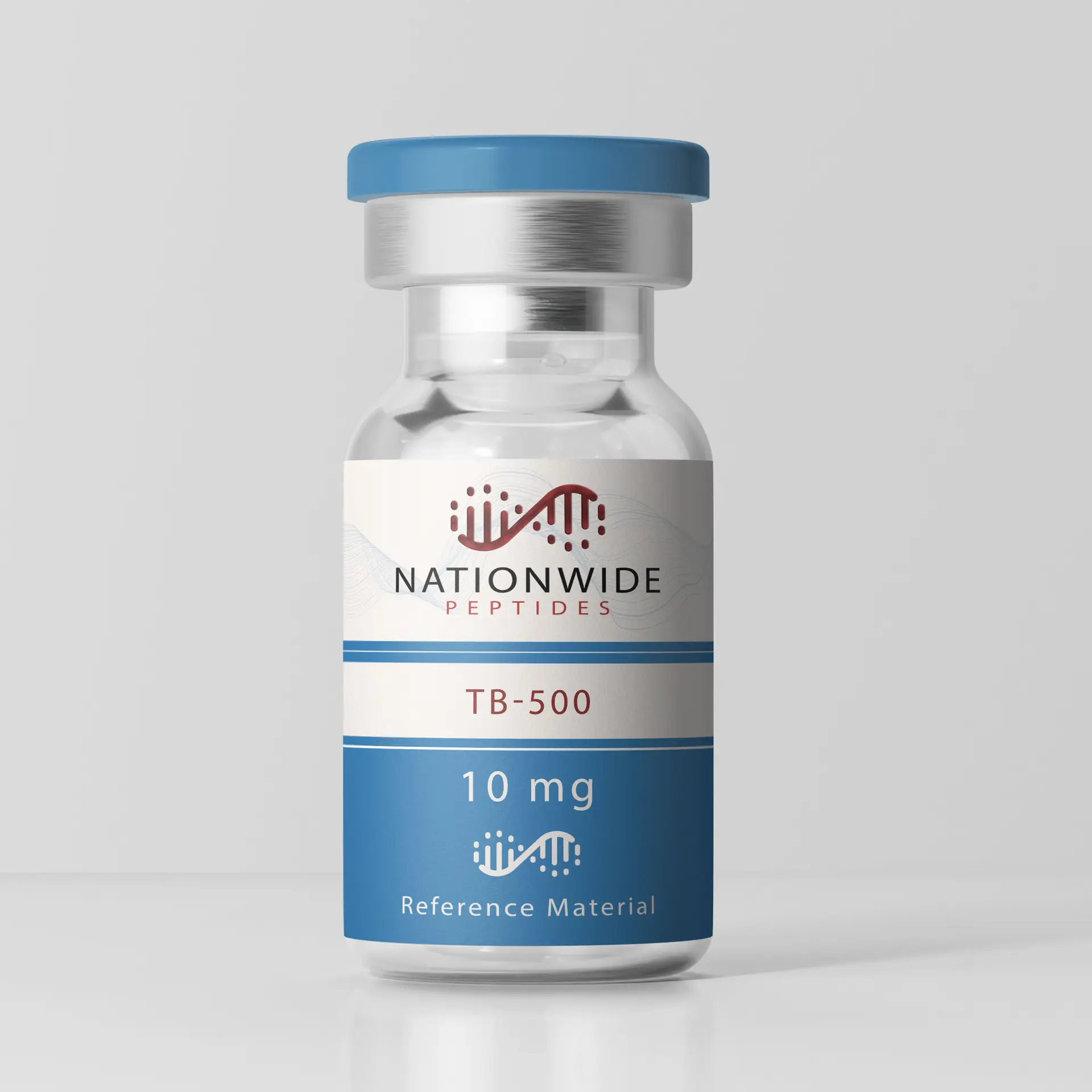
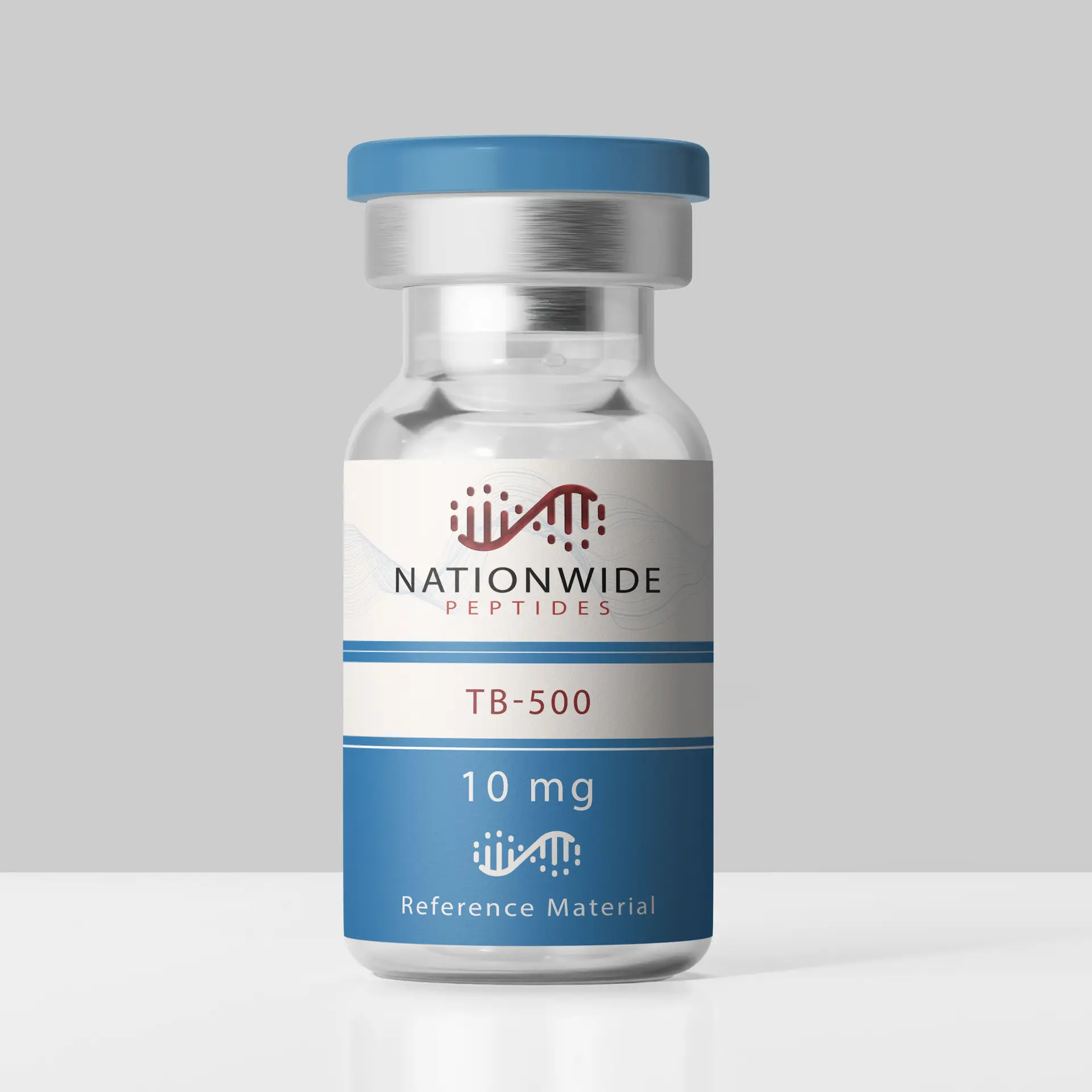
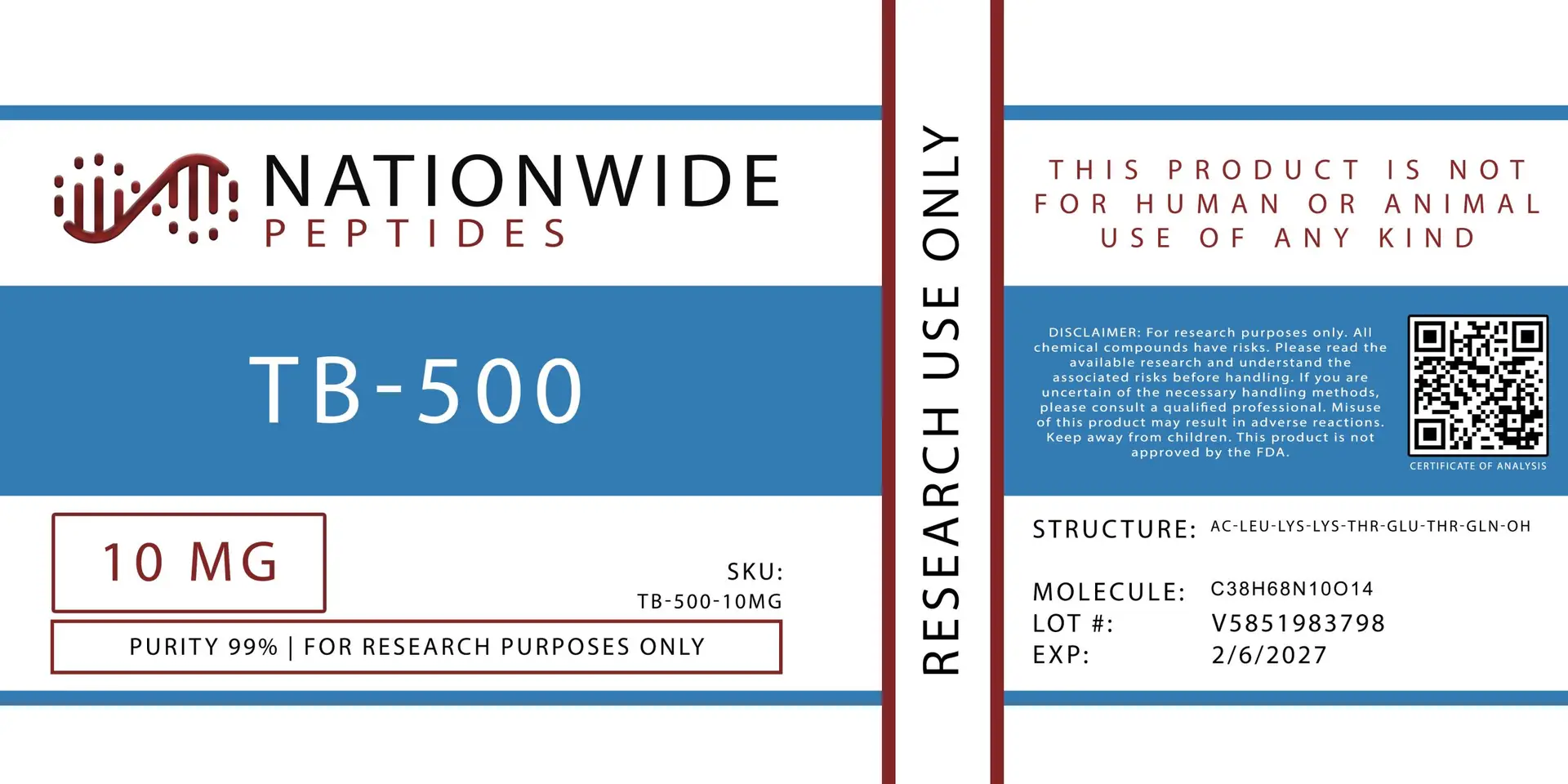
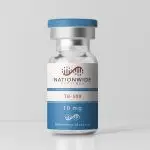
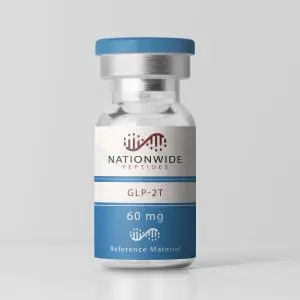
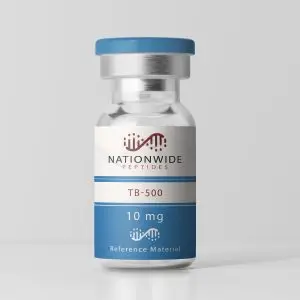
TB-500 Peptide (TB4)
$63.00 $83.00Price range: $63.00 through $83.00 Select options

TB-500 Peptide (TB4)

Price range: $63.00 through $83.00

For Research Use Only. Not for human use. TB-500 (Thymosin Beta-4 Fragment) is a synthetic research peptide frequently studied in preclinical studies on cellular migration, tissue repair pathways, angiogenesis, and cytoskeletal organization.

View Test Report

For Research Use Only — Not for Human Consumption
 

Free shipping on all orders over $200 (US)

  • 99% Purity – Third-Party Tested
  • Fast & Reliable Shipping
Guaranteed Checkout

For Research Use Only. Not for human use.

TB-500 (Thymosin Beta-4 Fragment) is a synthetic research peptide frequently studied in preclinical studies on cellular migration, tissue repair pathways, angiogenesis, and cytoskeletal organization. As a key actin-binding peptide fragment, TB-500 is widely used across regenerative biology, musculoskeletal studies, and wound-healing research models. According to published scientific literature, TB-500 functions as a major G-actin sequestering molecule, regulating actin polymerization processes central to cellular migration and structural reorganization .

Our TB-500 peptide is manufactured under strict analytical standards and supplied as a stable lyophilized powder to ensure experimental consistency, purity, and long-term reliability.

Key Scientific Features

  • High-purity, research-grade TB-500 peptide
  • Lyophilized formulation for enhanced stability during storage
  • Full Certificate of Analysis (COA) verifying purity and identity
  • Stringent quality-controlled manufacturing environment
  • Optimized for regenerative, cellular, and musculoskeletal research applications

Research-Referenced Applications (Based on existing scientific literature; not intended as therapeutic claims.) TB-500 is commonly explored in preclinical models involving:

  • Cellular migration & cytoskeletal reorganization pathways
  • Muscle, tendon, and ligament tissue research models
  • Regenerative-tissue and wound-healing studies
  • Angiogenesis and microvascular remodeling
  • Inflammatory and oxidative-stress response signaling
  • Actin-regulation and cell-mobility mechanisms

Why Researchers Choose Nationwide Peptides

  • Pharmaceutical-grade synthesis protocols
  • Analytical validation for purity, identity, and structural integrity
  • Reproducible batch-to-batch consistency
  • Transparent documentation and traceability
  • Competitive research-market pricing
  • Ideal for academic labs, biotechnology research groups, and peptide-science environments requiring high-stability, high-performance TB-500 peptide.
Additional information

Weight .125 lbs
Dimensions 8 × 7 × .5 in
Size: No selection

5mg, 10mg

Peptide Research

  • PubMed: Goldstein et al. (2012) multi-functional review [PMID: 22074294]; Malinda et al. (1999) wound healing [PMID: 10469335]; Sosne et al. (2012) dermal repair [PMID: 23050815]; Philp et al. (2004) angiogenesis/hair [PMID: 15037013]; Crockford et al. (2010) Phase I safety [PMID: 20536472] – https://pubmed.ncbi.nlm.nih.gov/22074294/
  • PubMed: Thevis et al. (2012) TB-500 synthesis/doping [PMID: 22962027]; Wang et al. (2021) Phase I Tβ4 safety [PMID: 34374499]; Malinda et al. (1999) wound healing [PMID: 10469335]; Goldstein et al. (2012) multi-functional review [PMID: 22074294]; Ho et al. (2012) equine doping [PMID: 23084823]. – https://pubmed.ncbi.nlm.nih.gov/22962027/
  • Reviews/Recent: Ueki (2021) anti-aging peptides [PMC: PMC8228050]; Maar et al. (2025) cardiac remodeling [PMID: 38712345]; Ti et al. (2015) diabetic angiogenesis [PMID: 26177688]; WADA (2023) metabolism report – https://pmc.ncbi.nlm.nih.gov/articles/PMC8228050
  • Additional: Peptides.org (2025) safety overview; Innerbody (2025) TB4/TB-500 guide; ScienceDirect (2024) metabolism/wound healing [DOI: 10.1016/j.jchromb.2024.123941]. – https://www.sciencedirect.com/science/article/pii/S1570023224000412

Keep lyophilized peptides sealed in their original vial, protected from light and humidity, and store at -4°F or colder for optimal long-term stability in research settings; short-term refrigeration at around 39°F suffices for immediate use within weeks, though freezer storage maximizes integrity across extended research timelines.