
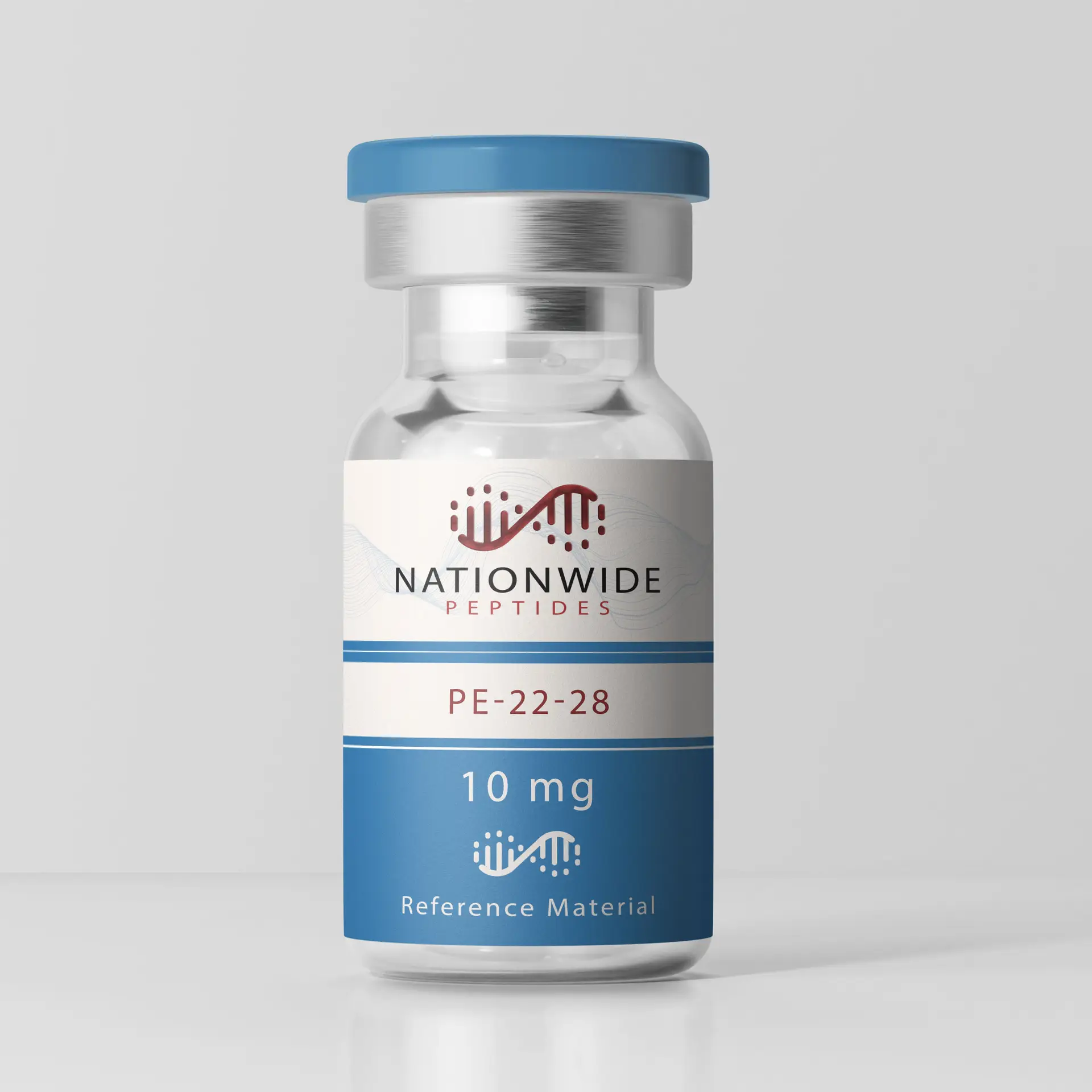
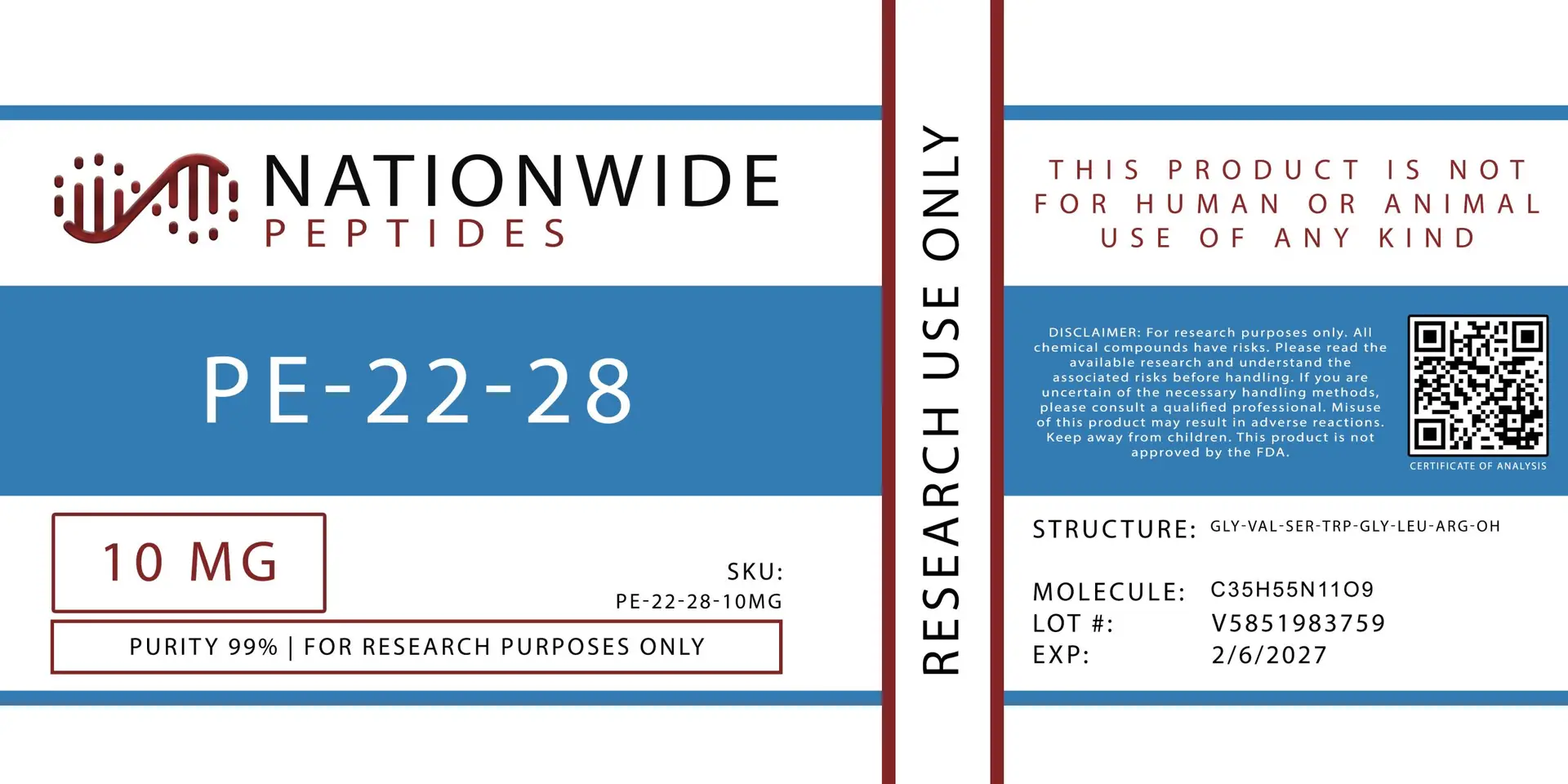
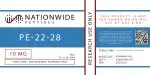
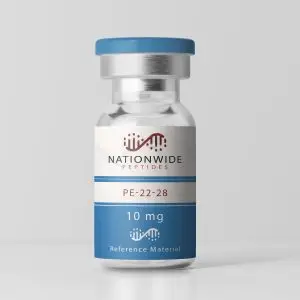
PE-22-28 is a synthetic analog derived from the endogenous sortilin propeptide, spadin, used in preclinical research to selectively block the TREK-1 potassium channel. It regulates neuronal excitability, synaptic plasticity, and mood-related behaviors in laboratory models. The peptide is produced under GMP-compliant conditions and supplied as a lyophilized powder with full quality documentation including a Certificate of Analysis. It acts as a potent antagonist of TREK-1, enhancing neuronal depolarization and serotonergic neuron activity. Research indicates its role in modulating TREK-1 activity, promoting hippocampal neurogenesis and synaptogenesis, and influencing stress and mood regulation in preclinical studies. It is intended for research use only and not for human use.
PE-22-28 Peptide
PE-22-28 Peptide
Price range: $53.00 through $64.00
PE-22-28 is a research-grade synthetic peptide that selectively blocks TREK-1 potassium channels for preclinical studies on neuronal and mood regulation.
Additional information
| Weight | .125 lbs |
|---|---|
| Dimensions | 9 × 7 × .5 in |
| Size: No selection | 5mg, 10mg |
Peptide Research
- Shortened Spadin Analogs Display Better TREK-1 Inhibition, In Vivo Stability and Antidepressant Activity (2017) – https://pmc.ncbi.nlm.nih.gov/articles/PMC5601071/
- Spadin, a sortilin-derived peptide, targeting rodent TREK-1 channels: a new concept in the antidepressant drug design (2010) – https://pubmed.ncbi.nlm.nih.gov/20405001/
- In vitro and in vivo regulation of synaptogenesis by the novel antidepressant spadin (2015) – https://pubmed.ncbi.nlm.nih.gov/25694029/ (related to spadin mechanisms applicable to analogs)
- Spadin as a new antidepressant: absence of TREK-1-related side effects (2012) – https://pubmed.ncbi.nlm.nih.gov/21807005/
- The Involvement of Sortilin/NTSR3 in Depression as the Progenitor of Spadin (2018) – https://www.frontiersin.org/journals/pharmacology/articles/10.3389/fphar.2018.01541/full
- Role of TREK-1 in Health and Disease, Focus on the Central Nervous System (2019 review) – https://pmc.ncbi.nlm.nih.gov/articles/PMC6470294/
Keep lyophilized peptides sealed in their original vial, protected from light and humidity, and store at -4°F or colder for optimal long-term stability in research settings; short-term refrigeration at around 39°F suffices for immediate use within weeks, though freezer storage maximizes integrity across extended research timelines.
Frequently bought together
Choose variants
×| Product | Price |
|---|
Related products
-
-
 Price range: $51.00 through $74.00Buy Now This product has multiple variants. The options may be chosen on the product page
 -
 Price range: $54.00 through $74.00Buy Now This product has multiple variants. The options may be chosen on the product page
 -
 Price range: $69.00 through $168.00Buy Now This product has multiple variants. The options may be chosen on the product page
 -
 Price range: $51.00 through $65.00Buy Now This product has multiple variants. The options may be chosen on the product page