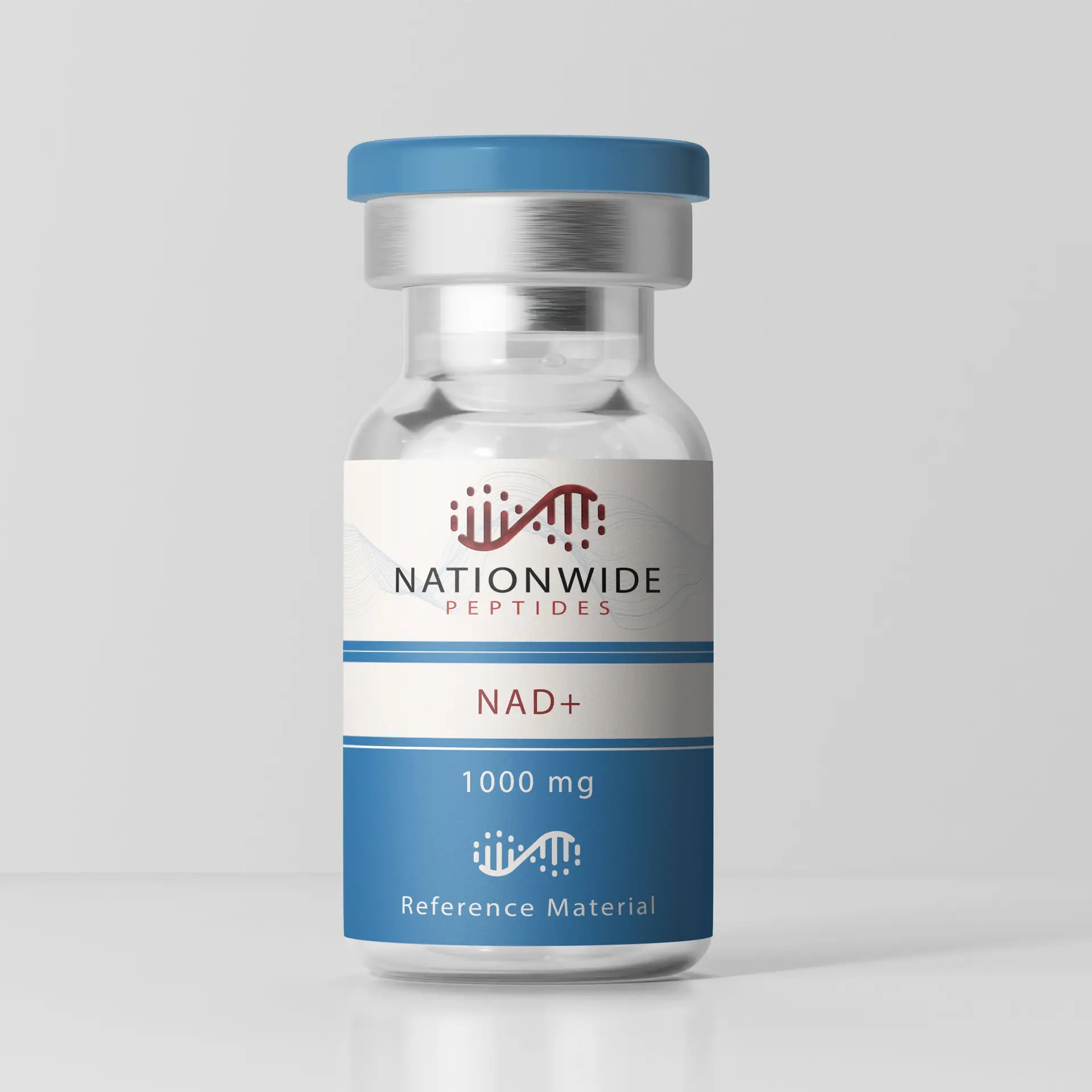
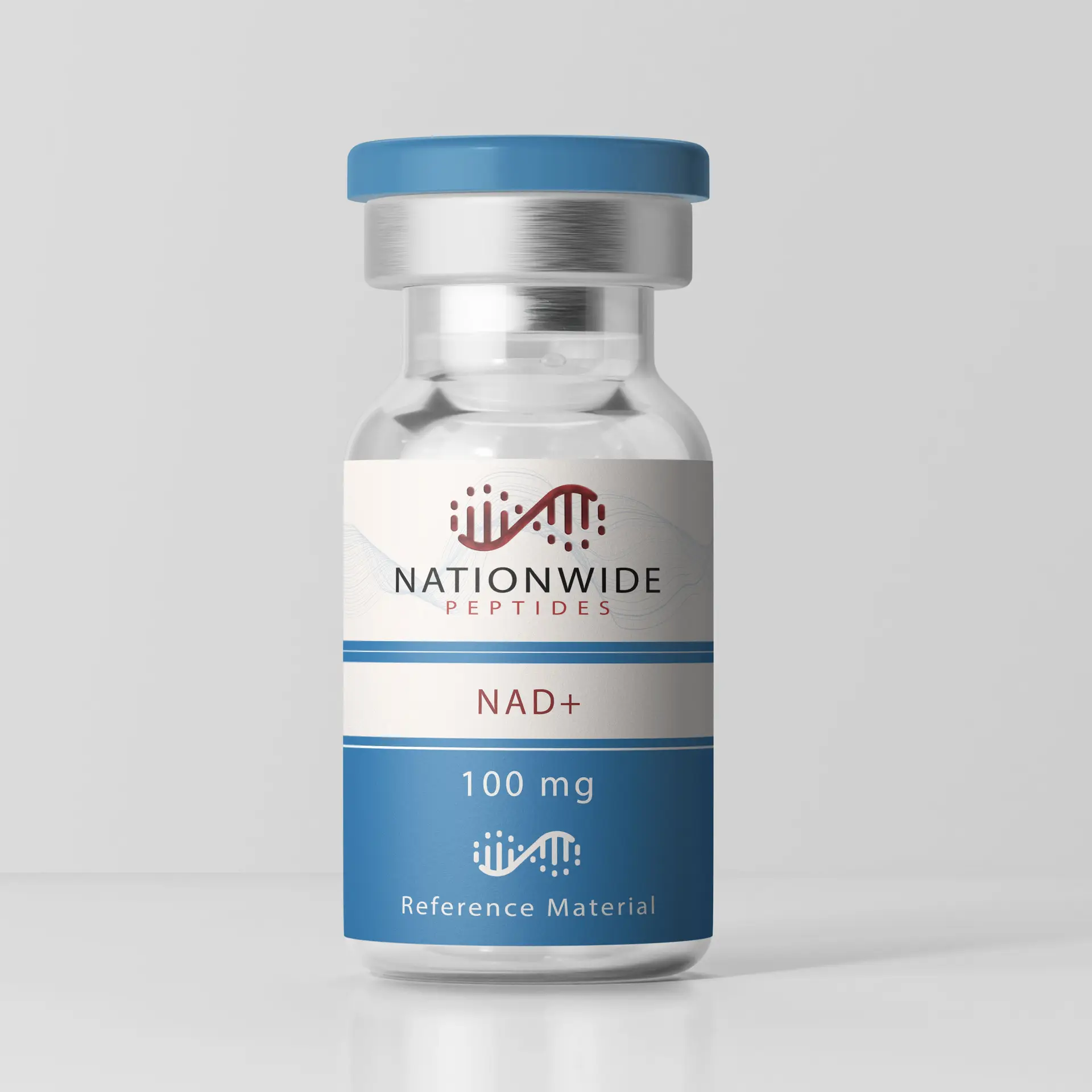
NAD+ Peptide
NAD+ Peptide
$40.00 $134.00Price range: $40.00 through $134.00 Select options

NAD+ Peptide

Price range: $40.00 through $134.00

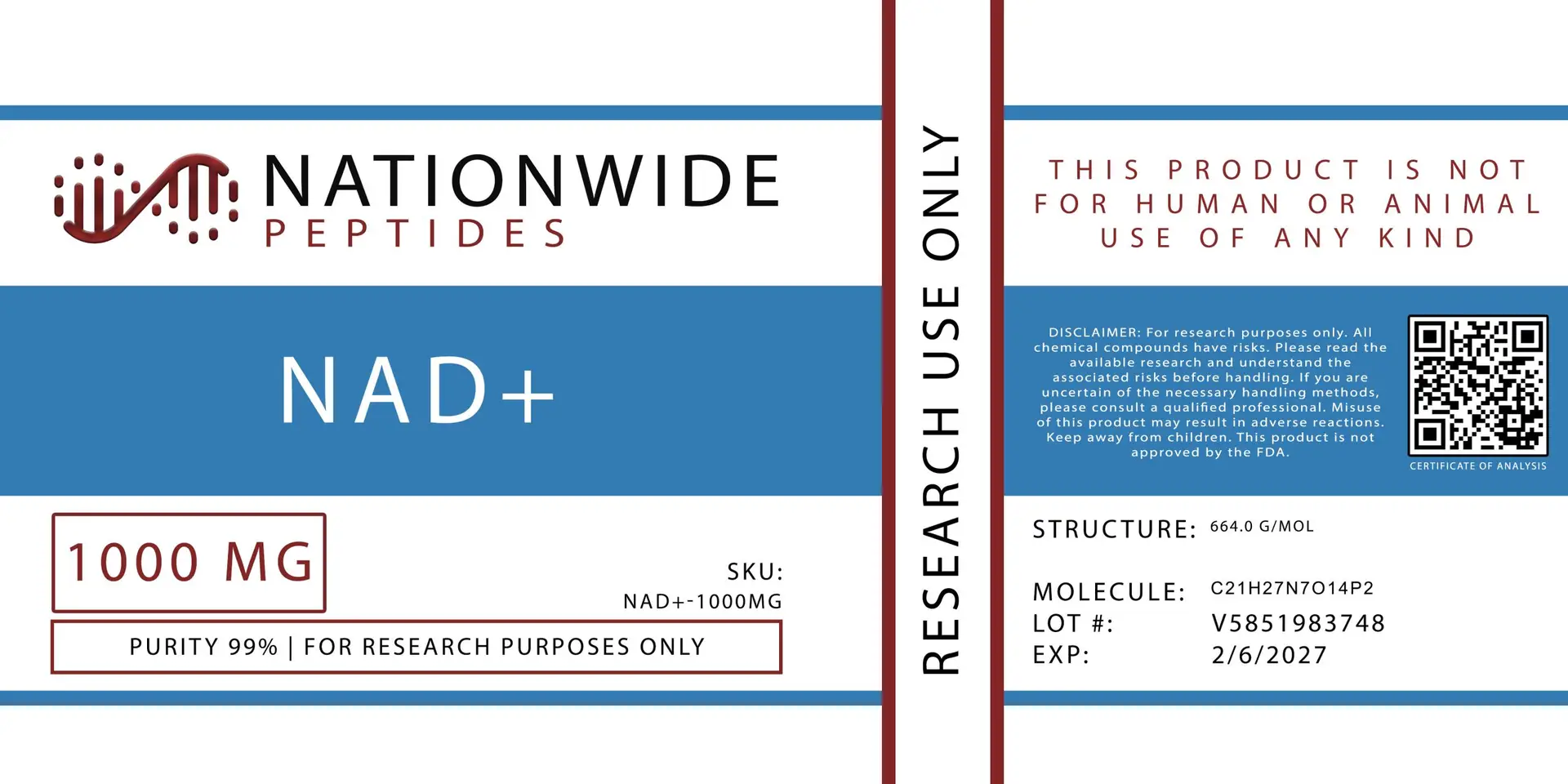
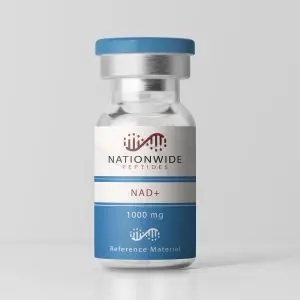
For Research Use Only. Not for human use. NAD+ (Nicotinamide Adenine Dinucleotide) is an essential metabolic coenzyme widely studied in research for its roles in cellular energy metabolism, mitochondrial function, and DNA repair pathway mechanisms.

For Research Use Only — Not for Human Consumption
 

Free shipping on all orders over $200 (US)

  • 99% Purity – Third-Party Tested
  • Fast & Reliable Shipping
Guaranteed Checkout

NAD+ (Nicotinamide Adenine Dinucleotide) is a critical metabolic coenzyme essential for redox reactions, mitochondrial function, and cellular energy generation. In research settings, NAD+ is widely studied for its involvement in oxidative metabolism, sirtuin pathway activation, DNA repair pathways, cellular stress models, and metabolic-signaling systems.

For Research Use Only. Not for human use.

Our research-grade NAD+ is produced under strict quality-controlled laboratory conditions and supplied as a stable lyophilized formulation to ensure maximum purity, consistency, and reproducibility across experimental applications.

Key Scientific Features

  • High-purity NAD+ in research-grade form
  • Lyophilized for improved stability and long-term storage
  • Full Certificate of Analysis (COA) for every batch
  • Manufactured in a controlled, GMP-aligned laboratory environment
  • Ideal for metabolism, mitochondrial function, and cellular signalling studies

Why Researchers Choose Nationwide Peptides

  • Pharmaceutical-grade synthesis and purification standards
  • Analytical validation of purity, identity, and molecular structure
  • Consistent batch reproducibility for reliable results
  • Transparent documentation and traceability
  • Competitive research-market pricing
  • Secure, temperature-regulated shipping for sensitive cofactors

Our NAD+ is optimized for academic, biochemical, and metabolic research laboratories requiring high consistency and robust scientific performance.

Research-Referenced Applications (Based on scientific literature; not intended as therapeutic claims.) NAD+ is frequently utilized in studies exploring:

  • Mitochondrial energy production and oxidative metabolism
  • Redox balance and cellular respiration mechanisms
  • Sirtuin pathway activation in biochemical assay models
  • DNA repair and genomic stability pathways (PARP-related studies)
  • Metabolic function, insulin-signaling pathway mechanics, and ATP production assays
  • Cellular stress response and oxidative-damage models
  • Neurobiological metabolism and biochemical signaling investigations

Its central role in NAD+/NADH cycling makes it a critical molecule for metabolic and biochemical research.
Additional information

Weight .125 lbs
Dimensions 9 × 7 × .5 in
Size: No selection

100mg, 500mg, 1000mg

Peptide Research

  • PubMed: Imai & Guarente (2014) on NAD+/sirtuins in aging [PMID: 24786309]; Mouchiroud et al. (2013) on mitochondrial UPR/FOXO [PMID: 23870130- https://pubmed.ncbi.nlm.nih.gov/24786309/
  • Reviews: Chini et al. (2021) on NAD+ metabolism in aging; Covarrubias et al. (2021) on NAD+ in senescence/longevity; Martens et al. (2023) on human NAD+ boosting safety/tolerability [PMC:10692436] – https://pmc.ncbi.nlm.nih.gov/articles/PMC7963035/
  • Clinical: Liao et al. (2021) on NMN in runners; Pencina et al. (2023) on MIB-626 dosing [PMC:9495723 for risks – https://pmc.ncbi.nlm.nih.gov/articles/PMC9495723/
  • Systematic Reviews/Meta-Analyses: Alarcón et al. (2024) safety/efficacy review [PMID: 37971292]; Wang et al. (2022) glucose/lipid meta [PMID: 35303905]; Dollerup et al. (2023) BP/CRP/CIMT meta [PMID: 37593976]; Sharifan et al. (2023) weight/adiponectin meta [PMID: 37854354] – https://pubmed.ncbi.nlm.nih.gov/37971292/
  • Clinical Trials: Yi et al. (2023) NMN dose trial [PMID: 36482258]; Brakedal et al. (2022) NR in Parkinson’s [PMID: 35235774]; Remie et al. (2018) chronic NR [PMID: 29599478]; Song et al. (2024) NMN variability [PMID: 38921475]; Braidy et al. (2024) AD review [PMID: 39422945] – https://pubmed.ncbi.nlm.nih.gov/36482258/

Keep lyophilized peptides sealed in their original vial, protected from light and humidity, and store at -4°F or colder for optimal long-term stability in research settings; short-term refrigeration at around 39°F suffices for immediate use within weeks, though freezer storage maximizes integrity across extended research timelines.