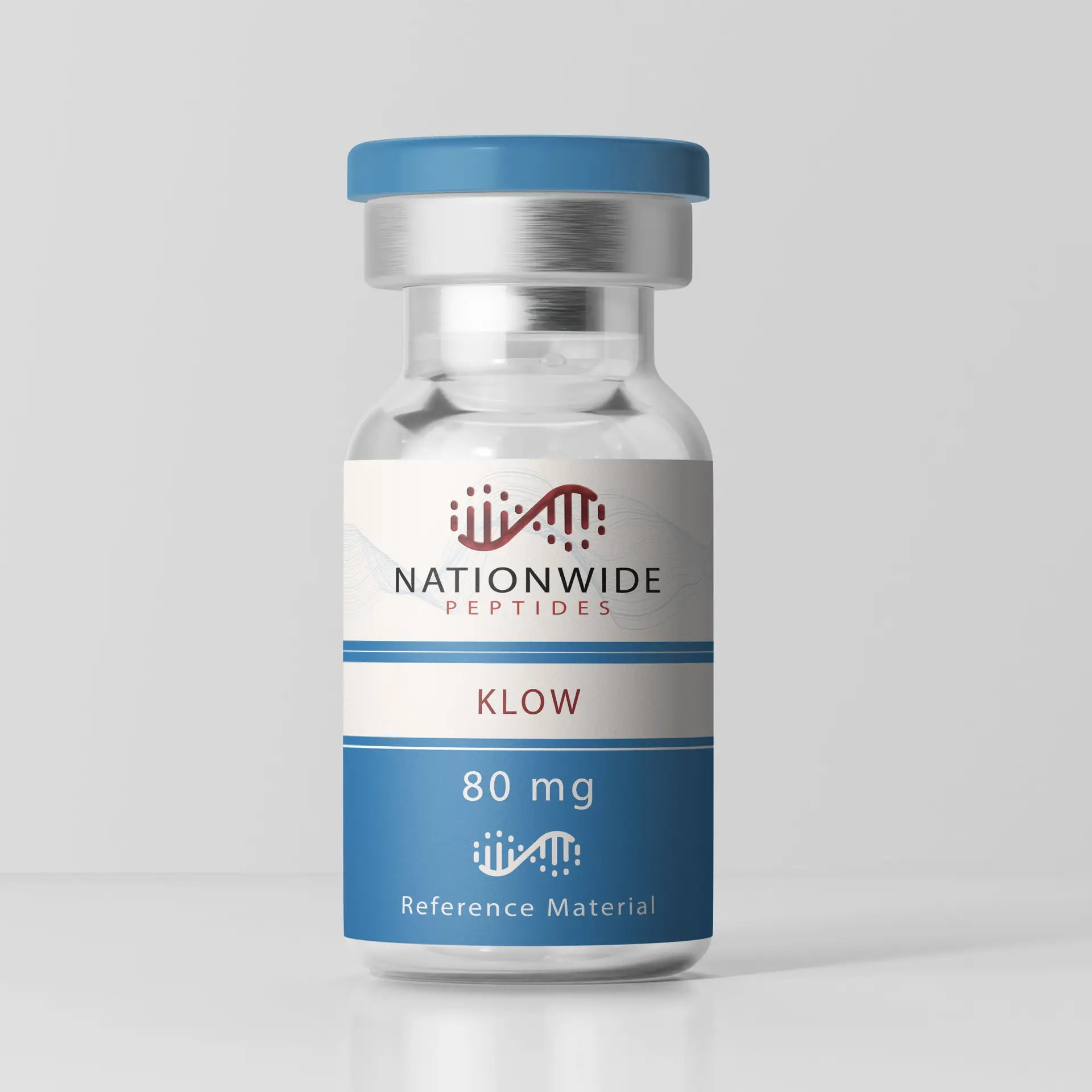
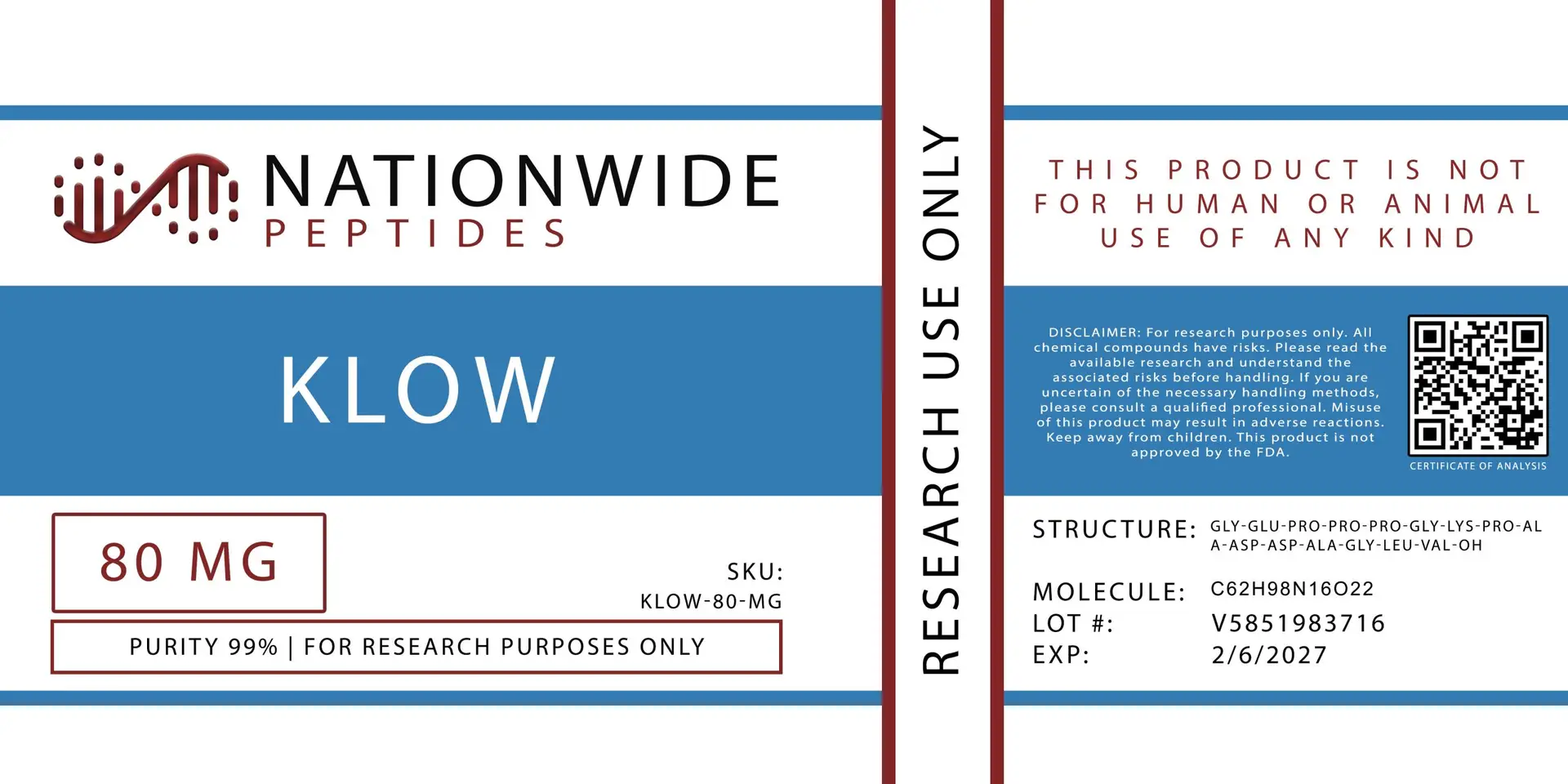
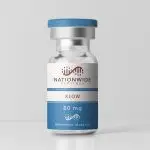
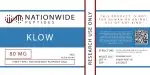


KLOW is a research-grade multi-peptide blend supplied for in vitro and preclinical laboratory use. Researchers use this compound to investigate the combined molecular behaviors of its constituent peptides across tissue-related, immunological, and extracellular matrix signaling pathways. This compound is produced under stringent GMP-compliant conditions and provided as a stable lyophilized powder to support purity, stability, and reproducibility in experimental applications.
Engineered solely for laboratory research, each batch of KLOW undergoes a comprehensive quality assessment and includes complete documentation, including a Certificate of Analysis (COA), purity data, and compositional verification.
Scientific Overview
KLOW components are studied in research settings for their potential interactions across multiple signaling pathways. Preclinical investigations have examined KLOW in the following research contexts:
- Angiogenic and regenerative signaling pathway interactions in in vitro models
- Cytokine expression profiles in stress-challenged cellular models
- Extracellular matrix remodeling and collagen organization at the cellular level
- Molecular signaling in gastrointestinal and musculoskeletal injury research models
- Cellular migration and proliferation mechanisms in laboratory wound paradigms
Research-Referenced Compound Characteristics (Based on existing preclinical and published literature—not intended as claims of therapeutic use)
- BPC-157 has been studied in relation to VEGF and nitric oxide pathway signaling in preclinical models (DOI: 10.1016/j.jss.2010.05.007)
- TB-500 (thymosin β4 fragment) has been examined for actin sequestration and cell migration mechanisms in laboratory models (DOI: 10.1111/j.1524-475X.2007.00292.x)
- GHK-Cu has been investigated in the context of collagen expression and extracellular matrix signaling in dermal fibroblast cultures (DOI: 10.1016/j.biochi.2017.11.004)
- KPV has been studied for its interactions with inflammatory signaling cascades and mucosal barrier models in vitro (DOI: 10.1053/j.gastro.2007.09.038)
- Research examines potential pathway interactions across the combined constituent peptides in multi-pathway laboratory studies
- Investigation of combined molecular signaling in musculoskeletal and epithelial research models
Quality Specifications
For laboratories requiring dependable KLOW research compound, our manufacturing process prioritizes reproducibility and scientific precision. Every batch is confirmed for:
- Purity ≥99% by HPLC (compositional assay)
- Structural/ingredient identity via mass spectrometry
- Third-party Certificate of Analysis (COA) available per lot
For Research Use Only. Not for human use.
Statements regarding KLOW have not been evaluated by the FDA. This product is not intended to diagnose, treat, cure, or prevent any disease. For laboratory and research purposes only.