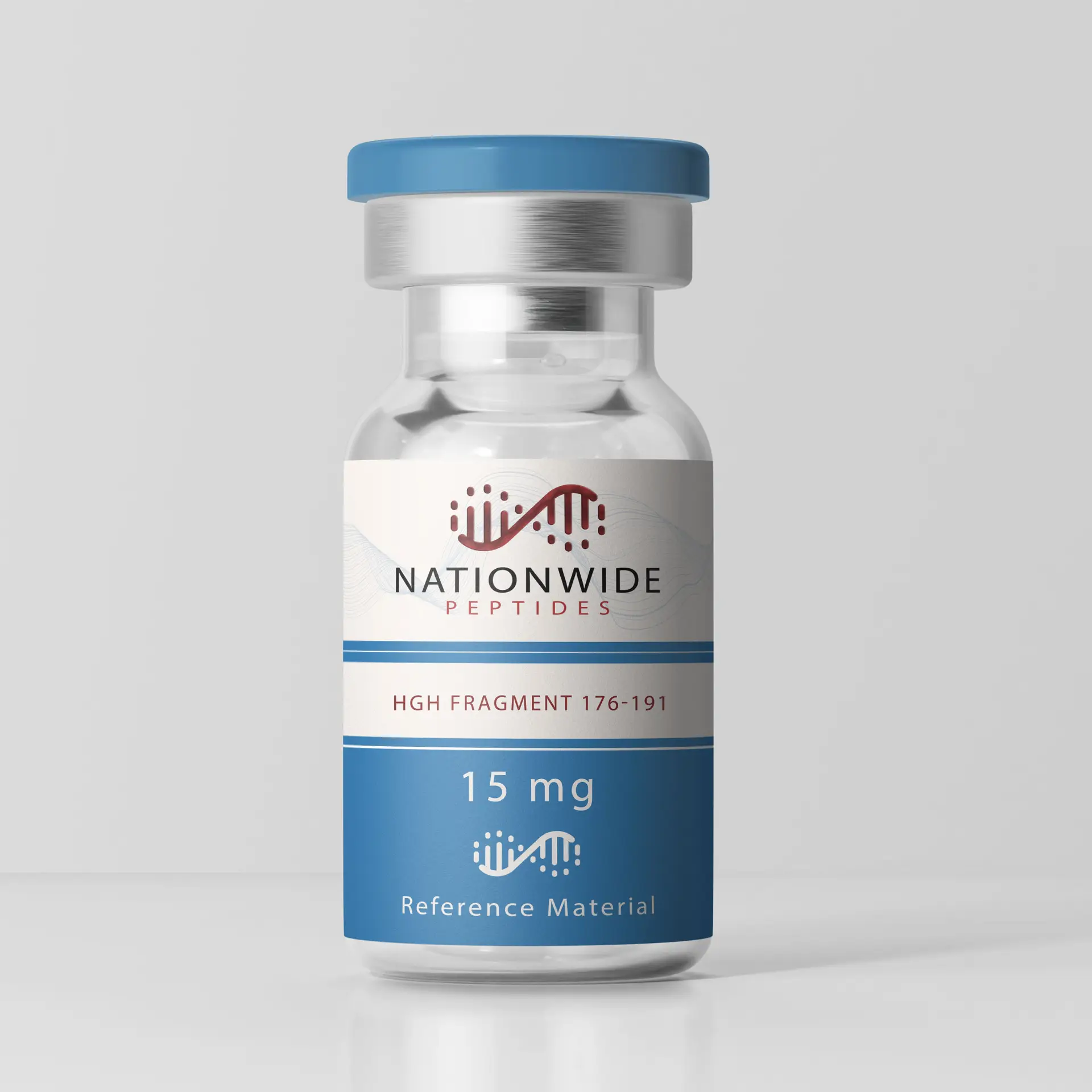
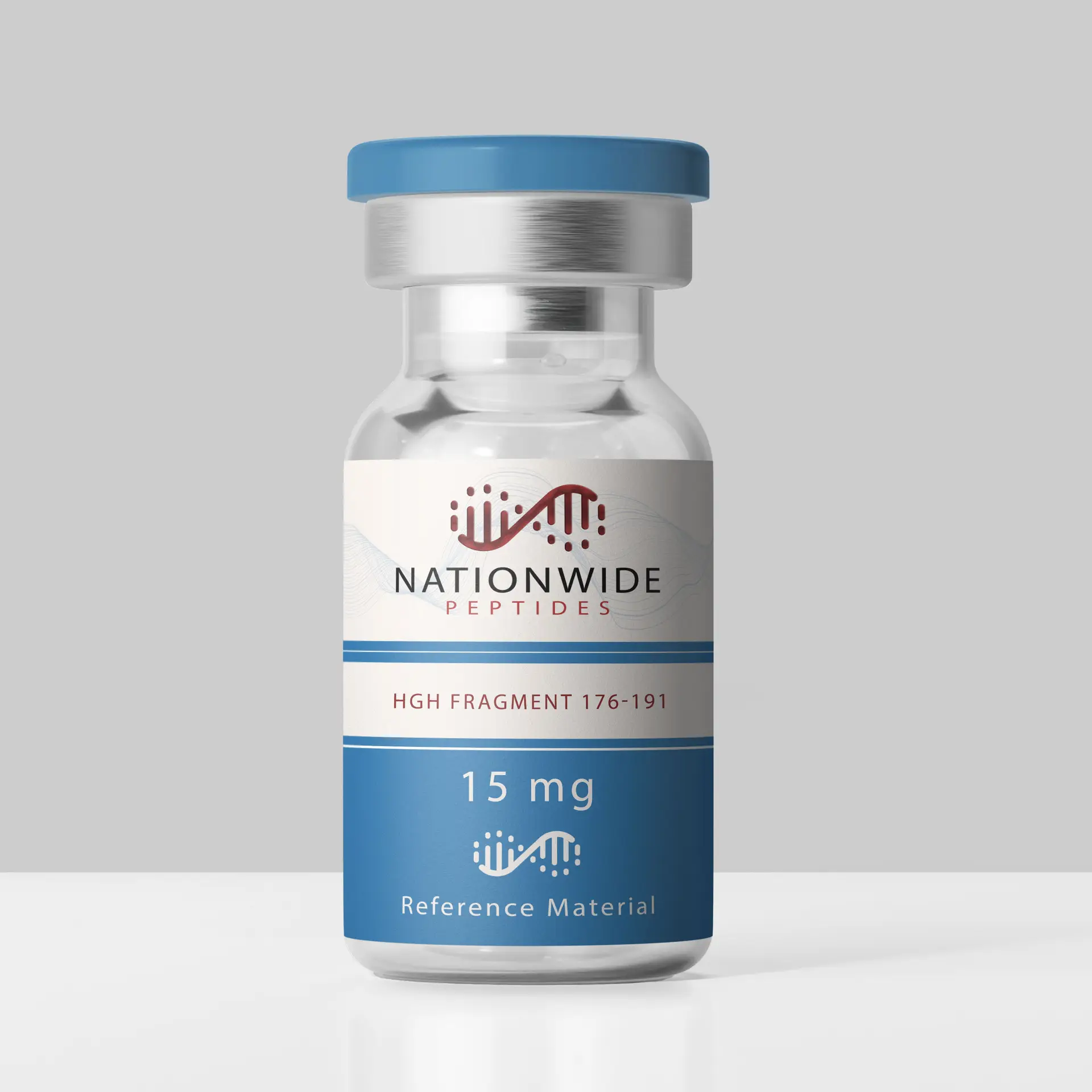
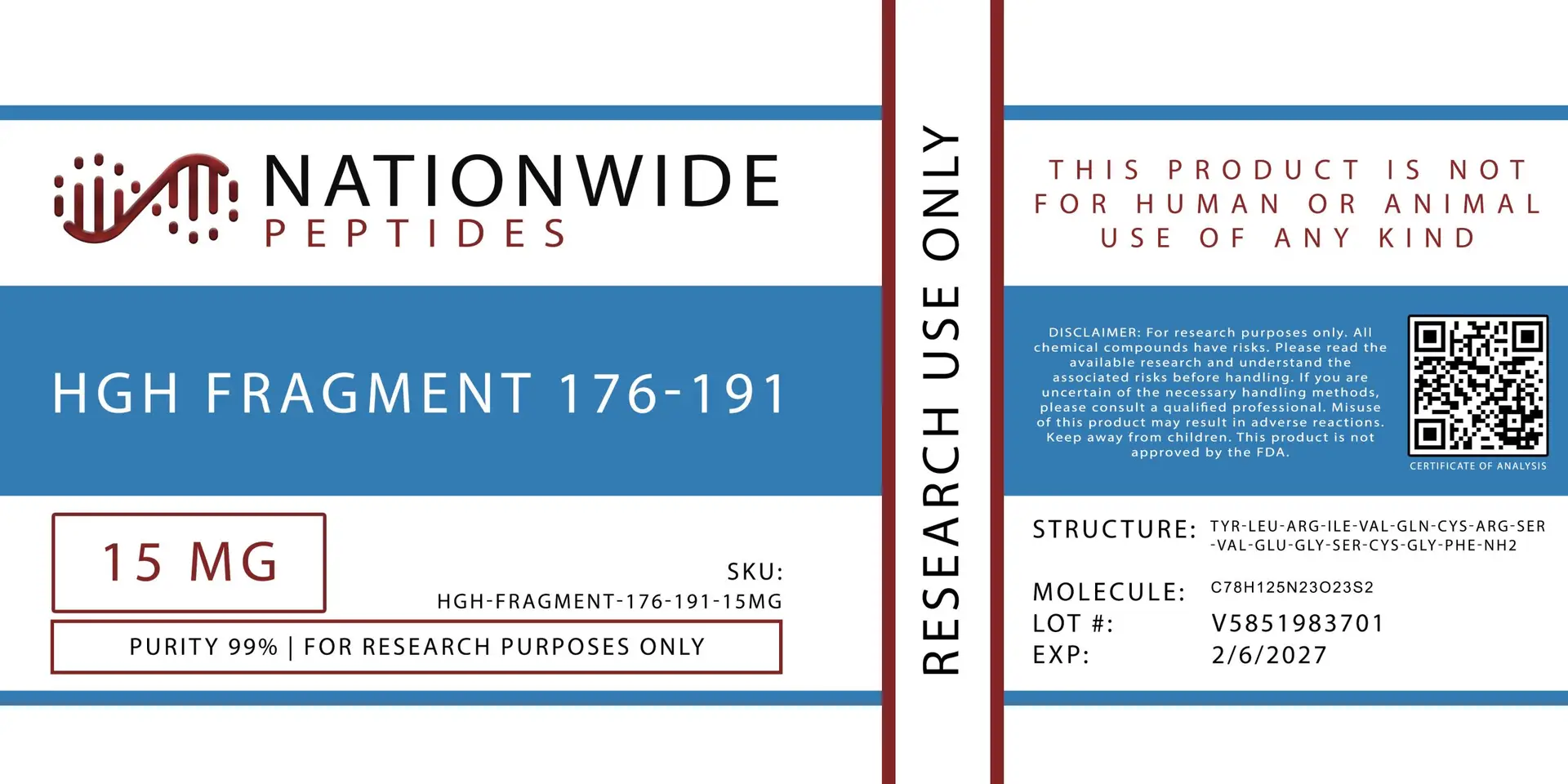
HGH Fragment 176-191 is a truncated peptide corresponding to amino acids 176-191 of the full-length human growth hormone (hGH) protein, first identified in the 1990s for its selective lipolytic properties independent of full hGH’s anabolic effects. This research-grade lyophilized formulation is synthesized under strict quality controls and provided with comprehensive analytical documentation, making it suitable for metabolic, oncology, and regenerative biology studies. For Research Use Only. Not for human use.
Key Scientific Specifications
- High-purity HGH Fragment 176-191 (≥ 98% by HPLC, acetate salt form)
- Verified 16-amino-acid sequence (Tyr-Leu-Arg-Ile-Val-Gln-Cys-Arg-Ser-Val-Glu-Gly-Ser-Cys-Gly-Phe)
- Lyophilized powder for optimal stability and solubility
- Full Certificate of Analysis (COA) with HPLC, MS, and amino acid analysis
- Manufactured in GMP-aligned, ISO-compliant facilities
- Suitable for lipolytic pathway, adipose metabolism, and receptor-binding research
Research-Referenced Applications (Based on scientific literature; not therapeutic claims)
- Selective stimulation of lipolysis and fat oxidation in adipose tissue models via beta-3 adrenergic receptor (ADRB3) agonism in preclinical settings
- Potential modulation of glycogen synthase phosphatase and glucose metabolism in rodent muscle tissue models
- Enhancement of drug delivery and cytotoxicity in cancer cell lines (e.g., MCF-7 breast cancer via receptor targeting) as referenced in peer-reviewed literature
- Investigation of thermogenesis and energy expenditure pathways in experimental models without observed IGF-1 elevation in preclinical data
- Exploration of mitochondrial uncoupling and AMPK phosphorylation for fatty acid oxidation in in-vitro and animal models
- Synergistic effects in blends with GHRH analogs for metabolic and hormonal signaling studies in laboratory settings
Why Researchers Choose HGH Fragment 176-191
- Precise C-terminal sequence mimicry (not full hGH or modified AOD9604)
- Consistent solubility and bioactivity batch-to-batch
- Transparent analytical data (HPLC, MS, purity >98%)
- Used in metabolic endocrinology, oncology, and peptide-biotechnology laboratory research
- Competitive research pricing with bulk options