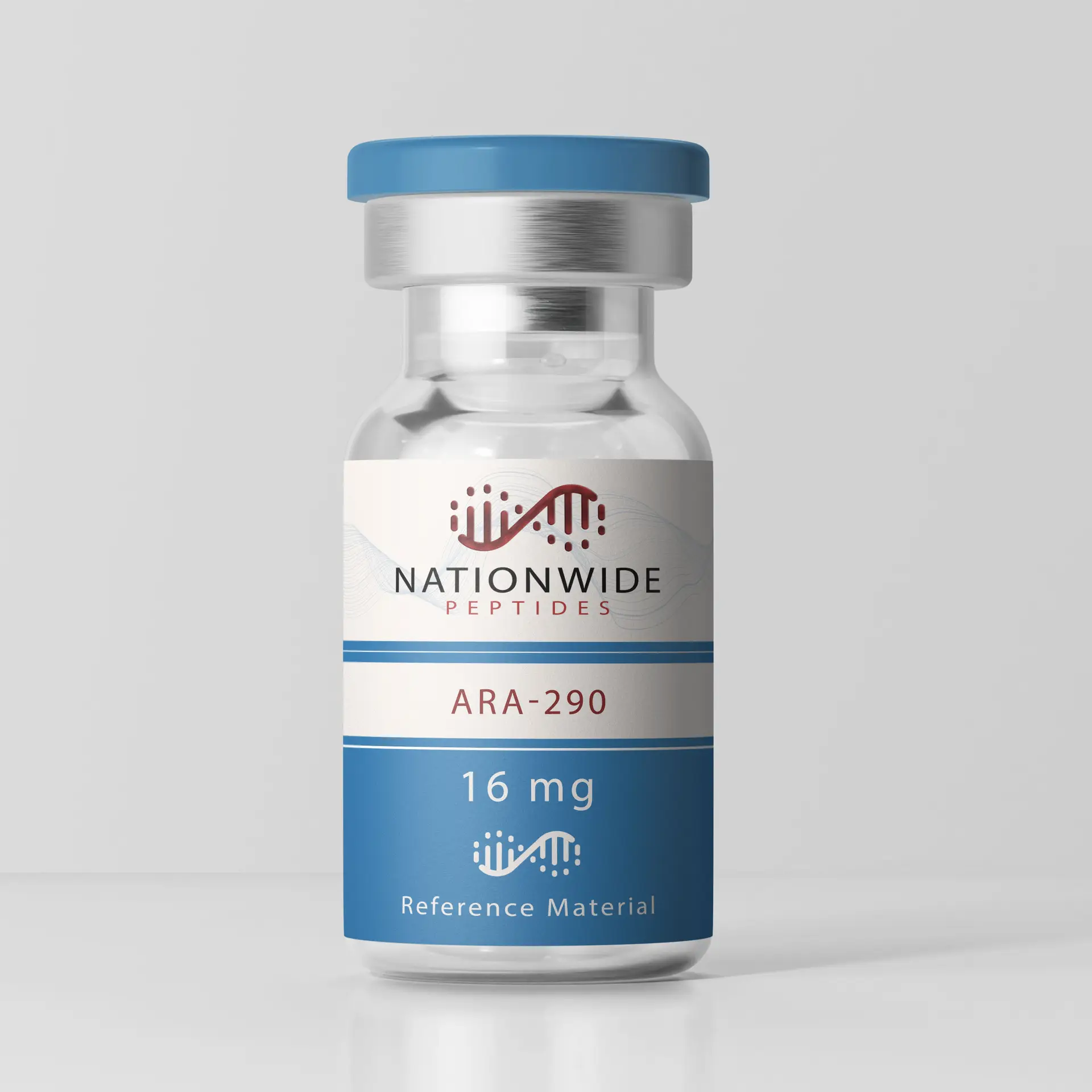
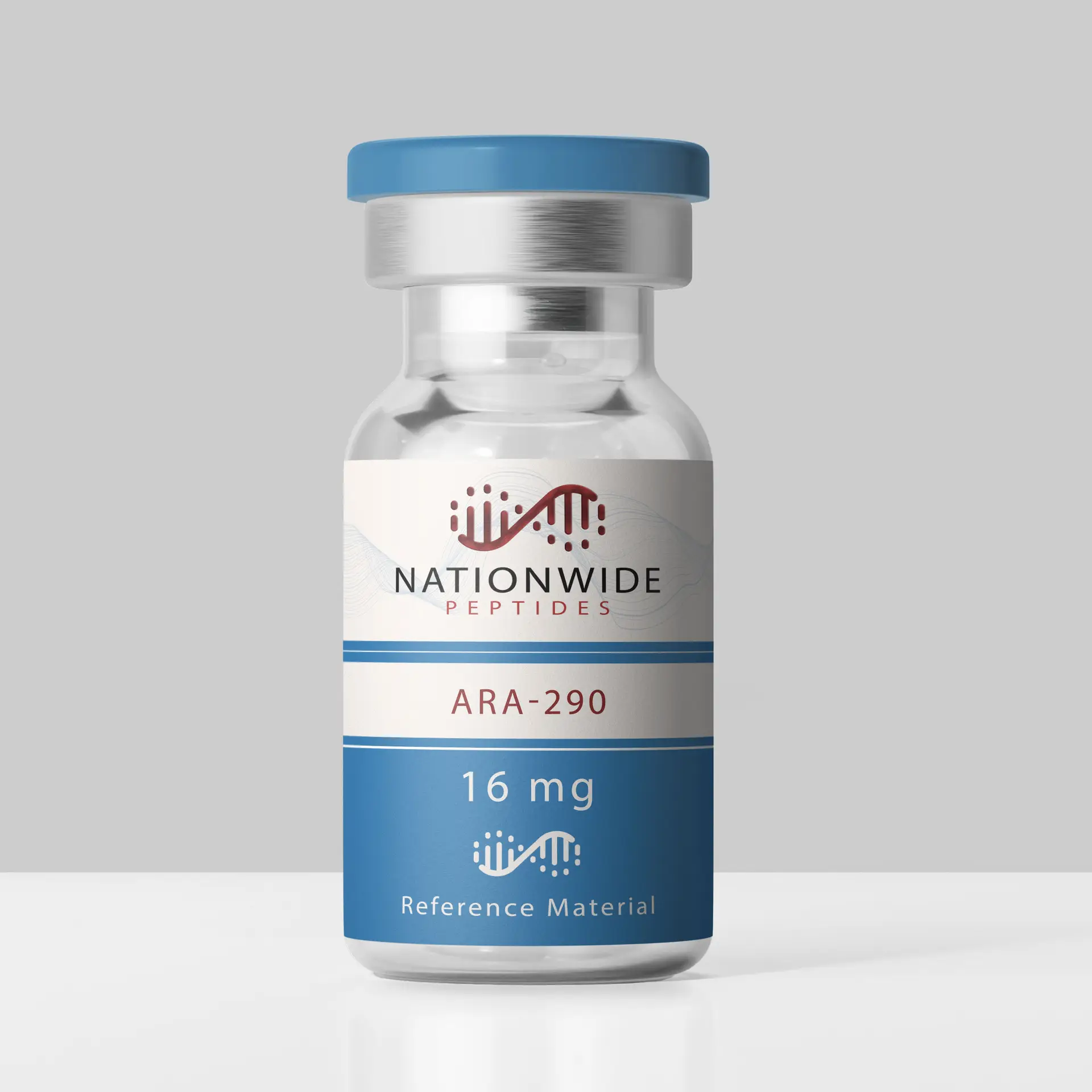
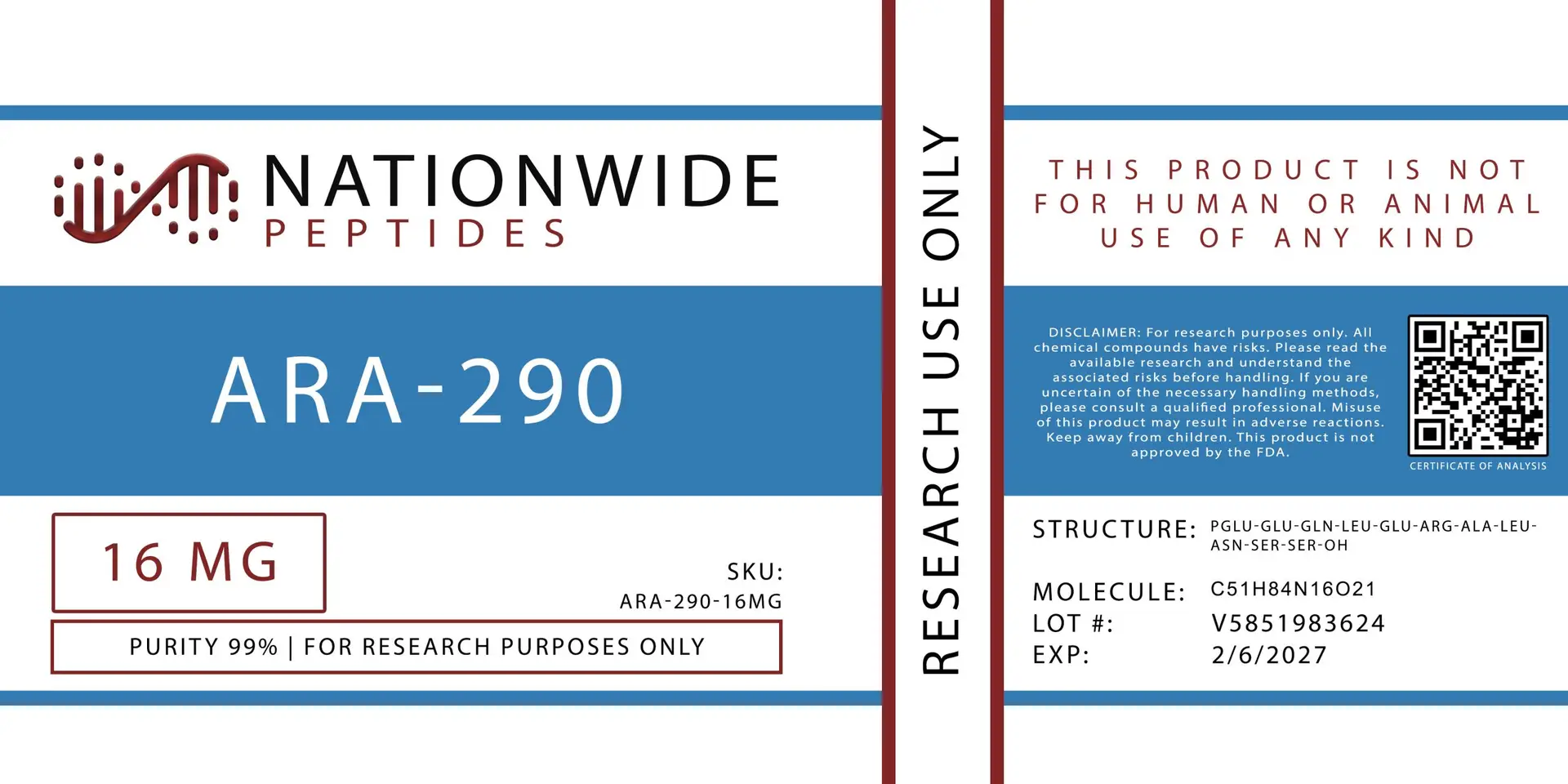
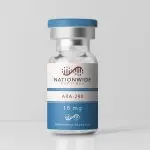
ARA-290 (Cibinetide) (PyroGlu-Gln-Leu-Glu-Arg-Ala-Leu-Asn-Ser-Ser) is a non-erythropoietic EPO derivative developed by Araim Pharmaceuticals. It selectively binds the innate repair receptor (IRR = EPOR-β common receptor complex) without increasing hemoglobin or red blood cell count. For Research Use Only. Not for human use.
Key Scientific Features
- High-purity ARA-290 (≥ 99% by HPLC/MS, acetate salt form)
- Verified 11-amino-acid sequence: pyroGlu-Gln-Leu-Glu-Arg-Ala-Leu-Asn-Ser-Ser
- Lyophilized formulation for long-term stability
- Full Certificate of Analysis (COA) with HPLC, MS, amino acid analysis, and IRR binding assay
- Manufactured in GMP-aligned, ISO-compliant facilities
- Suitable for IRR activation and tissue-protection research models
Research Applications
- In vitro and preclinical IRR binding and selectivity studies
- Non-erythropoietic EPO derivative research
- Inflammatory pathway and cytokine research models (TNF-α, IL-6)
- Cell-based apoptosis and tissue-repair mechanism studies
Why Researchers Choose Nationwide Peptides ARA-290
- Exact sequence match to the compound referenced in published preclinical and clinical literature
- Transparent analytical data (HPLC >99%, MS confirmation)
- Competitive research pricing with bulk options
For Research Use Only. Not for human or animal use. Not intended to diagnose, treat, cure, or prevent any condition.